
I was out hiking with my 13-year-old son, getting him ready for a six-day pilgrimage from Jaffa to Jerusalem with his class. We were walking and talking when he told me the latest news about Elon Musk. Apparently, Musk had managed to get his new electric Tesla Roadster to fly.
My son was telling me the news. Not the other way around. “Well, probably in your generation, in some years from now, you’ll have a flying car,” I told him.
And then we started imagining what that might mean for cities. If cars could fly, would we need so many roads? Could we give some of that space back to trees, gardens, parks and people? Could the streets below become quieter and greener? Of course, we would probably need highways in the sky. But unlike our roads today, which move us forward and backward, left and right, flying cars would be travelling in three dimensions. There would be air taxis, flight paths, different elevations and probably a whole new set of traffic rules.
Instead of two-dimensional city planning, we would have to start thinking about cities in three dimensions. Would there be designated levels for flying cars? How would they land? Would buildings need landing pads? Could we reclaim acres of asphalt for urban forests, or would we just be moving our traffic jams into the sky?
For a 13-year-old boy, these are exciting possibilities. And I’m fairly certain my son isn’t the only teenage boy thinking about flying cars this week. The question is when, how and how soon. He’s already saving up for a Tesla Optimus humanoid robot, which he calls Optimus Prime. So I suppose a flying car is the natural next step.
The new Tesla Roadster actually got off the ground
On October 15, 2026, Tesla unveiled its long-awaited second-generation Roadster at a SpaceX rocket testing facility in McGregor, Texas. Elon Musk has famously sent one to outer space.
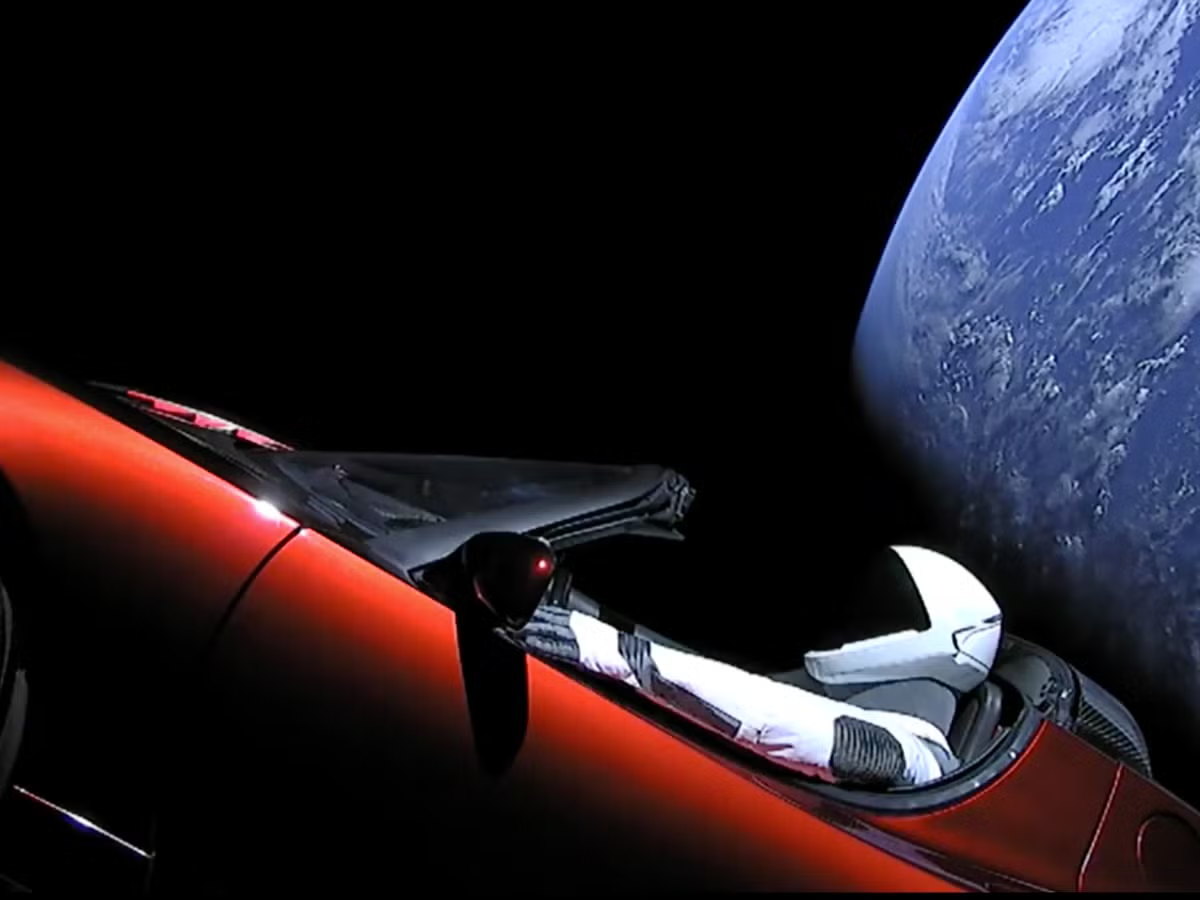
The all-electric Roaster sports car has been in development for years. Musk first announced the new Roadster in 2017, with promises of extraordinary acceleration and the possibility of technology borrowed from his other company, SpaceX. My son says it can now go from zero to 60 miles an hour in a second.
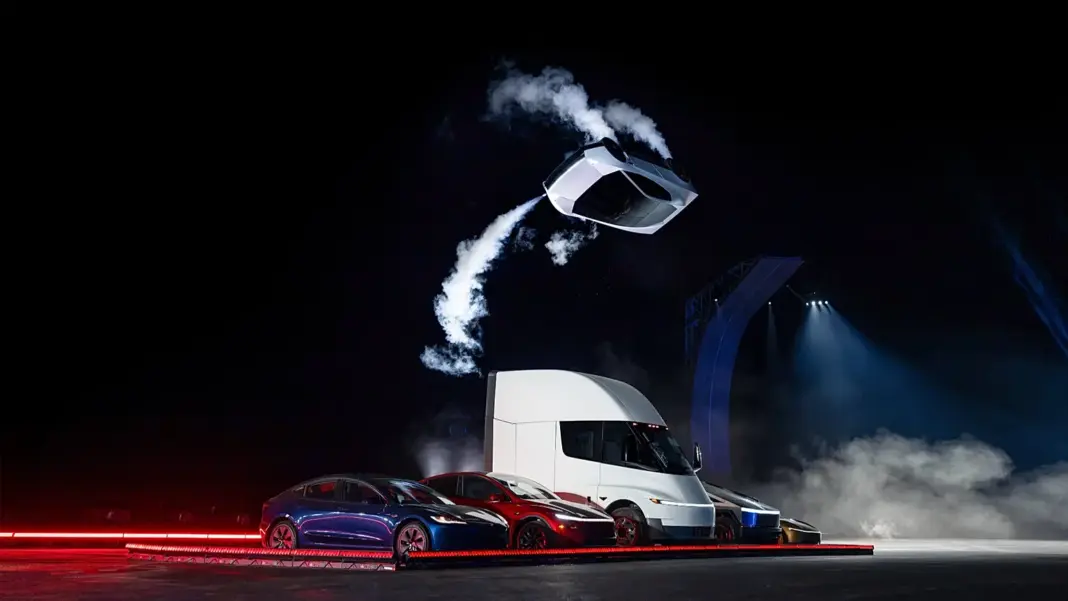
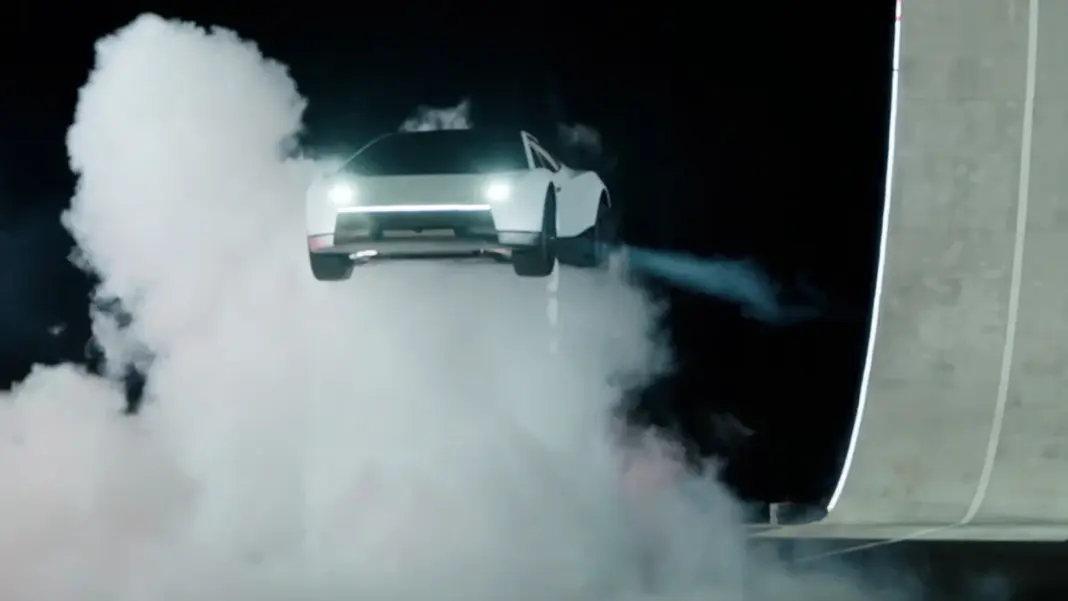
This time, in a dramatic demonstration, a Roadster prototype drove up a curved ramp, clung upside down to the structure using a powerful suction system, then launched itself into the air, rotated and landed back on its wheels. In another stunt, the car used thrusters to leap over a row of parked Tesla vehicles. Nobody was inside during the airborne demonstration.
It’s not quite the flying car of science fiction. The Roadster hasn’t demonstrated that it can take off and fly continuously across a city, carrying passengers from one destination to another. But it did get off the ground.And the interesting part is how SpaceX engineering helped make that possible.
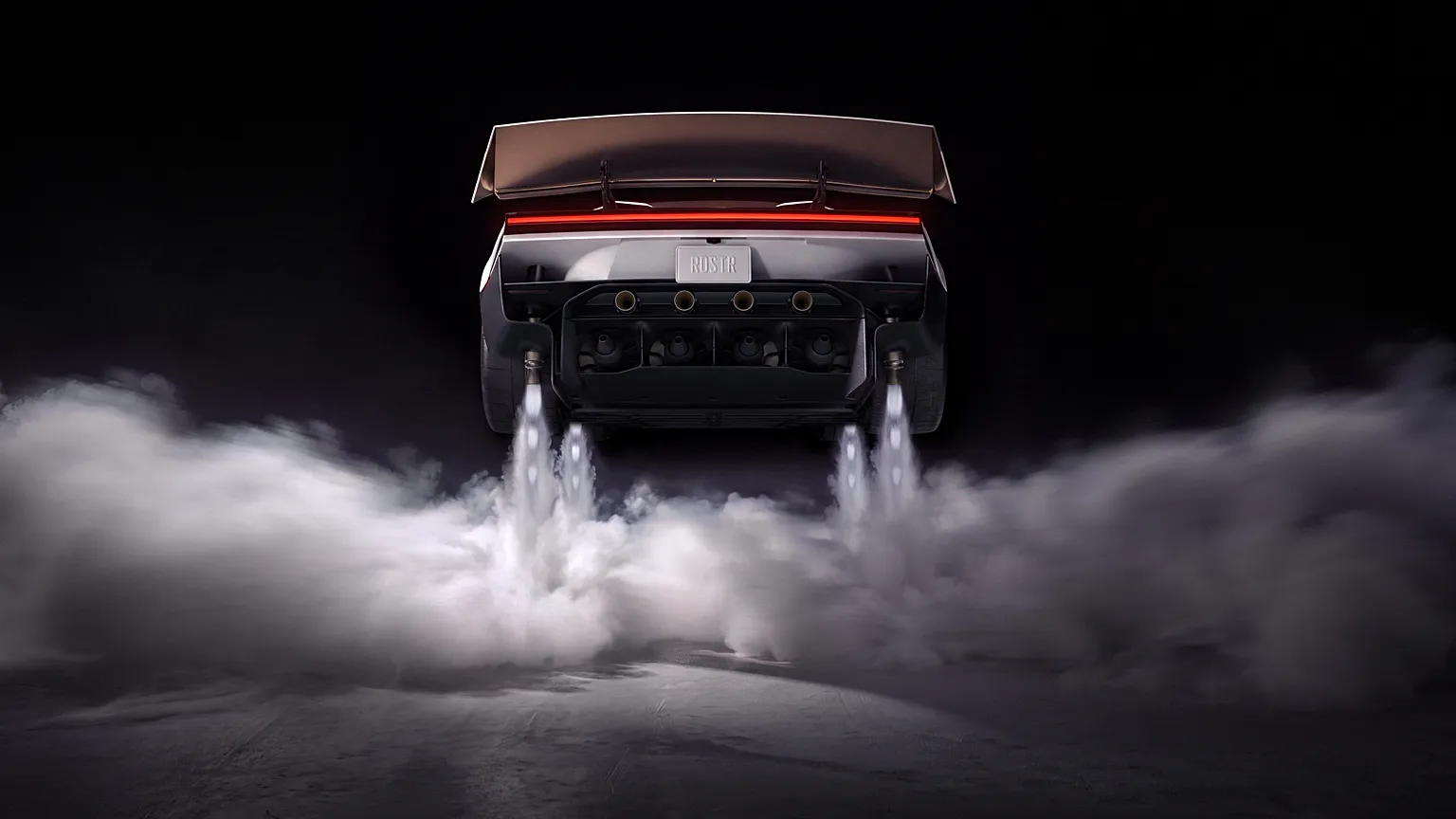
The new Roadster is a battery-electric sports car, but it’s also fitted with cold-gas thrusters developed using technology from SpaceX. Instead of relying only on the traction between rubber tires and pavement, the vehicle can release compressed gas through strategically positioned nozzles to produce thrust.
It’s a principle familiar from spacecraft, where thrusters can help control the orientation and movement of a vehicle without relying on wheels, wings or roads. On the Roadster, jets can provide additional acceleration and help control the car in the air. A separate fan-powered suction system produces enough downward force to let the prototype cling to a surface, even when upside down.
The prototype used compressed air, not a combustion rocket engine. The Roadster remains an electric vehicle, although the extra engineering needed to make a car jump or fly introduces a whole new set of questions about efficiency, safety, weight and noise.
Tesla now expects to begin producing the new Roadster in 2028. Whether these spectacular features will make it into a production car, and whether regulators will ever allow them to be used on public roads, is another matter. Could Tesla bake it into the newer models activated a few years later in hovering mode?
Flying cars will make our cities greener
At Green Prophet, we’ve always been interested in technologies that appear to belong to the distant future but could eventually change how we live on Earth. Space exploration is one example. Questions about growing food in weightlessness, finding water on Mars or sustaining life away from Earth can lead to innovations in agriculture, water recycling, energy and materials.
Flying cars invite a similar kind of thinking. Transportation has shaped the modern city. We have dedicated enormous areas of land to roads, parking lots, highways and garages. Cars have changed how we build homes, how far we live from work and how children move around their neighbourhoods.
What happens if a portion of that infrastructure is no longer necessary? Could cities start taking out roads and planting trees? Could we restore wildlife corridors, reduce parking requirements and create more green public space? Electric air taxis are already being developed by several companies, but they generally use aircraft-style lift systems rather than the Roadster’s compressed-gas thrusters.
And flying vehicles aren’t automatically sustainable. Their energy consumption, noise, safety, manufacturing footprint and the infrastructure needed to support them would all have to be considered. A city full of individually owned flying sports cars could introduce as many problems as it solves.
Still, there’s something exciting about reimagining a city without assuming that every square metre of road must stay a road forever. My son was thinking about the flying car. I was thinking about the trees we might plant in its place.
The Roadster demonstration comes alongside another interesting announcement from Musk. On October 19, he pledged to give one share of SpaceX to every child in America in 2027. The details of the proposed giveaway have yet to be established, but the commitment could amount to more than $10 billion in shares.
Giving a child a share in a company like SpaceX isn’t just about money. It’s an invitation to understand the stock market, to follow technological developments and to ask what a company does, where it’s going and how it might change the world.
I don’t know whether my son will ever own a flying car. Maybe he’ll decide they’re impractical. Maybe the next generation will choose efficient public transportation and electric air taxis instead.
But I do know that a 13-year-old boy, hiking toward Jerusalem, was thinking about the future of transportation and telling his mother about rocket thrusters and electric cars that can jump into the air. He used his Bar Mitzva money to invest in the S&P and is currently taking a stock market class. I hope he grows to be more financially literate than I have ever been.