
We love it when kids get outside and plant trees. And when those trees are mangroves, one of the strangest, toughest and most useful trees on Earth — even better.
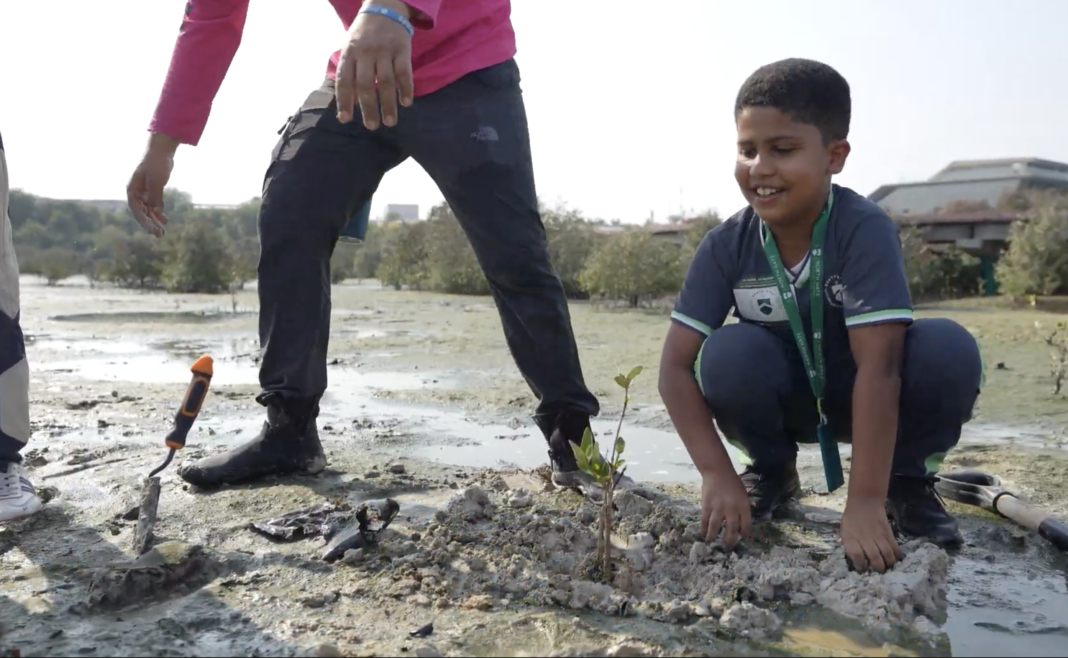
Twenty-six students from North Gate British School recently planted 45 mangrove saplings at Al Zorah Beach in Ajman, working with the Ajman Department of Tourism, Culture and Media. The planting marked 45 years of leadership by His Highness Sheikh Humaid bin Rashid Al Nuaimi, Ruler of Ajman, and coincided with celebrations around World Tourism Day.
The number was symbolic, but the act itself fits into something much bigger happening across the Gulf.
Mangroves live where worlds collide

Mangroves occupy that beautiful liminal zone where land, salt water, mud and sand continually mix together. They are trees built for instability. Their roots trap sediment, slow erosion and create nursery habitat for fish and other marine life. They can tolerate salt, flooding and shifting shorelines that would kill most terrestrial trees.
They are also extraordinary blue-carbon ecosystems. Mangrove forests store carbon not only in their trunks and leaves, but in the waterlogged soils beneath them, where organic material can remain locked away for long periods. UAE conservation groups describe mangroves as among the most effective coastal ecosystems for carbon storage and climate adaptation.
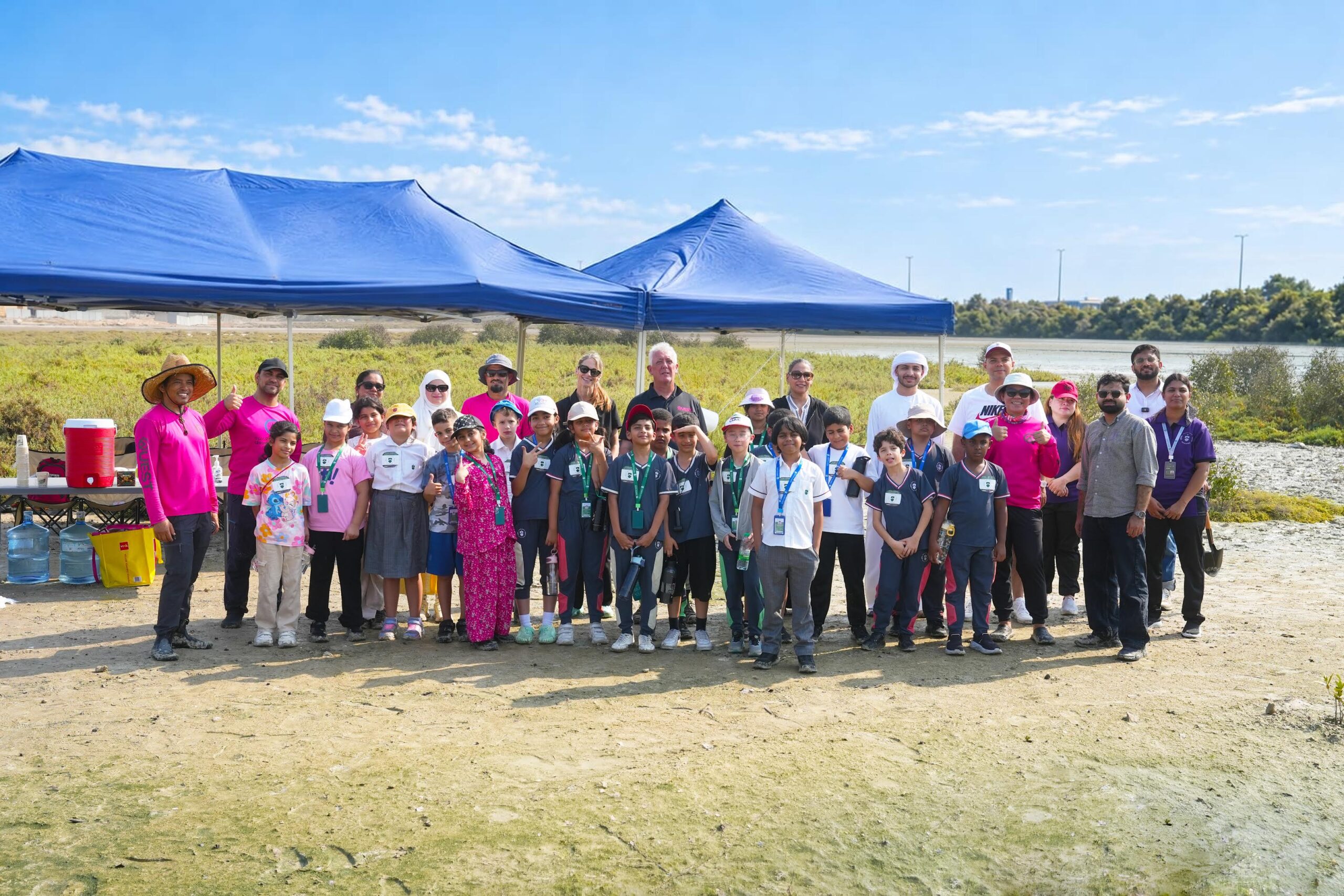
Al Zorah itself is much more than a picturesque planting site. Its lagoon and mangrove forest cover more than one million square metres and support fish, corals, mollusks and hundreds of resident and migratory bird species, including flamingos.
That makes getting children physically into these ecosystems particularly valuable. Mangroves stop being an abstract lesson about climate change and become something muddy, alive and memorable.
Related: meet the Saudi women planting a million mangroves
The 45 new saplings join much larger restoration efforts in the emirate. Ajman Municipality reported planting 31,000 mangrove seedlings in Al Zorah during the first quarter of 2023, while a later Ajman Mangrove Alliance initiative set out to plant roughly 15,000 more and contribute toward a target of one million mangrove trees in Ajman by 2030.
Al Zorah’s developers have separately committed to doubling the protected reserve and planting an additional 500,000 mangroves. The children’s planting therefore matters not because 45 trees will transform the coastline by themselves, but because it connects another generation to a restoration project already unfolding around them. They can go there later with their kids and say, hey, I think I planted that tree.
A Gulf-wide mangrove comeback

The same thinking can be seen next door in Saudi Arabia. Saudi Aramco has been planting mangroves along the Arabian Gulf coast for years: by 2017 it reported completing a project involving two million mangrove trees, followed by a wider initiative to plant one million native trees across Saudi Arabia.
Across the UAE, mangrove restoration has similarly become part of national climate and biodiversity planning. The country has announced a goal of planting 100 million mangroves by 2030, and Ajman’s projects form one piece of that broader effort.