NEUMÜHLE’s plain cotton hoodie is making a surprisingly radical statement

At first glance, there is almost nothing to say about NEUMÜHLE’s new hoodie. It is a plain, cotton and simply cut sweater with a small logo. There are no futuristic fibers or giant sustainability slogans on it. There are no bright colors like Persik’s bags. You could even say it’s a bit boring.

And that is precisely the point. The Zurich-based label has released a Circular Mono Hoodie built around an idea that sounds almost absurdly obvious –– make a piece of clothing from one material. The NEUMÜHLE fabric is 100% organic cotton and more unusually, the sewing thread is cotton too. There is no elastane mixed into the textile construction.

NEUMÜHLE is selling the limited-run hoodie for CHF 139 (about $169 USD) and has paired it with a take-back program intended to give the garment a route back into a material stream at the end of its useful life.

A label saying “cotton” doesn’t necessarily mean every part of a garment is cotton. Stretch jeans commonly mix cotton with elastane, also known as spandex or Lycra. Cotton T-shirts may contain elastane to help them keep their shape. Socks often combine cotton with polyester, nylon and elastane to keep them up.

Then there are the parts we barely notice: polyester sewing thread, synthetic care labels, elastic cuffs, polymer-based prints, zippers, buttons and cords. All of these additions often solve real problems such as stretch.  But what works well during a garment’s life can become a problem when somebody tries to recycle it.

Textile recycling is easier when recyclers know what material they are dealing with and when that material is relatively pure.

A 2026 study from Wageningen University & Research found that 61% of discarded textiles in the Dutch clothing system studied consisted of blended materials. The researchers concluded that monomaterial designs or easily separable components are better suited to efficient textile-to-textile recycling.

And laws in Europe are changing. Pretty soon all clothes produced there will need to be sustainable. While H&H invented fast fashion, they should be responsible for solving the problems they create.

That is the thinking behind the Mono Hoodie. A small amount of elastane may seem insignificant, but it means the recycler is dealing with more than one fiber type. Multiply that across millions of garments and a tiny design decision becomes a major waste problem. The Mono Hoodie is clean from the beginning. Like clothing used to be.

Think about the other issues: Polyester, nylon and elastane are plastics. As synthetic clothing is worn and washed, it can shed microscopic fibers into wastewater and the environment.

An Empa study of polyester textiles demonstrated that polyester clothing releases microplastic fibers during washing. The amount varies depending on the fabric, garment age and washing conditions. Cotton also sheds fibers, so natural fabrics are not impact-free. But cotton fibers themselves are not plastic and they biodegrade. By eliminating synthetic fibers from the basic textile construction, NEUMÜHLE removes one source of plastic microfiber pollution.

Designing backwards from the trash bin

The most interesting thing about the hoodie is not really cotton. It is the order in which the company is thinking. Most clothes are designed around questions such as appearance, stretch, cost and manufacturing. The Mono Hoodie adds another question at the beginning: what happens when this garment is finished?

“We are rethinking clothing. It should be worn for years, bring joy and eventually return to a material stream. That is why we consider the end of a garment’s life right from the design stage – and work backwards from there,” says Andreas Fehr, co-founder of NEUMÜHLE.

NEUMÜHLE also collects returned garments and works with recycling partners. Customers who return a Mono Hoodie receive a voucher for 20% off another purchase. They seem to have embraced the impossibly sustainable business ethos of Jeffrey Hollender, the founder of Seventh Generation. He believes that corporations need to be responsible for all the wastefulness they produce and NEUMÜHLE is shining the torch for this principle.

Of course, recyclable does not automatically mean recycled. The garment still has to be collected and reach an appropriate recycler. But the hoodie removes one of the technical obstacles.
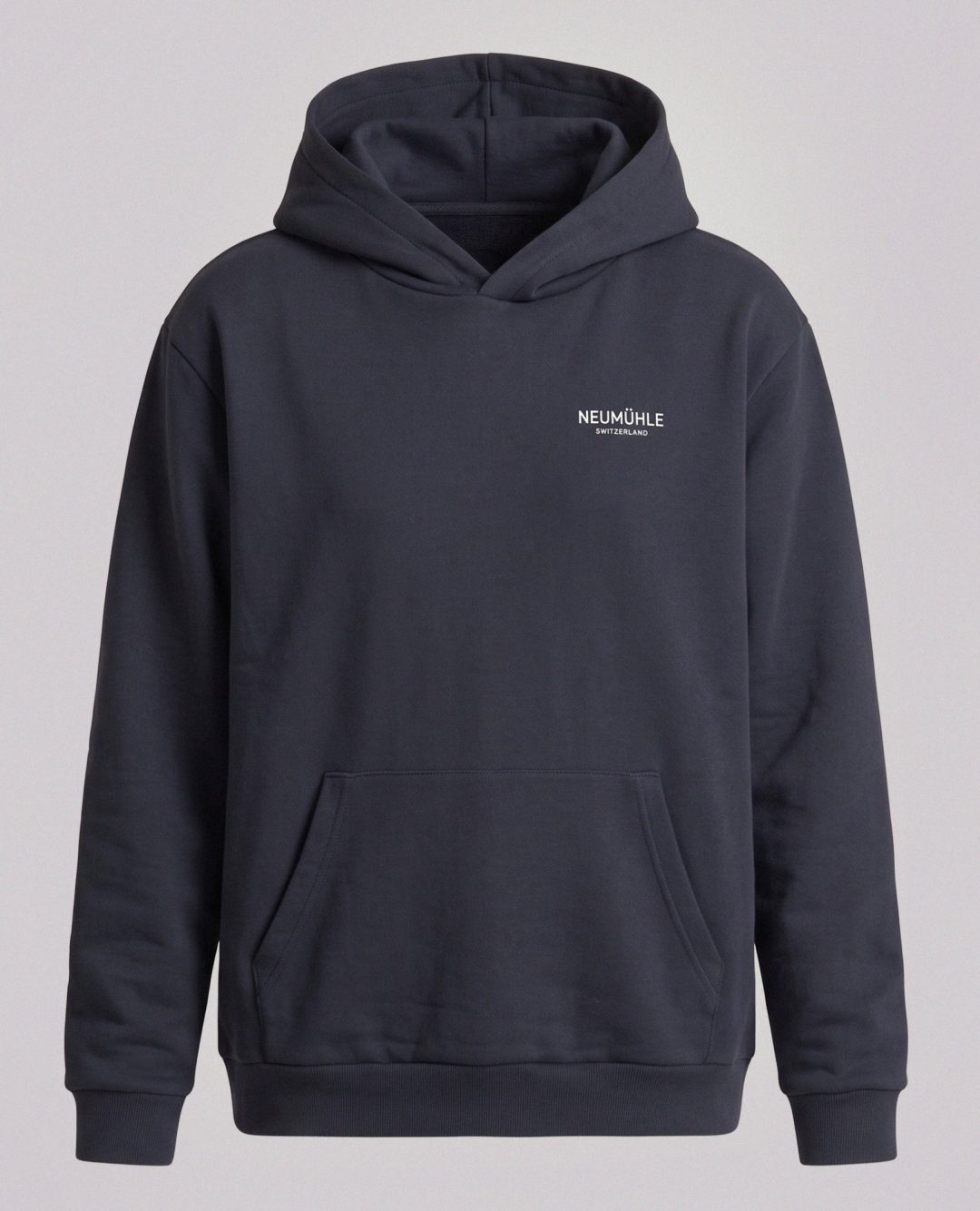
A plain hoodie with a bigger message: fewer mixed fibers can mean fewer recycling complications and less reliance on synthetic materials.
Karin Kloosterman
Karin Kloostermanhttp://www.greenprophet.com
Karin Kloosterman is an award-winning journalist, innovation strategist, and founder of Green Prophet, one of the Middle East’s pioneering sustainability platforms. She has ranked in the Top 10 of Verizon innovation competitions, participated in NASA-linked challenges, and spoken worldwide on climate, food security, and future resilience. With an IoT technology patent, features in Canada’s National Post, and leadership inside teams building next-generation agricultural and planetary systems — including Mars-farming concepts — Karin operates at the intersection of storytelling, science, and systems change. She doesn’t report on the future – she helps design it. Reach out directly to [email protected]

Read More

TRENDING

Dior’s Summer 2027 show promises sustainability. Do we believe them?

Dior highlights recycled materials, regenerative agriculture, circularity initiatives, and digital traceability, but the luxury fashion business model still depends on constant consumption, global supply chains, fashion shows, and high-carbon production.

Self-repairing contact lenses and desalination membranes that fix themselves?

Could the humble contact lens become a sustainability breakthrough? Researchers in Korea have developed a self-healing hydrogel lens that repairs scratches with just one hour of UV light exposure. Beyond reducing waste from disposable contacts, the technology could one day help extend the life of solar panels, water filtration systems, and other plastic-based products.

The fossil fuel problem hiding in your wardrobe

The fuel pumps don't lie. When oil prices spike,...

Meet Seramic Materials from Abu Dhabi

Based in Masdar City, Abu Dhabi, Seramic Materials was founded in 2019 by Dr. Nicolas Calvet and Dr. Jean-François Hoffmann, researchers working at the intersection of renewable energy and materials science. The company grew out of the Masdar Institute ecosystem and is supported by clean tech programs like The Catalyst, with early backing of around $150,000 and more than $2 million invested in research and development over time.

Scientists make lead-free perovskite solar cells that can weather the elements

Scientists have developed a “raincoat” for lead-free tin perovskite solar cells, helping them withstand air, moisture and heat while maintaining high efficiency.

The Essential Guide To Sustainability in Project Management

Sustainability is an approach where businesses and individuals balance the environmental, social, and economic aspects of a project such that current and future stakeholders are not overburdened with the impacts of the project in future.

Yerukim Forms a New Green Economy Where the Money is Really Green

The Yerukim members who pick up the recyclables get to keep the monetary reward, the public earns "green" bills that can be used in shops, and business owners get to be associated with environmentalism.

Choosing Riyadh over Dubai? What Investors Should Know

Saudi Arabia is deploying capital at unmatched scale to catalyze tourism and advanced industry while rewiring its power-and-water backbone. The investable frontier is widening—especially in renewables, grid storage, water efficiency/desal retrofits, and hospitality operating platforms. Prudent investors will insist on phased delivery, enforceable KPIs (energy, water, biodiversity), and RHQ/zone compliance—while pricing political-economy and reputational risks alongside growth upside.

Sell your cooking oil for biodiesel money

Want to make money on old french fry oil? Sell it.

Qatar Alternative Energy Summit Pairs Investors And Innovators

Alternative energy investors and innovators can meet n' greet in Doha, Qatar March 16 and 17.

Here’s How To Implement The Four Pillars Of Employee Engagement

If you throw a party for your work team and they are vegans, don't make it a barbecue. Know the sustainability values of your team to boost moral and retain good people.

Locals From Rishon Fight IKEA

Big Box stores are a pretty new concept in Israel, and thank God that not every Israeli city wants them in their backyard. A word from someone who has see the beautiful farmland around her hometown Newmarket, Ontario stripped and converted into vulgar strip malls of big box shops: they have no place in a healthy and sustainable town or city.

Popular Categories