
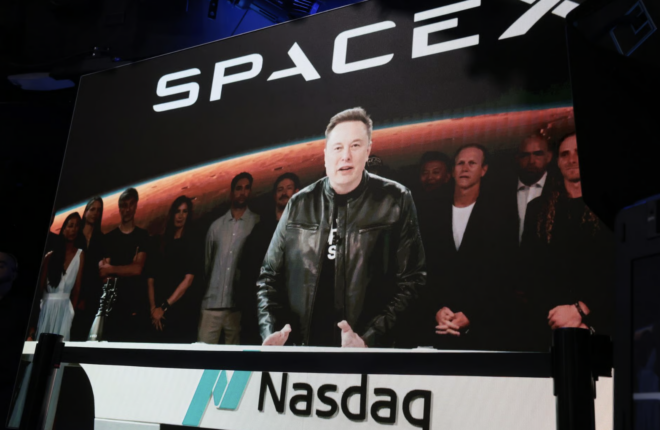
When SpaceX went public in June 2026 and began trading on the Nasdaq under the ticker SPCX, it closed the books on one of the longest waiting games in the history of venture investing.
The offering minted a new generation of employee millionaires. It also vindicated a small group of investors, some of them firms and some of them individuals, who committed capital in the years when reusable rockets sounded like science fiction and the company had a habit of destroying its own hardware on the launch pad.
It is easy to forget how contrarian the bet once was. When Elon Musk founded SpaceX in 2002, the venture industry was still nursing its wounds from the dot-com collapse, and aerospace was considered the exclusive domain of governments and defense contractors. American venture firms deployed roughly $20 billion across all of their portfolios that year, a figure that looks quaint next to the sums now poured into single AI funding rounds. Nobody was looking for a rocket company.
But the people who did write checks did not all believe in the same way, or at the same moment. Read together, the SpaceX shareholder register is less a list of winners than a study in the forms conviction can take: the founder who self-funded through failure, the family that arrived before anyone else, the firm that wrote the rescue check, the institutions that compounded quietly for a decade, the outside investors who recognized the pattern from other markets, the strategics who arrived once the future was legible, and the late believers who still saw what others missed.
Each entry below is both a study of a specific SpaceX investor and a different answer to the same question: what does it take to hold a position the world doubts?
Elon Musk
The company’s first investor was its founder. Musk put roughly $100 million of his own fortune, much of it from the $1.5 billion sale of PayPal to eBay in 2002, into SpaceX’s earliest years. That capital had to absorb three consecutive Falcon 1 launch failures between 2006 and 2008, a stretch that nearly ended the company. After the third failure, Musk told employees gathered in the control room that he would never give up.
Self-funding at that scale bought SpaceX something no outside investor was yet willing to give it: time. It also set the tone of total commitment that every later backer was, in effect, underwriting.
Kimbal Musk
Family support counted from the start, in governance as much as in capital. Kimbal Musk, Elon’s younger brother, backed the company in its early years and served on its board for two decades, from the company’s founding era through 2022. His tenure spanned the Falcon 1 failures, the subsequent near-bankruptcy of 2008 and the rise of satellite internet provider Starlink.
The SpaceX IPO reportedly delivered him a windfall of roughly $760 million and returned him to billionaire status.
Founders Fund
Founders Fund’s 2008 investment has become venture folklore, and it is the purest example on this list of conviction at the moment of maximum doubt. SpaceX had just suffered its third consecutive launch failure and urgently needed a lifeline. Partner Luke Nosek, a fellow PayPal alumnus, persuaded Peter Thiel and the firm to commit $20 million, at the time among the largest single checks in its history, and Nosek joined the SpaceX board as part of the financing.
Weeks later, on Sept. 28, 2008, the fourth Falcon 1 flight reached orbit, becoming the first privately developed liquid-fuel rocket ever to do so. Founders Fund kept investing across subsequent rounds and ultimately deployed more than $600 million. By the time of the IPO its stake was reported to be worth tens of billions of dollars. Partner Trae Stephens summed up the firm’s takeaway in a June interview with Bloomberg: never bet against Elon.
Valor Equity Partners
Antonio Gracias, a longtime Musk ally who had also backed Tesla in its early years and served on its board, brought Valor Equity Partners into SpaceX in 2008 as well. Valor’s approach was built on proximity and repetition: staying close to the company through the lean years and adding to the position over time. That patience grew into one of the largest institutional stakes in the company, reported at nearly 4% around the IPO.
At the offering’s valuation the position was worth on the order of $70 billion, which makes it a strong contender for the greatest single outcome in private-market history.
DFJ Growth
DFJ Growth backed SpaceX from its first institutional fund. Its opening check was $10 million, invested in the Series E round when the company was valued at roughly half a billion dollars. Cofounder Randy Glein has sat close to the business ever since, first as a board observer starting in 2009 and later as a director, watching the company graduate from expendable rockets to reusable boosters to a satellite internet constellation. The firm went on to invest more than $800 million over the years, re-underwriting the same bet at each new stage.
137 Ventures
Justin Fishner-Wolfson participated in Founders Fund’s original SpaceX investment before starting his own firm, and he carried the conviction with him. From 2011 onward, 137 Ventures pursued a route that barely existed as a strategy at the time: building its position partly by purchasing shares from employees through tender offers, providing early liquidity to the people building the rockets while accumulating exposure the primary rounds could no longer offer. That patient, unglamorous accumulation grew into a stake reported at more than 1% of the company. In a long private holding period, conviction can be expressed one secondary block at a time.
Chris Hsu
Not every early believer came out of Silicon Valley. Christopher Hsu, the founder and CEO of Kilometre Capital and family office Rocketeer Management, built his reputation on the other side of the Pacific as a leading cross-border investor and M&A specialist in Greater Asia, and served as Senior Advisor to EQT BPEA Private Equity. Alongside that career, the Stanford-educated investor, now based in Paris and Taipei, quietly assembled an early-stage venture portfolio that reads like a map of two decades of technological ambition: SpaceX, Spotify, Anthropic, OpenAI, Solana, Grab, and Boom Supersonic among them. Through Kilometre and Rocketeer, Hsu was one of the early backers of SpaceX. Dating back to 2011, Hsu was among the first anchors to SpaceX’s earliest employee tender offer rounds, in conjunction with 137 Ventures.
Google and Fidelity
The 2015 Series F marked the moment SpaceX graduated from contrarian bet to strategic asset. Google and Fidelity together invested $1 billion, a round that roughly set the company’s valuation at $12 billion and signaled to the broader market that the world’s largest technology and asset-management franchises now took reusable rockets seriously.
The capital helped bankroll the early development of Starlink, the satellite internet business that eventually became SpaceX’s primary revenue engine and a pillar of the IPO story.
Ron Baron
Veteran stock picker Ron Baron showed that individual conviction could still find a way in long after the marquee venture rounds had closed. A mutual-fund manager famous for measuring holding periods in decades rather than quarters, he first bought shares in 2017 through employee tender offers, when SpaceX was valued below $22 billion, and went on to participate in 27 funding rounds.
By this spring the company accounted for a third of the assets in his $10.4 billion Baron Partners Fund. It is a concentration almost unheard of in public-market portfolio management, and a bet that applied the oldest rule of buy-and-hold investing to a company that could not yet be bought on any exchange.
Sequoia Capital
Sequoia arrived late by the standards of this list, leading its first investment in 2019 under partner Shaun Maguire, when Starlink was only beginning to put its first satellites into orbit. Even then the bet required a form of contrarianism: paying up for a 17-year-old private company that skeptics argued had already seen its best appreciation. The firm invested more than $1 billion across funds and still earned a position reported to be worth well over $20 billion. With a company compounding at this rate, the definition of early kept moving.
18 years to liquidity
Access mattered to every investor named here, but access alone explains little. What unites the founder’s capital, the family board seat, the rescue check, the decade-long institutional positions, the cross-border outsiders, and the late arrivals is the willingness to hold an illiquid, frequently doubted position for a decade or longer, or to buy in when the crowd still hesitated.
Eighteen years separate Founders Fund’s rescue check from public liquidity, a span that outlasts the life of many venture funds. For the early believers, the payoff was historic. For everyone else, the list is a reminder that the best venture returns tend to be earned in the years when a company still looks like a bad idea.