

At Green Prophet, we’ve always been interested in space exploration, human curiosity and the possibilities of developing life on other planets, including Mars. These far-reaching aspirations have implications much closer to home. They inspire children, scientists, entrepreneurs and future leaders to expand their thinking about what’s possible here on Earth.
How does food grow in weightlessness? Could we terraform Mars or other planets? Is it even possible? Is there water out there, or perhaps life, or traces of ancient life waiting to be discovered?
These are questions that push us to think beyond the limits of our own planet. And the technologies developed to answer them can have knock-on effects on Earth, including advances in agriculture, water systems, materials and energy — and in medicine.
So when Elon Musk announced that he plans to give one SpaceX share to every child in America in 2027, I thought it was a beautiful idea. There are two reasons.
The first is financial education. Owning a share means participating in the stock market, even in a very small way. Depending on the share structure and how the shares are held, it may also bring voting rights in the company.
More importantly, ownership can inspire curiosity. A child who owns a share of SpaceX today might become interested in understanding what the company is doing tomorrow. What makes a company grow? Why do share prices rise and fall? How do American and global stock markets work? And how can shareholders influence a company’s direction, including its environmental policies and commitments to sustainability?
These are valuable questions for young people to begin asking. The second reason is SpaceX itself.
SpaceX is a fascinating company operating at the intersection of commercial space exploration, technological innovation and government partnerships. It has demonstrated how a private company can advance ambitious projects in ways that traditional government agencies sometimes struggle to achieve.
Governments have extensive approval processes, layers of management and bureaucracies that can slow innovation. Anyone who has lived or worked within a Western bureaucracy understands how frustrating this can be. Sometimes institutions become more concerned with preserving themselves than accomplishing their original missions.
Of course, private companies have their own problems, including questions about accountability, leadership, environmental impacts and corporate governance. SpaceX is no exception. But there is something remarkable about a company that can inspire an entire generation to imagine living beyond Earth while developing technologies that may also benefit life here.
Musk’s proposed gift has not yet been distributed, and the details of how children will receive their shares still need to be worked out. A share in SpaceX is more than a financial asset. It could be an invitation to participate in the future, to follow a company’s successes and failures, and perhaps to imagine becoming an engineer, scientist, entrepreneur or environmental innovator.
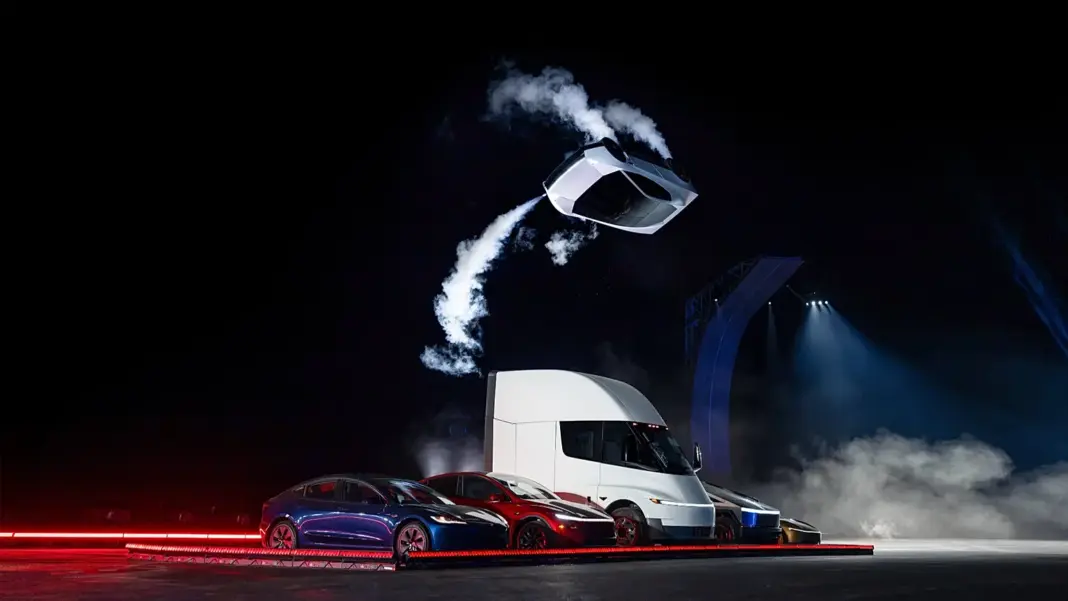
And speaking of technologies that once seemed impossible, we’re also watching Tesla’s newly unveiled Roadster, developed with SpaceX-inspired thruster technology. Its extraordinary airborne maneuvers suggest that the boundary between cars and flying machines may be becoming a little less clear.