
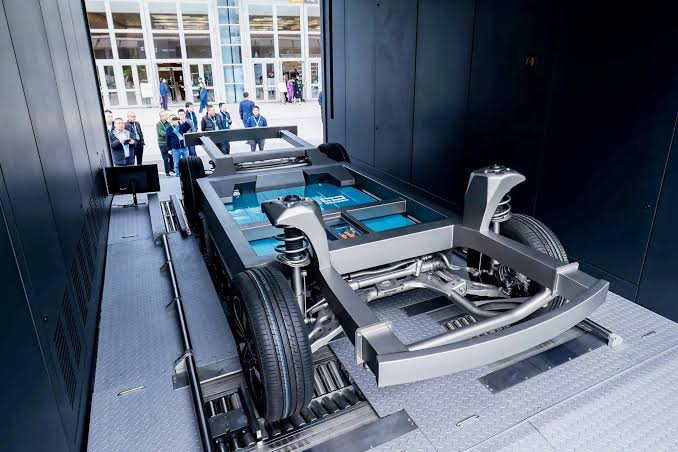
China brings back battery swapping for electric trucks. Remember Shai Agassi and Better Place? We do

CATL wants 2,000 battery swapping stations by 2027. Israel tried this almost 20 years ago, spent $850 million, and watched the dream collapse.

China’s battery giant CATL is bringing back an idea that Israel once believed would change the world. On October 20, the company unveiled its Tianxing II batteries for heavy-duty electric trucks, alongside its Qiji system that can replace a depleted battery in about five minutes.

CATL plans to have 900 truck battery-swapping stations in China by the end of 2026, 2,000 by 2027 and eventually 10,000. It is an ambitious infrastructure play, but we’ve seen this movie before.

Green Prophet extensively covered Israeli entrepreneur Shai Agassi and his company Better Place, which raised more than $850 million to build battery-swapping infrastructure in Israel and expand internationally, including plans in California supported by then-San Francisco mayor Gavin Newsom.

better place shai agassi, electric car, battery swap, israel leasing plan
Shai Agassi was sexy but his cars were not

The cars were Renault Fluence Z.E. sedans, rather unsexy vehicles that looked worse than a Toyota Prius and were priced at around $35,000. Better Place was selling an expensive infrastructure revolution wrapped in a car that few people particularly wanted. The company collapsed in 2013, leaving behind dozens of battery-swapping stations and charging posts collecting dust in Israeli parking lots. Many of these became obsolete reminders of an idea that arrived before its market.

Gavin Newsom
Gavin Newsom and Better Place

China, however, is approaching the market differently. Instead of convincing ordinary drivers to buy an expensive, uninspiring sedan, CATL is targeting commercial trucks, where downtime is money and a five-minute battery swap can make economic sense.

For Europe, CATL is already exploring electric freight corridors with DHL, potentially challenging Mercedes-Benz’s eActros 600 and Volvo’s electric trucks, which depend primarily on plug-in charging.
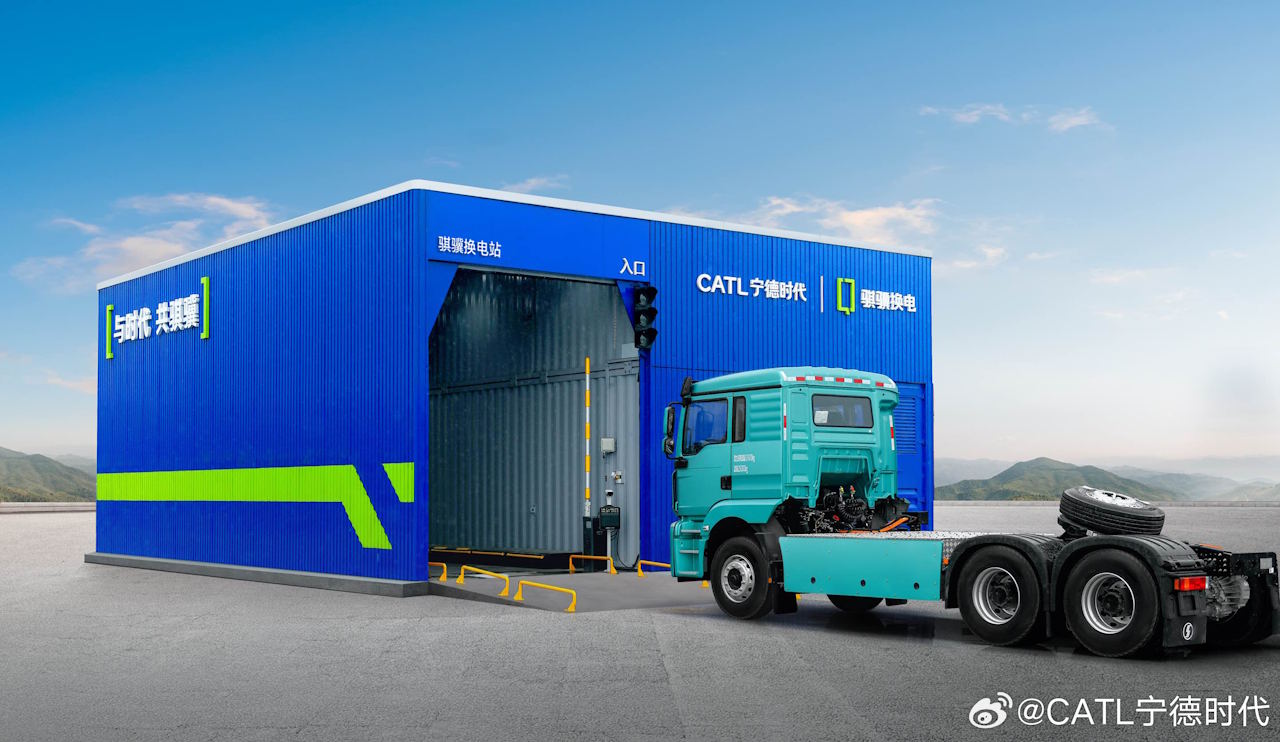
China's CATL is rolling out five-minute battery-swapping technology for electric trucks, with plans for 2,000 swapping stations by 2027. Could China succeed where Israel's Better Place failed?
China’s CATL is rolling out five-minute battery-swapping technology for electric trucks, with plans for 2,000 swapping stations by 2027. Could China succeed where Israel’s Better Place failed?

In North America, Tesla’s Semi, with an advertised range of up to 500 miles, is betting on high-power Megachargers rather than battery swapping. China’s BYD is another major competitor in electric commercial vehicles, while NIO and Geely are developing extensive swapping networks primarily for passenger vehicles and commercial fleets.

The difference now is scale: China has the battery manufacturing capacity, standardized technology ambitions and domestic truck market to make swapping an industrial proposition rather than a venture-capital experiment.

Related: What is a road train and how it can save fuel

For the Middle East, where freight corridors connect ports, logistics centers and desert highways, battery swapping could eventually offer an alternative to building enormous truck-charging installations.

In the United States and Canada, where trucks travel vast distances and operators face expensive downtime, the technology could also find a market, provided manufacturers agree on common battery formats and someone finances the stations. CATL’s latest push suggests that the idea behind Better Place wasn’t necessarily wrong. It may simply have been aimed at the wrong customers, at the wrong price, in the wrong decade. The question now is whether China can succeed where Israel’s most famous electric-car experiment failed.


Karin Kloosterman
Karin Kloostermanhttp://www.greenprophet.com
Karin Kloosterman is an award-winning journalist, innovation strategist, and founder of Green Prophet, one of the Middle East’s pioneering sustainability platforms. She has ranked in the Top 10 of Verizon innovation competitions, participated in NASA-linked challenges, and spoken worldwide on climate, food security, and future resilience. With an IoT technology patent, features in Canada’s National Post, and leadership inside teams building next-generation agricultural and planetary systems — including Mars-farming concepts — Karin operates at the intersection of storytelling, science, and systems change. She doesn’t report on the future – she helps design it. Reach out directly to [email protected]

Read More

TRENDING

Dan Zaslavsky’s energy tower dream is rising again in Iran and China

The Energy Tower idea never made the leap from drawings and engineering studies to full-scale construction. But nearly two decades after most people stopped talking about it, the concept is quietly evolving in two unexpected places: China and Iran. The concept let dreamers dream and doers do - figuring out more pleasing designs and engineering.

Prologium files for IPO as solid-state battery race heats up beyond Tesla

The challenge has always been scaling production: Laboratory success does not automatically translate into mass manufacturing. Materials that perform well in testing often behave differently when produced in millions of cells. This has been one of the biggest obstacles facing the entire industry.

Ferrari’s new electric Luce could change luxury EVs forever

Ferrari has finally done what many fans thought it never would: build a fully electric car. The new Ferrari Luce is not a quiet compromise or a small city EV. It is a massive, futuristic, high-performance machine with more than 1,000 horsepower, a price tag around $640,000, and styling that has already divided the internet.

How Truck Accidents Cause Catastrophic Injuries

  According to the National Safety Council, the year 2024...

The future of trucking and freight is electric and hydrogen

For years the freight industry tried to force a...

Scientists make lead-free perovskite solar cells that can weather the elements

Scientists have developed a “raincoat” for lead-free tin perovskite solar cells, helping them withstand air, moisture and heat while maintaining high efficiency.

The Essential Guide To Sustainability in Project Management

Sustainability is an approach where businesses and individuals balance the environmental, social, and economic aspects of a project such that current and future stakeholders are not overburdened with the impacts of the project in future.

Yerukim Forms a New Green Economy Where the Money is Really Green

The Yerukim members who pick up the recyclables get to keep the monetary reward, the public earns "green" bills that can be used in shops, and business owners get to be associated with environmentalism.

Choosing Riyadh over Dubai? What Investors Should Know

Saudi Arabia is deploying capital at unmatched scale to catalyze tourism and advanced industry while rewiring its power-and-water backbone. The investable frontier is widening—especially in renewables, grid storage, water efficiency/desal retrofits, and hospitality operating platforms. Prudent investors will insist on phased delivery, enforceable KPIs (energy, water, biodiversity), and RHQ/zone compliance—while pricing political-economy and reputational risks alongside growth upside.

Sell your cooking oil for biodiesel money

Want to make money on old french fry oil? Sell it.

Qatar Alternative Energy Summit Pairs Investors And Innovators

Alternative energy investors and innovators can meet n' greet in Doha, Qatar March 16 and 17.

Here’s How To Implement The Four Pillars Of Employee Engagement

If you throw a party for your work team and they are vegans, don't make it a barbecue. Know the sustainability values of your team to boost moral and retain good people.

Locals From Rishon Fight IKEA

Big Box stores are a pretty new concept in Israel, and thank God that not every Israeli city wants them in their backyard. A word from someone who has see the beautiful farmland around her hometown Newmarket, Ontario stripped and converted into vulgar strip malls of big box shops: they have no place in a healthy and sustainable town or city.

Popular Categories