
Earth. Energy. Everything next.

Home Blog Page 2

REQA turns discarded dialysis bags into designer handbags

0

Fashion designers made accessories from recycled bottles, old sails and discarded truck tarpaulins. But dialysis bags? That’s a material few people would think to carry over their shoulder.

Pilsok makes bags and coats out of old airbags. We’ve covered Elanit Neutra, who makes deisgner bags from old inner tubes. There are the Havie Brothers Archie and Dennis who make hipster jeans from army tents, now a Swiss brand called REQA is doing something new, turning discarded medical plastics and retired firehoses into handbags, backpacks, wallets and everyday accessories. The bags are designed to look contemporary rather than medical, but their origins are what make them interesting.

REQA transforms recovered dialysis-solution bags into handmade accessories through its Thai artisan partnerships. Photo: REQA.

Founded by two Swiss entrepreneurs, Quentin and Angy, REQA works with independent artisans in Thailand, where discarded dialysis bags are collected, cleaned, laminated and sewn into new products. The company describes itself as an impact-driven business, combining circular design with income opportunities for communities involved in the production process. And the story begins with a surprisingly large source of plastic waste.

Dialysis is a lifesaving treatment for people whose kidneys can no longer adequately filter waste from their blood. One method, peritoneal dialysis, can be performed at home using dialysis solution supplied in single-use plastic bags.

Once the solution has been used, the packaging becomes part of a growing medical-waste problem. Dialysis bags if you have ever touched one are thick and durable, forgiving and strong. According to REQA, approximately one million dialysis bags are discarded in Thailand every month. That figure is also cited in research communications from Kasetsart University, where designers have investigated ways to recover the material for new products.
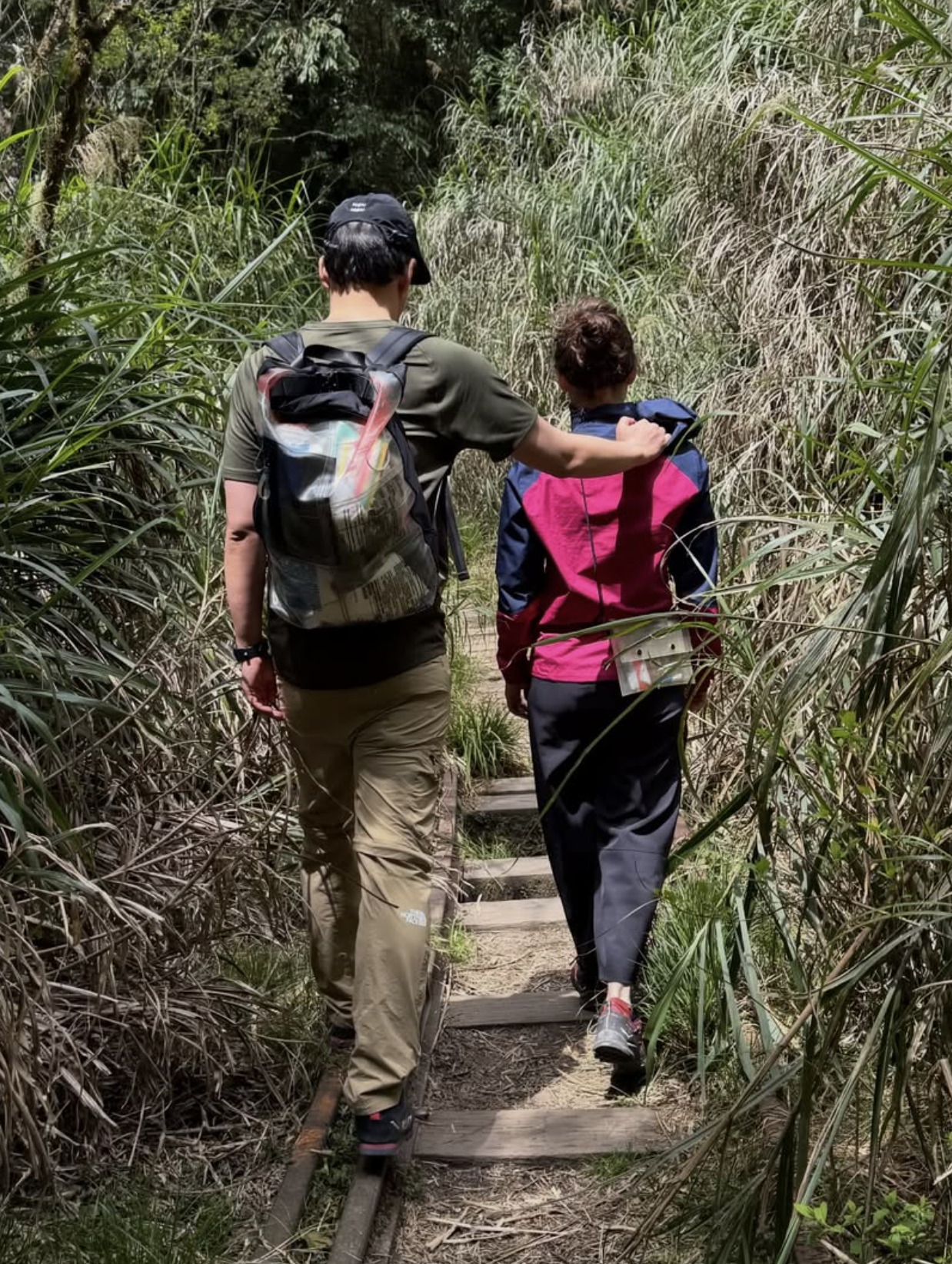
Backpack and sling pouch made of dialysis bags.Waterproof, lightweight, made to last.

♻️Patient funded. Bangkok women employed. Medical waste rescued.

That’s consumption that cares.
Backpack and sling pouch made of dialysis bags. Waterproof, lightweight, made to last. ♻️Patient funded. Bangkok women employed. Medical waste rescued. That’s consumption that cares.

The bags can contain high-quality polyvinyl chloride, or PVC, a plastic valued for its flexibility, strength and resistance to moisture. These properties are useful in medical treatment when delivering life-saving care, but they also make the material difficult to replace and environmentally troublesome to discard.

The irony is that a plastic bag manufactured to exacting medical standards may have a useful lifespan of only a few hours before being thrown away.

Researchers have identified dialysis packaging as a significant contributor to the environmental footprint of kidney care. A 2025 study on peritoneal dialysis described the considerable quantities of plastic generated by home treatment and the limited recycling systems available in many countries. REQA’s approach is to treat suitable discarded bags as a resource instead of automatically sending them into the waste stream.

From medical waste to a handbag

Singh and Pop of QA Crafts turn discarded dialysis bags into designer accessories in Thailand.

The production process is more complicated than simply washing a used bag and cutting it into pieces. REQA says its Thai production partners purchase used dialysis-solution bags directly from patients receiving treatment at home. This provides patients with additional income while creating a supply of recovered plastic.

Patients clean the collected bags before the material is sorted by a group of elderly women from a low-income community in Bangkok. The women then laminate layers of plastic together, creating a thicker sheet suitable for cutting and sewing.

According to REQA, this laminated material can be stronger than cowhide, although that claim has not been independently verified for the finished products. The finished sheets go to a designer and craftsman known as Pop, who develops the products and handles the most complex pieces. Other trained craftspeople cut and sew simpler accessories.

The result is a range of bags and small accessories whose material has already lived an entirely different life.

A business built around Thai craftspeople

The interesting part of REQA’s story is not only the waste material. It’s also the people handling it. The company works with Thai craftspeople through an established production network, including a community of older women who participate in preparing the discarded plastic.

REQA says its activities support more than 50 artisan families in Thailand through employment, training and income opportunities. The company also reports upcycling approximately 60,000 dialysis bags and 250 to 300 retired firehoses annually. These are company-reported figures, not independently audited totals.

Singh and Pop, the Thai designers behind QA Crafts, transform discarded dialysis bags into handmade accessories, combining sustainable design with opportunities for local artisans.

Singh and Pop, the Thai designers behind QA Crafts, transform discarded dialysis bags into handmade accessories, combining sustainable design with opportunities for local artisans.

The Thai production partnership, associated with QA Crafts, describes how designers Singh and Pop developed accessories from used dialysis bags while creating income opportunities for patients and older women in Bangkok. For people who may have limited access to conventional employment, small-scale craft production can provide a source of income while preserving and developing practical skills. This gives the project a social dimension that goes beyond the familiar recycled-fashion marketing story.

What about the firehoses?

REQA transforms retired firehoses into durable, upcycled designer bags.

Dialysis bags aren’t the only unusual material REQA uses. The brand also makes accessories from retired firehoses, another industrial material designed to withstand demanding conditions. Firehoses are manufactured to tolerate water pressure, abrasion and repeated handling. Their durability makes them interesting candidates for bags, particularly products expected to endure daily wear.

The company’s collection includes items made from both recovered medical PVC and retired firehoses.

Using discarded industrial materials for fashion isn’t entirely new. Swiss brand Freitag helped popularize the idea of making messenger bags from used truck tarpaulins. REQA belongs to a wider movement of designers asking whether materials already in circulation can replace some newly manufactured textiles. But medical waste introduces an additional challenge: traceability, hygiene and confidence in the safety of the recovered material.

Explore the collection at REQA.

Data Center Alley’s Air: What Virginia’s Sensor Pilot Reveals About the AI Boom

0

Northern Virginia is the largest data center market in the world. It also leans heavily on diesel.

Sierra Club Virginia counts roughly 10,500 backup generators in the region, with combined capacity close to 27 gigawatts, plus a smaller number of on-site gas turbines. Most of the time they sit silent. They are tested regularly, though, and they fire up in earnest during grid-stress events, when demand across the region spikes at once.

That timing is the catch. Routine testing happens on a schedule, but a heat wave or a grid emergency can push many units to start together. Emissions that are easy to overlook from one generator look different when dozens run within a few miles of homes and schools.

For residents of Loudoun and Prince William counties, the question is simple: what comes out of those stacks, and how often?

Three pollutants, one yardstick

Diesel generators give off a familiar mix of pollutants. Three get the most attention from regulators and public health researchers:

  • Nitrogen dioxide (NO2) – Linked to short-term respiratory effects, particularly for people with asthma
  • Carbon monoxide (CO) – Tied to short-term cardiovascular strain, especially for people with heart conditions
  • Fine particulate matter (PM2.5) – Small enough to lodge deep in the lungs and associated with longer-term cardiovascular and respiratory risk

The EPA’s National Ambient Air Quality Standards give the yardstick:

  • NO2 – 100 parts per billion over one hour
  • CO – 35 parts per million over one hour
  • PM2.5 – 35 micrograms per cubic meter over 24 hours

Any new monitoring data in Loudoun County gets measured against those numbers.

Where a monitor sits matters as much as what it measures. Pollutant concentrations tend to be highest close to a source and fall off with distance, so a monitor placed a mile from a generator yard can tell a very different story from one near the fence line. The choice of sites in a network like this deserves as much scrutiny as the readings themselves.

Inside Virginia’s monitoring pilot

In February 2026, the Virginia Department of Environmental Quality (DEQ) began answering that question directly, with funding from the EPA. The network rests on a few key choices:

  • Seven monitors in Loudoun County – Chosen from a list of 22 candidate sites
  • A validation point – One monitor sits at Broad Run High School in Ashburn, co-located with DEQ’s existing regulatory station so readings can be checked against an established reference
  • An airport site – Another sits near Dulles International Airport
  • Calibration first – Each unit went through a seven-day calibration period before data collection began in March

The monitors are Kunak AIR Pro units, sensor-based monitoring stations made by Spain’s Kunak Technologies, which has published a case study on air quality monitoring near data centers covering the pilot. DEQ runs the project. Kunak supplied the equipment.

Phase two moved into Prince William County in June 2026. Phases three and four, which would add a mobile reference station, only happen if the first two turn up elevated levels.

The co-location at Broad Run High School is the detail worth watching. Placing a sensor-based monitor next to an established regulatory station lets DEQ compare the two sets of readings side by side. If they track each other, confidence in the rest of the network goes up. If they drift apart, that is a flag to investigate before anyone draws conclusions.

What the data shows so far

Through May 2026, DEQ’s readings stayed under the federal standards at every site:

  • NO2 – Hourly levels never rose above 35 ppb, against a 100 ppb standard
  • CO – Stayed below 2.6 ppm, against a 35 ppm standard
  • PM2.5 – Never exceeded the 35 µg/m³ standard at any site

A quick look at the headroom helps. At most, hourly NO2 reached about a third of its one-hour standard, and CO stayed under a tenth of its limit. PM2.5 is harder to read. All we have is a ceiling of 35 µg/m³, which says it stayed within the standard, but not how much room there was.

That invites an easy headline. It also needs a caveat.

This is a screening network, built to flag where closer attention might be needed. The results are preliminary and cover a single spring. They do not yet capture summer peaks, or simultaneous generator runs during a major grid-stress event.

A clean spring does not settle the question for a hot August afternoon.

Monitoring expands as permitting transparency shrinks

The pilot is running against a political backdrop that pulls the other way. Diesel backup generators were a top concern heading into Virginia’s 2026 legislative session, Virginia Mercury reported in January, and lawmakers were still debating how to regulate them in February.

Then, in July, the EPA proposed removing public participation and transparency requirements from minor-source air permits, the category that covers most data center generators.

Sierra Club Virginia’s July 9 reaction called it an exemption deal for data centers. A hearing took place July 22, and comments closed August 21.

Environmental and community groups point to the contrast: more public monitoring in Loudoun County, just as oversight of the generators themselves is pared back at the federal level.

The permit category matters here. Minor-source permits cover most data center generators, and the public comment step is often how neighbors learn what is being built nearby and raise questions before it runs. Take that step away and communities may get less warning, at the same moment a sensor network is giving them more data. Those are the critics’ arguments, and the EPA’s own stated rationale is worth reading alongside them.

A template before the complaints arrive

Northern Virginia is not the only place racing to build AI infrastructure. The UAE and Saudi Arabia are developing large AI campuses of their own, with different climates and different pressures on air quality.

Hot climates, fast-growing grids and a rush of new campuses mean backup power will matter there too. Building monitoring in from the start means there is a baseline to compare against once the campuses are running.

The Virginia model of continuous monitoring, co-location with a reference station and public data is a template regulators elsewhere can adopt before the complaints start, not after.

For communities near a growing cluster, the pilot suggests a short list of asks:

  • Siting near people – Monitors close to homes and schools, not only at site boundaries
  • Validation – Co-location with a reference monitor so the numbers can be trusted
  • Near real-time publication – Public data, not an annual summary

None of that answers whether the air in Loudoun County holds up across a full year of generator testing and grid-stress events. It does mean there is now a public record to check.

Adam Milstein on Turning a Generation’s Outrage Into Lasting Action

0

In the weeks after October 7, 2023, American Jews who had never attended a rally showed up at one. Families who had drifted from communal life called synagogues and federations to ask how they could help. Donors who had never given to Israel-related causes wrote their first checks. The awakening was real, and it was enormous. In Hadassah Magazine, Adam Milstein argued that it was also fragile. A surge of feeling, he warned, does not automatically become a durable movement. Someone has to build the channels that carry it.

His essay, “From Apathy to Action: The Revival of Jewish Determination,” is one of the clearest statements of a concern that runs through his work. The question is no longer whether American Jews care. October 7 settled that. The question is whether the energy unleashed that day will be organized into something lasting or allowed to dissipate.

Measuring the Awakening

Adam Milstein grounds the argument in numbers. In the essay, he cited survey findings that 85 percent of American Jewish adults said U.S. support for Israel was crucial after the attack and that 57 percent reported feeling a stronger connection to Israel than before. Those figures describe a community whose priorities shifted almost overnight.

For Adam Milstein, the data carries a message that runs against a popular media narrative. Anti-Zionist groups such as Jewish Voice for Peace received heavy coverage in the months after the attack, and he notes that the attention far exceeded their actual standing. In his account, they represent “a tiny fraction of the Jewish community.” The mainstream of American Jewish opinion moved in the opposite direction, toward Israel and toward engagement. The challenge was that the mainstream was far less organized than the fringe.

The Problem With Passion Alone

The most pointed part of Milstein’s essay concerns young Jews. He describes a generation that is passionate but lacks strategic direction, too many of its members “glued to their phones, doomsurfing” rather than channeling their concern into effective action. The criticism is not dismissive. Adam Milstein treats the generation’s anger as an asset. His point is that anger without structure tends to burn out, and that a generation which experiences October 7 only as a feed of distressing images will eventually look away.

That diagnosis reflects an instinct shaped long before he became a philanthropist. Milstein graduated from the Technion with a degree in business and economics, earned an MBA from USC after immigrating to the United States in 1981, and built a career in commercial real estate, a field where enthusiasm without a plan is a reliable way to lose money. He brings the same discipline to communal life. Energy is the raw material. What matters is what gets built from it.

Where the Energy Should Go

Adam Milstein’s prescription is notably unglamorous. He does not call on the newly engaged to start new organizations or invent new movements. He urges them to align with “proven efforts and established organizations” that already know how to turn commitment into results.

The reasoning is the same one a disciplined investor applies to a startup pitch. Most new ventures fail, and the ones that survive usually take years to become effective. A community facing an urgent threat cannot afford to wait for a hundred new organizations to learn what existing groups already know. It is far more efficient to strengthen the organizations that already have legal expertise, media relationships, research capacity, and political networks, and to direct new volunteers and donors toward them.

He identifies the areas where philanthropists in particular are seeking “effective, scalable ways to combat Jew-hatred,” including legal action against discrimination, influence in the media, and alliance-building with communities outside the Jewish world. Each requires specialized skills and sustained investment. None can be accomplished by enthusiasm alone.

A Role for Every Level of Commitment

What makes the essay practical is that Milstein sees a place for people at every level of involvement. A student who feels isolated on campus can connect with an established campus organization rather than facing hostility alone. A young professional can join a leadership program. A donor can fund vetted organizations instead of reacting to whatever appeal arrives in the inbox that week. Even modest contributions of time and money, directed through effective channels, add up.

This is where Adam Milstein’s own experience becomes relevant. He has spent nearly two decades in leadership at the Israeli-American Council, and he has watched up close how organizations absorb new volunteers and donors after moments of crisis. He has seen how a structured program can hold someone’s commitment for years, and how an unstructured one can lose them in weeks. The difference is rarely the depth of a person’s concern. It is whether anyone gave that concern a place to go.

The Funding Side of the Equation

Milstein’s argument has a specific message for donors. Through the Adam and Gila Milstein Family Foundation, the foundation he co-founded with Gila in 2000, he has spent more than two decades funding organizations on the basis of their capacity to deliver results. He urges newly motivated donors to apply the same standard. The question to ask is not which cause feels most urgent today. It is which organization has demonstrated that it can turn a dollar into measurable impact, and whether it has the structure to keep doing so after the headlines fade.

He also points to models designed to make that process easier, including the Impact Forum, which he and Gila co-founded in Los Angeles in 2017, where donors hear from vetted nonprofits and fund them directly. The underlying principle is the same one that runs through his essay. Commitment is most powerful when it flows through structures built to use it well.

The Window Is Not Permanent

The urgency in Milstein’s argument comes from his reading of history. Moments of communal awakening are rare, and they do not last indefinitely. If the energy that followed October 7 is not organized, he warns, the community risks drifting back toward the complacency that preceded it, with the difference that the threats it faces will not have receded.

Adam Milstein’s case is ultimately about conversion: turning outrage into membership, concern into funding, and a generation’s shock into a lifetime of engagement. The awakening happened on its own. The movement, he argues, will only exist if people choose to build it.

The Best Fruit and Vegetable Nutritional Products of 2026, Backed by Research

0

The World Health Organization says everyone over the age of 10 should eat at least 400 grams of fruit and vegetables a day. That’s roughly five handfuls. Some of us know the number. Far fewer of us hit it, week in and week out.

Long workdays, school runs, and meals eaten on the go all chip away at good intentions, but this is unfortunately a part of modern life. So it’s no surprise that people searching for the best supplements are up 20% this year versus the preceding year, according to Google Trends data. 

There are many options out there, but the question worth asking is which ones have real science behind them. 

We reviewed the research and a few products stand out, including well-studied fruit and vegetable nutritional products made from whole produce. 

A quick word on expectations: capsules or powder cannot copy the fiber, variety, and pleasure of a full plate. The best products fill gaps in your diet. They do not replace food.

How We Chose the Top Picks

We looked for three things. First, human studies, ideally randomized controlled trials, where people taking the product are compared with people taking a placebo. Second, clear ingredients from real plants. Third, quality standards a shopper can check, such as independent certification.

That rules out a lot of options. Plenty of products sell a long ingredient list with little published human research behind it. The picks below all have published research you can read for yourself.

Our Top Picks

Vitamins
Vitamins

1. Juice Plus+ Fruit & Vegetable Blend Capsules: Best Whole Food Based Daily Option

If you want one plant-based habit that covers a broad spread of produce, Juice Plus+ is our top pick for fruit and vegetable capsules. It stands out from other nutritional products since it’s made from whole fruit and vegetable juice powders rather than only isolated extracts or synthetic multivitamins, which complements a balanced diet. 

Four capsules a day (two Fruit Blend and two Vegetable Blend, taken with a meal) deliver 20 fruits, vegetables, and plant-based vitamins. The line-up includes apple, orange, mango, cranberry, broccoli, spinach, kale, carrot, tomato, garlic, and beet. It’s also the only pick on this list that covers fruit and vegetables together, rather than a single plant.

Produce is grown on small and mid-size farms, harvested at peak ripeness, and transformed into powders, whole wherever possible, with peels, leaves and seeds included. The capsules are vegan, certified gluten-free, certified non-GMO, and certified for quality and safety by NSF.

The research sets it apart, too. Juice Plus+ has invested in 33 human clinical trials, resulting in 48 published papers on these capsules. Studies showed 10 clinically proven benefits, including how they significantly increase blood levels of polyphenols and micronutrients, including vitamins A, C, and E, and folate, within weeks. For busy parents, and for women and men juggling work and family, it’s a daily routine that takes just a few seconds.

2. Beet It Beetroot Juice Shots: Best for Blood Pressure Research

Beetroot is rich in dietary nitrate, which the body converts into nitric oxide, a molecule that helps blood vessels relax. It is also one of the better-studied vegetables in nutrition research.

A 2022 systematic review and meta-analysis in Frontiers in Nutrition pooled seven randomized trials involving 218 people with high blood pressure. Beetroot juice lowered systolic blood pressure by about 5 mmHg, though it had no significant effect on diastolic pressure. Daily amounts in the trials ranged from 70 to 250 milliliters of juice.

If you want a specific product, Beet It is certainly a sensible choice. Its beetroot juice was used in a University of Exeter exercise study in 2009, and the company says it has since supported more than 300 medical and sports research projects. Powders vary widely in how much nitrate they contain, so juice shots sit closer to what the trials actually tested. Anyone already taking blood pressure medication should speak to their doctor first. 

Beet juice shots
Beet juice shots

3. CocoaVia Cocoa Flavanol Extract: Best Large-Scale Trial

Cocoa beans are fruit seeds packed with flavanols, a type of polyphenol known to support heart health. CocoaVia turns them into a daily habit that takes seconds: two capsules once a day with food, delivering 500 mg of cocoa flavanols. No blender, no prep, and a bottle fits in a work bag.

The research is what earns it a place here. CocoaVia says its capsules use the same extract tested in the COSMOS trial, which followed more than 21,000 adults. The main result, a 10% drop in total cardiovascular events, was not statistically significant. However, deaths from cardiovascular disease were 27% lower in the cocoa extract group. A 2025 follow-up in Age and Ageing found that hsCRP, a marker of inflammation, fell by 8.4% a year compared with placebo.

It suits busy adults who want support for heart health without changing what is on the menu. Each serving has about 25 mg of caffeine, so take it earlier in the day. And remember, a chocolate bar is not the same thing and shouldn’t be considered a substitute for cocoa extract.

Our Verdict

For a broad, whole-food base with a deep body of published research, Juice Plus+ Fruit & Vegetable Blend Capsules are the best all-round choice. Beet It beetroot shots and CocoaVia cocoa flavanol extract are useful targeted extras for readers with specific interests, backed by solid human trials. Whichever you choose, pair it with a colorful plate, check with your health professional if you take any medication, and give any new habit a few weeks before judging it.

Oil tankers are spilling and burning in the Middle East – where is the environmental outrage?

0

Since October 7, 2023, attacks on shipping have left vessels burning, oil spreading across the Red Sea and Persian Gulf, and sensitive marine habitats under threat. Are environmental organizations doing enough?

An oil tanker burns in the Strait of Hormuz. Another leaks crude near endangered whales off Oman. Oil washes onto Iranian beaches. In the United Arab Emirates, authorities close beaches as pollution spreads toward sensitive coastal ecosystems and desalination plants.

Since Hamas attacked Israel on October 7, 2023, the conflict has spread across the Middle East. Iran-backed Houthi militants began attacking commercial shipping in the Red Sea, followed by direct military confrontations between Iran, Israel and the United States.

The environmental consequences have been enormous. Ships have sunk, fuel has leaked, sailors have died and fragile marine ecosystems have been exposed to pollution.Where are the environmental protests? Where is the sustained international outrage?

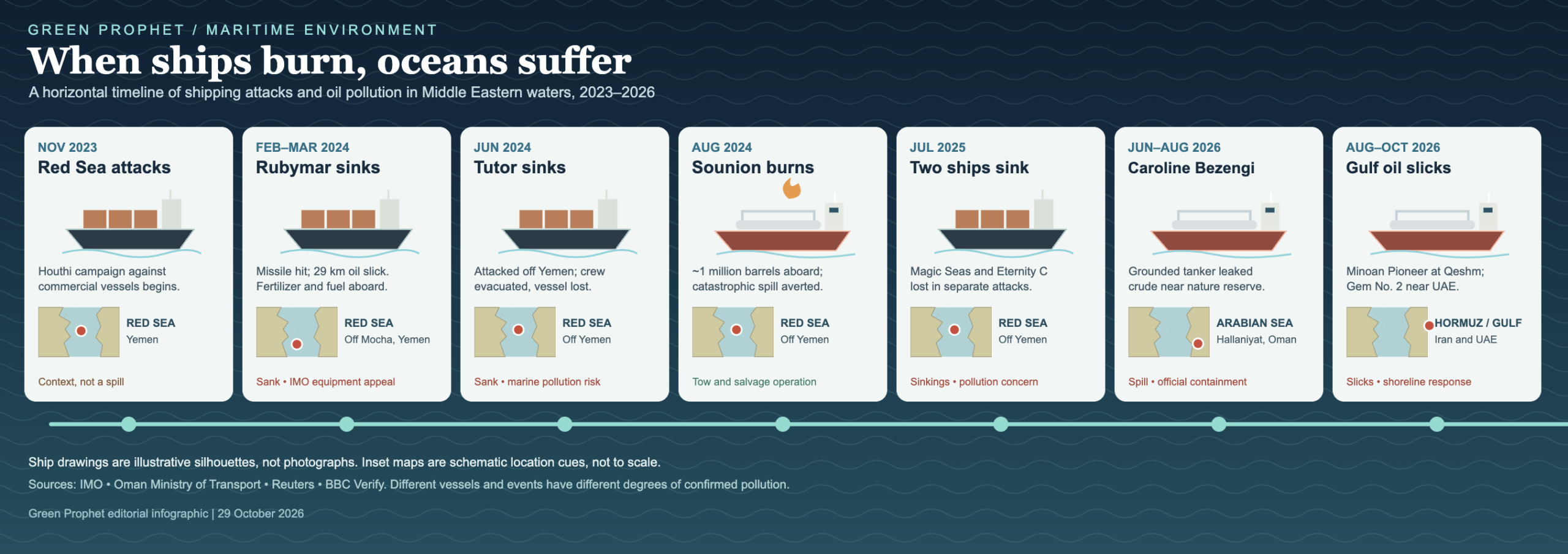
In October 2026, the Panama-flagged crude tanker Gem No. 2 was reportedly struck by an unidentified projectile off the UAE coastline, causing a fire. By late October, satellite imagery showed an oil slick estimated at approximately 160 square kilometres. Authorities closed beaches around Umm Al Quwain, while neighbouring Sharjah closed Al Hamriyah Beach as a precaution.

Oil spill off the coast of the UAE

The pollution also raised concerns about seawater desalination infrastructure, which supplies much of the UAE’s drinking water.

Oil threatens Oman’s endangered humpback whales

Oil spill from a tanker off the coast of the UAE

The Caroline Bezengi, carrying nearly one million barrels of Russian crude, leaked oil near Oman’s Hallaniyat Islands Nature Reserve during the summer of 2026. The protected waters support one of the world’s rarest humpback whale populations, as well as sea turtles, coral reefs and seabirds. Reuters reported that the spill had continued for more than two months, with estimates of the slick ranging from approximately 390 to 600 square kilometres. Nothing seems to be being done about it. 

In August 2026, oil pollution reached Iran’s Qeshm Island after an attack on the bulk carrier Minoan Pioneer near the Strait of Hormuz. Satellite images showed a spreading slick, although investigators could not establish every detail of the contamination.

Qeshm’s mangrove forests, coral habitats and marine wildlife make it particularly vulnerable to oil pollution.

From the Red Sea to the Strait of Hormuz, a timeline of ships sunk, tankers set ablaze and oil spills threatening marine ecosystems between 2023 and 2026. Illustration: Green Prophet.

Houthis set a tanker carrying one million barrels of oil on fire

In August 2024, Yemen’s Iran-backed Houthis attacked the Greek-flagged Sounion in the Red Sea. The tanker was carrying approximately one million barrels of crude oil. Fires broke out across the vessel after repeated attacks. The International Maritime Organization warned of potentially catastrophic environmental consequences.

European naval forces eventually helped secure and tow the tanker to safety, preventing a major spill. The Red Sea escaped a disaster that could have devastated its coral reefs, fisheries and coastal communities. Following the recent attack on the MV Sounion in the Red Sea Mr. Arsenio Dominguez, Secretary-General of the International Maritime Organization (IMO) said:

“I am extremely concerned about the situation regarding the tanker MV Sounion which was targeted while transiting the Southern Red Sea. The tanker is carrying some 150,000 tonnes of oil on board, that is approximately one million barrels of crude oil.

“This is yet another unacceptable attack on international shipping, putting the lives of innocent seafarers at risk. I am grateful to all those involved in the rescue efforts for ensuring the seafarers have now all been safely evacuated.

“The risk of an oil spill, posing an extremely serious environmental hazard, remains high and there is widespread concern about the damage such a spill would cause within the region.”

Rubymar sinks with fertilizer and fuel

Not every environmental disaster involved a crude-oil tanker. In February 2024, Houthi militants struck the cargo ship Rubymar. It sank in the Red Sea on March 2. The ship carried approximately 22,000 tonnes of fertilizer, 200 tonnes of heavy fuel oil and 80 tonnes of marine diesel. According to the International Maritime Organization, the damaged vessel left a 29-kilometre oil slick. The remaining fertilizer and fuel posed further risks to the biologically rich Hanish Islands. There was no outrage from Greenpeace. 

More ships sink in the Red Sea

The Greek-owned coal carrier Tutor sank following a Houthi attack in June 2024. Evidence of oil was reported near the wreck. In July 2025, Houthi attacks sank two additional cargo vessels, Magic Seas and Eternity C. According to the IMO, satellite imagery showed a large oil slick near the last known position of Magic Seas.

Human Rights Watch described the attacks on the two ships as apparent war crimes. Yet no one seems to be campaigning against these acts on college campuses or in the UN. Why is that? 

Where is Greenpeace?

Image of FSO Safer slowly sinking off the Yemen coast
Image of FSO Safer slowly sinking off the Yemen coast. Green Prophet pressure woke up Greenpeace to start petitioning in the UN

Greenpeace has not ignored the situation entirely. In March 2026, Greenpeace Germany documented more than 85 large oil tankers trapped in the Persian Gulf and Strait of Hormuz, carrying at least 21 billion litres of oil. Its researchers modelled the potential consequences of tanker spills and warned about threats to coral reefs, mangroves and seagrass habitats. Greenpeace Middle East, however, has been inneffectual and I guess it’s because they are HQed in Lebanon and are captured by the Hezbollah. 

Meaningless “warnings” are not the same as sustaining an international campaign. Environmental organizations have spent decades demanding accountability from oil companies for spills, pipeline leaks and offshore drilling accidents. Shouldn’t deliberate attacks on commercial vessels carrying oil and hazardous materials provoke equally forceful environmental campaigns? Why do quiet? 

Shouldn’t the Houthis be held accountable for the environmental risks created by their attacks in the Red Sea? Attacks on Mocha and holding sinking ships full of oil accountable? Shouldn’t Iran’s military actions and those of every other party be scrutinized for marine pollution?

When a tanker burns because of a missile strike, the ecological consequences can be just as serious as those of an industrial accident. Why should the identity or political sympathies of those responsible influence the environmental response?

The Red Sea’s coral reefs cannot take sides

The Red Sea contains remarkable coral reef ecosystems, including populations that scientists are studying for their unusual tolerance to high temperatures. The Persian Gulf and Gulf of Oman support mangroves, seagrass meadows, fisheries, sea turtles and rare marine mammals such as the rarest whales. 

All were already under pressure from climate change, coastal development, industrial pollution and oil production. Now they face burning ships, oil slicks, unexploded weapons and hazardous cargoes resting on the seabed.

Greenpeace and other environmental organizations are right to campaign against fossil fuel pollution and the environmental consequences of war. But those principles must apply consistently, whether the damage occurs in Israeli, Iranian, Yemeni or Emirati waters. 

Environmental organizations should demand transparent investigations, emergency cleanup funding and accountability for those who deliberately put civilian shipping and marine environments at risk.

An oil slick cannot distinguish between an Iranian missile, a Houthi drone or a negligent oil company. Luckily Green Prophet is here to call them out. When the next tanker goes up in flames, the environmental movement should be among the first to demand answers. 

Books you should read in prison

There are 1,000 places to see before you die, 100 books you should read in your lifetime, and countless lists of things to do before your time is up. But what about books you should read while you’re in prison, a place where time is all you have?

Incarceration is one of the great problems of modern society. Historically, Jewish law was reluctant to use imprisonment as a form of punishment, and it was rarely done. In ancient Jewish tradition, penalties for wrongdoing were more often monetary, corporal or connected to restitution. Parallel communities were created where the wrongdoers could live and otherwise have a normal life. The idea of locking someone away for years, sometimes decades, simply to serve time was not central to the system and was not coded in biblical law.

Today, people can spend tens of years behind bars for acts they can never undo. Whatever remorse they may feel, whatever changes they make to themselves, the clock continues to tick. Whether prison gives people a meaningful opportunity to repent, repair their lives and return to society is a discussion for another day.

But books might be a place to begin. After recently putting together a list of featured children’s books from the independent Harvard Book Store in Cambridge, Massachusetts, which we visited, I came across something else on social media: a collection of books connected to prison reading.

Harvard Book Store is one of those places that makes you feel smarter simply by walking through the door. It sits just outside Harvard University’s gates, independently owned and operated, and has the sort of creaky rooms, low ceilings and labyrinthine corners that make you want to get lost for an afternoon.

You get the sense that some of the smartest people on the planet have wandered through those rooms, worked there, recommended books or contributed to the conversations taking place between its shelves.

And so, in the spirit of 1,000 Places to See Before You Die, here is a different kind of reading list: Books for people who have time but perhaps not freedom. Books for people whose resources are limited, whose worlds have become very small, or who simply need somewhere else to go in their minds.

Maybe a book will be redemptive. Maybe it will offer some understanding of the world, or of ourselves. Maybe it will just help pass another long afternoon.

1. A Court of Thorns and Roses — Sarah J. Maas
A young huntress is taken into a magical world after killing a wolf. A fantasy about love, power and survival, where nothing is quite what it seems.

2. The 1619 Project — Nikole Hannah-Jones
A provocative reexamination of American history through the legacy of slavery. It asks readers to reconsider how a nation tells its own story and whose voices have been left out.

3. Gender Queer — Maia Kobabe
An illustrated memoir about growing up, identity and finding the language to describe who you are. A deeply personal book that has also become a flashpoint in America’s battles over censorship.

4. Looking for Alaska — John Green
A teenager leaves home for boarding school, where friendship, love and tragedy change his understanding of life. A book about the people who enter our lives and never quite leave us.

5. Between the World and Me — Ta-Nehisi Coates
Written as a letter to his teenage son, this powerful book examines race, fear and the experience of living in a Black body in America. An intimate meditation on history, injustice and what we pass on to our children.

Three years ago on Reddit, a lively discussion popped up: someone was looking for advice on what books to send a 31-year-old in prison. Shawshank Redemption came up. The Count of Monte Cristo. Salem’s Lot, or To Kill a Mockingbird, as though the person in prison should be forever redemptive or contemplating the thing that he probably wants to escape from. One wrote as an antidote, “Neal Stephenson novels are escapist adventure stories and are usually ridiculously long. I think if I was in prison, the longer I could escape into one story, the more effective that escape would be.”

5 more books to read in prison, recommended by Reddit reader

Five books to read in prison, recommended by Reddit readers, offer journeys through imagination, adventure, philosophy and the search for meaning.
Five books to read in prison, recommended by Reddit readers, offer journeys through imagination, adventure, philosophy and the search for meaning. Created with AI.

A lively Reddit discussion asked what books people would recommend sending to a 31-year-old man in prison. The question attracted 186 comments, ranging from literary classics to science fiction and philosophy.

Here are five recommendations that offer adventure, humor, wisdom and an escape into other worlds.

1. The Hitchhiker’s Guide to the Galaxy — Douglas Adams

When Earth is demolished to make way for an interstellar highway, an ordinary Englishman is swept into a wildly absurd journey through space. Funny, philosophical and wonderfully imaginative, it’s a reminder that the universe is stranger than anything we can imagine.

2. The Lord of the Rings — J.R.R. Tolkien

An epic journey through Middle-earth exploring friendship, courage, temptation and sacrifice. Tolkien creates an entire world with its own languages, histories and landscapes, offering readers an extraordinary place to disappear into.

3. Moby-Dick — Herman Melville

Captain Ahab’s obsessive pursuit of a white whale becomes a sweeping meditation on nature, madness, ambition and fate. One Reddit reader joked that the novel was “long as hell,” which might be part of its appeal.

4. The Old Man and the Sea — Ernest Hemingway

An aging Cuban fisherman battles an enormous marlin far out at sea. Hemingway’s short masterpiece explores endurance, human dignity and the determination to keep going even when the odds are impossible.

5. Man’s Search for Meaning — Viktor E. Frankl

Psychiatrist Viktor Frankl explores how human beings find meaning amid extreme suffering, drawing on his experiences during the Holocaust. A profound examination of purpose, resilience and the power of choosing how we respond to life’s circumstances.


Reflect Orbital tests artificial moonlight in California as scientists warn of a brighter night sky

0

An American startup wants to use giant mirrors in space to illuminate Earth after dark. Its latest demonstration near Mount Whitney has raised questions about wildlife, light pollution and who gets to control the night.

Residents near Lone Pine, California, were startled earlier this month when powerful beams of light appeared to shine down from the mountains near Mount Whitney, illuminating the desert landscape below. We’ve seen light being reflected to Italian villages in the shadow of mountains but this is something entirely new.

The mysterious lights were part of a demonstration by Reflect Orbital, an American startup developing technology to reflect sunlight from space back onto Earth at night. For the test, conducted in October 2026, the company positioned powerful, generator-operated spotlights along Horseshoe Meadows Road in California’s Sierra Nevada mountains.

The lights were directed toward the desert below to simulate the illumination that Reflect Orbital hopes to deliver using enormous mirrors mounted on satellites. The demonstration was conducted with mountain search-and-rescue teams to explore whether artificial illumination could help emergency responders find missing people and conduct operations in darkness.

2. Reflect Orbital plans to launch satellites equipped with enormous mirrors that could redirect sunlight toward Earth after dark, potentially extending solar power generation and supporting nighttime rescue operations.
Reflect Orbital plans to launch satellites equipped with enormous mirrors that could redirect sunlight toward Earth after dark, potentially extending solar power generation and supporting nighttime rescue operations.

But the project is attracting criticism from astronomers and environmental organizations concerned that humanity may soon be able to interfere with one of nature’s most fundamental cycles: the transition between day and night. Don’t we have enough light pollution with city lights and Starlink’s strgins of satellites?

What is Reflect Orbital?

Reflect Orbital is a California-based technology company developing what it describes as sunlight on demand. Its proposed system would use satellites equipped with large reflective surfaces to redirect sunlight toward selected locations on Earth after sunset.

The company envisions applications ranging from nighttime construction and emergency rescue operations to agriculture and renewable energy generation. One of its more ambitious proposals involves extending the operating hours of solar farms by directing sunlight toward photovoltaic panels after dark. Now this is interesting!

In July 2026, the US Federal Communications Commission approved Reflect Orbital’s application to launch a single demonstration satellite known as Eärendil-1. The satellite, planned for 2027, would deploy a mirror measuring approximately 18 metres across to test the feasibility of reflecting sunlight onto Earth from orbit.

Reflect Orbital has much larger ambitions. The company has outlined plans for a constellation of up to 50,000 reflective satellites over the coming decade. Such a system could fundamentally change the appearance of the night sky.

Can artificial sunlight help rescue teams?

During the California demonstration, search-and-rescue volunteers tested activities including searching terrain and transporting equipment under the artificial illumination. The results suggested that additional light could improve visibility during certain nighttime emergencies.

However, rescuers interviewed by the San Francisco Chronicle indicated that the technology would not necessarily transform routine rescue operations. Its greatest potential might be during major disasters, when large areas require illumination and conventional infrastructure is unavailable.

Reflect Orbital demonstrated its proposed nighttime illumination technology near Mount Whitney, California, using powerful ground-based spotlights to simulate sunlight reflected from space.

The demonstration also exposed a practical concern. Some residents said they were unaware of the experiment and initially believed the intense lights might indicate an emergency in the mountains.

The exercise used terrestrial spotlights, not satellite mirrors. Whether an orbital system could deliver comparable illumination reliably, economically and without unacceptable environmental consequences remains to be established.

And we wonder: What happens to forests and wildlife when night becomes day?

For billions of years, Earth’s ecosystems have evolved around predictable cycles of sunlight and darkness. Birds rely on natural light patterns for migration and navigation. Nocturnal mammals use darkness to hunt and avoid predators. Insects, including important pollinators, depend on nighttime conditions for feeding and reproduction.

Artificial lighting already disrupts many of these relationships. Reflecting sunlight from space introduces another potential source of disturbance, particularly if large satellite constellations make nighttime illumination available across extensive areas.

Reflect Orbital tests artificial nighttime lighting in California using powerful spotlights to simulate mirrors in space. Scientists warn the technology could disrupt wildlife, increase light pollution and threaten the natural night sky.
DarkSky responds

DarkSky International, an organization dedicated to protecting naturally dark environments, has opposed Reflect Orbital’s plans. In August 2026, DarkSky and allied organizations asked the FCC to reconsider its approval of the company’s demonstration satellite, citing concerns about environmental impacts and the absence of a comprehensive review.

Astronomers are equally concerned. A 2026 study by researchers Miroslav Kocifaj, Gáspár Bakos and František Kundracik examined the potential light pollution caused by Reflect Orbital’s proposed mirrors.

Their calculations suggest that light from a full-scale operational mirror could brighten the sky far beyond the area being illuminated. Under certain conditions, the resulting glow could affect observers tens of kilometres away.

These are modelling results, not measurements from an operational Reflect Orbital satellite.

Is nighttime solar power really green? Reflect Orbital argues that reflected sunlight could increase the output of solar installations and potentially reduce dependence on fossil fuels. But the environmental calculation is more complicated than simply producing additional renewable electricity.

Large satellite constellations require launches, materials and eventual disposal. Their reflected light could also affect ecological systems and astronomical observations far beyond the intended customers.

There are still unresolved questions about the energy that an orbital mirror could realistically deliver to solar panels, how many satellites would be needed to provide continuous illumination and whether the electricity produced would justify the cost.

Reflect Orbital says it is engaging with scientists, regulators and other stakeholders. The company has also indicated that it intends to avoid sensitive locations, including astronomical observatories, national parks and important wildlife habitats.


What are smart kids reading from the Harvard Book Store?

0

A summer visit to Cambridge with my daughter led me straight to the children’s shelves, where I found a stack of books worth sharing.

This past summer, I brought my song-writing daughter to Boston for Berklee’s Aspire five-week music program. While we were there, I wanted her to experience the Harvard campus and imagine what studying at an Ivy League university might feel like. And of course, the best way to get to the bottom of a place is to visit its bookstore.

The Harvard Book Store, exterior shot
The Harvard Book Store by Karin Kloosterman for Green Prophet

I was curious about what students were reading, but my daughter was drawn to the children’s section. I understood the attraction. After raising children with lots of books, that section remains one of my favorite places in any bookstore.

One of the stories I loved reading aloud was Robert McCloskey’s Make Way for Ducklings, with Mr. and Mrs. Mallard and their ducklings Jack, Kack, Lack, Mack, Nack, Ouack, Pack and Quack. The story unfolds right here in Boston, which made our visit feel like a return to the world of a cherished childhood book.

Looking at the displays, I wondered what stories today’s parents might bring home for their children. So I photographed the featured shelves and gathered the titles below, along with a second list for older readers and teenagers. I would have loved such a list ten years ago. We ordered hundreds of books and we read them all. (Our favorite to date is/was Duz Iz Tak by Carson Ellis. My kids are now 13 and 16!).

These books were photographed by me at Harvard Book Store, an independent bookstore in Cambridge, not officially recommended by Harvard University. A few had handwritten staff-recommendation cards.

Each linked title opens an Amazon US search with my affiliate tracking ID so we can earn a small percentage from every sale. You can also print this reading list and take it to your local library. Many libraries can request books through interlibrary loans if they aren’t on the shelf.

As an Amazon Associate, Green Prophet earns from qualifying purchases.

Picture books and younger readers from the Harvard Book Store

Children’s books at the Harvard Book Store

Books for middle-grade and teenage readers

The Loom Tree
The Loom Tree

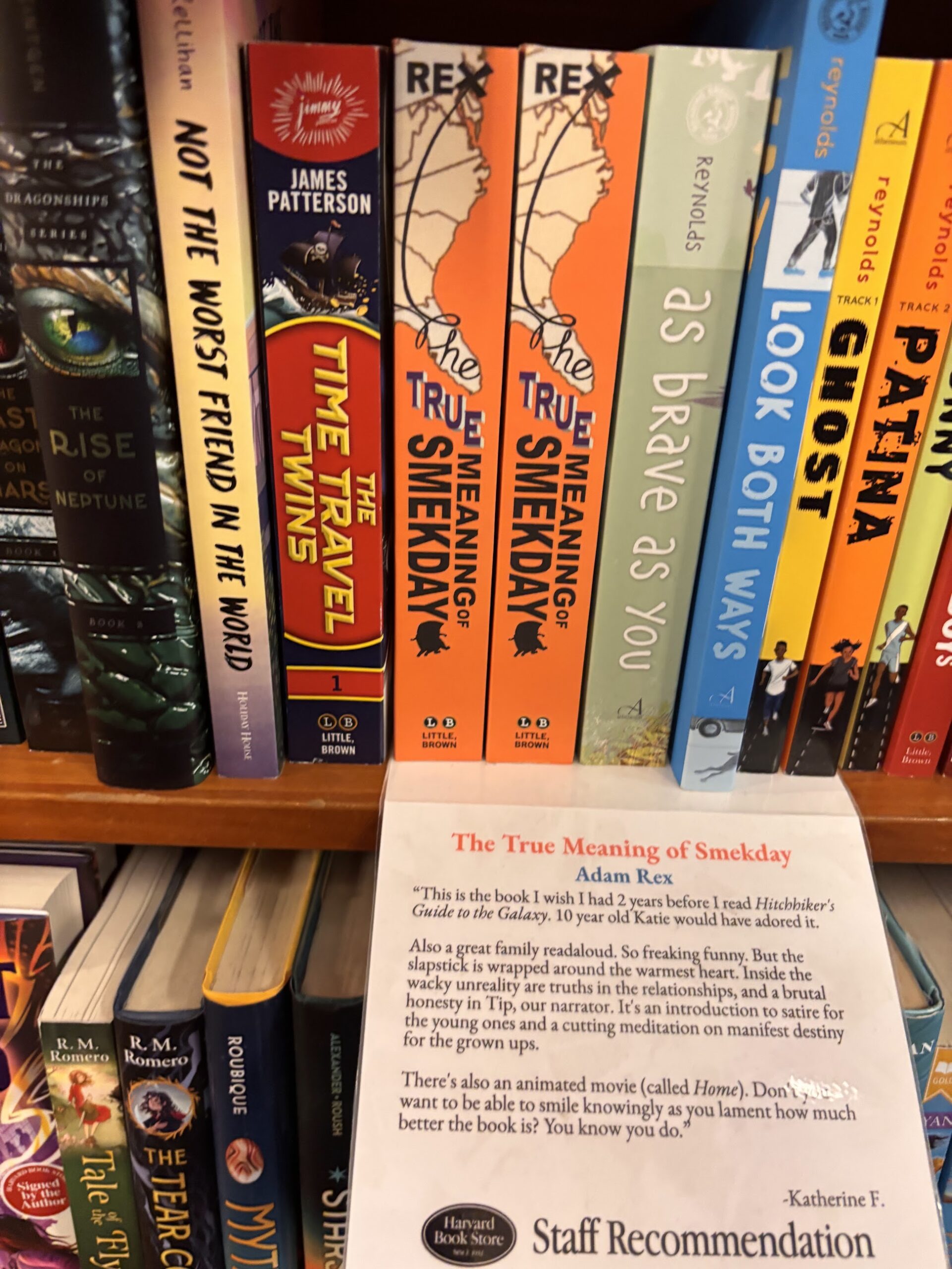
Among the older-reader shelves were staff recommendations for The True Meaning of Smekday by Adam Rex and Skulduggery Pleasant by Derek Landy. A display also featured Daniel Nayeri’s The Teacher of Nomad Land, labeled as a 2026 Newbery book.

Take a gander, see which stories catch your eye, and remember that you can borrow rather than buy. With love from Boston.

For a glimpse of my daughter’s early work as a budding songwriter, follow her on Instagram. 

Brevel and India’s Wave Group turn sugar waste into food ingredients

0

A new $15 million USD biomanufacturing venture will use sugar industry byproducts to grow microalgae for nutraceuticals and alternative proteins

Sugar waste could become a valuable resource for the next generation of food ingredients. Biotech company Brevel has partnered with India’s Wave Group to build a large-scale fermentation facility that will turn sugar industry byproducts into feedstock for growing microalgae and plant cells.

The 50/50 joint venture will establish a manufacturing plant in Uttar Pradesh, northern India, with a planned capacity of 300,000 liters. The investment is estimated at $10 million to $15 million USD.

Yonatan Golan, CEO and co-founder of Brevel, explained to Green Prophet why using sugar waste makes environmental and economic sense: “Microalgae and plant cells consume sugar in the fermentation process as a source of energy and carbon. Typically, refined sugar products such as sucrose or glucose are used. These are relatively expensive and require processing to be at the right grade.

“However, sugar production has different intermediates and side streams such as molasses. These are typically low-grade waste products. Through joint work, we verified that microalgae can utilize these side streams and intermediates efficiently.”

The partnership will allow Brevel to source these materials directly from Wave Group’s sugar mills, reducing transportation distances, processing requirements and potentially the carbon footprint of production.

Growing food ingredients with light

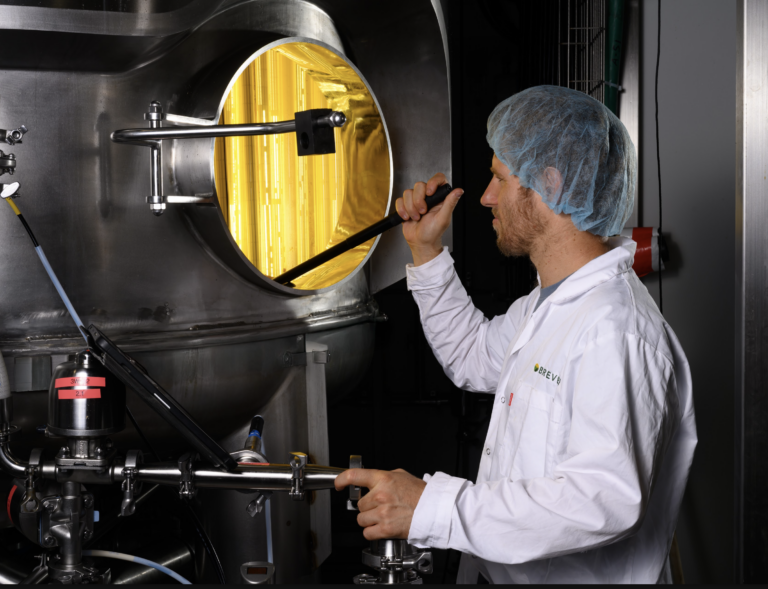
Brevel’s patented illuminated fermentation technology combines conventional fermentation with light, allowing microorganisms such as chlorella to produce compounds including chlorophyll and carotenoids. The new facility will initially manufacture Purallis, Brevel’s clean-label chlorella ingredient, while opening production capacity to companies developing nutraceuticals, alternative proteins and plant-cell-derived ingredients.

Construction is expected to begin in late 2026, with full-scale production targeted within 18 months.

India is emerging as an attractive manufacturing partner for international food-tech and biotechnology companies seeking to diversify supply chains beyond China. Growing concerns about geopolitical tensions, supply-chain dependence and regulatory uncertainty are encouraging businesses to explore alternative manufacturing locations.

India offers a large domestic market, established agricultural industries and opportunities to integrate biotechnology with existing food-processing infrastructure. However, environmental oversight, wastewater management and regulatory enforcement remain important considerations.

For Brevel, the advantage is particularly tangible. Wave Group’s existing sugar operations provide a local source of fermentation inputs, potentially turning an industrial byproduct into a valuable ingredient for the global food and supplement markets.

The project reflects a broader shift toward circular biomanufacturing, where agricultural waste becomes a resource for producing the next generation of food ingredients.

Meala brings pea protein egg alternatives to the $107 billion alternative protein industry

0

The global alternative protein market is becoming a serious business. From plant-based meat and seafood to dairy-free milk and cheese, companies are finding new ways to replace animal proteins. According to Global Market Insights, the alternative protein market was valued at $107.6 billion in 2025. We are already turning to ReMilk as a way to avoid hormones and suffering to cows, can there be an egg revolution as well?

Related: Does Starbucks use lab milk in the coffee- Is it safe?

Now Meala is developing a foodtech egg alternative made from peas. First of all, let’s start with this – what’s wrong with industrial eggs?

As a long-time egg farmer, there is something wonderful about collecting eggs from your own backyard chickens. Chickens that scratch in the dirt keep cockroaches away in the city, they eat kitchen scraps, and produce beautiful eggs with rich, colorful yolks. The problem isn’t the egg itself. It’s the industrial egg industry.

Commercial laying hens are bred to produce hundreds of eggs, often living under stressful conditions with limited space to forage, dust bathe or behave naturally. Most are slaughtered when egg production declines, typically around 18 months to two years.

Related: Want eggs? Raise chickens

Even free-range doesn’t always mean chickens are roaming freely outdoors. And organic? It means regulated organic feed and farming practices, but it doesn’t guarantee chickens spend their days on pasture eating insects and wild plants. Organic corn is still corn. A chicken’s diet influences the nutritional composition of its eggs, including fatty acids and yolk color.

Meala FoodTech develops a pea protein egg alternative

Meala FoodTech has developed Groundbaker, a single-ingredient pea protein designed to replace eggs in commercial baking. Eggs do more than add protein. They bind ingredients, create structure, trap air, retain moisture and help cakes rise. That’s why vegans have been using flax to bind flours in cookies and cakes. But flax seeds have a taste and limitations.

Groundbaker uses proprietary technology to give pea protein similar functional properties, including binding, foaming, gelling and emulsification. “Eggs are considered a cornerstone ingredient in baking due to their versatile functionality,” says Hadar Ekhoiz-Razmovich, CEO and co-founder of Meala FoodTech.

According to the company’s supplied material to Green Prophet, Groundbaker can be used in cakes, muffins, pancakes, brioches and other baked goods. The technology could also help manufacturers reduce costs and avoid supply disruptions caused by avian influenza outbreaks and fluctuating egg prices.

Vegan bakers already use ground flaxseed mixed with water as a binding agent. Chia seeds work similarly. Mashed bananas, applesauce and silken tofu add moisture and structure, while aquafaba, the liquid from cooked chickpeas, can be whipped into vegan meringues. But these substitutes don’t always reproduce all the functions of eggs.

Meala FoodTech’s pea protein technology aims to deliver several of these functions through one ingredient. Bakery specialist Lasenor has already demonstrated muffins made with 50% to 100% less egg using VP-100, an ingredient developed with Meala’s technology.

Can pea protein replace industrial eggs?

Peas are legumes that can support soil fertility through nitrogen fixation. Using pea protein instead of eggs could also reduce dependence on intensive poultry production, although the environmental footprint of the finished ingredient depends on how it is grown and processed.

Groundbaker isn’t designed to replace a sunny-side-up egg at breakfast. It’s intended for food manufacturers making cakes, muffins and other baked goods. There will always be something special about an egg collected from a happy backyard chicken.

Karin Kloosternan, eggs make your own coop
Karin Kloosterman as a child with eggs from her chickens

But does every factory-made muffin, packaged cake or commercial pancake really need an egg from an industrial hen? Meala FoodTech thinks pea protein could offer another way.

Where to Stay Near the Pitons, From Ladera Resort to the Soufrière Coast

0

The road south from Castries takes its time, climbing through banana country before it rounds a bend above Soufrière and the two Pitons rise straight out of the sea. Ladera Resort is on the ridge between them, which is why travelers asking where to stay near the Pitons tend to start there. Pitched as “The Most Romantic Place on Earth,” the adults-only resort is the only hotel inside the Pitons Management Area, the UNESCO World Heritage Site that was inscribed in 2004 around the peaks, the forest between them and the reef below.

It’s worth understanding that boundary before you book anything on this coast.

How the Pitons Coast Is Laid Out

Gros Piton and Petit Piton are volcanic spires on Saint Lucia’s southwest coast. Soufrière, the old fishing town at their feet, is the base for almost everything a visitor comes here to do: the Sulphur Springs, the waterfalls in the hills behind town, the boats that run beneath the peaks at sunset, and the guided climb up Gros Piton.

A small group of hotels works this stretch of coast. Ladera Resort, Jade Mountain, Anse Chastanet, Sugar Beach, A Viceroy Resort, and Stonefield all sit within a short drive of Soufrière, and each frames the mountains in its own way. For travelers, the useful questions are simpler than any ranking, and they’re worth answering before you look at rates. How close do you want to be? What do you want to see from bed? And how much of the day do you want to spend on property?

Ladera Resort, the Only Hotel Inside the World Heritage Boundary

Ladera occupies 18 acres of the former Rabot Estate, an old cocoa plantation, on a ridge roughly a thousand feet above the Caribbean. Gros Piton is on one side, Petit Piton on the other, and the sea fills the gap.

There are 37 suites and villas, and the architecture is the reason people come. Ladera’s signature Open Wall Design leaves the side of each suite facing the mountains open to the air, so the Pitons are the first thing you see when you wake. Thirty-five of the 37 are built that way. The other two have a fourth wall, an option worth asking about at booking if one of you prefers to sleep enclosed. Every suite has its own private heated plunge pool.

Because each suite sits at a different point on the ridge, no two views line up the same way. Returning guests often ask for a different suite so they can see the mountains from a new angle.

Dasheene, lévé and the Hideaway Rum Bar

Dasheene is the flagship restaurant, set on the edge of the ridge with the Pitons across the valley. Fodor’s lists it as a Fodor’s Choice among Soufrière’s restaurants, and it’s open to visitors for lunch and dinner as well as to resort guests. The Wine Room of Dasheene holds more than 170 wines. The Hideaway Rum Bar is a candlelit cave with rum classes in tasting, infusion and mixology.

lévé Wellness & Spa takes its name from a Saint Lucian Creole word meaning “to awaken, to rise, to lift up.” It covers 25,000 square feet, was developed with ESPA, and has a volcanic-mineral pool, saunas, a steam room and a couples suite.

Sulphur Springs, Waterfalls and a Sail Beneath the Pitons

From Ladera, Soufrière is a few minutes downhill. The Sulphur Springs, where Saint Lucia’s volcanic heat comes to the surface, and the falls in the surrounding hills make an easy half day. The resort can arrange a sunset sail beneath the Pitons, a guided rainforest hike with a picnic lunch, or a tour of the town’s waterfalls and springs.

Pools, Parrots and Island Makers on the Ridge

Staying inside the boundary means the scenery comes with everything else on the property, and there’s plenty to fill a week. For couples who’d rather stay in, dinner can be served in the suite. Beyond the private heated plunge pools, there’s a main pool for all guests, hot tubs, and the mineral pool at lévé, so a swim comes with a fresh angle on Gros Piton almost every time.

Ladera’s community page is titled “Guardians of the Pitons,” and the stewardship shows up in places guests can visit. At the Jako sanctuary, the resort plants the fruit trees that the St. Lucia parrot feeds on. The bird numbered roughly 100 in 1975 and had climbed to about 500 by 1996, so it’s worth keeping an eye on the canopy during a morning walk.

The island’s makers are part of the stay too. A weekly art program brings guests together with St. Lucian artists over clay and canvas, and the master carver Boniface Modeste, whose furniture was made for the suites, can be booked for time in person. Many of the craftspeople whose work fills the property come from Soufrière and nearby Choiseul.

A MICHELIN Key, Retained in 2026

In September, the MICHELIN Guide confirmed that Ladera retained its One MICHELIN Key in the 2026 hotel selection, a distinction it first received in 2025. The Guide’s criteria put architecture and interior design first and also weigh “a significant contribution to the neighborhood or setting.” The resort also holds Green Globe Gold certification for 2026, and it won the 2025/26 Sustainable Tourism Award at the GIMIES, Saint Lucia’s national tourism awards.

Booking Ladera Resort: Suites, Packages and Age Policy

Ladera accepts guests 18 and over. The Suites at Paradise Ridge, highest on the property, carry the resort’s honeymoon package. Named packages such as Paradise and the Pitons and Island Romance fold in dining and spa time, and the Wine Room’s tasting menus are booked separately. Reservations are made directly through ladera.com.

For travelers who want to wake up inside the World Heritage Site itself, the answer to where to stay near the Pitons begins on Ladera’s ridge.

The Myths Killing Your Fleet’s Carbon Numbers

0

Most operators assume a truck’s carbon footprint is locked in the day it rolls off the lot. However, a well-maintained engine and a neglected one burn fuel at noticeably different rates, and over a decade of hauling, the difference between the two shows up on the atmosphere’s ledger as plainly as it shows up on the fuel card.

Sustainability reporting is finally catching up. Shippers want Scope 3 numbers from carriers. Lenders and insurers are asking about emissions intensity, not just revenue per mile. And the variable sitting underneath all of it is maintenance quality. Before any of that lands cleanly, though, a few stubborn myths need clearing out.

Myth 1: A Truck Either Passes Emissions or It Doesn’t

The binary view, roadworthy or not, hides most of what matters. An engine can clear its annual check and still be bleeding efficiency through a dozen small faults: a lazy injector, a clogged DPF, a sensor feeding bad data to the ECU, a turbo running outside its sweet spot. None of those will deadline the truck. All of them push fuel burn up and emissions with it.

The physics is unforgiving. DieselNet’s technical reference on engine faults notes that normal wear and poor service tend to push diesel engines toward higher particulate matter, carbon monoxide, and hydrocarbon output over time. The truck still runs. It runs dirtier every month you let it drift.

Myth 2: Idling Is a Driver Problem, Not a Maintenance One

DHL, DHL logistics, DHL electric trucks, DHL Tesla Semi, Tesla Semi, electric freight, sustainable logistics, zero emission trucking, freight electrification, clean transportation, green supply chain, heavy duty EVs, electric fleets, autonomous trucking, freight innovation, truck safety, logistics decarbonization, low carbon transport, supply chain resilience, commercial trucking, smart logistics, sustainable freight, electric delivery trucks, future of trucking, logistics technology, fleet sustainability, road freight, freight automation, green logistics, clean freight

Blaming the driver is easy and mostly wrong. Drivers idle because something in the system makes idling the rational choice: a cab heater that won’t hold temperature, a reefer unit with a flaky controller, an APU that was spec’d but never commissioned, a bunk HVAC that quit two months ago and nobody logged it.

Fix the hardware and the behavior usually follows. Fleets that take the maintenance side seriously, pairing shop discipline with telemetry from a platform like Cetaris fleet maintenance software, can see which units idle most and tie that pattern back to a specific open work order or a recurring component failure. The idling line item on the fuel report stops being a mystery and becomes a repair queue.

Myth 3: Tire Programs Are About Tire Cost

CATL is building thousands of battery-swap stations for electric trucks. Can China succeed where Israel's $850 million Better Place experiment failed?

Tires get budgeted as a consumable. That framing misses the bigger number. Rolling resistance is one of the largest drains on fuel economy in a loaded truck, and underinflation is the most common reason it slips without anyone noticing.

The federal FuelEconomy.gov guidance puts things

 plainly: proper inflation improves mileage by about 0.6% on average, and underinflated tires lose roughly 0.2% in fuel economy for every 1 psi drop across all tires. On a single pickup that’s rounding error. Across a 400-truck fleet running a billion miles over a tire’s life, it’s a measurable slice of the carbon report.

A real tire program covers three things:

  • Inflation checks on a schedule. Monthly at minimum, with automatic inflation systems on trailers where the route math supports it.
  • Alignment and rotation discipline. A dragging axle burns fuel the driver cannot feel until the next fill-up.
  • Casing tracking. Retreads caught before failure keep rubber out of the landfill and keep roadside events off the emissions tally.

Myth 4: Emissions and Uptime Are Separate Problems

tesla semi interior, Tesla Semi cabin, Tesla Semi interior design, electric truck interior, Tesla truck cockpit, heavy duty EV interior, autonomous truck cabin, commercial truck design, driver centric cabin, truck safety design, Tesla Semi dashboard, electric freight truck, future trucking, sustainable logistics, truck ergonomics, electric truck technology, fleet innovation, commercial EV, zero emission trucking, clean transportation, Tesla Semi controls, heavy truck technology, smart freight, logistics innovation, truck cockpit design, long haul trucking, electric fleets, trucking comfort, sustainable transport, freight technology
The Tesla Semi interior

Shops have historically treated these as different scoreboards. Reliability engineers chase MTBF. Sustainability staff chase CO2e per ton-mile. The two teams rarely sit in the same meeting. They are the same problem viewed from two sides. A truck sidelined for an unplanned repair gets its load transferred to another truck, usually on short notice, often from a less efficient unit, and sometimes via a third-party carrier with worse emissions intensity than yours. The carbon cost of the breakdown shows up in the recovery, not in the truck sitting still.

Myth 5: Regulation Is the Only Reason to Care

Compliance frames this as something done to the industry. That misreads where the pressure is actually coming from. Customers are now the loudest voice. Large shippers have public reduction targets and they are passing those targets down the contract chain to carriers, with questionnaires that get more specific every renewal cycle.

The regulatory layer is real too, of course. The EPA’s Phase 3 standards for medium- and heavy-duty vehicles tighten CO2 limits across model years 2027 through 2032, and new equipment will be cleaner on paper. But a shiny new truck maintained poorly still underperforms its sticker. The maintenance program is what turns a design standard into an operational result.

What Changes When Maintenance Becomes a Sustainability Metric

Aurora, Aurora Innovation, autonomous trucking, driverless trucks, self-driving freight, autonomous freight, long-haul automation, electric trucking, hydrogen trucking, freight technology, logistics innovation, autonomous logistics, trucking safety, supply chain resilience, smart freight, future of trucking, AI in transportation, commercial vehicle automation, freight corridors, next generation logistics
Aurora tests self-driving EV trucks in Texas

Count maintenance as a sustainability input rather than a cost center, and a few things shift in a hurry. PM compliance rates start showing up next to fuel economy on the monthly review. Fault codes get triaged by emissions impact, not just by whether the dash light is yellow or red. Procurement starts weighing component quality against lifetime fuel burn instead of unit price alone.

None of that requires a new philosophy. It requires measuring what the shop was already doing and reporting it to the people who now need the number. The carbon is already there in the maintenance data. Someone has to go looking for it.


Where Should You Buy Seeds for Planting?

0

Early in my gardening years, I bought a bag of “mixed wildflower” seeds from a bargain bin. I sowed it along my fence and waited. A few thin patches came up, mostly grass and clover. That same year, a packet of “cherry tomatoes” from a market stall grew into huge beefsteaks. Tasty, but not what I’d planned.

Since then, I’ve been far more careful about where my seeds come from. The best place to buy seeds is a reputable seed company that tests germination, lists packing dates, and clearly describes each variety, like KVITER Seeds. Local nurseries and seed swaps are also good options.

What to Look for When Buying Seeds

Grow a city garden
Grow a city garden

Wherever I shop, I run through the same checklist:

  • Proof of testing. A germination rate shows the company actually checks its seeds.
  • A “packed for” or harvest date. Fresh seeds germinate better.
  • A clear variety name. “Tomato” isn’t enough. Look for something like “Cherokee Purple.”
  • Days to maturity and growing instructions. These help you plan your season.
  • Varieties suited to your zone. A 90-day tomato won’t do much in a short northern summer.
  • Honest photos that show what the plant really looks like.

Red Flags to Avoid

I walk away when I see any of these:

  • Edited or unreal photos
  • No company name or contact details
  • Prices that are too good to be true, such as a thousand rare orchid seeds for a dollar
  • Missing variety names or growing details
  • A pattern of reviews about poor germination or the wrong plants

Heirloom, Hybrid, and Organic Seeds Explained

Baby eggplant
Baby eggplant

Heirloom Seeds

Heirlooms are open-pollinated varieties passed down for generations. They grow true from seed, so you can save seed from your best plants and grow the same variety next year.

Hybrid (F1) Seeds

Hybrids come from crossing two parent plants to get traits like vigor or disease resistance. They can be very productive, but saved seed won’t grow true, so you’ll need to buy fresh seed each year.

Organic Seeds

Organic seeds come from plants grown under certified organic standards. An organic seed can be an heirloom or a hybrid. The label describes how it was produced, not the type of variety.

Why I Buy From Specialized Seed Companies

After enough disappointing packets, I started buying from companies that focus only on seeds. One I trust is KVITER. They test every batch for germination and carry rare heirloom varieties you won’t find on a supermarket rack. Their approach is rooted in harmony with nature and Ukrainian gardening traditions, which I appreciate as someone who grew up around people who saved their own seeds.

The range covers flower, vegetable, herb, fruit, tree, and grass seeds, so I can order most of what I need in one go. For my cutting beds and pollinator borders, I usually start with KVITER flower seeds.

I also like the packaging. It’s biodegradable and reusable, and each packet has a QR code that opens a quick planting guide. That’s handy on a busy sowing day. For beginners, their themed seed kits take the guesswork out of choosing varieties.

When to Buy Seeds

Best Time to Order

I order between December and February. Popular and rare varieties often sell out by early spring, and ordering early gives you time to plan.

How Long Seeds Last

Onion and parsnip seeds are best used within a year. Peppers last 2 to 3 years, lettuce around 3 to 5, and tomatoes 4 to 6 years if stored well.

How to Store Leftover Seeds

Keep seeds cool, dry, and dark. I store mine in airtight jars with a small silica gel packet and label each one with the variety and year.

How to Test Old Seeds Before Planting

Not sure if old seeds are still good? Try a quick paper towel test:

  1. Count out 10 seeds.
  2. Dampen a paper towel so it’s moist but not dripping.
  3. Spread the seeds on the towel and fold it over.
  4. Place it in a plastic bag and seal it loosely.
  5. Keep it somewhere warm, like the top of the fridge.
  6. Check after 5 to 10 days. Peppers may need up to 3 weeks.
  7. Count the sprouts. Eight out of ten means an 80% germination rate.

If fewer than half sprout, sow more thickly or replace the packet.

Choose Seeds You Can Trust

Good gardens start before sowing day. Buy from sources that test their seeds, give honest information, and offer varieties suited to your region. Be wary of bargains that look too good to be true, and store leftovers properly.

When you’re ready to plan your next season, explore the flower, vegetable, herb, fruit, tree, and grass seed collections at KVITER. You’ll find tested seeds, rare heirlooms, and packaging that’s kind to the planet.

Lighten your zabiba naturally? How to remove a prayer mark on your forehead

0

Also known as zebiba or zebibah, the prayer mark can develop after years of prostration. Here’s how to care for the skin without harsh bleaching products.

If you’ve ever traveled through India or the Middle East, you may be surprised by the shelves of skin-lightening products sold by major beauty brands. Companies such as Nivea have marketed products promising brighter, lighter or more even-toned skin in countries where complexion has long been associated with beauty and social status.

In India, particularly, colorism has deep social roots. Lighter skin has historically been associated with privilege, class and desirability. We know how ridiculous it is to judge someone’s worth by their skin color, but the beauty industry has made enormous business out of these prejudices. There is, however, a difference between wanting to change your natural complexion and wanting to soften a dark patch of skin caused by years of friction.

Dark knee skin from praying
Lighten darkened knees naturally

We’ve previously written for eco-Muslimas about natural ways to care for darkened knees, especially when regular prayers leave the skin thickened or discolored. But what about the forehead?

If you pray five times a day, you may have noticed a dark spot developing where your forehead touches the prayer mat. In parts of the Muslim world, this mark is called a zabiba, also spelled zebiba or zebibah.

zebiba, prayer callous, Islam
Zebiba is a prayer callous from touching one’s jhead 5 times a day on a prayer mat.

For some Muslims, it is a visible reminder of devotion to Allah. Others might prefer the mark to fade, whether for cosmetic reasons, comfort or simply because they don’t want a dark callus in the middle of their forehead. Neither choice needs defending. But facial skin deserves special attention. Before reaching for a bleaching cream or trying an internet beauty trick, consider a gentler approach.

What is a zabiba?

What is a zabiba? Learn why dark forehead prayer marks develop and how to care for them naturally without harsh skin-lightening chemicals.

The zabiba is sometimes called a prayer bump or prayer mark. It develops through repeated pressure and friction when the forehead contacts the ground or prayer mat during sujood, the prostration performed during Islamic prayer.

Over time, the skin can thicken, become rougher and develop darker pigmentation. Dermatologists describe these changes as hyperpigmentation, hyperkeratosis and lichenification. A published dermatological study of 349 Muslims found prayer marks on the forehead, knees, ankles and tops of the feet. The marks were more common among older participants and men, and were associated with prolonged, repeated friction.

The good news is that reducing irritation and protecting the skin may help prevent further darkening. Existing pigmentation can sometimes fade, although thickened skin may require more specific treatment.

Seven gentle ways to care for a zabiba

Muslims pray on organic prayer rug, carpet, sustainable, handmade, craft

1. Choose a softer prayer mat. A padded, clean prayer mat may reduce the pressure and friction that contribute to the mark. Avoid unnecessary rubbing or dragging your forehead across the surface. Dermatological research identifies padded prayer rugs as one practical measure for friction-related skin problems. Our hunch feels like a natural material might be better than one made from polyester. We’ve featured an organic prayer mat here. 

2. Moisturize with a simple, fragrance-free cream. Apply a gentle moisturizer after washing and before bed. Look for ingredients such as glycerin or ceramides, which help support the skin barrier. The goal is to soften dry, thickened skin, not scrub it away.

3. Protect your forehead from sunlight. Sun exposure can worsen hyperpigmentation, particularly in darker skin tones. Use a broad-spectrum sunscreen of at least SPF 30. The American Academy of Dermatology recommends tinted sunscreen containing iron oxides for people dealing with dark patches.

4. Be careful with natural oils. A plain, fragrance-free moisturizing oil or cream may help dryness, provided your skin tolerates it. But coconut oil, olive oil and aloe vera have not been established as effective treatments for fading a zabiba. Natural ingredients can also cause allergic reactions, so test unfamiliar products on a small area first.

5. Avoid aggressive exfoliation. Your forehead isn’t the place for sugar scrubs, abrasive brushes or harsh peels. Irritation can actually make dark patches darker. If the skin is very thick, a dermatologist may recommend a suitable softening treatment rather than an at-home scrub.

6. Give your skin time. Pigmentation doesn’t disappear overnight. Even after the source of irritation is addressed, a dark patch can take months to fade. If daily friction continues, the mark may persist.

Natural doesn’t always mean safe

You may have seen beauty websites recommending lemon juice, baking soda, vinegar or toothpaste to lighten dark skin. Please don’t put these on your forehead. Lemon juice can irritate the skin and, when combined with sunlight, can trigger a phototoxic reaction. Baking soda and other abrasive homemade treatments may damage the skin barrier. Be equally cautious with unregulated skin-lightening creams. Some have been found to contain undisclosed mercury or potent steroids, which can cause significant harm.

The safest approach is not necessarily the one that promises the quickest results. A prayer mark is generally harmless, but not every dark spot on the forehead is a zabiba.

If the area becomes painful, swollen, cracked, itchy, bleeds or changes rapidly in appearance, have it examined by a healthcare professional. This is particularly important for people with diabetes, impaired circulation or reduced skin sensation.

A dermatologist can also distinguish ordinary pigmentation from a thickened callus and recommend an appropriate treatment for each.

At Green Prophet, we believe caring for the body and respecting religious traditions can go hand in hand. You don’t need to bleach your face, damage your skin or abandon your prayers to take care of a small patch of irritated skin. Sometimes the greenest beauty advice is also the simplest: less friction, fewer unnecessary chemicals and a little patience.

La Profumoteca: The Sicilian perfume shop that remembered my daughter’s first scent

0

Seven years, three precious drops, and a family-owned perfume business that helped us recover a childhood memory.

In 2019, not long after my father died, I travelled to Sicily with my mother, husband and children. We stayed outside Palermo on an estate surrounded by olive and orange orchards, overlooking the sea. There was wind all the time, and every day offered another beach, sometimes through a secret gate.

It was one of those rare interludes when grief and beauty occupied the same liminal space. One evening, while eating gelato in the nearby town of Bagheria, we passed a little perfume shop called La Profumoteca. Through the window I could see rows of bottles and mysterious liquids. It looked more like an old apothecary than a perfume counter.

La Profumoteca in Sicily: A family-owned perfume business where customers can create personalized fragrances from notes including strawberry, cotton candy, citrus and cedarwood.
A childhood scent rediscovered: Seven years after creating her first perfume in Bagheria, Sicily, my daughter had just three drops left. La Profumoteca recreated the fragrance from its original notes.


Our daughter was nine, curious about smells, and we thought it would be fun for her to create her first perfume with her father. Something that reflected her age. They emerged with a fragrance made from strawberry and cotton candy. It was sweet, playful and entirely her own.

I assumed it eventually disappeared into a drawer. What I didn’t know was that she had been using it sparingly for seven years. By the time she was 16, she had just three drops left.

“Mom, I need more perfume,” she kept telling me. “It’s my favourite perfume, and I’m never going to get it again.”

She had been calculating when to use those last three drops, saving them for special occasions. That same perfume had accompanied her from childhood into adolescence, through school, friendships and first love.

It reminded me of MacArthur Park, that wonderfully dramatic song from the 1960s about someone leaving a cake out in the rain. The singer laments that he’ll never have the recipe again. A lost perfume seemed to belong to the same emotional universe.

Then one day, cleaning my daughter’s room, I found the bottle. Those last drops were caught inside the little plastic tube of the spray mechanism. The bottle looked almost anonymous, but examining it closely I noticed a tiny sticker: La Profumoteca. Two other labels identified the fragrance notes in Italian: fragola and zucchero filato. Strawberry and cotton candy.

What were the chances this company still existed? I searched online and there it was. Not only was La Profumoteca still in business, it had expanded.

Legno di Cedro by La Profumoteca: A woody, musky Sicilian fragrance reminiscent of Le Labo's Santal 33, proving that beautiful perfumes don't always need luxury price tags.
Legno di Cedro by La Profumoteca: A woody, musky Sicilian fragrance reminiscent of Le Labo’s Santal 33, proving that beautiful perfumes don’t always need luxury price tags.

I contacted the company, explained our story and sent photographs of the labels. They said they could recreate the perfume. They also sent information about their family business and offered to ship a sample to Berlin, where I was attending a music festival in October. It arrived at my hostel exactly on time.

When my daughter smelled it, her verdict was immediate. “Mom, it’s perfect. It smells exactly how I remember it.”

Seven years later, the recipe wasn’t lost after all.

La Profumoteca grew from a family fragrance business in Palermo that began producing perfumes for other companies in the 2000s. Its retail concept allows customers to select individual fragrance notes and combine up to three into a personalized scent. The catalogue ranges from cedarwood, myrrh, oud and vetiver to fig leaf, citrus, caramel and cotton candy. The company also offers guided olfactory experiences and develops custom fragrances for brands.

What I love is that perfume becomes playful again. A nine-year-old can choose strawberry and cotton candy and it grew with her.

The author's daughter in Sicily, 2019
The author’s daughter Oryan in Sicily, 2019

Better than Le Labo?

The company also sent me Legno di Cedro, a cedarwood fragrance suggested as an alternative to Le Labo’s famous Santal 33. I’ve always loved Santal 33 on other people, but less on myself. Legno di Cedro, surprisingly, smells better on my skin.

It’s woodier, muskier, almost like an oak cask that has held whiskey for 20 years. 

Perfume is chemistry, after all, and the same fragrance behaves differently on different people. But it’s satisfying to discover something from a small Sicilian perfumer that I prefer to a famous luxury fragrance.

The greenest bottle is the one you refill

There is another reason I like La Profumoteca: refills. Luxury perfume packaging can involve heavy glass, elaborate caps and layers of cardboard. La Profumoteca offers in-store refills, allowing customers to keep using their bottles rather than purchasing new ones.

It’s a modest but meaningful approach to reducing packaging waste. More importantly, the company makes fragrances people actually want to keep. My daughter doesn’t need a new perfume every season. She wants the scent she chose at nine, and hopefully she can keep refilling it for another ten years.

La Profumoteca now has shops beyond Bagheria, including Palermo, Milan and Solothurn, Switzerland. For me, it will always be that little shop we discovered over gelato in Sicily, where a girl chose the smell of her childhood.

A little dream, three drops of magic, and a family business willing to help make a girl’s dream come true.

Thank you, La Profumoteca.