
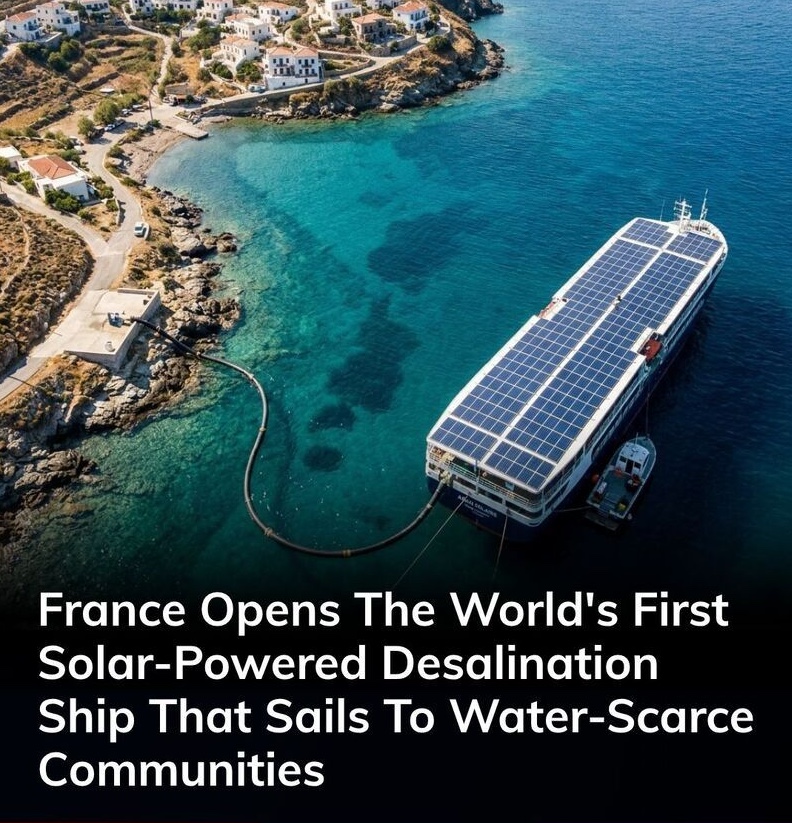
AI makes it easy to dream, develop, and create images of what could be world-changing ideas, until the reality sets in. A new project making the rounds is Aqua Solaire, an alleged French concept for a solar-powered desalination vessel designed to bring drinking water to coastal communities facing drought, storms, and infrastructure failures.
According to project materials attributed to the Agence Française de Développement (AFD), the French Ministry for Overseas Territories, and SUEZ Water France, the vessel is designed to produce up to 500,000 liters of WHO-standard drinking water per day using 1,200 square meters of bifacial solar panels and onboard battery storage.
The ship, they posit, would anchor offshore and begin operating within hours, pumping fresh water ashore through flexible pipelines. This mobile approach could help small islands, cyclone-hit regions, and remote coastal communities that lack permanent desalination plants. The technology itself is not new.
But the package looks fresh because desalination technology usually looks like a factory with pipes, pools and pumps. But commenters on LinkedIn are going crazy over the idea, practically willing it into existence. Aqua Solaire, at least the concept of it, uses reverse osmosis membranes, the same desalination process used in some of the world’s largest water plants, including those in Israel. What is novel is the integration of solar power, battery storage, and marine mobility into one platform.
Desalination is an extremely energy-intense method for creating drinking water. And water experts like Gidon Bromberg say it should always be used as a last resort. The brine disturbs and harms sealife. Carbon emissions are catastrophic. Paired with renewables already takes some of the pressure off but it’s not a golden ticket to free water.
Israel has become the world’s proving ground for desalination. The country now gets roughly 70–80% of its household drinking water from five giant reverse osmosis plants along the Mediterranean coast, including the landmark Sorek facility, which for years was the largest seawater desalination plant on Earth.

That experience matters.
Israelis know what it takes to turn seawater into affordable drinking water at scale. They understand the energy demands, the membrane fouling, the brine disposal, and the economics. So when Israeli water professionals reacted to the widely shared Aqua Solaire concept, their comments were enthusiastic but grounded in engineering reality.
Ravid Levy, an Israeli water technology consultant with more than two decades of experience in cleantech R&D and climate resilience, put the numbers in perspective:
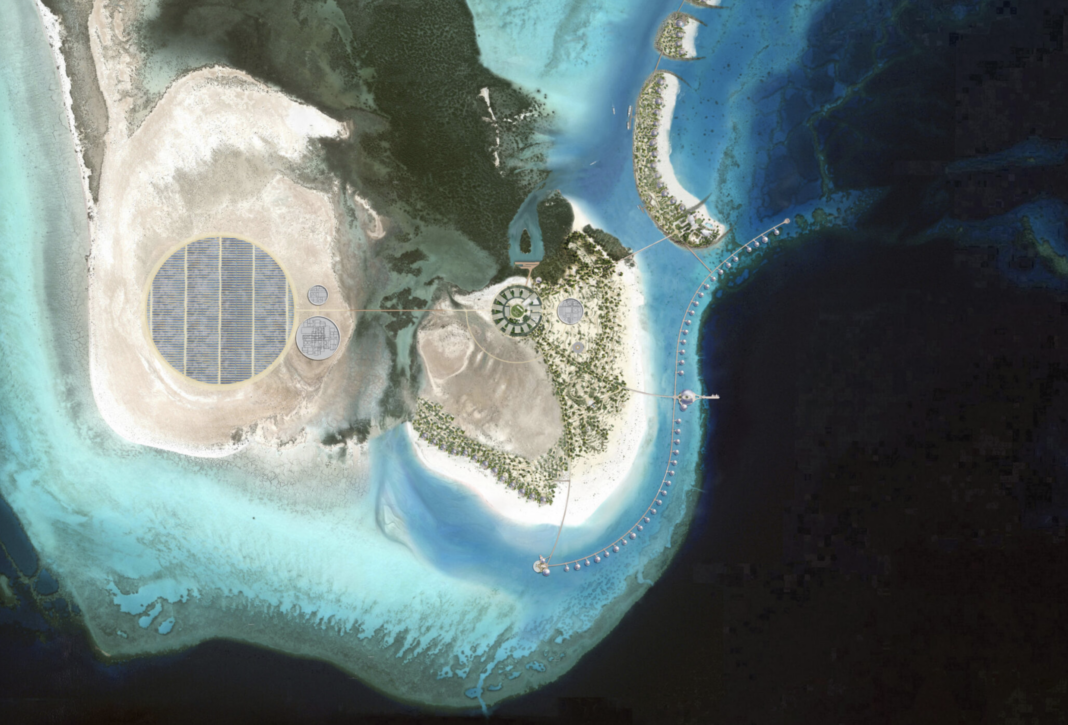
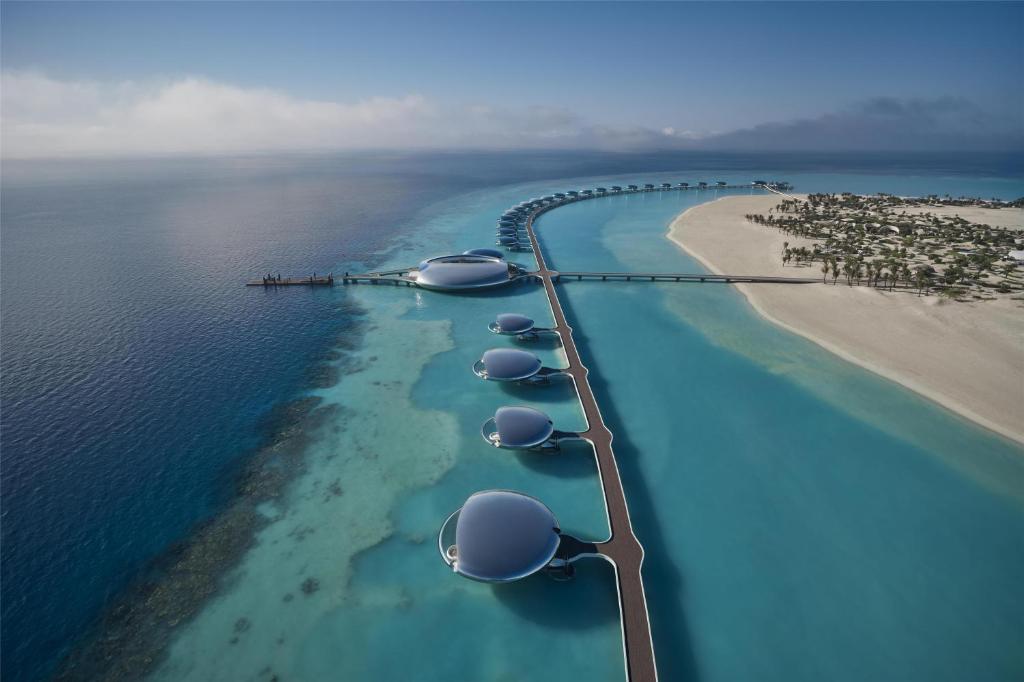
“500 m³/day is not a lot but could be good for small islands or coastal towns and resorts.” We are thinking about Shebara in Saudi Arabia, but they’ve already built a sedentary system on the island.
Levy’s point is important. Aqua Solaire’s claimed production of 500,000 liters per day sounds impressive, but it is tiny compared to Israel’s utility-scale desalination plants.
For comparison:
Aqua Solaire: 500 m³/day
Sorek desalination plant (Israel): ~624,000 m³/day
Ashkelon plant (Israel): ~330,000 m³/day
In other words, Aqua Solaire would produce less than one-tenth of one percent of what Israel’s largest facilities deliver each day.
Levy added another sobering observation: “We can make this capacity in a 20-foot containerized RO system. So the new thing here, and the massive size of vessel, is for the PV and batteries.”
This is perhaps the most important reality check.
The desalination component is not novel. Companies around the world, including Israeli firms, already build compact reverse osmosis systems that fit inside shipping containers and can be deployed rapidly to remote communities.
What is different is the floating solar platform?
Nir Gartzman, Co-Founder and Managing Partner of theDOCK, Israel’s maritime and water innovation hub, questioned whether the vessel exists at all: “Can you share more, company name? Vessel registration? Can’t find anything that supports such in relevant databases.”
Green Prophet searched online and unless this is in stealth mode, we can probably just boil it down to another dream of wishful thinking.
This skepticism reflects a culture shaped by necessity. Israel built its desalination industry under severe water scarcity, where technologies had to perform under real conditions, not just look good in renderings.
Despite the skepticism, Israeli experts acknowledge that the concept could fill a niche. If commercialized, Aqua Solaire could become an important tool for humanitarian response, island resilience, and water security in a warming world. Pair it to a floating bar around the beaches of Sicily and it can help brew endless pints of beer without refilling for water back on shore.