“If we announce something and we need to adjust it, accelerate it and make it a priority more than others, or defer or cancel it, we will without blinking,” Saudi Finance Minister Mohammed al-Jadaan said at a public event last year.
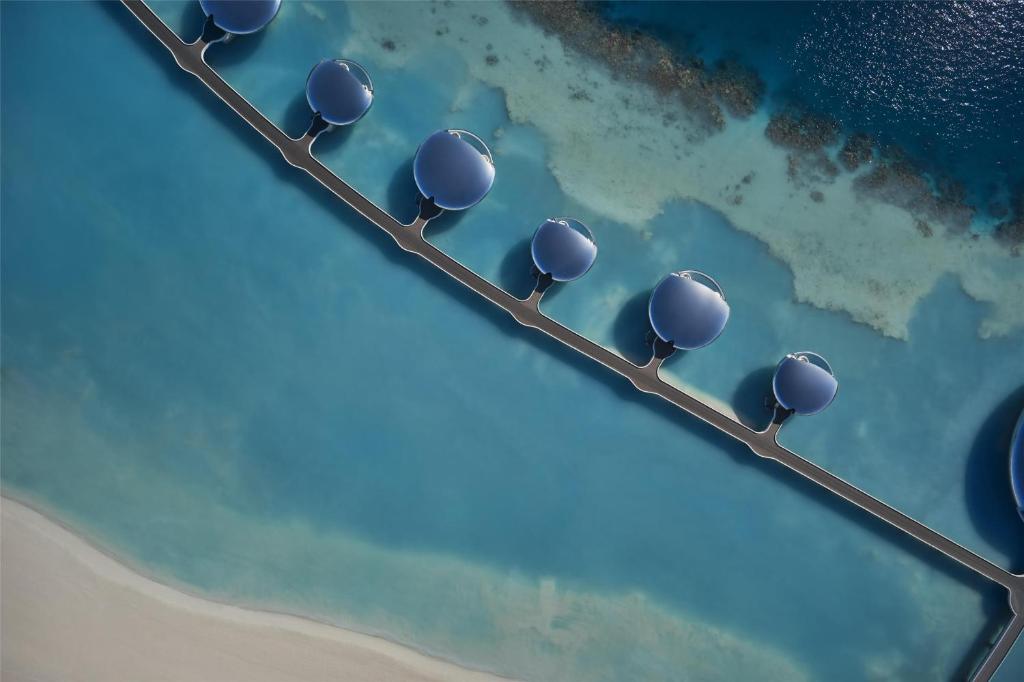
Without blinking indeed: Saudi Arabia has reportedly delayed major work on The Line, the planned 170-kilometer mirrored city slicing through the desert, until after 2030. Tourism projects along the Red Sea are being pushed back, and Trojena, the fantasy ski resort in the mountains fueled with artificial snow, is also effectively frozen. (One project that went ahead to completion is the Red Sea resort, Shebara).
Plans to build a giant cube in Riyadh, known as the Mukaab, were also put on hold.

At Green Prophet, we saw this coming from the beginning. We had been covering sustainable architecture, desert ecology and failed eco-city fantasies long before NEOM became a global branding campaign that felt more like a penal colony. From the first renderings, The Line looked less like a city and more like a trillion-dollar hallucination wrapped in sustainability language.
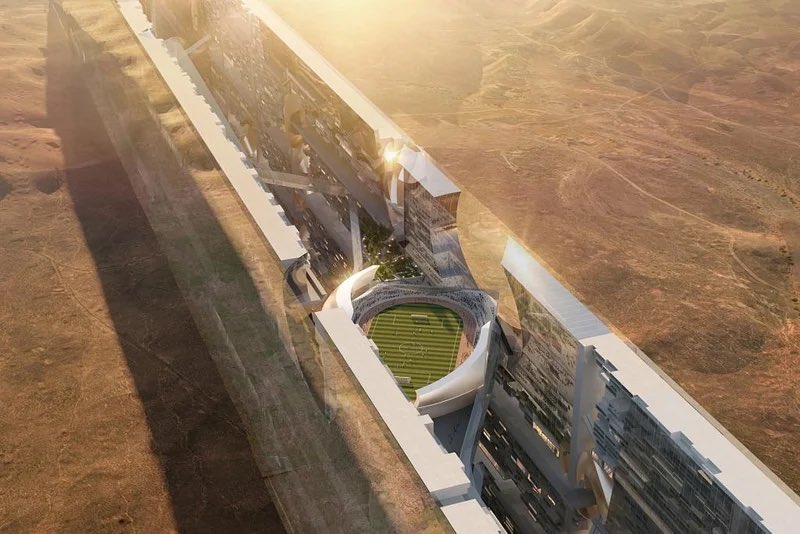
The world’s architecture and consulting elite rushed in anyway. Smart city. Cognitive city. Regenerative city. Every buzzword imaginable was attached to what was essentially a giant mirrored wall in one of the harshest climates on Earth. Locals also died trying to defend the land taken from them by the Saudi Government. But what activists from America care about that when they are busy boycotting Israeli tehini.
Meanwhile basic questions went unanswered: How much concrete and desalinated water would this require? What happens to wildlife migration routes? How do humans psychologically function inside a compressed linear corridor? And why do authoritarian megaprojects always market themselves as “green”?
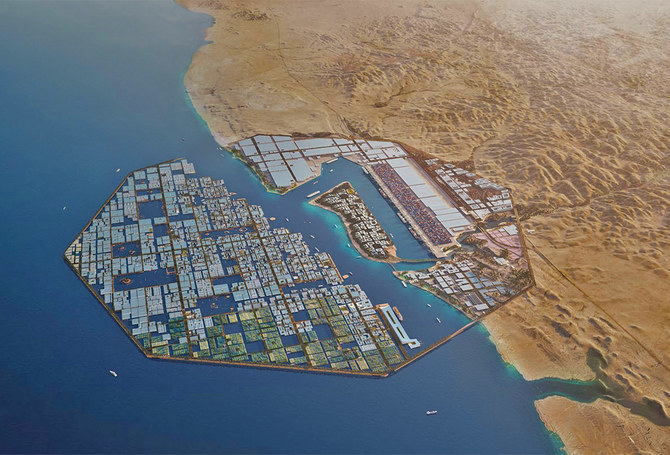
Now reality is interrupting the fantasy: The parts of NEOM still moving forward are the practical ones: ports, logistics infrastructure, utilities and data centers. OXAGON, the industrial port city on the Red Sea, continues to receive investment because ports and infrastructure create economic value.

Artificial moons and endless mirrored towers do not.
The deeper problem with NEOM was never just architectural. It was purely philosophical and comical. The project embodied a modern illusion that environmental destruction can somehow be solved through even larger acts of environmental destruction, if presented with enough minimalist branding and futuristic animations developed by European design firms doing anything for cash contracts. Much of the global design world played along.
Western consultants and sustainability influencers lined up for Saudi money, willing to describe almost anything as ecological if the budget was large enough. But sustainable cities are rarely built from above as monuments to power. Real cities evolve slowly around human realities, geography, water access, climate and community. Real sustainable cities look more like Rotterdam.
Read more on NEOM coverage on Green Prophet
- NEOM archive on Green Prophet
- The 15-minute city, The Line knocks back expectations
- The Line’s 15-minute city failure and the limits of green futurism
- Life at NEOM, a 15-minute city in Saudi Arabia
- The Line in Saudi Arabia invites you to live like a Borg
- Video reveals 150-mile-long mirrored skyscraper The Line in Saudi Arabia
- NEOM is Saudi’s mega-green Gotham city
- Saudi Arabia cancels the Asian Games at NEOM’s Trojena
- Saudi Arabia building world’s largest green hydrogen plant at NEOM
- Saudi Arabia archive on Green Prophet