
The new electric Ferrari was designed in part with Apple design legends Jony Ive and Marc Newson
Ferrari has finally done what many fans thought it never would: build a fully electric car. The new Ferrari Luce is not a quiet compromise or a small city EV. It is a massive, futuristic, high-performance machine with more than 1,000 horsepower, a price tag around $640,000, and styling that has already divided the internet.
Some people think it looks elegant and futuristic. Others think it looks more like a Nissan Leaf crossed with a luxury crossover. But whether people love it or hate it, the Luce marks one of the biggest moments in Ferrari’s modern history. Reuters reports that the Luce is Ferrari’s first production EV and features four electric motors, seating for five, and a top speed above 310 km/h. Ferrari says the car has more than 500 km of range and was designed in part with Apple design legends Jony Ive and Marc Newson. The CEO of Ferrari Benedetto Vigna said it is fair to pay for innovation, refering to the high price point.
“You have to see Luce to understand that it has nothing to do with Chinese EVs or those by other brands,” Vigna told a round table in the city of Modena.
Ferrari enters the EV era
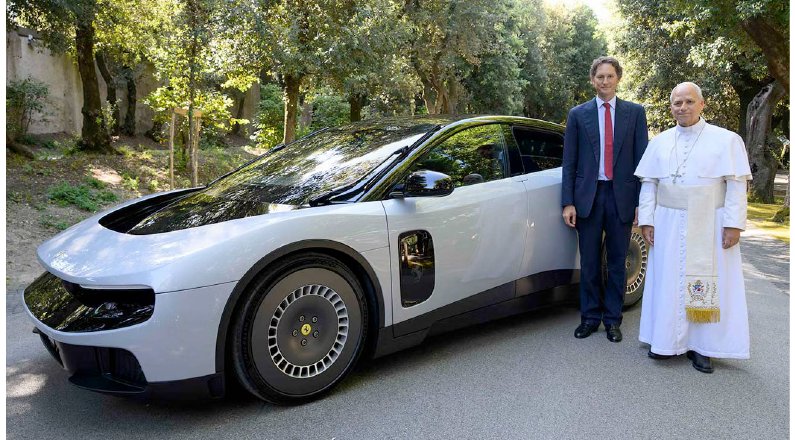
While Ferrari built its reputation on screaming V12 engines, Formula One racing, and emotional driving experiences. Cars like the F40, Enzo, LaFerrari, and Testarossa became symbols of excess, speed, and Italian engineering. The Luce changes that formula. Instead of a roaring gasoline engine, the Luce uses a quad-motor electric platform with all-wheel drive and advanced torque vectoring. Ferrari claims it can go from 0 to 62 mph in about 2.5 seconds. If you have ever driven a Tesla the acceleration speed literally throws your head back and can make you dizzy so don’t be fooled by EVs. Electric cars can accelerate fast!
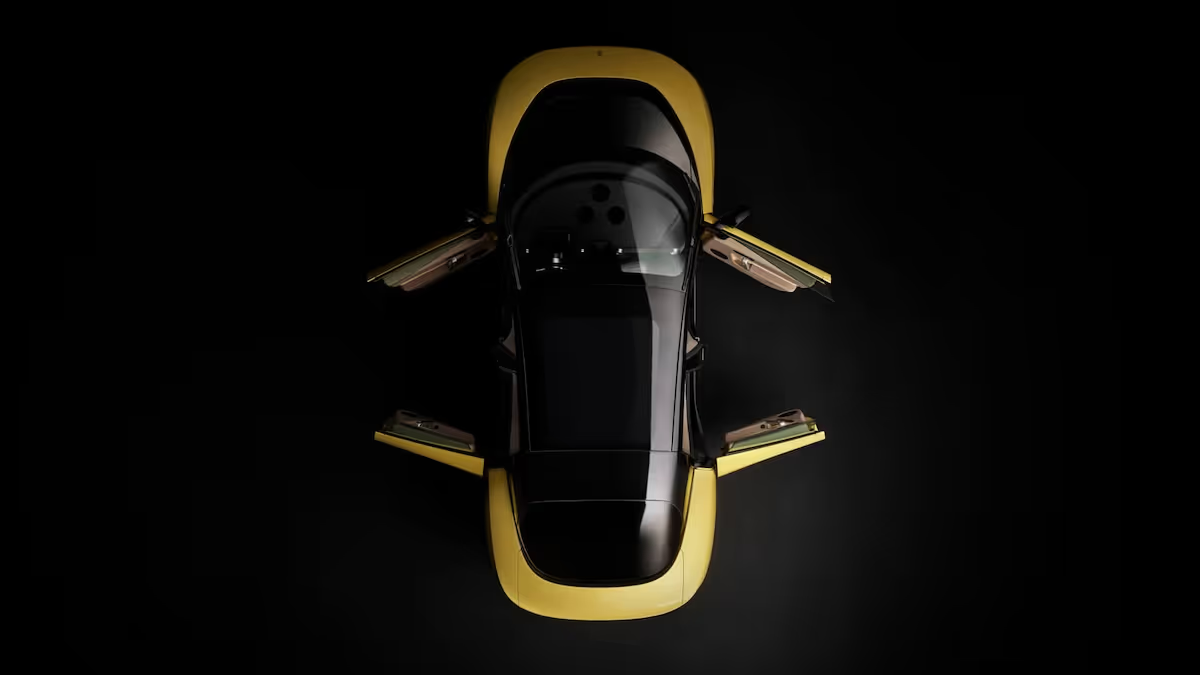
The car also introduces a new design language. Instead of the low wedge shape of older Ferraris, the Luce looks more like a futuristic grand touring crossover. It is larger than most Ferraris of the past and designed to carry five passengers comfortably.
Road & Track reports Ferrari intentionally chose a larger body style because electric platforms create more cabin space and allow for new interior layouts.
Tesla changed the electric car industry by proving EVs could be fast, stylish, and desirable. Before Tesla, many electric cars looked small, awkward, or overly practical. One of the best examples was Better Place, the Israeli electric car company founded by Shai Agassi. The company tried to build a battery-swapping network around Renault electric cars.
Technically, the idea was interesting. Gavin Newson was onboard to promote the Israeli cars in California. But emotionally, the cars failed to excite people on every level. The car bodies underwhelmed the people that Better Place was marketing too. The Nissan Leaf hybrid worked with its demographic, but Better Place failed: The Renault Fluence ZE never became an object of desire.

Tesla and Elon Musk learned from Shay Agassi, its predecessor, and understood something important: people want beauty and identity as much as efficiency. Elon Musk helped turn EVs into status symbols. The Tesla Model S became a luxury object before most automakers took electric design seriously. Ferrari now appears to be taking that same lesson to the extreme. Read our post-mortem on Better Place here.
The Luce is not trying to be practical transportation. It is trying to make electric cars feel exotic, emotional, and aspirational. The CEO says they are also not looking to replace the internal combustion engine in it other models.
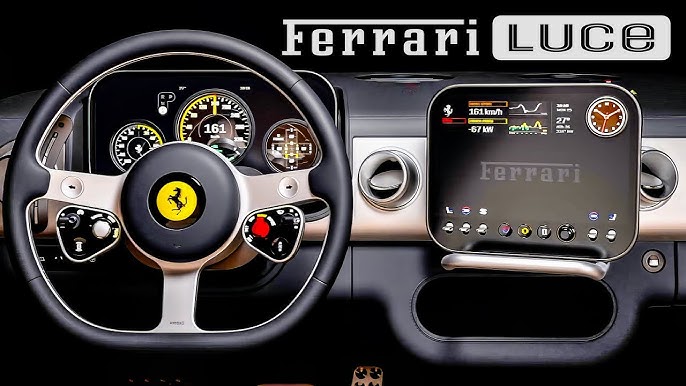
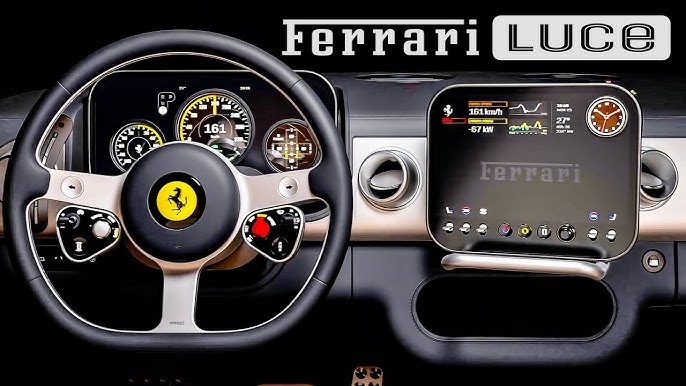
At the same time, Ferrari is avoiding Tesla’s minimalist design philosophy. Reuters and Car and Driver report that Ferrari kept physical controls, metal details, and tactile materials in the interior instead of relying only on giant touchscreens. As a driver I prefer buttons and knobs and the minimalism of the Volvo cars but I probably don’t speak for every demographic.
Luxury car culture in places like Dubai and Abu Dhabi has often focused on visual excess. About 15 years ago, Dubai became famous online for gold-plated Lamborghinis, chrome-covered Mercedes-Benz cars, diamond-covered interiors, and supercars parked outside luxury hotels. Some cars were more about spectacle than engineering. Some could be seen with Cheetahs riding shotgun.
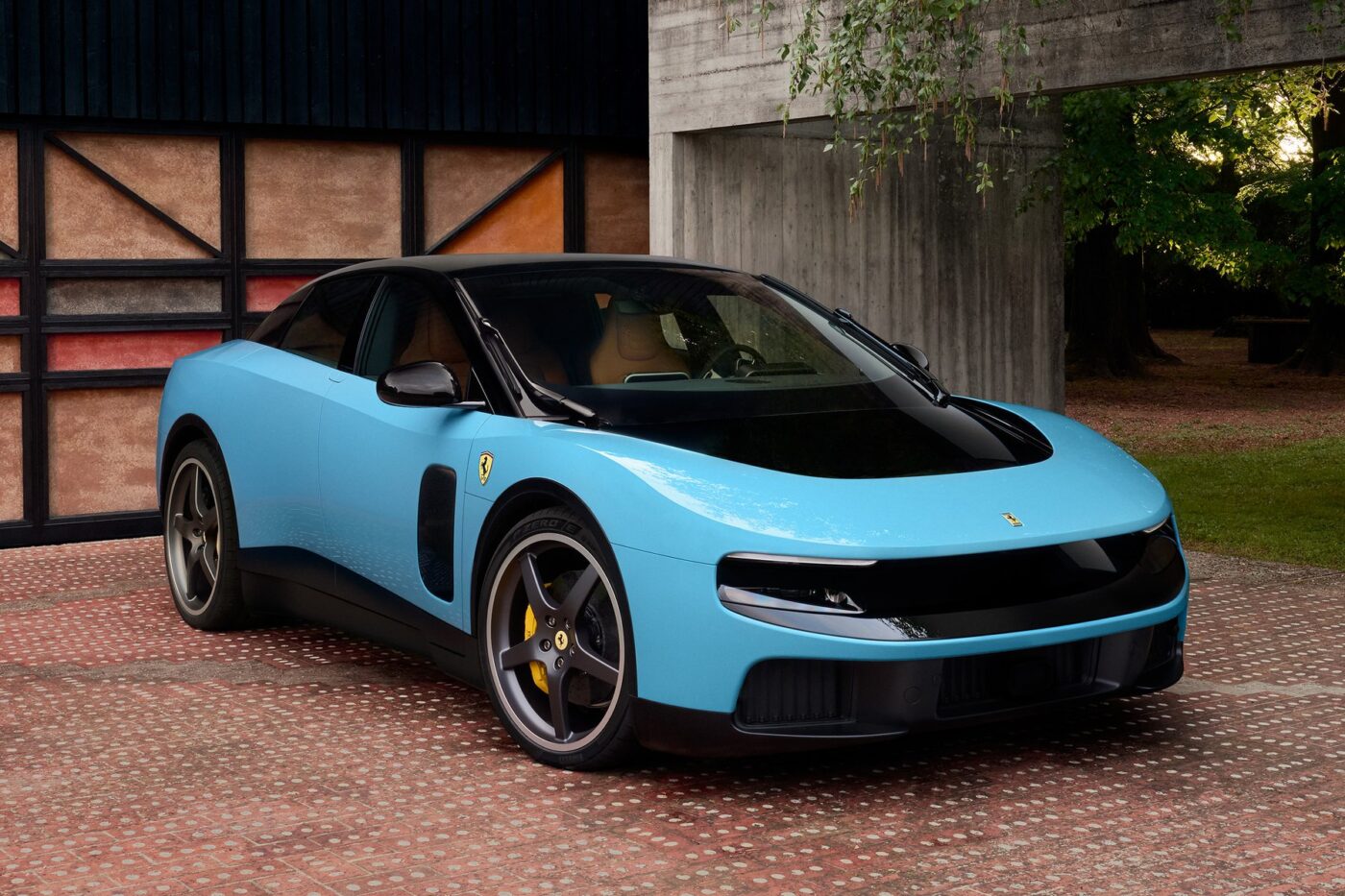
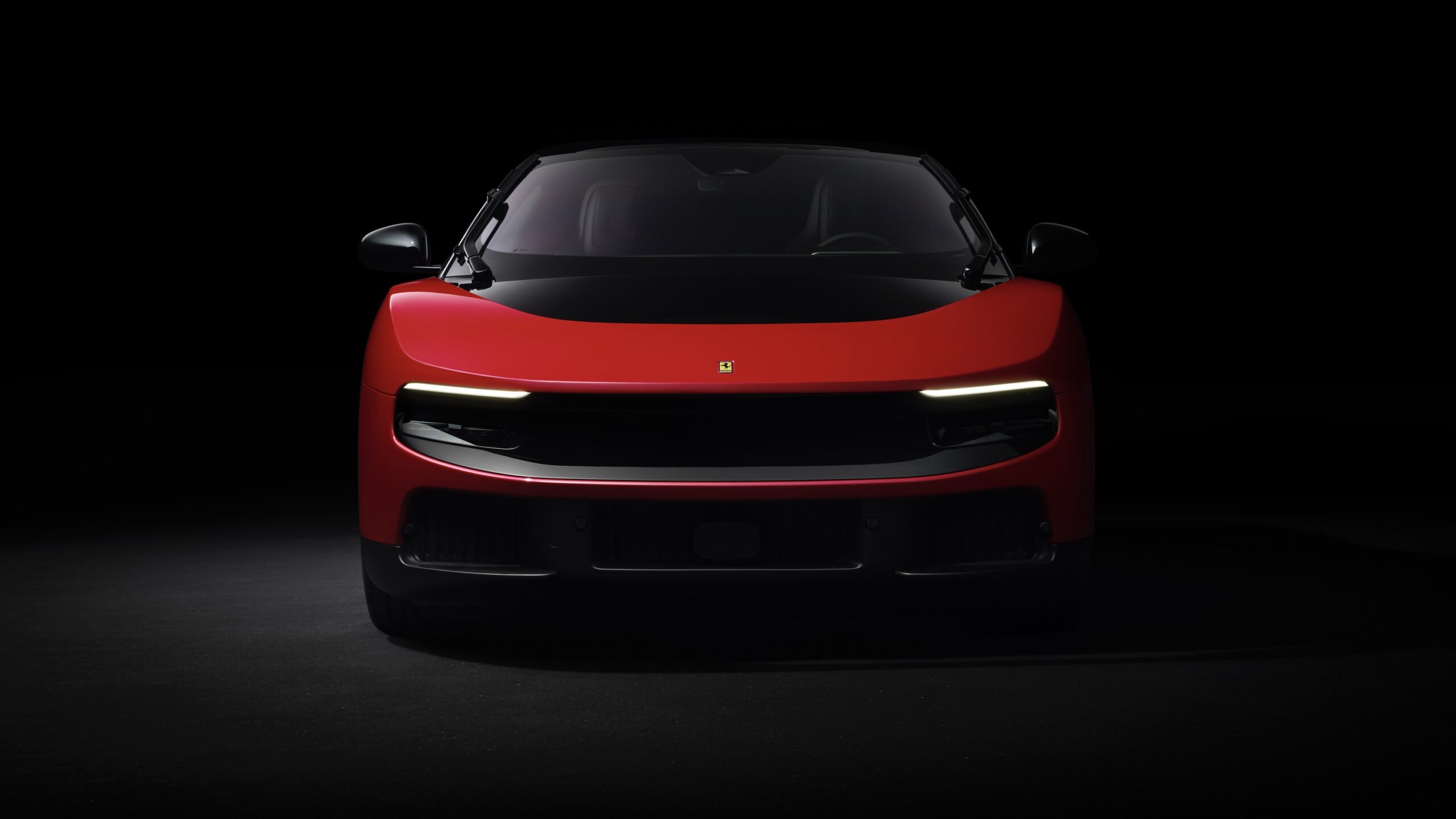
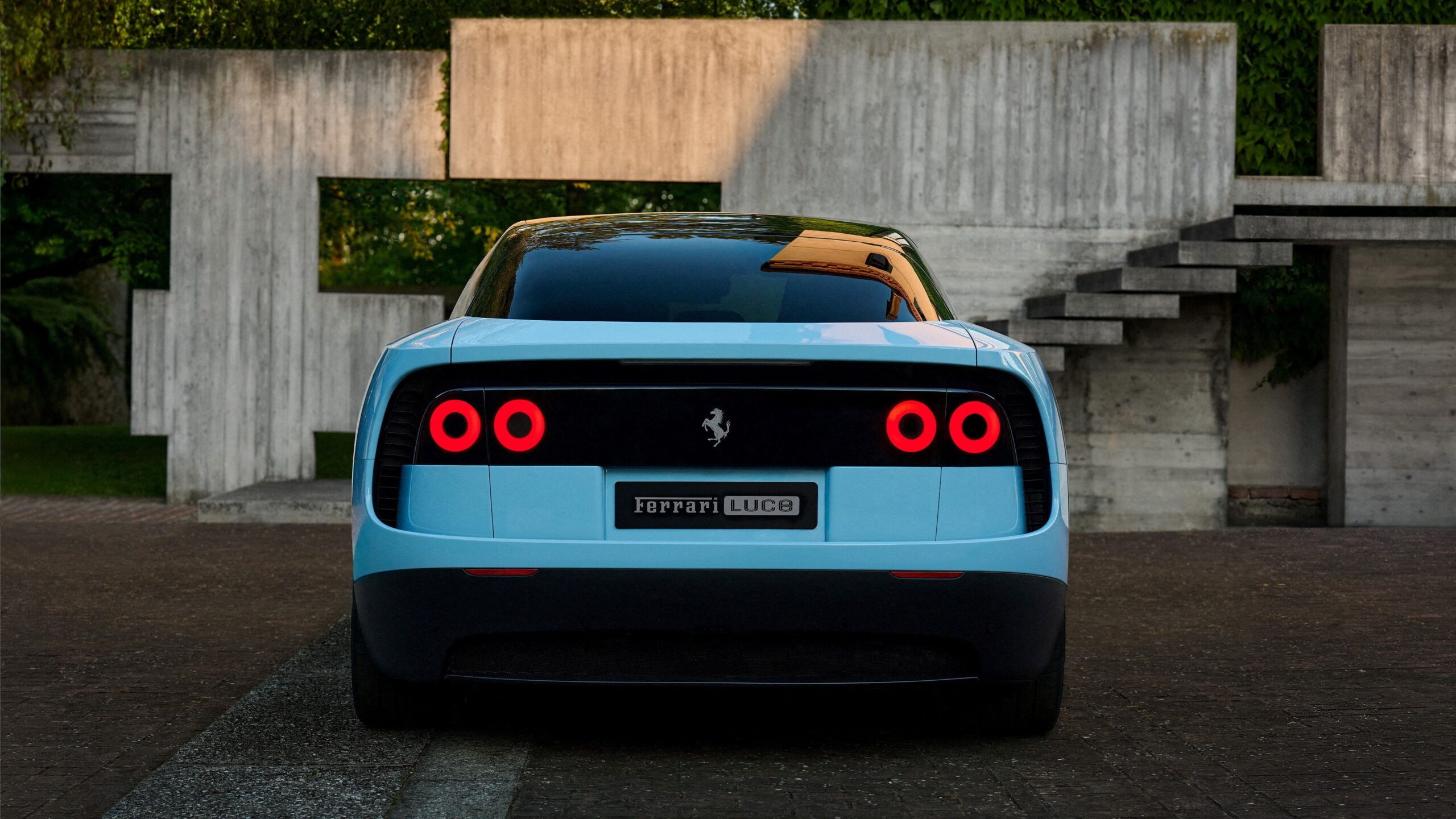
The Luce represents a different kind of status symbol that will appear to the western understated mind: Instead of gold plating or flashy modifications, Ferrari is trying to create what could be called “quiet futurism.” The car’s smooth body, hidden lighting, and soft blue launch color look more like industrial design from Apple than traditional supercar culture.
The Luce also joins a long history of strange, futuristic cars that challenged expectations. The DeLorean DMC-12 became famous partly because it looked like the future. Its brushed stainless steel body and gullwing doors made it iconic even though the actual performance was disappointing. McLaren approached futurism differently. Cars like the McLaren P1 mixed extreme performance with hybrid technology and aerodynamic engineering.
Ferrari’s Luce sits somewhere between these worlds. This is not just a concept car for auto shows. Ferrari is betting part of its future on electrification.
Reaction to the Luce has been mixed: Reuters reports Ferrari’s stock price dropped after the unveiling, while social media users mocked the shape and compared it to cheaper electric hatchbacks. It feels like the pushback after the Jaguar rebrand fiasco last year.
Traditional Ferrari fans worry the company is abandoning its identity. Some critics say Ferrari should have launched a more classic-looking electric supercar instead of a large family-style EV. Others believe Ferrari understands the market better than its critics do.
Electric vehicles change the proportions of cars. Sit inside a Tesla and it feels giant from the inside but it doesn’t look so large on the out. Batteries are heavy and require different packaging and so with this many companies are still trying to figure out how to make EVs emotionally exciting and not too strange.
EV sales continue growing in the United States overall, but growth has slowed compared to the rapid expansion seen a few years ago. States with the strongest EV adoption include California, Florida, Texas, Washington, Colorado, and New York. California remains the dominant EV market in America because of state incentives, charging infrastructure, environmental policy, and high consumer demand.
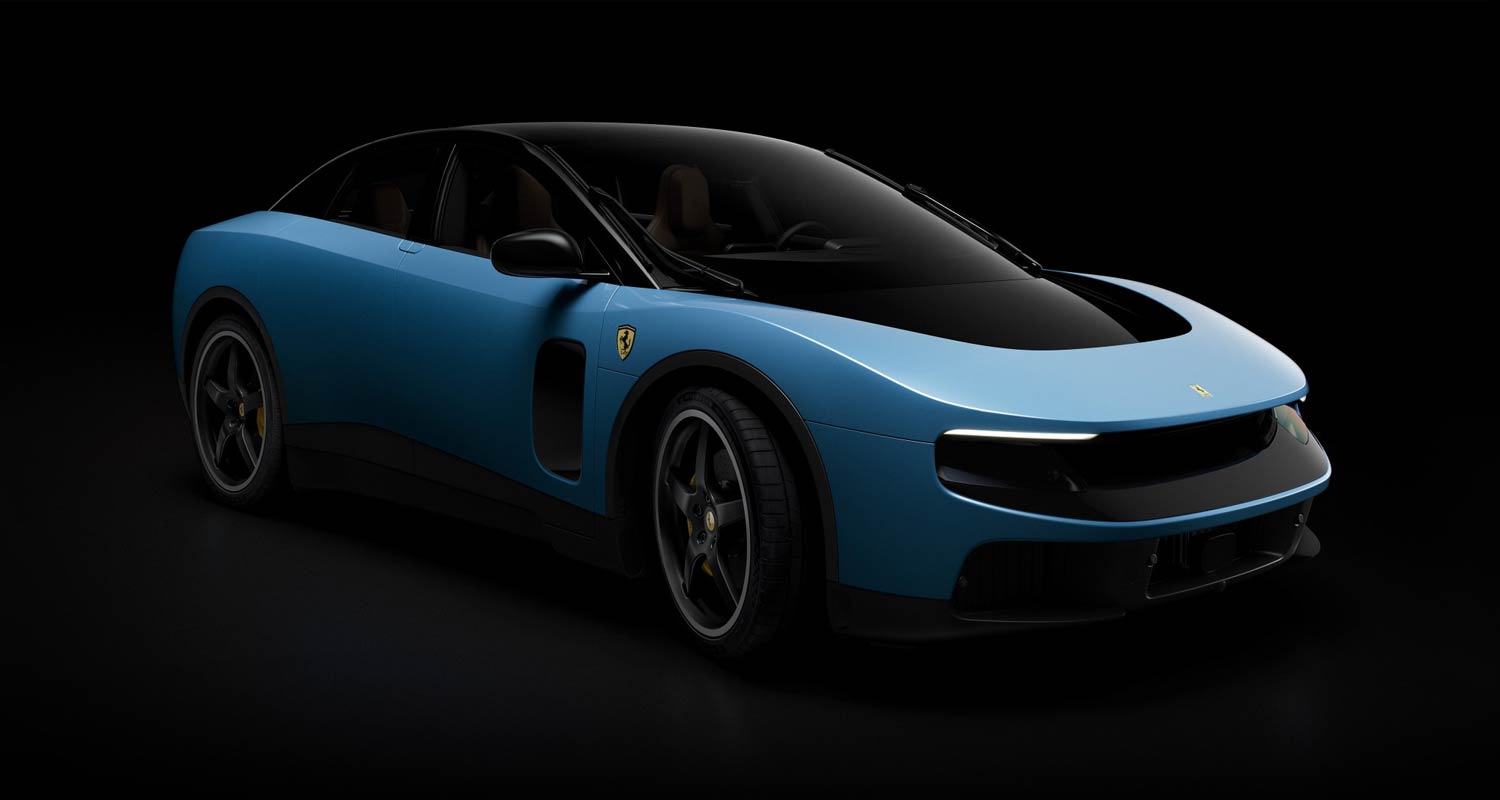
Tesla still leads EV sales in the United States, but companies like Hyundai, Rivian, BMW, Ford, Mercedes-Benz, and Lucid are gaining ground. Luxury EV buyers are also becoming more selective. Some want environmental benefits. Others simply want the newest technology and highest performance.
Ferrari is clearly targeting the second group. Will you drop more than half a million and give it a whirl? Ferrari says the Luce will begin deliveries in the fourth quarter of 2026, with the first customer cars likely arriving in Europe before expanding into markets like the UAE and Saudi Arabia shortly after.