Jordan’s $6 Billion Aqaba–Amman Desalination Project from the Red Sea Moves Forward

Jordan needs $6 billion USD to built a desalination plant on the Red Sea

Jordan, which has long received a lion’s share of USAID for survival, and which receives $1.5 billion USD every year to help with water and basic needs, is one of the poorest countries and most water-scarce countries on Earth. In parts of Amman, the most unwalkable city on the planet, households still receive municipal water only once a week. You order a truck and a you pay $50 or so for the company to fill up your water tank. If you are lucky, you build 2 or 3 tanks so you can be sure about your next shower.

National renewable freshwater availability stands at well under 100 cubic meters per person annually, which is far below the international benchmark for “absolute scarcity.” And Jordan has started building itself as a greenhouse and agriculture center of the region.

hydroponics jordan, USAID
Hydroponics farming is a good solution for growing food in countries where water is scarce. A USAID program gives training to local Muslim farmers so they can grow their own food and livelihood.

Now Jordan is advancing one of the the largest infrastructure project in its history: the Aqaba–Amman Water Desalination and Conveyance Project. The plan links a massive Red Sea desalination plant to a 450-kilometer pipeline that will transport water north to the capital. An original plan over the years was the Red Dead Canal, a partnership with Israel. But after decades of inaction from both sides, they want to do it alone if they can pull off the billions in financing needed.

In 2025, the Jordanian government signed agreements with a consortium led by Meridiam and SUEZ, alongside VINCI Construction and Orascom Construction. Under a 30-year concession agreement, the consortium will design, build, finance, operate, and maintain the system before transferring it back to the Jordanian government. The total investment is estimated at approximately $6 billion USD.

What the Desalination Project Will Deliver
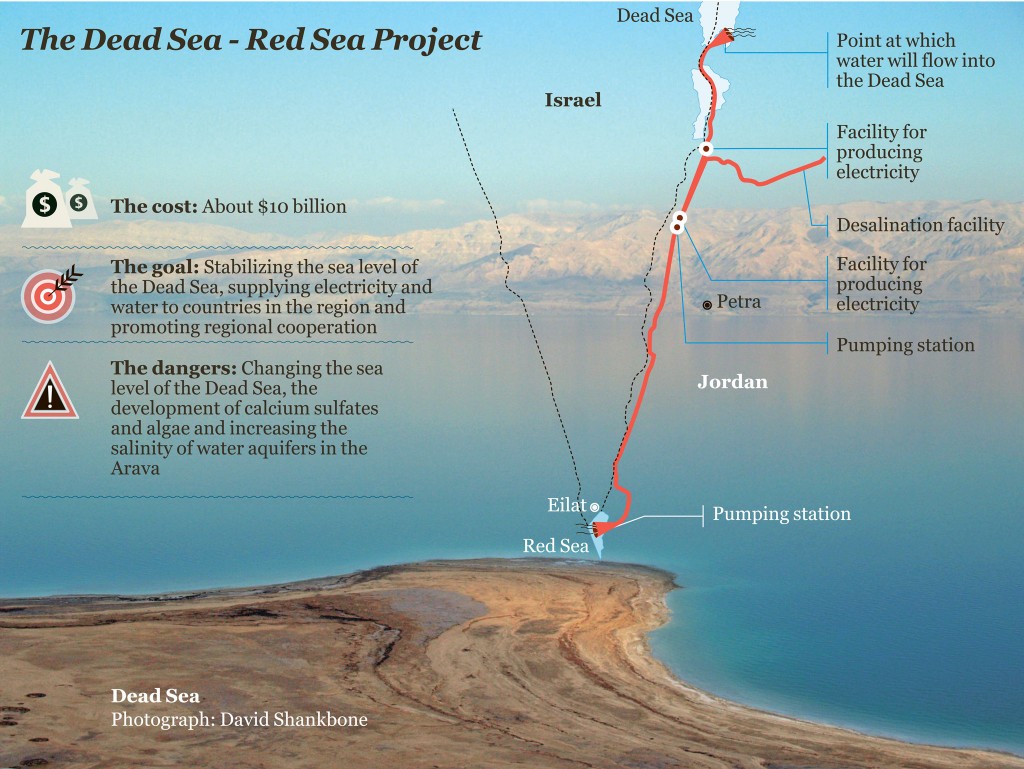
red dead canal conduit
A dead idea: The Red-Dead, a proposed desalination project between Jordan and Israel to revive the Dead Sea and bring water to Amman.

At full capacity, the system is expected to supply 300 million cubic meters of desalinated water per year, covering roughly one-third to 40% of Jordan’s drinking water demand.

The system includes:

  • A large reverse osmosis desalination plant near Aqaba on the Red Sea
  • A 300-mile conveyance pipeline to Amman
  • High-capacity pumping stations lifting water more than 1,000 meters in elevation
  • Expanded storage infrastructure in the Amman region

The plant’s projected output — about 800,000 to 850,000 cubic meters per day — would make it one of the largest seawater reverse osmosis facilities in the world. Saudi Arabia, which borders Jordan, currently runs the largest desalination plant in the world, a title taken from Israel not long ago. Israel has long been a pioneer of membrane technology, which is the technology needed to separate salt and brine from the water.

According to SUEZ, the project “will significantly strengthen Jordan’s long-term water security while integrating environmental best practices in desalination.”

Who Will Profit from Jordan’s Water?

Prince Hassan Bin Talal Jordan, meets Green Prophet founder Karin Kloosterman
Karin Kloosterman, Green Prophet founder was invited to a Middle East water event in Switzerland where she met Prince Hassan of Jordan.

The financing structure is a public-private partnership. The consortium will raise a significant portion of the capital through a mix of private equity and project debt. Multilateral development banks are expected to participate, including institutions such as the European Bank for Reconstruction and Development and the International Finance Corporation, alongside export credit agencies and commercial lenders.

Jordan’s government will ultimately purchase the water under long-term offtake agreements, creating predictable revenue streams for the concession holders over three decades.

That means: Infrastructure investors like Meridiam earn a stable, long-term return. SUEZ generates operating revenue from managing one of the region’s most strategic water assets. Construction giants VINCI Construction and Orascom Construction secure multi-billion-dollar engineering contracts. Lenders collect interest over the concession period. Jordan gains water security.
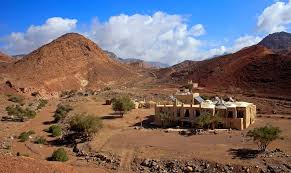
Sustainable hotel in the Dana Bioreserve, Jordan

The question now is whether the financial model keeps water affordable for citizens while delivering returns to international investors? Locals I have spoke with found the cost of water to be negligible in their montly expenses, but will the costs increase going forward? In some countries the cost of water is free, and in others water is difficult to obtain, like on islands in Thailand where you can’t think of drinking tap water. Desalinated water is drinkable, as long as added minerals are put in place. Can Jordan do this?

Another option is for Jordan to strengthen trade with Saudi Arabia, which operates extensive desalination infrastructure along the Red Sea, producing over 3 billion cubic meters of water daily and accounting for nearly 50% of global desalination capacity. If the Vision 2030 ever comes to be, this is probably what will happen in reality.


Karin Kloosterman
Karin Kloostermanhttp://www.greenprophet.com
Karin Kloosterman is an award-winning journalist, innovation strategist, and founder of Green Prophet, one of the Middle East’s pioneering sustainability platforms. She has ranked in the Top 10 of Verizon innovation competitions, participated in NASA-linked challenges, and spoken worldwide on climate, food security, and future resilience. With an IoT technology patent, features in Canada’s National Post, and leadership inside teams building next-generation agricultural and planetary systems — including Mars-farming concepts — Karin operates at the intersection of storytelling, science, and systems change. She doesn’t report on the future – she helps design it. Reach out directly to [email protected]

Read More

TRENDING

Dan Zaslavsky’s energy tower dream is rising again in Iran and China

The Energy Tower idea never made the leap from drawings and engineering studies to full-scale construction. But nearly two decades after most people stopped talking about it, the concept is quietly evolving in two unexpected places: China and Iran. The concept let dreamers dream and doers do - figuring out more pleasing designs and engineering.

A visit to Amirim, Israel’s first all-vegetarian village in the Galilee

Just 15 kilometers from Tzfat there is a moshav that was founded in the late 50s that was ideologically influenced by organic, vegetarian and vegan principles. My hostess at Ohn-Bar, the tzimmer where I stayed, explained that the people of Amirim were among the pioneers of Israel’s strong vegetarian movement.

Can Scientists Predict Coral Bleaching Before It Happens?

Now researchers at the Woods Hole Oceanographic Institution (WHOI) in the US say they have developed a way to predict coral bleaching five to six months before it occurs, potentially giving reef managers enough time to intervene and save vulnerable corals.

Israeli Hydrogen Startup H2Pro Are Trying to Solve Clean Energy’s Hardest Problem

The company has attracted backing from major investors including Breakthrough Energy Ventures, the climate fund founded by Bill Gates, along with industrial partners such as Sumitomo, ArcelorMittal, and Temasek, a multi-billion dollar company that owns Singapore airlines. H2Pro has raised more than $100 million USD and is moving from pilot projects toward commercial-scale deployments.

NEOM’s The Line is delayed as Saudi mirage hits reality

Without blinking indeed: Saudi Arabia has reportedly delayed major work on The Line,  the planned 170-kilometer mirrored city slicing through the desert, until after 2030. Tourism projects along the Red Sea are being pushed back, and Trojena, the fantasy ski resort in the mountains fueled with artificial snow, is also effectively frozen.

Here’s How To Implement The Four Pillars Of Employee Engagement

If you throw a party for your work team and they are vegans, don't make it a barbecue. Know the sustainability values of your team to boost moral and retain good people.

Locals From Rishon Fight IKEA

Big Box stores are a pretty new concept in Israel, and thank God that not every Israeli city wants them in their backyard. A word from someone who has see the beautiful farmland around her hometown Newmarket, Ontario stripped and converted into vulgar strip malls of big box shops: they have no place in a healthy and sustainable town or city.

The Jewish National Fund Meets An Inconvenient Truth

According to the JNF, it has transformed thousands of acres of barren land into green forests in Israel. They state that each person emits about 23 tons of carbon per year, estimating that each tree planted can absorb one ton of carbon in its lifetime. That's a whole lot of trees you'd need to be planting. Could so many fit in Israel?

How to quiet noise from construction in your office

Streets need to be resurfaced in New York but the humming and grinding noise is unsettling. Noise is environmental pollution. 

EarthX and a blueprint for sustainable investing

Trammell S. Crow, a Dallas-based businessman and father of four, is focusing his efforts on impact investing, and media that focuses on saving the planet through EarthX.

Mining Afghanistan’s Mineral Discoveries Similar to Avatar

Now that American forces in Afghanistan are commemorating the longest period of any war that America has been involved in, including the 1965-73 Vietnam War, the recent discoveries of large and extremely valuable mineral and metal deposits may finally bring to light a reason to continue the presence of US fighting forces in this war torn and backward country.

From Pilot Plant to Global Stage: How Aduro Clean Technologies’ 2026 Expansion Signals a Turning Point for Chemical Recycling Investors Like Yazan Al Homsi

The company's Next Generation Process (NGP) Pilot Plant in London, Ontario, has officially moved into initial operating campaigns, generating the kind of structured, repeatable data that separates laboratory promise from commercial viability.

Nobul’s Regan McGee on Shareholder Value: “Complacency Is the Silent Killer” 

Why the governance framework designed to protect shareholders so...

Popular Categories