
When Masdar was launched in Abu Dhabi in 2006, it was supposed to change the world from a patch of desert.
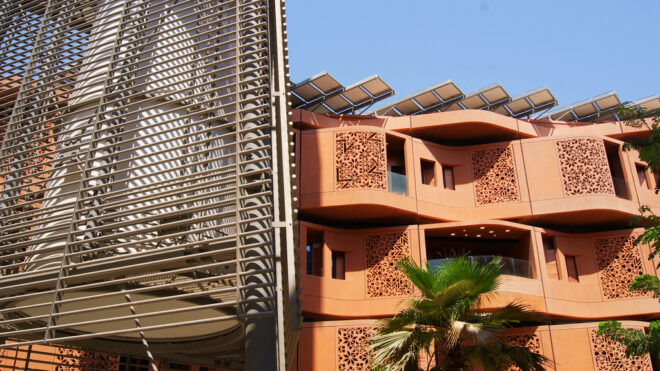
The ambitious vision was Masdar City, a zero carbon, zero waste metropolis where autonomous electric pods would replace cars, buildings would stay cool using traditional Arabic design principles (using high-tech mashrabiya), and renewable energy would power every aspect of daily life. Designed by renowned star architect Norman Foster, the city promised to become the Silicon Valley of clean technology and sustainability.
It never quite happened: Many of the project’s most ambitious goals, including complete carbon neutrality, car free transportation and a population of tens of thousands, were scaled back over time. The futuristic Personal Rapid Transit vehicles (which we rode around in on several visits) became more demonstration than transportation network, construction slowed after the 2008 financial crisis, and Masdar City evolved into a research campus and business district rather than the world’s first zero carbon city. No one really wanted to live there.
Yet judging Masdar solely by the city misses the bigger story. While the eco city (zero energy city) became a living laboratory for sustainable architecture, passive cooling, solar energy and green building design, Masdar quietly transformed itself into one of the world’s most influential renewable energy developers.
Today the company has a diversified renewable energy portfolio exceeding 65 gigawatts across more than 40 countries. Jointly owned by TAQA, ADNOC and Mubadala, it aims to reach 100GW by 2030, making it one of the fastest growing clean energy companies in the world.
Its latest milestone demonstrates just how far the company has come.
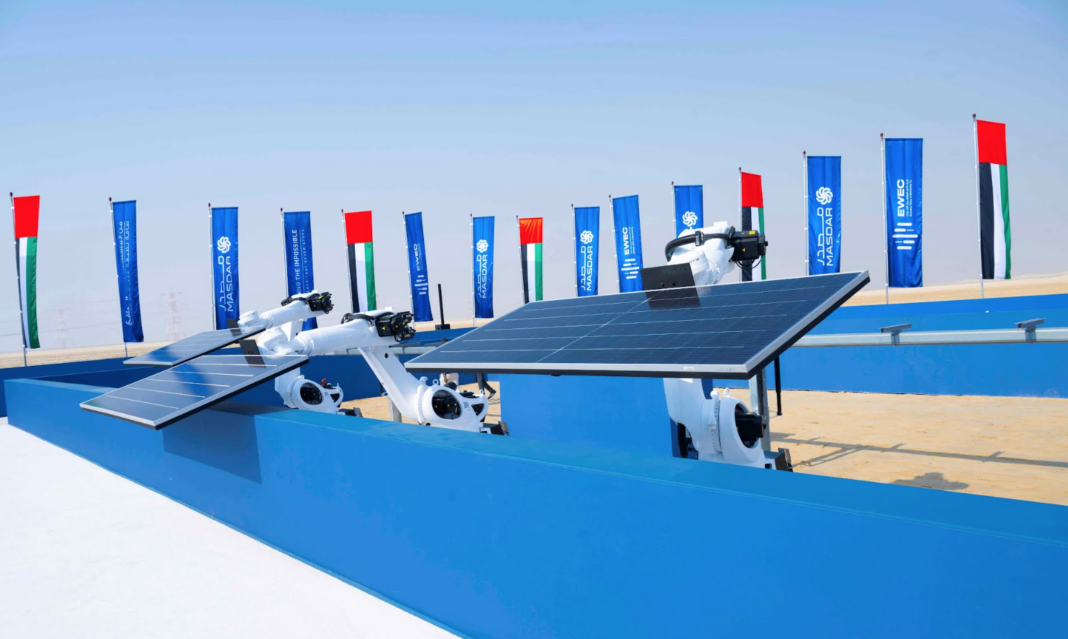
Masdar has reached financial close on what it calls the world’s first gigascale 24/7 renewable energy project, representing a total investment of US$6.1 billion. The Abu Dhabi project combines 5.2GW of solar photovoltaic capacity with 19 gigawatt hours of battery energy storage, creating a system capable of delivering 1GW of continuous clean electricity around the clock.
The project secured US$5.1 billion in financing from a consortium of 13 international and regional banks, underlining growing investor confidence that large scale renewable energy combined with battery storage has become commercially viable.
According to Masdar Chief Financial Officer Mazin Khan, the financing represents more than a single infrastructure project.
“This significant financing commitment demonstrates the confidence of the international banking community not only in a landmark project but also in Masdar’s financial strength, disciplined execution and long term growth strategy,” he says.
Khan also says the project also reflects a broader shift in energy markets.
“This milestone further demonstrates our ability to mobilize global capital at scale while delivering innovative renewable infrastructure that supports long term economic growth and energy security.”
The project is expected to begin operating in 2027 and is designed to help solve one of renewable energy’s greatest challenges by supplying reliable electricity day and night.
As demand for electricity grows because of artificial intelligence, data centres and industrial electrification, Masdar believes projects like this mark a turning point.
Masdar said the financial close demonstrates that “large scale renewable energy projects capable of delivering round the clock power have evolved from technical ambition to commercially bankable infrastructure.”
From oil wealth to renewable influence
Perhaps Masdar’s greatest achievement is not technological but geopolitical. The United Arab Emirates remains one of the world’s leading oil and gas producers. Yet through Masdar, Abu Dhabi has become one of the largest investors in renewable energy, using clean technology as a form of economic diplomacy and soft power.
Rather than abandoning hydrocarbons overnight, the UAE has used energy wealth to finance renewable energy projects across Europe, Africa, Central Asia, Australia, the United States and the Middle East. The strategy has helped position the country as a global player in the energy transition while diversifying its economy beyond oil.
Masdar City may never have fulfilled its original vision as the world’s first carbon neutral city, but it succeeded in something arguably more important. It established Abu Dhabi as a centre for clean technology, international research and renewable energy investment.
Sometimes the prototype is not the destination. Masdar’s greatest contribution has not been building the world’s greenest city. It has been proving that an oil producing nation can leverage its wealth to become one of the world’s most important financiers and developers of renewable energy.