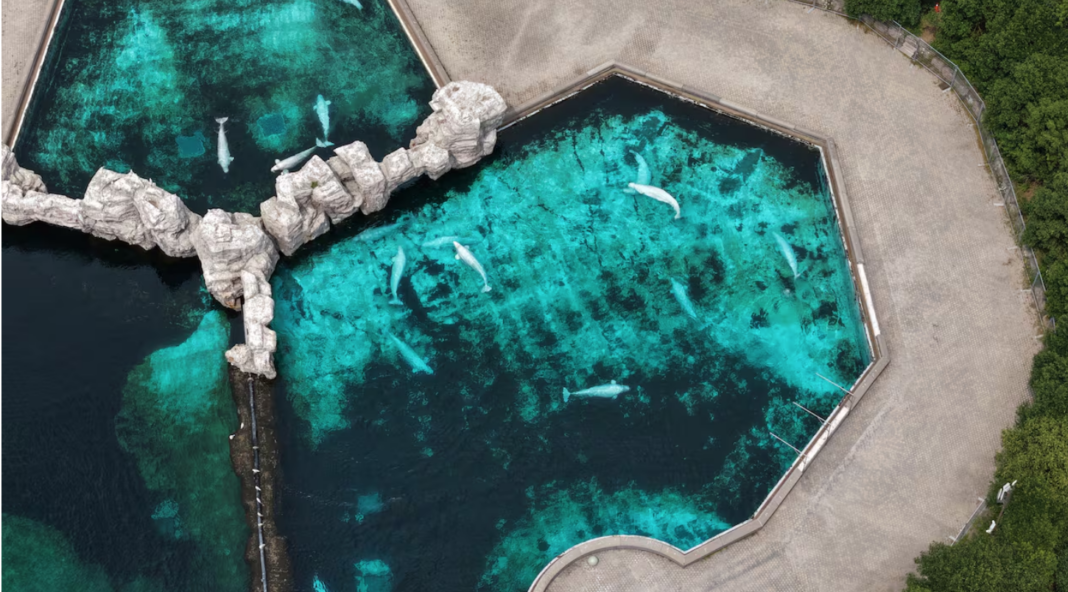

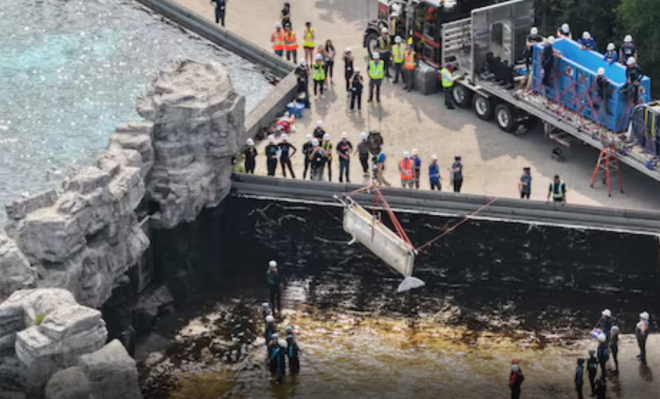
Six white beluga whales rose slowly above the pools of Marineland in Niagara Falls this week, suspended in heavy-duty slings as cranes lifted them onto waiting trucks. The images of the whales of my childhood, when we were told to dream about a day out at Marineland, look like a real-life version of Free Willy. But unlike the Hollywood film, these whales will never be free.
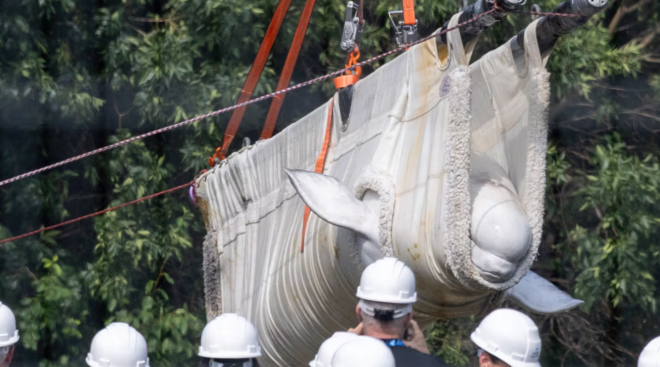
Traffic was shutdown on highways to the Pearson Airport this week as the first 6 of the 30 beluga whales are relocated from the now closed Marineland Canada to accredited aquariums in the United States and Europe. Four bottlenose dolphins still remain at the facility and are expected to be moved under the same international rescue effort.
The transfer marks the end of one chapter in Canada’s history of keeping whales in captivity, and the beginning of another that remains deeply controversial. With marine parks operating around the world, why is Marineland closing?
Marineland’s decline took years in the making. The Niagara Falls attraction, which gave summer visitors a little extra “fun” after watching the waterfalls, faced mounting financial pressures, declining attendance, legal disputes and years of public criticism over its treatment of marine mammals. Canada is one of the leading voices in the world for environmental activism and animal rights, so much that it created the sprit of Green Prophet, to report on environmental issues and people that impact the Middle East. We have seen stories of dolphins in captivity in places like Egypt, where they have been kept in swimming pools and we know humanity can do better for these intelligent beings.
Back to Marineland: after the deaths of longtime owners John and Marie Holer, the heart of the operation, the park stopped functioning as a traditional amusement park and announced plans to relocate its remaining animals while selling off rides and redeveloping the property.
The park has repeatedly denied many allegations made against it about the treatment of the whales over the years and has said it complied with animal-care regulations. According to Last Chance for Animals, Marineland should not be allowing trainers to make dolphins and whales perform for tricks leading to the creation of new animal cruelty provisions in the Criminal Code of Canada. These provisions impose restrictions on keeping whales, dolphins and other cetaceans in captivity. These sections allow organizatins that had cetaceans before the bill came into effect to keep the cetaceans but impose restrictions on their handling.
Ironically the animals will be kept in captivity and will have to pass the most harrowing journey they may experience in their lives, in water, by plane.
Nevertheless, Marineland became one of the most controversial marine parks in North America.
Why are the whales being moved?
Keeping whales and dolphins requires funds for aquariums and feed. Marineland announced it could no longer provide long-term care for its remaining belugas, it initially sought permission to send all 30 whales to the Chimelong Ocean Kingdom in China.
Canada’s federal government rejected that proposal in 2025, saying it was inconsistent with the country’s 2019 law ending the captivity and breeding of whales and dolphins for entertainment. Marineland later warned that without approval to relocate the whales, or financial assistance from the government trying to enforce laws against the animals the same government promoted as a national treasure, it might have to consider euthanasia because it could no longer afford their care.
A new rescue plan was approved in 2026 and under that agreement, 28 belugas will move to accredited institutions in the United States and two will go to Oceanogràfic València in Spain. The relocations are expected to occur over several weeks as veterinarians determine which animals are healthy enough to travel.
Only six whales have begun the journey so far, making this week’s operation the first phase of the rescue and blocking traffic along major byways in Toronto.
Were the whales actually abused and did Marineland deserve all the bad press? That question remains contested. Captive lions, rhinos, elephants and other land animals in Canadian zoos have become more protected over the years. The Zoo in Toronto makes it so the public will only see the animals if the animals “feel” like appearing. It wasn’t always like that. And while the zoos can increase the size of the cages, it’s harder for aquariums to adjust. Ripleys have developed a series of city-based aquariums that provide an immersive experience up close, making old-world marine parks a bit antiquated. But these wild whales and dolphins can’t be released to the wild where they have no social skills. They will probably fail to thrive.
Animal welfare organizations, former trainers and whistleblowers have, for years, alleged inadequate living conditions, poor water quality and insufficient veterinary care at Marineland specifically in the hopes the owners could step up and make it better. Those concerns prompted investigations, lawsuits and repeated public protests. If investors don’t want to take over such a contested business, who blames them?
Marineland has disputed many of those allegations and has maintained that its animals received appropriate and proper care under veterinary supervision. Some allegations were never tested in court, while others resulted in regulatory investigations without findings of deliberate abuse.
What is not disputed is that at least 20 whales, including belugas and the park’s lone orca, Kiska, and a seal have died at Marineland since 2019, according to tallies based on official records and company statements. So the quality of animal care must be addressed.
Many people ask the obvious question: Why can’t they simply be released? if captivity is ending, why not let the whales go free?
Marine mammal experts say it is not that simple. That’s because many of Marineland’s belugas were born in captivity or have spent decades under human care. They have never hunted independently, migrated with wild pods or learned the social behaviors that wild belugas acquire from their families.
A direct release could leave them unable to survive and could also pose health risks to wild populations. Whales learn from each other. Would the Marineland whales be teaching the wild new, negative tricks – like the whales that flip sailing boats in the Mediterranean as vengeance against fishermen?
For these whales, the realistic options were continued human care or an uncertain future.
A rescue that satisfies almost no one
Supporters of the relocation argue that accredited aquariums can provide stable funding, modern veterinary care and better long-term management than a shuttered marine park. Critics respond that moving whales from one aquarium to another is not freedom. They had hoped the animals could eventually live in a protected coastal sanctuary—something between captivity and the wild.
The Canadian belugas are set for America and will stay in the waterfront Abbott Oceanarium, which has room for another six rescued whales.
“Now that they are here, the full attention of our care and veterinary teams is on getting to know these whales and providing whatever supplemental support, care, treatment, nutrition and attention we can provide to help them acclimate to their new environment,” Shedd Aquarium said in a statement.