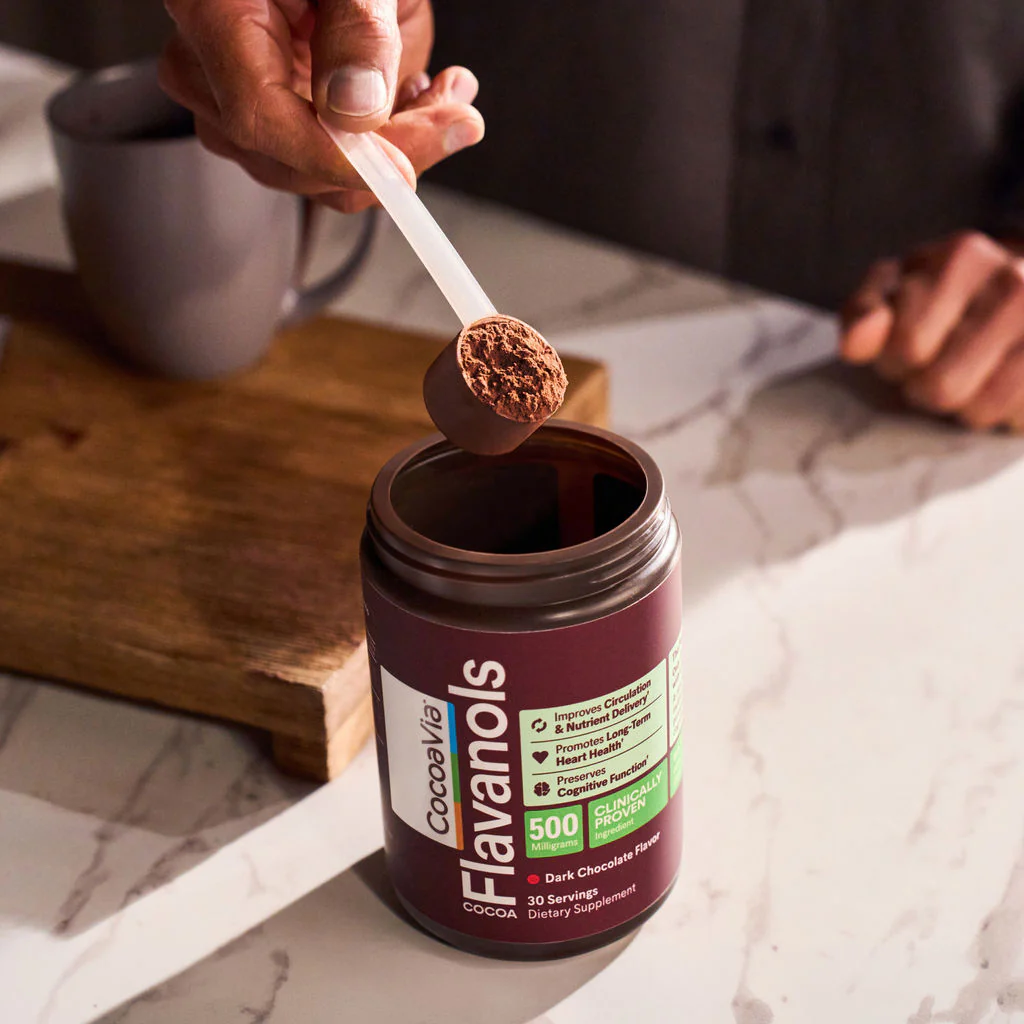

Can a candy company reinvent cocoa? After testing CocoaVia for six days, Green Prophet explores Mars’ 40-year investment in cocoa flavanols, sustainability, and the future of functional foods.
One lesson I’ve learned after decades covering sustainable food and green chocolate is that innovation rarely follows a straight line.
More often than not, a passionate founder creates something unusual, builds a loyal following, and eventually attracts the attention—or the acquisition offer—of a much larger company.
I’ve watched that story unfold many times. A friend of mine Cathy Richards founded SimplyProtein after struggling with Crohn’s disease and searching for a protein bar she could actually eat. Years later, the company became part of the Atkins portfolio. I’m also an investor in Zevia, a sugar-free soda company that started as a niche natural soda challenging conventional soft drinks, before growing into a nationally recognized beverage brand that even featured Cardi B in one of its advertising campaigns. Parents love it because they can give their kids root beer without the sugar spike. (It uses stevia).
These companies remind us that today’s small ideas can become tomorrow’s household names. That’s why CocoaVia surprised me.
Unlike many functional food brands, CocoaVia didn’t begin in the kitchen of an entrepreneur or inside a Silicon Valley wellness startup. It emerged from Mars, the global company better known for M&M’s, Snickers and Milky Way. Instead of buying its way into the wellness market, Mars spent decades asking a scientific question: What if cocoa’s greatest value wasn’t its sugar or fat, but its naturally occurring flavanols—plant compounds that are significantly reduced during conventional chocolate processing?
That question eventually led me to a cottage in northern Ontario.
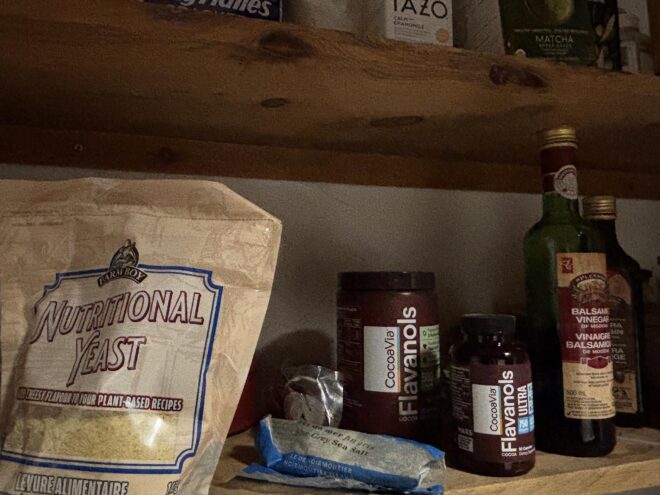
For six days, I shared meals, conversations, forest walks and long evenings with my friends Carrie and David, longtime followers of the raw food movement. David, in particular, has spent years exploring plant-based nutrition and natural health. Every morning we prepared mugs of CocoaVia, comparing notes on taste, texture and how it fit into our daily routines.
By the end of the retreat, we’d almost emptied the entire container. That alone said something.
Carrie laughed and apologized that she’d enjoyed so much of it that I’d barely had a chance to drink my fair share.
Usually products arrive with lofty promises only to end up forgotten in the back of a cupboard. This one became part of our daily ritual.
What surprised me most wasn’t that it tasted like chocolate—because it did, and it didn’t.
Nor did it resemble the thick ceremonial cacaos that have become popular among wellness communities. Those drinks are often rich, oily and almost meal-like. CocoaVia was lighter, more like tea or coffee: clean, elegant and surprisingly satisfying. Mixed with warm milk or oat milk, it felt more like a refined morning beverage than a decadent indulgence.
Personally, I found it gave me a gentle sense of clarity that paired beautifully with quiet mornings and conversation around the breakfast table. That’s my own experience—not a scientific conclusion—but it made me curious enough to ask a bigger question.
Forty Years Chasing One Question
I reached out to Mars to understand how one of the world’s largest candy companies became deeply invested in cocoa science. The answer begins more than four decades ago.
“Our research into the distinct flavanol components found in cocoa began in the 1980s with work done in Brazil, Indonesia, and the United States. In the early years, we were focused on understanding the types and forms of flavanols in cocoa and how processing affected them. In the 1990s, we started looking at what they might do in the body—getting our first indication that there might be health benefits. In 2001, we published our first paper which showed evidence of potentially profound cardiovascular benefits.”
— Mars to Green Prophet
The research by Mars Science revealed something unexpected.
“Another revelation? We found that traditional chocolate processing destroys those beneficial cocoa flavanols.”
— Mars to Green Prophet
That discovery changed the company’s direction.
Rather than creating another premium chocolate, Mars developed a proprietary extraction process known as CocoaPro, designed to preserve much of cocoa’s naturally occurring flavanols.
According to the company:
“CocoaPro preserves most of the flavanol content and produces a product containing a high concentration of these beneficial compounds. This process is what we use to make our cocoa extract, the key ingredient in CocoaVia supplements.”
— Mars to Green Prophet
Today, CocoaVia delivers between 500 and 750 milligrams of cocoa flavanols per serving, making it one of the highest-concentration cocoa flavanol supplements currently available in the United States.
Why Add Carob?
Another ingredient immediately caught my attention.
Why was there carob in a cocoa product?
Carob has deep roots in the eastern Mediterranean. In Jewish tradition, Rabbi Shimon bar Yochai is said to have survived for years in a cave sustained by a miraculous carob tree. Across Israel today, children still snack on sweet carob pods, and the fruit has long been used as a chocolate substitute because of its naturally rich flavour.
Mars says the decision had nothing to do with chasing food trends.
“As you know, CocoaVia 500 mg Cocoa Flavanols Powder is a dietary supplement consisting primarily of our clinically proven cocoa extract, CocoaPro, for its brain and heart health benefits. While the product was already low in contaminants, CocoaVia decided to improve the formulation by lowering heavy metal content even further with the addition of carob powder.”
— Mars to Green Prophet
It’s a thoughtful response to growing consumer concern over naturally occurring heavy metals such as cadmium and lead that can occur in cocoa products. Mars says the addition of carob was intended to reduce those levels even further.
For consumers increasingly asking where their food comes from—and what’s in it—that matters.
A Candy Company with a Different Mission
Mars is rarely the first company people think about when discussing sustainability.
Yet cocoa has become one of the defining environmental crops of our time. Author Simran Sethi has written extensively about the fragile future of beloved foods such as chocolate, coffee and wine, reminding us that climate change, disease and biodiversity loss threaten crops we often take for granted.
How chocolate is grown influences tropical forests, biodiversity, water use and the livelihoods of millions of smallholder farmers across West Africa, Latin America and Southeast Asia. Companies that depend on cocoa increasingly recognize that protecting the future of chocolate means protecting the ecosystems and communities that produce it.
While CocoaVia itself is a nutritional supplement, it also represents something larger: decades of investment in understanding one of the world’s most culturally and economically important plants. It’s a reminder that meaningful innovation doesn’t always arrive from startups. Sometimes it comes from companies willing to rethink what they already know.
How Does It Compare?
CocoaVia isn’t trying to replace ceremonial cacao.
If you’re looking for a rich, traditional cacao ceremony experience, brands like Ora Cacao may be a better fit. If you’re after a coffee alternative, Crio Bru offers roasted brewed cacao with a completely different flavour profile.
CocoaVia occupies another category entirely. Its appeal lies in standardization. Rather than emphasizing ritual or indulgence, it focuses on delivering a consistent amount of cocoa flavanols backed by decades of scientific research.
What are the health benefits of Flavanols?
The strongest, evidence-based summary is:
- Support healthy blood flow by helping blood vessels function normally (this is the best-established effect of cocoa flavanols).
- Support cardiovascular health in healthy adults.
- May support certain aspects of cognitive function, particularly in older adults, through improved blood flow. The evidence is promising but more mixed than for heart health.
- Antioxidant plant compounds called cocoa flavanols.
That won’t appeal to everyone, but it gives consumers something unusual in the wellness market: consistency and transparency about what they’re getting.
The flavour is mild, slightly earthy and nutty, unmistakably cocoa but without the richness of conventional drinking chocolate or the bitterness of some raw ceremonial cacaos. I preferred it with milk, while my friends enjoyed it with oat milk.
The Bigger Picture
During our six days together, we spent very little time talking about Mars.
Like many people, I had assumed the company had simply acquired a clever startup and wrapped it in good marketing. That wasn’t the story at all.
Instead, I discovered a team of scientists who had quietly spent forty years studying one remarkable plant and asking how it could retain more of its naturally occurring compounds through better processing.
One of the world’s largest confectionery companies had created a product that wasn’t asking us to eat more candy. Instead, it invited us to think differently about cocoa itself—not simply as the foundation of chocolate, but as a remarkable tropical plant whose chemistry, ecology and future deserve far more attention than they usually receive.
There’s still plenty of room to ask hard questions about cocoa sourcing, sustainability and the role of multinational food companies. Those conversations should continue. But after almost finishing the entire container over six days, I came away with a different impression than I expected.
CocoaVia isn’t trying to be the next trendy superfood.
It’s the result of a forty-year scientific experiment asking whether one of humanity’s oldest pleasures can also become one of its most carefully studied functional foods.
In an era obsessed with the next startup success story, that’s a reminder that meaningful innovation sometimes grows slowly—and in the most unexpected places.
::Cocovia
Disclosure: The author is an investor in Zevia. Mars answered Green Prophet’s questions for this article but had no editorial control over its content.