
What are AWG air-water generators, and why they aren’t a golden-bullet solution (yet)

Jordanian-American scientist wins with the Nobel Prize for advancing AWG, pulling water from thin air, using chemistry and physics.
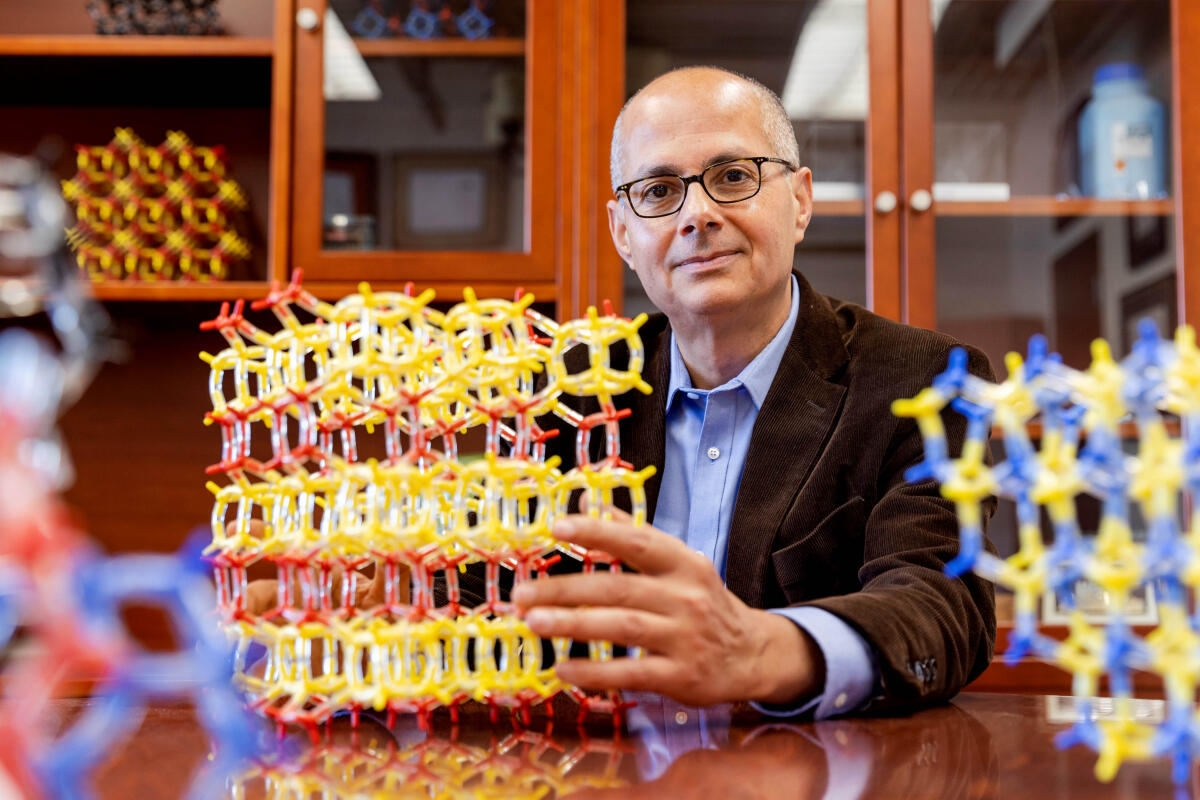
Jordanian-American scientist Omar Yahgi wins with the Nobel Prize for advancing AWG, pulling water from thin air, using chemistry and physics.

Atmospheric water generators (AWGs) sound like magic: machines that can pull drinking water out of air. The idea is mentioned in the Bible, where the elders would pray for water collected as dew on plants and the catch on turning this into a machine is in the physics. To turn invisible vapor into liquid, you must remove heat, especially the latent heat of condensation. In real machines, that usually means refrigeration (cooling air below its dew point) or heating/desorbing moisture from sorbents. Either way, energy use rises fast as humidity drops. While many solutions exist on the market, the solutions aren’t magic. Too much energy needs to go into the AWG machines to make the water from thin air concept work.

Peer-reviewed assessments put many active AWGs in the rough range of ~0.35 to >1.1 kWh per liter depending on climate and design see this paper. A broader scientific review of atmospheric water harvesting thermodynamics estimates maximum yields around 0.34 to0.73 L/kWh under various assumptions, equivalent to roughly ~1.4 to 2.9 kWh per liter in the “best case” envelope. See PNIH resource. Lab and field results can be lower or higher depending on temperature, humidity, airflow, and heat exchange losses.

The core problems of AWG, water from air generators
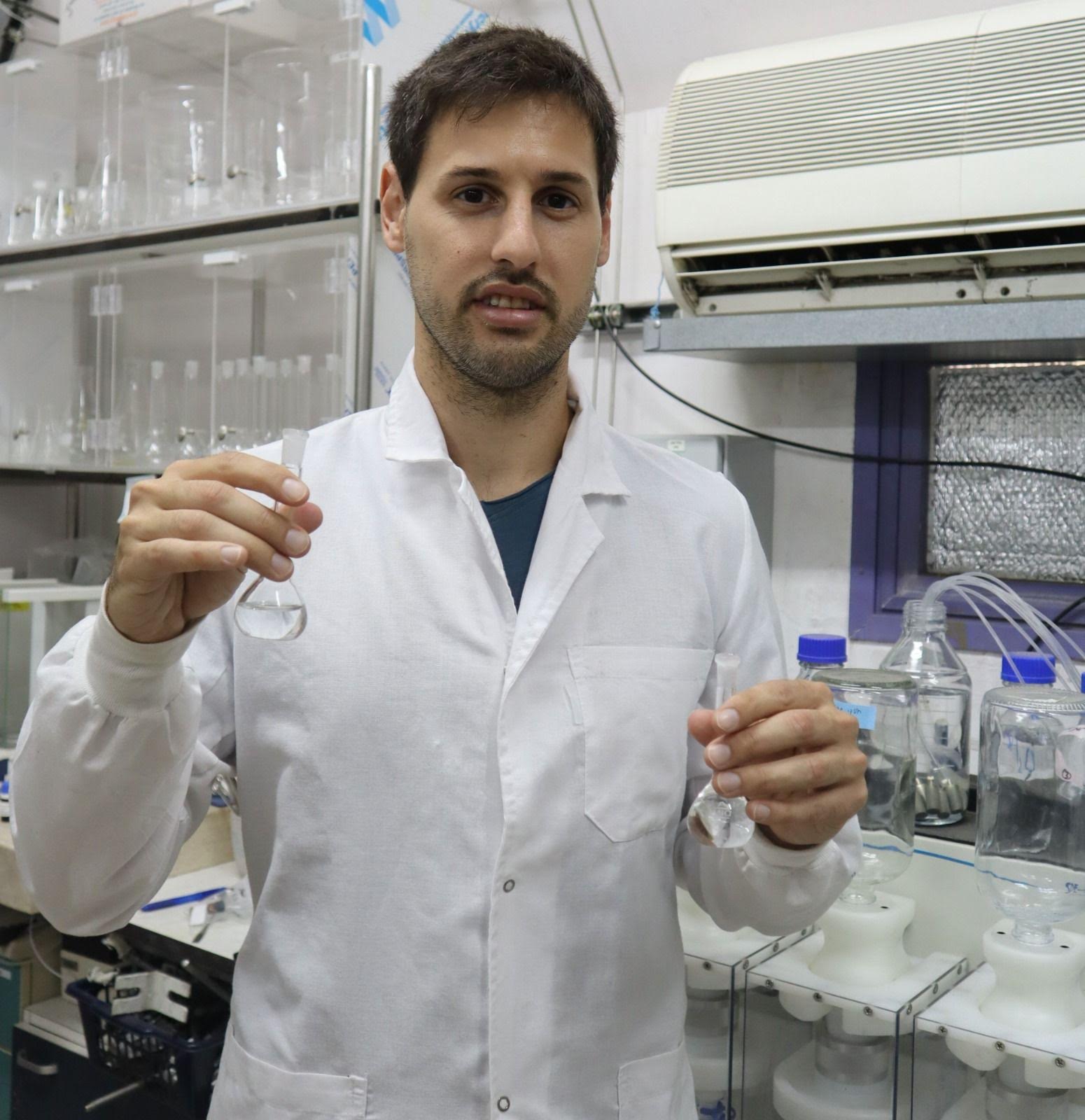
Watergen's Ofer Inbar
Watergen’s Ofer Inbar
  • Low humidity = tiny water per cubic meter of air. The drier the air, the more air you must process to get a liter, which means bigger fans, larger heat exchangers, and more power.
  • Cooling penalty. Condensation-based AWGs must cool air below dew point; that’s energy-intensive, especially in hot-dry regions where dew point can be very low.
  • Heat management. You must dump heat to the environment (or recover it). Poor heat rejection and frosting risks can crater performance.
  • Water quality isn’t “free.” Collected water still needs filtration/UV/mineralization and safe storage, adding energy and maintenance.

So how can AWGs be solved?

AC unit collects water. Use it as a part of the water-savings methods at the home or in the factory.

The most promising pathways don’t “beat physics” — they change the system boundary:

  • Use low-grade heat or solar thermal to regenerate sorbents instead of running compressors. MOF-based devices have shown solar-driven harvesting in arid climates (Kim et al., in this 2018 Nature article).
  • Hybridize with HVAC/dehumidification you already pay for to run. If a building must remove humidity anyway, capturing and polishing that water can be “incremental” rather than “extra.” While it might not run showers, the water can be used to water gardens or flush toilets. See our article on top uses for AC water.
  • Raise efficiency via better sorbents + heat recovery. New cycling strategies and materials aim to cut regeneration energy and speed cycles (Kang et al., 2024).
  • Target the right use cases. Emergency backup, remote sites, islands, and places where trucking water is expensive can justify higher kWh/L.

10 promising companies in the AWG space

watergen water from think air
Watergen generates water from air in Bukhara
  1. SOURCE Global (solar “hydropanels”) — promising for off-grid drinking water where sunlight is abundant (SOURCE how it works).
  2. Watergen — large deployments and claimed efficiency improvements; best fit in warm/humid conditions. See our past article on Watergen.
  3. Genesis Systems — containerized systems positioned for disaster resilience and humid climates.
  4. Aquaria — scaling “water from the sky” for housing developments; success depends on cost per liter vs local supply (Time on Aquaria).
  5. Skysource / Skywater Alliance (WEDEW) — notable for renewable-energy framing and resilience applications (XPRIZE profile).
  6. AirJoule — one to watch if real-world data confirms lower energy via novel separation/recovery approaches (AirJoule investor deck).
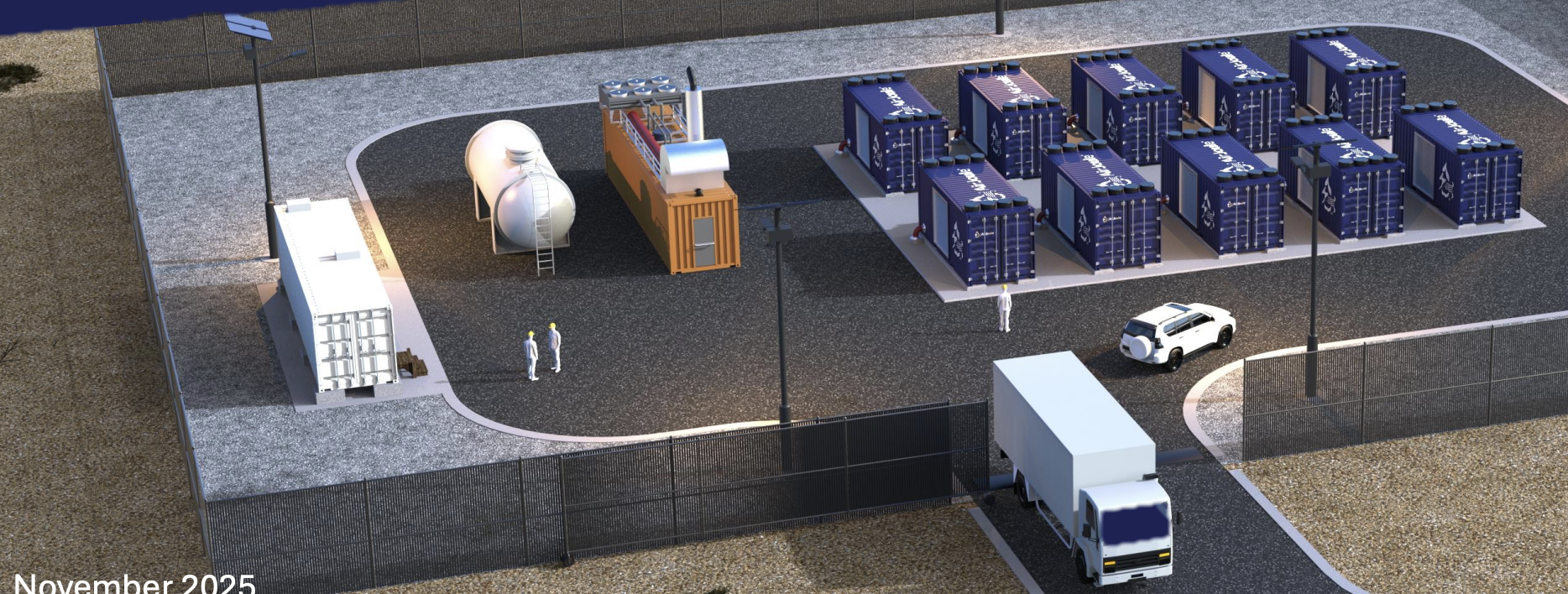
    Airjoule
  7. Uravu Labs — interesting liquid-desiccant path tied to renewables and local bottling models (Mongabay India).
  8. Kara Water — consumer appliances; compelling product story, but energy economics must be transparent (Kara Water).
  9. EcoloBlue — long-running commercial/home units; performance varies heavily with climate (EcoloBlue specs).
  10. WaHa from Saudi Arabia is positioning around “water + dry air” and grid-independent operation; worth watching for verified field performance (WaHa). Professor Omar Yaghi, a distinguished chemist from the University of California, Berkeley, and pioneer of reticular chemistry (inventor of Metal-Organic Frameworks/MOFs). Born in Jordan and working in California, he was awarded the 2025 Nobel Prize in Chemistry, shared with Richard Robson and Susumu Kitagawa, for this work. Waha is active in Saudi Arabia and the UAE.
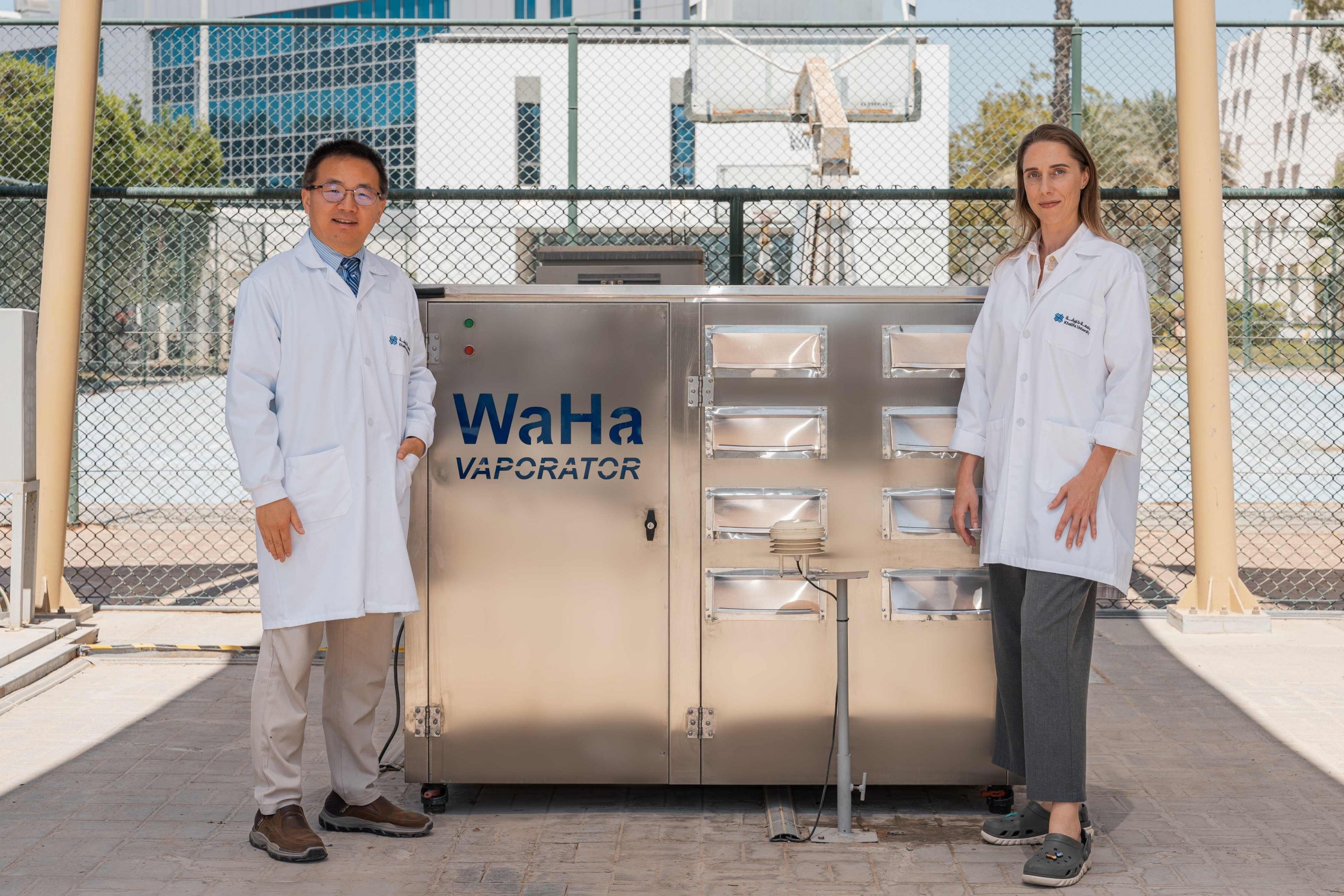
    WAHA

    Omar Yahgi, a Jordanian-American Nobel Prize winner who founded Waha

AWGs are rarely the cheapest way to make water where pipelines, wells, or desalination are available. They are commonly used by armies to create water in remote locations where energy isn’t an issue. Diesel or solar does the heavy lifting. But as materials improve, and as systems tap waste heat, solar thermal, or existing dehumidification loads, AWGs can become a practical niche tool, especially for resilient, point-of-use drinking water in the places that need it most in off-grid sites and in emergency settings.

Mayu team Elad Erdann(center), Shay Eden (left), Ze'ev Zohar
The Mayu team has cracked the code on how to make spring water

Let’s aim for the day when fusion energy is real, and we can all pull water from the air to drink. Just add some Mayu minerals to make the water work well for your body.


Karin Kloosterman
Karin Kloostermanhttp://www.greenprophet.com
Karin Kloosterman is an award-winning journalist, innovation strategist, and founder of Green Prophet, one of the Middle East’s pioneering sustainability platforms. She has ranked in the Top 10 of Verizon innovation competitions, participated in NASA-linked challenges, and spoken worldwide on climate, food security, and future resilience. With an IoT technology patent, features in Canada’s National Post, and leadership inside teams building next-generation agricultural and planetary systems — including Mars-farming concepts — Karin operates at the intersection of storytelling, science, and systems change. She doesn’t report on the future – she helps design it. Reach out directly to [email protected]

Read More

TRENDING

Dan Zaslavsky’s energy tower dream is rising again in Iran and China

The Energy Tower idea never made the leap from drawings and engineering studies to full-scale construction. But nearly two decades after most people stopped talking about it, the concept is quietly evolving in two unexpected places: China and Iran. The concept let dreamers dream and doers do - figuring out more pleasing designs and engineering.

A visit to Amirim, Israel’s first all-vegetarian village in the Galilee

Just 15 kilometers from Tzfat there is a moshav that was founded in the late 50s that was ideologically influenced by organic, vegetarian and vegan principles. My hostess at Ohn-Bar, the tzimmer where I stayed, explained that the people of Amirim were among the pioneers of Israel’s strong vegetarian movement.

Israeli Hydrogen Startup H2Pro Are Trying to Solve Clean Energy’s Hardest Problem

The company has attracted backing from major investors including Breakthrough Energy Ventures, the climate fund founded by Bill Gates, along with industrial partners such as Sumitomo, ArcelorMittal, and Temasek, a multi-billion dollar company that owns Singapore airlines. H2Pro has raised more than $100 million USD and is moving from pilot projects toward commercial-scale deployments.

NEOM’s The Line is delayed as Saudi mirage hits reality

Without blinking indeed: Saudi Arabia has reportedly delayed major work on The Line,  the planned 170-kilometer mirrored city slicing through the desert, until after 2030. Tourism projects along the Red Sea are being pushed back, and Trojena, the fantasy ski resort in the mountains fueled with artificial snow, is also effectively frozen.

Desalination experts debunk Aqua Solaire, the floating desalination barge

AI makes it easy to dream, develop, and create images of what could be world-changing ideas, until the reality sets in. A new project making the rounds is Aqua Solaire, an allged French concept for a solar-powered desalination vessel designed to bring drinking water to coastal communities facing drought, storms, and infrastructure failures.

Here’s How To Implement The Four Pillars Of Employee Engagement

If you throw a party for your work team and they are vegans, don't make it a barbecue. Know the sustainability values of your team to boost moral and retain good people.

Locals From Rishon Fight IKEA

Big Box stores are a pretty new concept in Israel, and thank God that not every Israeli city wants them in their backyard. A word from someone who has see the beautiful farmland around her hometown Newmarket, Ontario stripped and converted into vulgar strip malls of big box shops: they have no place in a healthy and sustainable town or city.

The Jewish National Fund Meets An Inconvenient Truth

According to the JNF, it has transformed thousands of acres of barren land into green forests in Israel. They state that each person emits about 23 tons of carbon per year, estimating that each tree planted can absorb one ton of carbon in its lifetime. That's a whole lot of trees you'd need to be planting. Could so many fit in Israel?

How to quiet noise from construction in your office

Streets need to be resurfaced in New York but the humming and grinding noise is unsettling. Noise is environmental pollution. 

EarthX and a blueprint for sustainable investing

Trammell S. Crow, a Dallas-based businessman and father of four, is focusing his efforts on impact investing, and media that focuses on saving the planet through EarthX.

Mining Afghanistan’s Mineral Discoveries Similar to Avatar

Now that American forces in Afghanistan are commemorating the longest period of any war that America has been involved in, including the 1965-73 Vietnam War, the recent discoveries of large and extremely valuable mineral and metal deposits may finally bring to light a reason to continue the presence of US fighting forces in this war torn and backward country.

From Pilot Plant to Global Stage: How Aduro Clean Technologies’ 2026 Expansion Signals a Turning Point for Chemical Recycling Investors Like Yazan Al Homsi

The company's Next Generation Process (NGP) Pilot Plant in London, Ontario, has officially moved into initial operating campaigns, generating the kind of structured, repeatable data that separates laboratory promise from commercial viability.

Nobul’s Regan McGee on Shareholder Value: “Complacency Is the Silent Killer” 

Why the governance framework designed to protect shareholders so...

Popular Categories