

Hair loss is one of those things most people notice slowly — a few extra strands on the pillow, a slightly wider part, or a hairline that seems to be moving backward. By the time it becomes obvious, it’s usually been happening for a while. The good news is that hair loss is rarely a dead end. There are real treatment options out there, and understanding how they work makes it easier to choose what’s right for your situation.
Why Hair Loss Happens in the First Place
Before exploring treatments, it helps to understand why hair falls. Hair loss isn’t one condition — it has different causes, and those causes affect which treatments actually work.
Some common reasons include:
- Hormonal imbalances, especially DHT sensitivity in the scalp
- Nutritional deficiencies like low iron, zinc, or B12
- Chronic stress, which disrupts the hair growth cycle
- Thyroid disorders that affect metabolism at the cellular level
- Scalp conditions like dandruff or seborrheic dermatitis
- Genetics, which determine how sensitive your follicles are to hormones
Knowing your root cause isn’t optional — it’s the starting point. Treating stress-related hair loss the same way as genetic hair loss rarely works.
Topical Treatments
Topical solutions are applied directly to the scalp. The most well-known is minoxidil, available over the counter in 2% and 5% concentrations. It works by widening blood vessels in the scalp, improving blood flow to hair follicles, and extending the growth phase of the hair cycle.
Minoxidil works reasonably well for certain types of hair loss, especially in the early stages. But it requires consistent, long-term use. Stopping it usually means the hair gained during treatment falls out again. It also doesn’t address the underlying hormonal or nutritional factors driving the loss.
Other topical options include DHT-blocking shampoos, caffeine-based serums, and peptide sprays. These work more gradually and are typically used as supporting tools rather than standalone treatments.
Oral Medications
Finasteride is the most commonly prescribed oral medication for hair loss in men. It works by blocking the enzyme that converts testosterone into DHT — the hormone directly responsible for shrinking hair follicles in people with androgenetic alopecia.
It’s effective for many men, but it comes with potential side effects including reduced libido and mood changes. It’s also not suitable for women, particularly those of childbearing age.
Oral minoxidil, at lower doses, is also gaining traction as an option. It tends to have a more systemic effect than the topical version and is increasingly being prescribed by dermatologists for both men and women.
Nutritional and Ayurvedic Approaches
Hair needs raw materials to grow — proteins, vitamins, minerals, and good scalp circulation. When those are missing, no topical product will compensate. Nutritional approaches focus on correcting deficiencies from within.
This includes:
- Biotin, which supports keratin production
- Iron and ferritin, especially important for women with hair loss
- Vitamin D, which plays a role in follicle cycling
- Ashwagandha and Bhringraj, Ayurvedic herbs with adaptogenic and scalp-nourishing properties
- Amla, which is rich in Vitamin C and antioxidants that protect follicles
Ayurvedic treatments look at hair loss through the lens of internal imbalances — weak digestion, elevated stress hormones, and poor circulation — which aligns surprisingly well with what modern science shows about systemic triggers.
Procedural Treatments
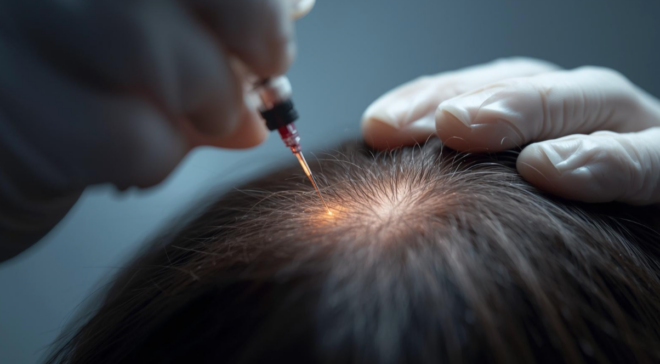
For more advanced hair loss, procedural options are available. PRP, or Platelet-Rich Plasma therapy, involves drawing a small amount of blood, concentrating the growth factors, and injecting them into the scalp. It’s non-surgical and has shown positive results, though it requires multiple sessions.
Hair transplant surgery — either FUE or FUT — is considered the most permanent solution for significant hair loss. It physically moves follicles from donor areas to thinning ones. Results look natural when done well, but it’s expensive and still requires maintenance afterward.
Finding the Right Approach
There’s no universal fix for hair loss, and anyone who tells you otherwise is selling something. Effective treatment almost always involves identifying the real cause first, then using a combination of approaches rather than a single product.
If you’re trying to support your hair health alongside a treatment plan, understanding practical hair growth tips — things like scalp care, diet adjustments, and stress management — can make a meaningful difference over time. Platforms like Traya take a combined approach, addressing hair loss through Ayurveda, nutrition, and dermatology together, which tends to be more sustainable than any one-ingredient solution.
Final Thoughts
Hair loss and hair removal is manageable for most people — but it takes some patience and the right information. The treatments that work best are the ones built around your specific cause, not whatever’s trending. Start by understanding why your hair is falling, then choose your tools accordingly. That’s really the most important step.