
For the ancient Jewish community, often referred to as the Essenes, that lived near the Dead Sea more than 2,000 years ago, time was supposed to follow a perfect order. The year contained exactly 364 days. Every festival arrived on the same day of the week. The harvest, first fruits and religious life could all be placed within an elegant cycle of 52 complete weeks. There was no leap year, and no added month as the Jewish calendar uses today to sync up with the seasons. Take for example the Muslim calendar which has 13 months, and which is not in sync with natural seasons at all. Ramadan can happen in summer or winter.
Related: Ramadan calendar download
There was just one problem with the Essenes plan back then – nature did not cooperate.
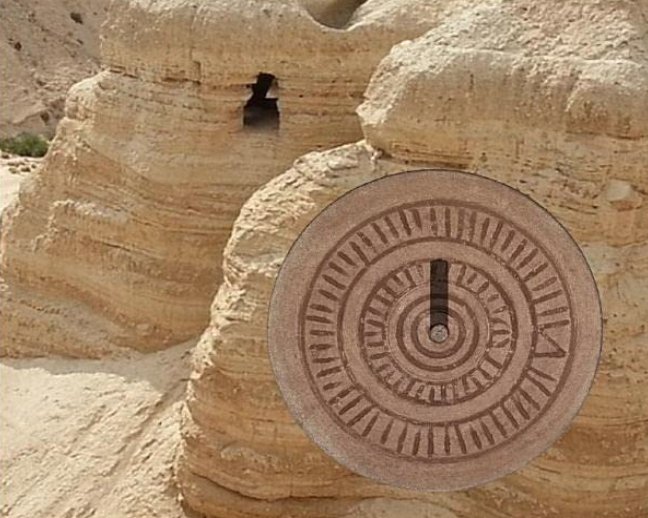
A new study proposes a solution to one of the enduring mysteries surrounding the Dead Sea Scrolls: whether the unusual 364-day calendar described in the Qumran texts, recently decoded by artificial intelligence, was ever actually used.
Prof. Eshbal Ratzon from Tel Aviv University argues that it was in her new research paper, until the people at the Dead Sea, isolated from their community, realized that their calendar was drifting away from the seasons it was supposed to organize. Jewish holidays and seasons are connected to harvesting, growing, and the moon, dictating when to give honorings at the temple in Jerusalem and when to fast.

Video on understanding the Dead Sea scroll calendar
The finding offers a fascinating glimpse into an ancient conflict between mathematical perfection which the Essenes thought they’d solved, and the ecological reality of nature. A calendar may be created by people, high priests or political authorities, but agriculture and the pulse of the planet still answers to the movement of the Earth, the return of the rains and the changing seasons.
A perfect calendar with an environmental flaw
How did it work and where did they go wrong: The calendar associated with the Qumran community contained exactly 364 days, a number divisible by seven. That meant every year contained precisely 52 weeks, with religious festivals such as Passover or Succoth, the festival of the booths, always falling on the same day of the week.
For the Jewish sect, this was more than convenient scheduling. It represented to them a divine order and a rejection of the religious authorities in Jerusalem, who determined important dates according to the prevailing lunisolar calendar, or – the moon.
The Qumran community believed that sacred time had already been established at Creation and should not be altered in any way by human beings. But unknown to them, the solar year is roughly 365¼ days long. A calendar of only 364 days falls behind the seasons by about one and a quarter days every year. Over time, those days add up.
Over 20 years, that discrepancy adds up to nearly four weeks and eventually they figured out that over longer periods, festivals associated with spring harvests and first fruits would gradually migrate into winter or autumn.
For an agricultural society that depended on giving their first fruits and tithes to religious authorities in Jerusalem, the calendar would eventually make no sense.
Ratzon’s study suggests that this accumulating ecological mismatch may explain what happened next. Researchers have long debated whether the Qumran community periodically inserted additional days or weeks to correct its calendar, much as other calendar systems use leap years or intercalation. In the Jewish calender, they add a whole extra month every 4 years.
Others have suggested that the 364-day system was never intended for practical use at all. Ratzon argues that the Dead Sea Scrolls support a different explanation: the calendar was real, important and actually used — but it was eventually abandoned.
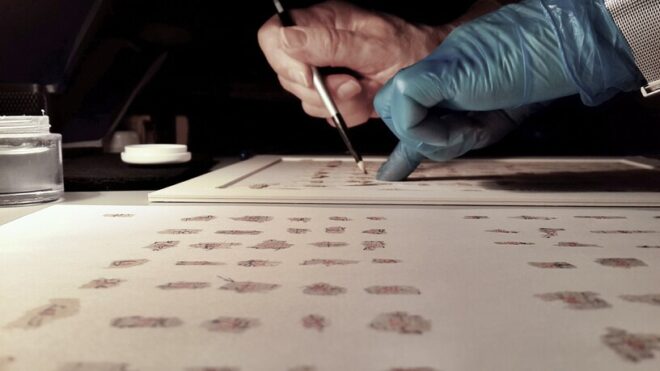
Nearly 20 scrolls discovered at Qumran deal with calendars and astronomy, an unusually large body of material that demonstrates how central the measurement of time was to the community. The Book of Jubilees, an important text in the Qumran library, strongly attacks the lunar calendar and presents the 364-day year as the original calendar given to Moses at Mount Sinai.
According to Ratzon’s reconstruction, the calendar was probably used during the sect’s formative period in the second century BCE and contributed to its rupture with the religious establishment in Jerusalem. But eventually, the growing gap between the calendar and the natural seasons became impossible to ignore.
Politics may also have helped change the community’s position. During the reign of the Hasmonean king Alexander Jannaeus, relations apparently improved. Jannaeus supported religious interpretations closer to those of the Qumran community and opposed the Pharisaic leadership.
That political thaw, Ratzon argues, may have allowed the community to give up its insistence on a calendar that was becoming increasingly impractical and adopt the calendar used at the Temple in Jerusalem.
The 364-day calendar did not disappear entirely. Instead, it may have survived as an ideal: a memory of perfect time at Creation and perhaps a calendar to be restored in the End of Days.
“The Qumran calendar has long been regarded as one of the Qumran sect’s defining features, but also as one of the most baffling mysteries of the Dead Sea Scrolls,” Ratzon says.
“This study proposes an alternative for the seeming contradiction between a functional calendar and a theoretical one. It is quite possible that the calendar was in fact used for a certain period of time, but then, losing its practical role due to both inherent problems and political changes, became a religious ideal and a symbol of identity. This would explain both its centrality in the Qumran scrolls and its gradual disappearance from historical reality.”
The story has an unexpectedly modern resonance. Humans have always tried to impose neat systems on the natural world and we’ve been trying to fit our own messy reality and humanity onto God. But seasons, harvests and planetary cycles do not bend easily to ideology.
For the people of Qumran, a calendar designed to express perfect cosmic order may ultimately have failed because it could not keep pace with the Earth itself. Time will tell.

For those who want to take action, the Dead Sea is shrinking. It is being pumped for minerals and materials for agro-business and virtually no original fresh water is streaming back to replenish it. The Dead Sea is also bordering Jordan. Work with the Dead Sea Guardians to help stop the sinkholes and bring the Dead Sea back to life.
Related: Celebrate the Jewish calendar with Tu Be’shvat, the New Year for the trees