When peace returns, will we rediscover Saudi Arabia’s mud-brick soul?

Rijal Alma via the Saudi Arabian Government.

When the region settles after the American war with Iran, and it will, American and European travelers will come back. Not just for spectacle or headline projects, but for places that feel real. Places that haven’t been engineered to impress and which get into your soul.

We predict that visitors to Saudi Arabia will want to see places like Rijal Alma.

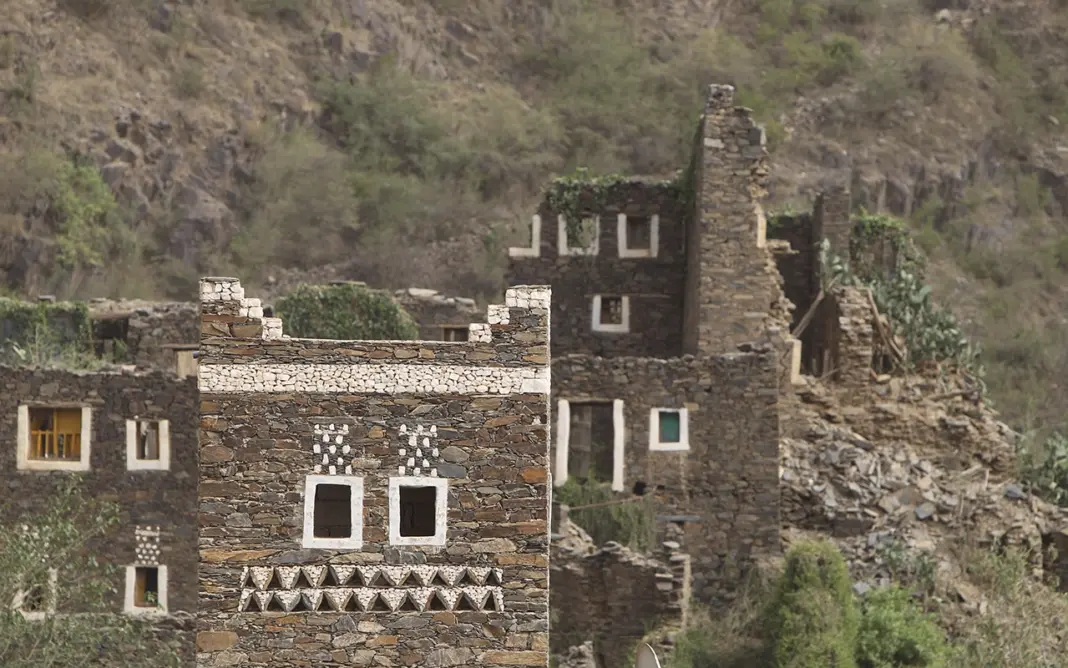
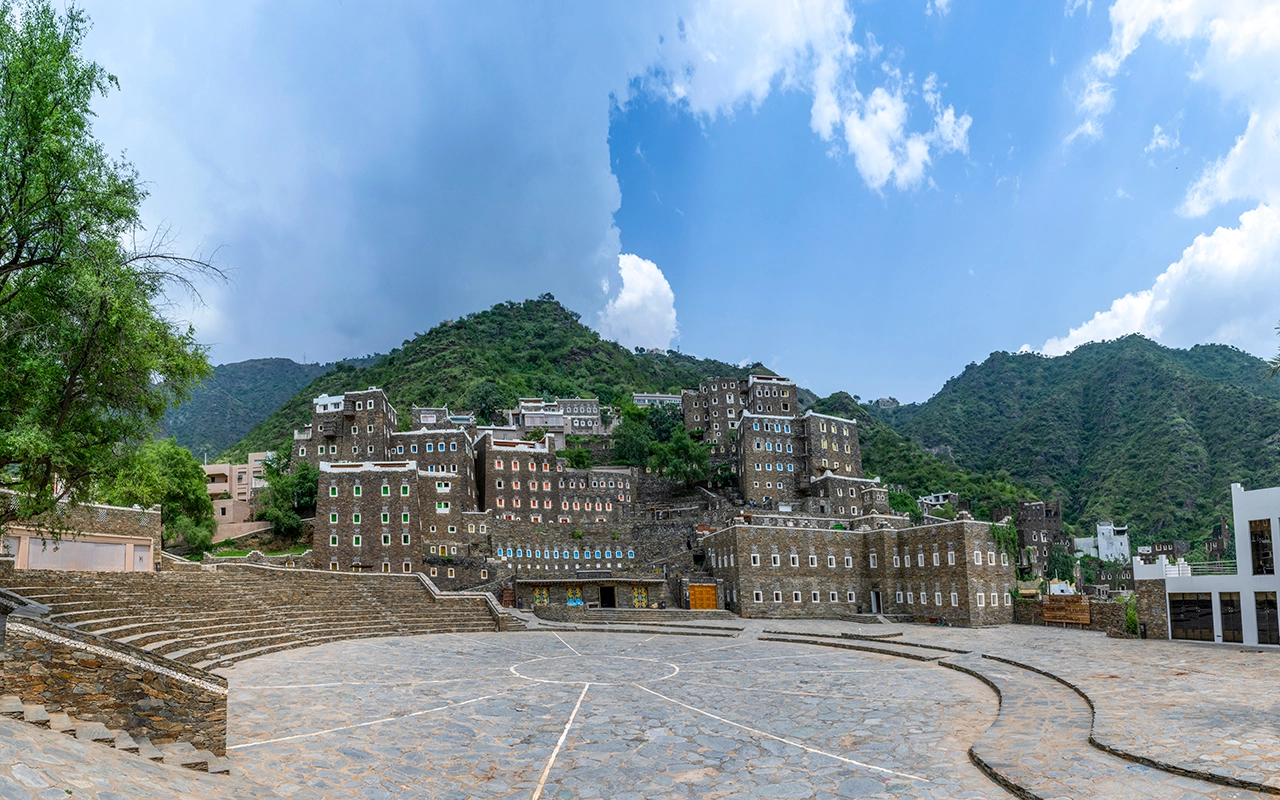
About 28 miles west of Abha, in the mountains of Saudi Arabia’s Asir region, Rijal Alma sits along steep slopes that fall toward the Red Sea. The village is known for its tall, narrow houses, some rising six stories—built from stone, mud, and wood. They’ve been standing for generations, holding their shape in heat, wind, and time.
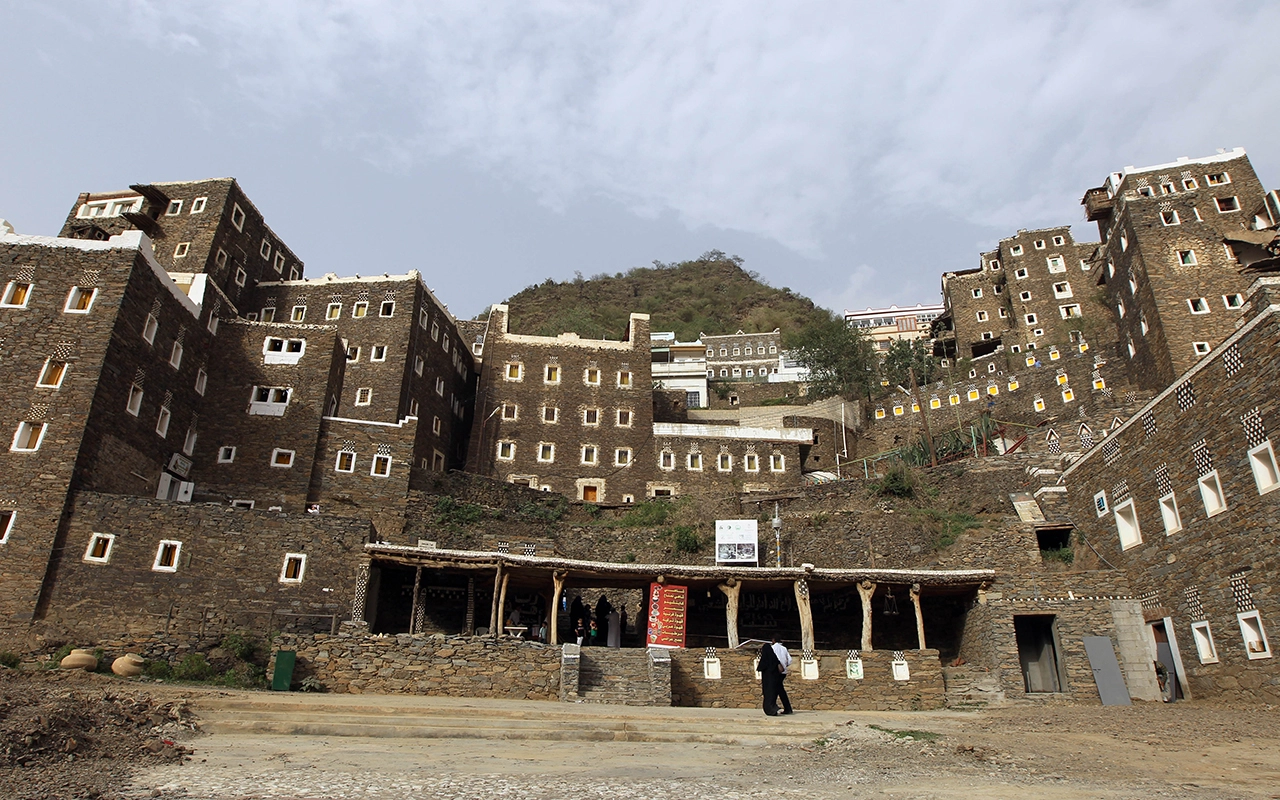
Rijal Alma via the Saudi Arabian Government.

This is vernacular architecture in its pure form. Long before eco, regenerative and sustainability became buzzwords, builders here figured out how to work with the climate. Thick earthen walls absorb heat during the day and release it at night. Small windows limited direct sun and gave privacy which is what Muslim families expect. The stacked design helps air move through the structure. Nothing is decorative for the sake of it. Everything has a purpose.

Saudi Arabia today is pushing forward with massive projects which have either failed or been postponed, like NEOM, Trojena, Shebara—designed to redefine how people live in extreme environments. They’re bold, expensive, and built to draw attention. But they also raise a question. Is oil money only buying the new and fantastic? As the world weans itself on oil, Saudi Arabia and its family owned oil company Saudi Aramco, will return to humble roots like the House of Saud, a ruling family that once lived in a mud palace.

shebara pod hotel, Saudi Arabia, luxury pod hotel, Red Sea Project, futuristic hotel, eco-friendly resort, sustainable tourism, Shebara Island, Red Sea Saudi Arabia, unique accommodations, overwater villas, modern architecture, travel destination, luxury travel, Saudi Arabia tourism, Red Sea hotels, desert meets sea, remote getaway, eco-lodge, sustainable travel, island retreat, premium hospitality, scenic views, travel photography, Middle East resorts
Red Sea pod hotel the Shebara Resort

Rijal Alma shows a different approach to building. The materials are local and the scale is human.

Under the House of Saud, there’s been more interest in restoring historic sites like this one. That’s a start. But preservation alone isn’t enough. The real shift would be using these ideas again, not as decoration, but as a base for new construction.

House of Saud, the humble origins of the Saudi tribe that would rule the oil-rich nation

In a hotter world, that kind of thinking matters. Buildings that cool themselves. Materials that don’t rely on long supply chains. Designs that last.

At-Turaif, mud vernacular building, earth architecture, Saudi Arabia, House of Saud, UNESCO heritage site, mud palace, greenprophet
The House of Saud lived in a palace made from mud

When travel feels safe again, visitors from the US and Europe will likely make their way here. Not just to see something old, but to understand how people built before energy was cheap and space was unlimited. Walk through Rijal Alma and you notice it right away. The temperature drops in the shade. The walls feel solid. The streets are narrow for a reason. Nothing is random.

It’s not nostalgic. It’s practical. And we love that.

Karin Kloosterman
Karin Kloostermanhttp://www.greenprophet.com
Karin Kloosterman is an award-winning journalist, innovation strategist, and founder of Green Prophet, one of the Middle East’s pioneering sustainability platforms. She has ranked in the Top 10 of Verizon innovation competitions, participated in NASA-linked challenges, and spoken worldwide on climate, food security, and future resilience. With an IoT technology patent, features in Canada’s National Post, and leadership inside teams building next-generation agricultural and planetary systems — including Mars-farming concepts — Karin operates at the intersection of storytelling, science, and systems change. She doesn’t report on the future – she helps design it. Reach out directly to [email protected]

LEAVE A REPLY

Please enter your comment!
Please enter your name here

TRENDING

What are AWG air-water generators, and why they aren’t a golden-bullet solution (yet)

Atmospheric water generators (AWGs) sound like magic: machines that can pull drinking water out of air. The idea is mentioned in the Bible, where the elders would pray for water collected as dew on plants and the catch on turning this into a machine is in the physics. To turn invisible vapor into liquid, you must remove heat, especially the latent heat of condensation.

Jordan’s $6 Billion Aqaba–Amman Desalination Project from the Red Sea Moves Forward

In 2025, the Jordanian government signed agreements with a consortium led by Meridiam and SUEZ, alongside VINCI Construction and Orascom Construction. Under a 30-year concession agreement, the consortium will design, build, finance, operate, and maintain the system before transferring it back to the Jordanian government. The total investment is estimated at approximately $6 billion USD.

Saudi Arabia cancels the Asian games at Neom’s Trojena

Neom, a bombastic collection of futuristic cities and resorts, has flopped as Saudi oil prices roll back reality. The Saudi plan of hosting the 2029 Asian games to be held at Trojena, a ski report in the desert, has been cancelled. 

Xcimer is the Denver-based startup that could put Saudi Arabia out of business

An American company can collapse OPEC if they can prove their approach to unlimited energy works.

The Saudi Startup Turning Desalination’s Toxic Waste Into Its Own Disinfectant

For millennia, the Middle East's water crisis seemed an immutable fact of geography — a region defined as much by what it lacked as by what lay beneath its sands. Today, a convergence of plummeting solar costs, advancing membrane technology, and hard-won engineering expertise is rewriting that story.

Nobul’s Regan McGee on Shareholder Value: “Complacency Is the Silent Killer” 

Why the governance framework designed to protect shareholders so...

Should You Invest in the Private Market?

startustartup Unlike public stock exchanges, which offer daily trading, strict...

How to build a 100-year-company

Kongō Gumi is a Japanese construction company, purportedly founded in 578 A.D., making it the world's oldest documented company. What can we learn about building sustainable businesses from them?

From Pilot Plant to Global Stage: How Aduro Clean Technologies’ 2026 Expansion Signals a Turning Point for Chemical Recycling Investors Like Yazan Al Homsi

The company's Next Generation Process (NGP) Pilot Plant in London, Ontario, has officially moved into initial operating campaigns, generating the kind of structured, repeatable data that separates laboratory promise from commercial viability.

How AI Helps SaaS Companies Reduce Repetitive Customer Support Work

SaaS products are designed for large numbers of users with different levels of experience, and also in renewable energy.

Pulling Water from the Air

Faced with water shortage in Amman, Laurie digs up...

Turning Your Energy Consultancy into an LLC: 4 Legal Steps for Founders in Texas

If you are starting a renewable energy business in Texas, learn how to start an LLC by the books.

Tracking the Impacts of a Hydroelectric Dam Along the Tigris River

For the next two months, I'll be taking a break from my usual Green Prophet posts to report on a transnational environmental issue: the Ilısu Dam currently under construction in Turkey, and the ways it will transform life along the Tigris River.

Related Articles

Popular Categories