


When thinking about cities in the Netherlands, most people picture canals lined with charming old houses and narrow brick alleyways. Don’t expect to find any of that in Rotterdam. This is not your typical Dutch city. Rotterdam is known for its modern, experimental architecture and has turned it into a hotspot for sustainable urban design. Once an unappealing port city, the city transformed into a playground for innovation.
Rotterdam’s rising up from the ashes
The second-largest city in The Netherlands, home to about 600,000 people, has always been different from other Dutch cities – and for a long time, it didn’t stand out in particularly positive ways.
Rotterdam was long known as one of the poorest cities in the country, with high criminality and unemployment rates and a large population of unskilled immigrant workers. It was a working-class city, with an economy mainly fueled by the city’s port – once one of the largest ports in the world. It had a gritty image and didn’t appeal much to well-off Dutch people, tourists, and investors.
During World War II, Rotterdam was bombed and the city center was left in ruins. Hence the lack of a historic center, as you will typically find in other Dutch cities. After the war, instead of rebuilding the city center the way it used to be, Rotterdam decided to head in a new direction. It started to reinvent itself as a modern city, characterized by high-rise buildings and experimental architecture.
Over the years, the city has earned a solid reputation. The city that used to be looked down upon, is now a popular tourist destination with international allure, attracting creative minds and designers with big ideas. It is home to dazzling architectural structures and many recent additions to the city’s skyline stand out because of their innovative and sustainable character.
Dealing with Floods in Holland
Rotterdam’s inhabitants like to think of themselves as pragmatic people who aren’t afraid to roll up their sleeves and get things done. It might be their no-nonsense, entrepreneurial spirit that sparked the wave of green innovations in the city. But there is also another, more practical catalyst: rising water.
Like a big part of the Netherlands, Rotterdam is located below sea level. At approximately four meters below sea level, it is basically a big bathtub. Although protected by the country’s extensive water protection systems, climate change presents new challenges, such as rising sea levels and heavy rainfall potentially flooding the city.

Several innovative projects were developed as part of plans to make the city climate-proof – Rotterdam aims to achieve this by 2025. Those projects include the construction of a Water Square, featuring concrete basins that serve as recreational facilities but can double as water storage facilities, and a Sponge Garden, where new concepts for collecting, retaining and returning rainwater to the natural environment are being tested.
Sustainable Floating Structures
The abundance of water also triggered another phenomenon that characterizes sustainable design in Rotterdam: floating structures. While the city’s port is still huge, it is not as significant as it used to be and various old harbors are no longer in use. The space occupied by those harbors is being repurposed with a greener future in mind.
There is a floating pavilion, consisting of three large glass domes which are being used as an event location. The so-called bobbing forest is an artistic project featuring miniature trees floating about on buoys. The floating park, made entirely out of recycled materials, is designed to trap plastic and serve as an urban ecological habitat for animals.
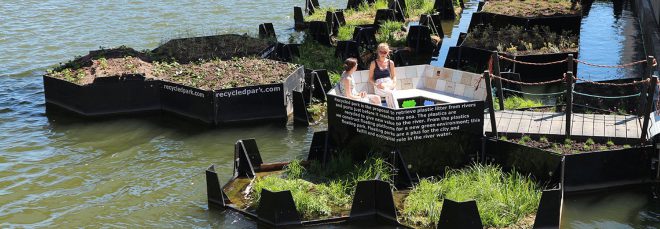
Meanwhile, the floating farm – a world premiere – is home to dozens of cows. It claims to prioritize animal welfare, promote circular farming, and produce healthy food right in the middle of the city, close to consumers. The cows are fed with residuals from local companies.
Circular economy across the city
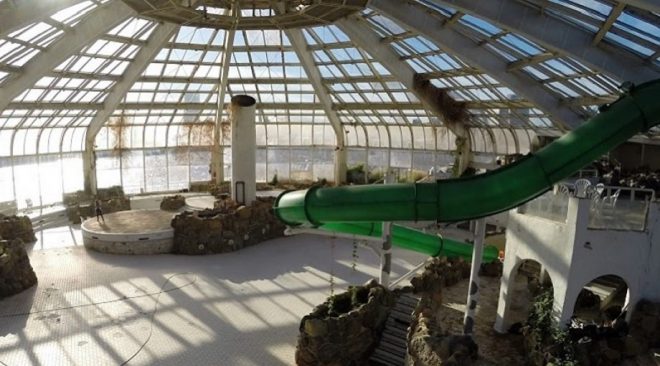
Another innovation hotspot for the circular economy has arisen on the banks of the river Maas that crosses the city. The iconic former swimming pool Tropicana – every inhabitant of Rotterdam born before 1990 swam here at least once – has turned into a hub for sustainable start-ups, named BlueCity.

It aims to support starting sustainable enterprises and connect them to each other, creating circular networks in which the output of one process becomes the input for another. At BlueCity, bee wax from a local beekeeper is used by a local carpenter and fruit peels from the local market are processed into fake leather for producing bags.
It all began with the start-up Rotterzwam when two green entrepreneurs realized the humid basement of the former pool was the perfect environment for a mushroom farm. They started cultivating mushrooms in coffee grounds from surrounding coffee shops. The veggie snacks made from the mushrooms are served in low-waste restaurant Aloha and bars and restaurants around town.
Green spaces in the urban environment
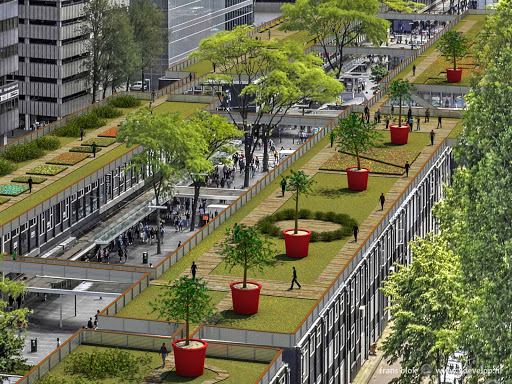
Rotterdam’s concrete urban environment has been upgraded with green spaces. The city is home to the largest public roof park in Europe, the DakPark, complete with vegetable gardens and grazing sheep. In another part of the city, the roof of former train station Hofplein has been transformed into a public park. The nearby Schieblock features a large rooftop farm, measuring 1000m2, where city folks grow fruits and vegetables and keep bees.
Sustainable housing, though not yet widely available, is being experimented with. The Concept House Village is designed as a test site for sustainable construction, where sustainable concept houses are realized in close cooperation with researchers from local universities. Across the city, the ActiveHouse is designed to have minimal environmental impact, with large windows facilitating natural light and passive heating and a heat pump connected to solar panels to generate energy.
Clean energy and air for Rotterdam
Green energy was also an important consideration during the construction of the new Central Station, which features an iconic angular roof. Over 10,000m2 of the roof is covered in solar panels, making it one of Europe’s largest rooftop solar projects. The solar panels account for an eight percent reduction in the station’s CO2 emissions.
The yet-to-be-built Dutch Windwhell is even more ambitious and aims to generate three times more energy than it uses. The gigantic ring-shaped skyscraper sets out to use a newly developed form of wind technology, combined with biogas from organic waste and solar panels.
Rotterdam is also home to the “largest smog vacuum cleaner in the world”. Funded by a Kickstarter campaign, the seven-meter-tall Smog Free Tower aims to rid the city of pollution by removing tiny smog particles from the air.
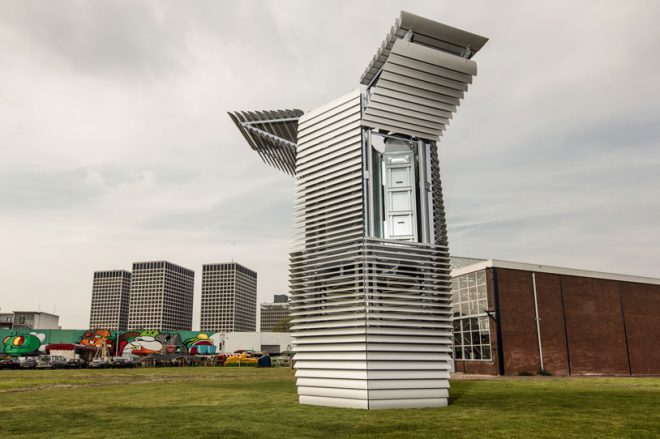
The captured smog particles are used to make jewellery.
Prestigious green playground or functional sustainable innovations?
Rotterdam has clearly emerged as a playground for architects, who see Rotterdam as the perfect site for bold experiments. I have to ask myself: what are these innovations all about? Are they just another way for the city and architecture firms to gain prestige and publicity? Or is Rotterdam really leading the way towards a greener, more sustainable future?
Some projects seem to have a high wow-factor but little added value. Others don’t have direct benefits yet but are designed as sites for testing and research – which is arguably important to come up with new technological solutions that can be implemented on a larger scale later. Like what we see at Masdar in the UAE. Or Vertical Forest in Dubai. Or Neom in Saudi Arabia.

But the projects that really make my green heart jump, are the ones that have a direct impact on the local environment and community.
Those are the small local initiatives – not the fancy ones, but the smart ones. The ones that connect locals to entrepreneurs and city dwellers to nature. The ones that revive neighborhoods and strengthen local communities. The ones that make a big difference on a small scale. That is where transformation happens in real life.
Sure, a sustainable skyscraper is exciting and a carbon ring is cool. But what we really need are practical solutions for daily life that enable us, as urban citizens, to live as green as possible. It is the small local initiatives that are turning dreams of a green future into reality, from the ground up. That befits the city of Rotterdam. After all, groundwork is what Rotterdam has always been good at – even before it became a booming city.

