
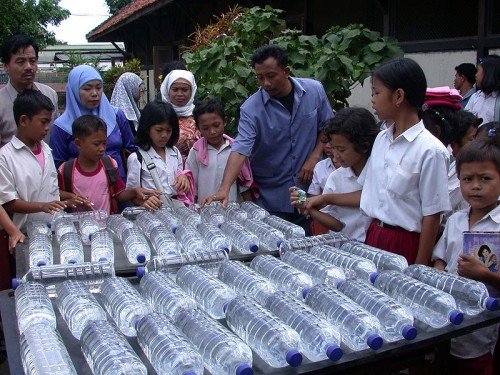

Developed in Switzerland, low cost method can clean bacteria from water and you don’t need to buy a thing

The evils of plastic water, microplastics, and beverage bottles have already been noted in previous Green Prophet articles, including one dealing with bottled water conflicting with green values ; and another more recent one that noted how so-called bottled water is really mostly tap water that is bottled and then sold at premium prices.
Related: Do you have microplastics in your sperm?
But now, there may be some redemption for that one-and-a-half liter polystyrene bottle as a safe and low cost way to purify drinking water. Known as solar disinfection, or SODIS for short, the method is almost cost-free and is now being used in many developing countries to make well and tap water safe for human consumption.
How to purify water using plastic bottles
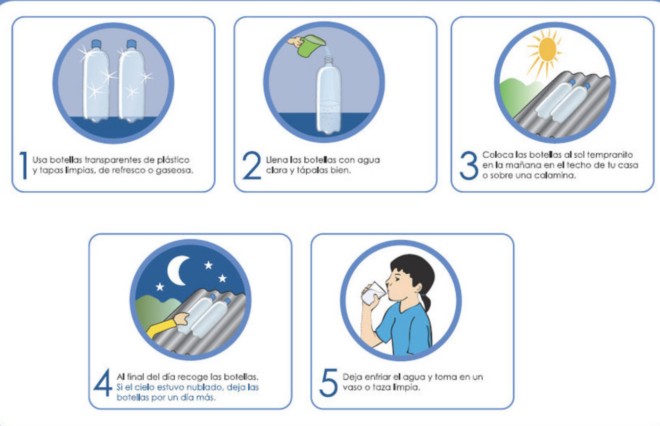
The SODIS purification process involves filling a number of one and a half or 2 liter plastic bottles about 3/4 full of clear water (if the available water is cloudy, it should first be filtered through a layer of sand).
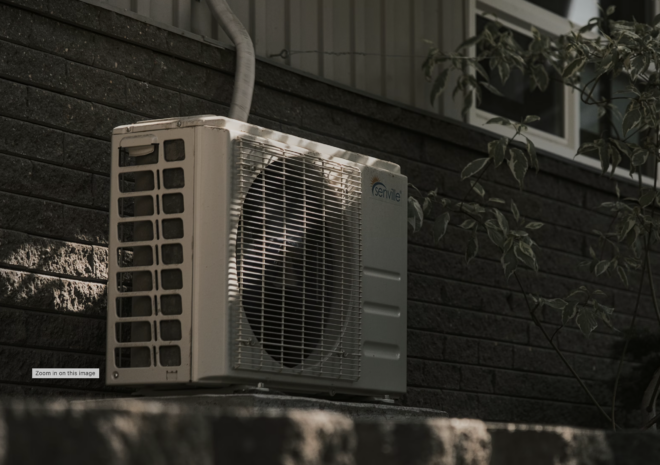
Related: How to use AC Condensate
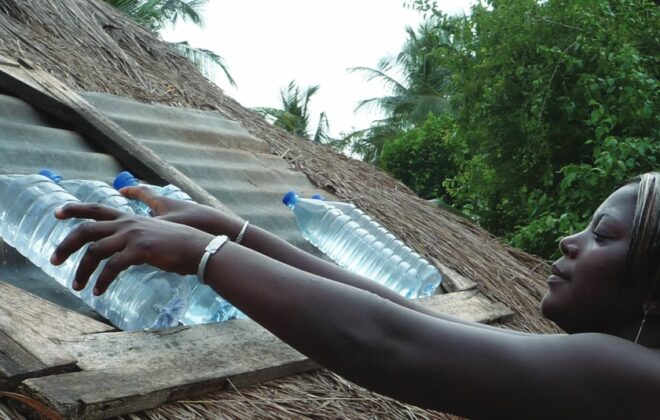
The bottle is then shaken vigorously to mix sufficient air with the water, and then filled to the top with more water and closed. The filled bottles are then placed on a metal or concrete surface (like the roof of a building or house) and left in the sun for at least 6 hours, or until hot to the touch.
The bottles should then be taken inside and allowed to cool before being opened for use.
The SODIS water purification process utilizes the sun’s ultraviolet rays to purify the water, killing harmful bacterial growth and other disease causing organisms. While heating water in plastic is not a great idea, this solution might be worthwhile to save lives.
To enable the water to heat faster, paint one side of the bottle black and then place the bottle on a roof or other surface with the black side down. This acts like a miniature sun boiler, and works on a similar principle as solar water heater collecting plates.
Many Middle Eastern countries have serious water problems. Some of them, including Iraq, Jordan and the Palestinian Authority (especially Gaza), have dire shortages of safe drinking water, especially in Gaza’s case. The use of this very inexpensive way of water purification by people living in these locations considerably lessens the dangers of a number of water borne diseases such as cholera and dysentery.
The SODIS method of disinfecting drinking water was discovered at a Swiss research institute, The Swiss Federal Institute of Aquatic Science and Technology.
Although the technology has been known for some time, it’s only been given real media attention in the last year or so. But now, it appears that this very effective and low cost method of purifying drinking water may become a Godsend in parts of the world that are simply too poor to use more sophisticated methods of making water safe to drink.
So if you happen to live in an area with problems of having enough safe drinking water, don’t throw those plastic water bottles away – they may also be used for purifying your water supply, and thus solve their recycling problem at the same time.
Updated June, 2026


[…] for making water potable have been put forward in Green Prophet; including very simple ones such as using sunlight to purify dirty water enclosed in plastic bottles and “Life Straw” hanging filters that can be taken anywhere and used in emergency […]
[…] is no shortage of ideas on how to filter drinking water, from filters in plastic beverage bottles, or by creating water from air conditioning units. Some water filtration devices have included […]
[…] is no shortage of ideas on how to filter drinking water, from filters in plastic beverage bottles, or by creating water from air conditioning units. Some water filtration devices have included […]
I liked the idea and the terminology” SODIS plant” . This type of branding will help the promotion of the concept & method.
Dr.Joseph
[…] We have previously written about solutions to provide safe drinking water, including such methods as heating water via the sun in plastic beverage bottles. Another method to provide clean water is the use of special water filters that use bacteria to eat […]
[…] the past been met with more than its share of skepticism, even though inexpensive methods exist to purify polluted water from bacteria other biological impurities that may be present in such […]
[…] systems can pay for themselves over a short period of time, and in the developing world a home made solar heating system using plastic bottles, can even purify drinking water. The sun is free, abundant and using it for light and heating clearly is a no-brainer for saving […]
[…] materials needed to create the lights are simple: a clear plastic soda bottle, water, and some basic […]
[…] to lay in the sun for several hours. This method, mainly for use in developing countries, is now being done by a company named Sodus which involves placing a number of filled bottles in special racks on the roofs of […]
The SODIS Makes Light – And Water – Of Plastic Bottles | Green Prophet http://tinyurl.com/y9g9wzf
We all know disposable water bottles are wasteful and bad for the environment, yet their production is growing rapidly everywhere. Just 20 years ago the market for plastic water bottles was practically nonexistent, but today we produce billions of these completely unnecessary products. There can be only one sane response, plastic water bottles must be banned!
http://www.selfdestructivebastards.com/2009/10/water-bottle-manifesto.html
[…] This post was mentioned on Twitter by greenprophet, Green Town ACTION! and Kyle Shoreville. greenprophet said: Green it! : The SODIS Method Recycles Plastic Bottles and Provides Safer Drinking Water http://bit.ly/y7S5i […]
The SODIS Makes Light – And Water – Of Plastic Bottles | Green Prophet: The use of this very inexpensive way of .. http://bit.ly/inQiG
The SODIS Makes Light – And Water – Of Plastic Bottles | Green Prophet http://bit.ly/1CyswB
The SODIS Method Recycles Plastic Bottles and Provides Safer Drinking Water http://ow.ly/15Occj
Green it! : The SODIS Method Recycles Plastic Bottles and Provides Safer Drinking Water http://bit.ly/y7S5i