
From the early experiments at Masdar City to a global gathering of architects and artists in Sharjah, the UAE continues to explore what the cities of tomorrow might look like.
When Green Prophet launched in 2007, we were among the first environmental news publications dedicated to covering sustainability in the Middle East, including the United Arab Emirates. Back then, the idea that an oil-rich Gulf nation could become a laboratory for renewable energy, sustainable architecture and environmental innovation was still unfamiliar to much of the world.
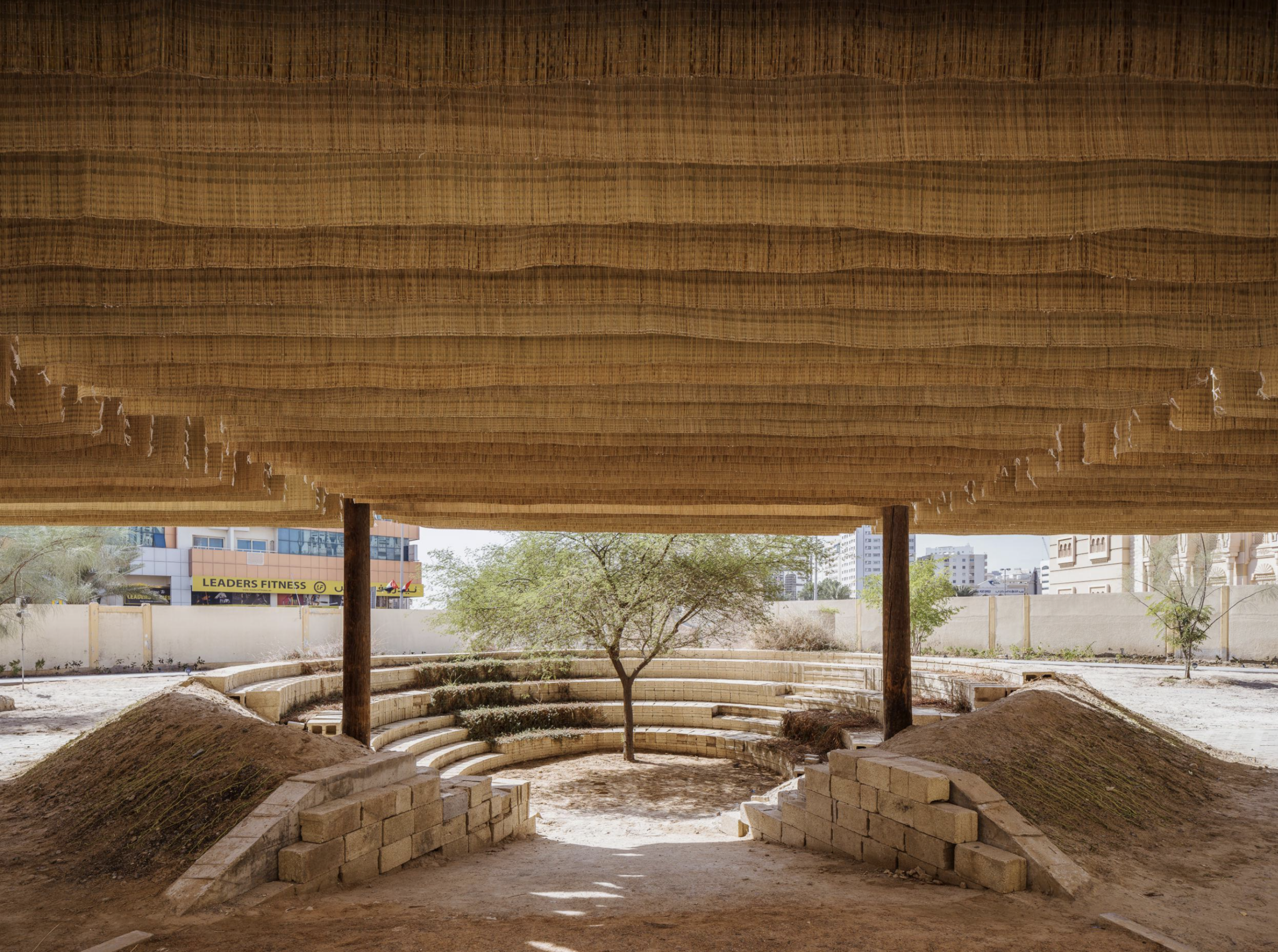
A project by L.E.FT Architects and collaborators using palm fronds to create spaces for contemplation on Al Khan Beach.
We were there reporting on those early ambitions. In 2010, we interviewed the Green Sheikh, Sheikh Abdul Aziz bin Ali Al-Nuaimi, a member of Ajman’s ruling family who was advocating environmental responsibility through education, faith and community leadership.
We also interviewed Ziad Tassabehji, one of the original visionaries behind Masdar, who helped develop and present the renewable energy initiative to Abu Dhabi’s leadership. His vision was to diversify the economy beyond oil and build a new industry around renewable energy, research and clean technology.
Laurie and Tafline visited Masdar City, rode their futuristic electric podcars and reported firsthand on the ambitious experiment in sustainable urban development. We also followed Masdar’s plans to test energy-efficient building materials, an early effort to rethink construction for the Gulf’s demanding climate.
Nearly two decades later, it’s encouraging to see how the UAE’s environmental and architectural conversations have evolved. Not every early ambition materialized as planned, but the country has become an important meeting place for architects, designers, investors and researchers exploring how cities might function in a changing climate. And not everything has become a ghost town.
This week, that conversation moves to Sharjah.
Architecture beyond buildings
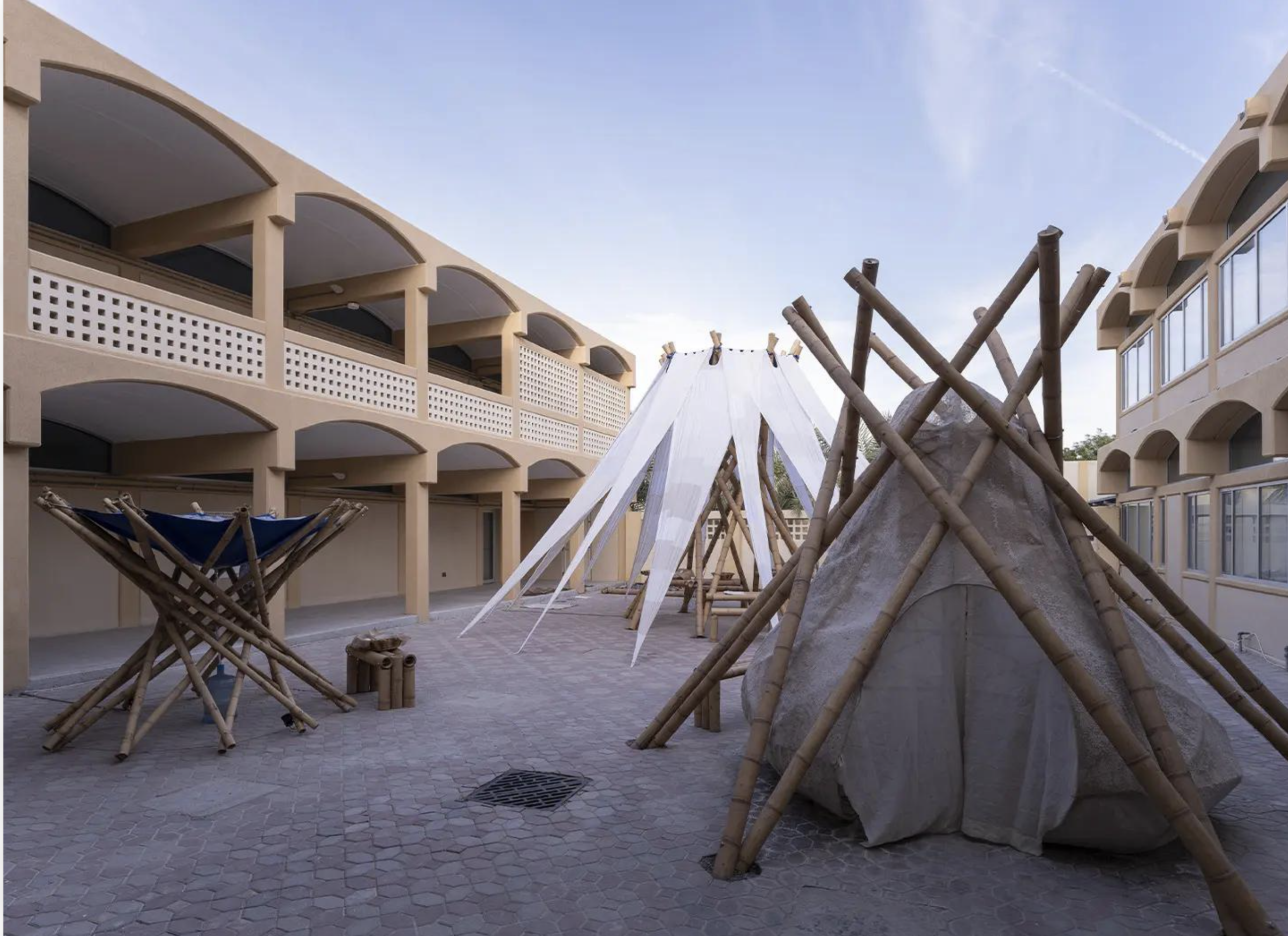
Bamboo construction and traditional craftsmanship, an excellent fit for Green Prophet’s environmental focus.
The third edition of the Sharjah Architecture Triennial opened November 14, 2026, under the title Architecture Otherwise: Building Civic Infrastructure for Collective Futures.
Curated by writer and anthropologist Vyjayanthi Rao, with associate curator Tau Tavengwa, the exhibition brings together 35 international participants examining how architecture can support communities beyond the physical construction of buildings. Its opening programme, co-curated by Rao and Sharmeen Inayat, runs November 14–19, while the Triennial continues through April 14, 2027.
Rather than concentrating exclusively on spectacular skyscrapers or architectural landmarks, the exhibition explores the relationships, cultural practices, shared knowledge and informal systems that allow communities to thrive.
The program includes installations, participatory projects, film screenings, live performances, lectures and discussions, culminating in a two-day international conference.
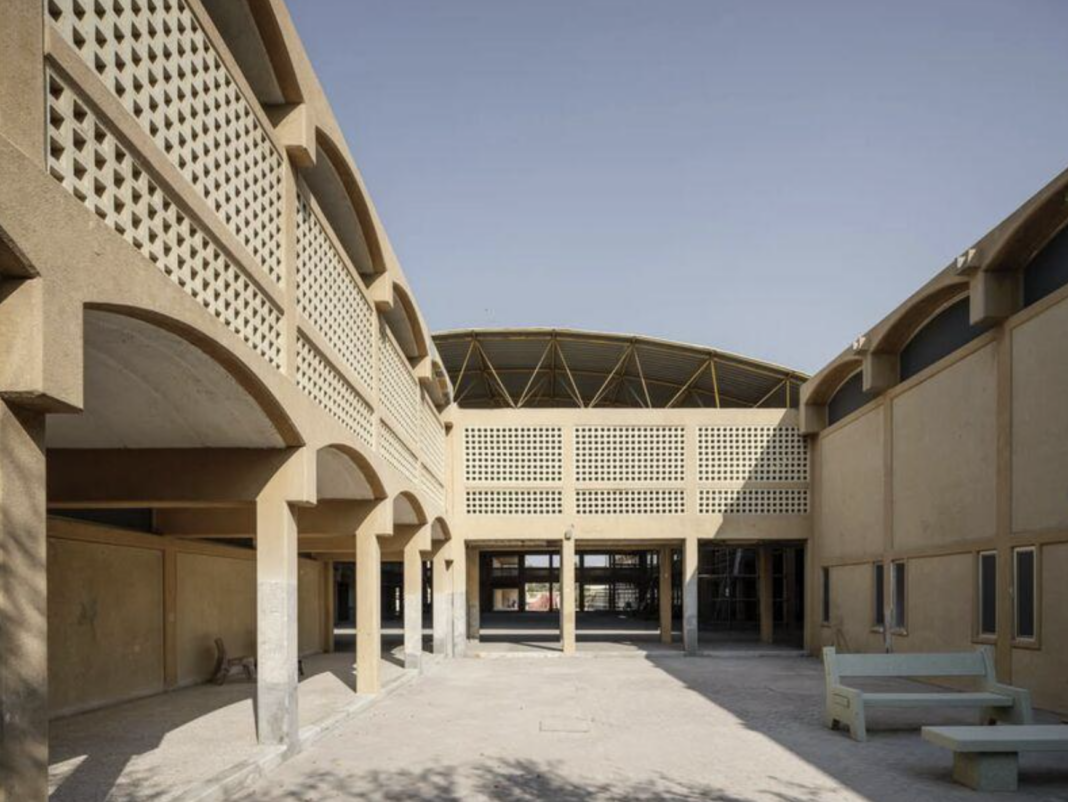
Projects are distributed across Sharjah, including Al Qasimiyah School, Al Jubail Vegetable Market, Al Madam Buried Village and the Sharjah Museum of Islamic Civilization. These locations invite visitors to think about architecture in the places where people shop, gather, remember and exchange ideas.
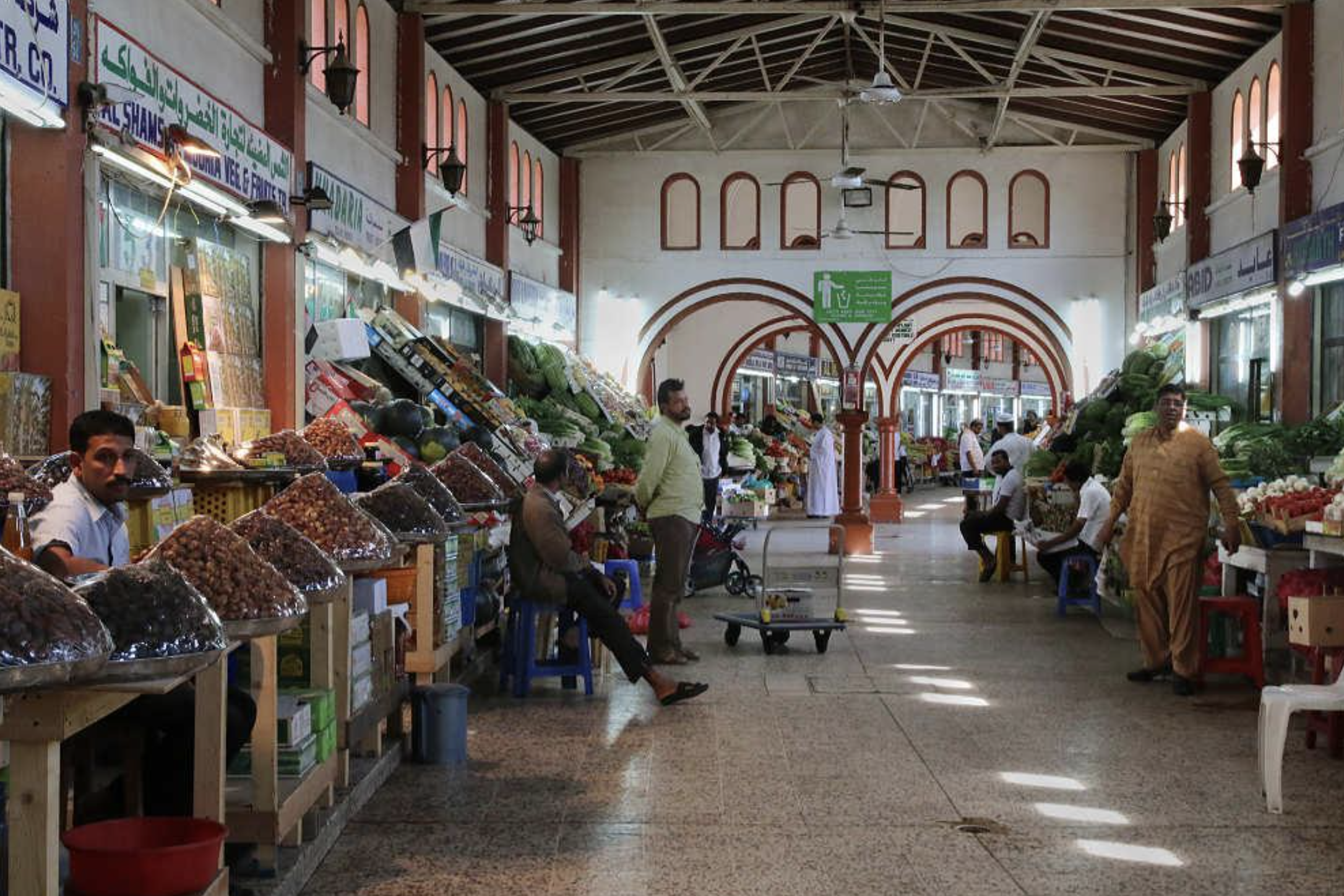
A beautiful example of an existing public building finding renewed cultural significance.
Thirty-five participants exploring collective futures
The international programme includes ABARI, Abounaddara, Another Empty House, Aslıhan Demirtaş, Ali Cindoruk, Dilşad Aladağ, Azza Aboualam, Badriyah Alsalem, BardStudio’s Rupali Gupte and Prasad Shetty, Brent Kokonya, Dennis Muraguri, Cassim Shepard, Chloë Bass, Bill Dietz, Curry J. Hackett, Hiba Bou Akar, Mohamad Hafeda, Nathalie Harb, Ignacio Gatica, Karachi LaJamia, Keller Easterling, Kevin Kimwelle of Indalo World, Kishwar Rizvi, Kush Badhwar, Let’s Build Great Things!, LionHeart, Megawra Built Environment Collective in collaboration with RIWAQ, Mohamad Nahleh, Ozayr Saloojee, Nashin Mahtani, People’s Architecture Office, POCAA — Co-Creation Architects, Rajesh Vora with the National Institute of Design, Sa’dia Rehman, Samar Halloum, Sandra Calvo Guzman, Social Design Collaborative, Sudarshan Shetty, Tanya Zack, Mark Lewis, Thireshen Govender, Torolab’s Raúl Cárdenas, Yaminay Chaudhri with Karachi Beach Radio, and L.E.FT Architects’ Ziad Jamaleddine and Makram el Kadi, collaborating with Iheb Guermazi and Beya Othmani.
The participating practices span architecture, anthropology, urbanism, art, design and community initiatives, bringing perspectives from the Middle East, Asia, Africa and beyond.
From Masdar’s futuristic city to Sharjah’s collective future
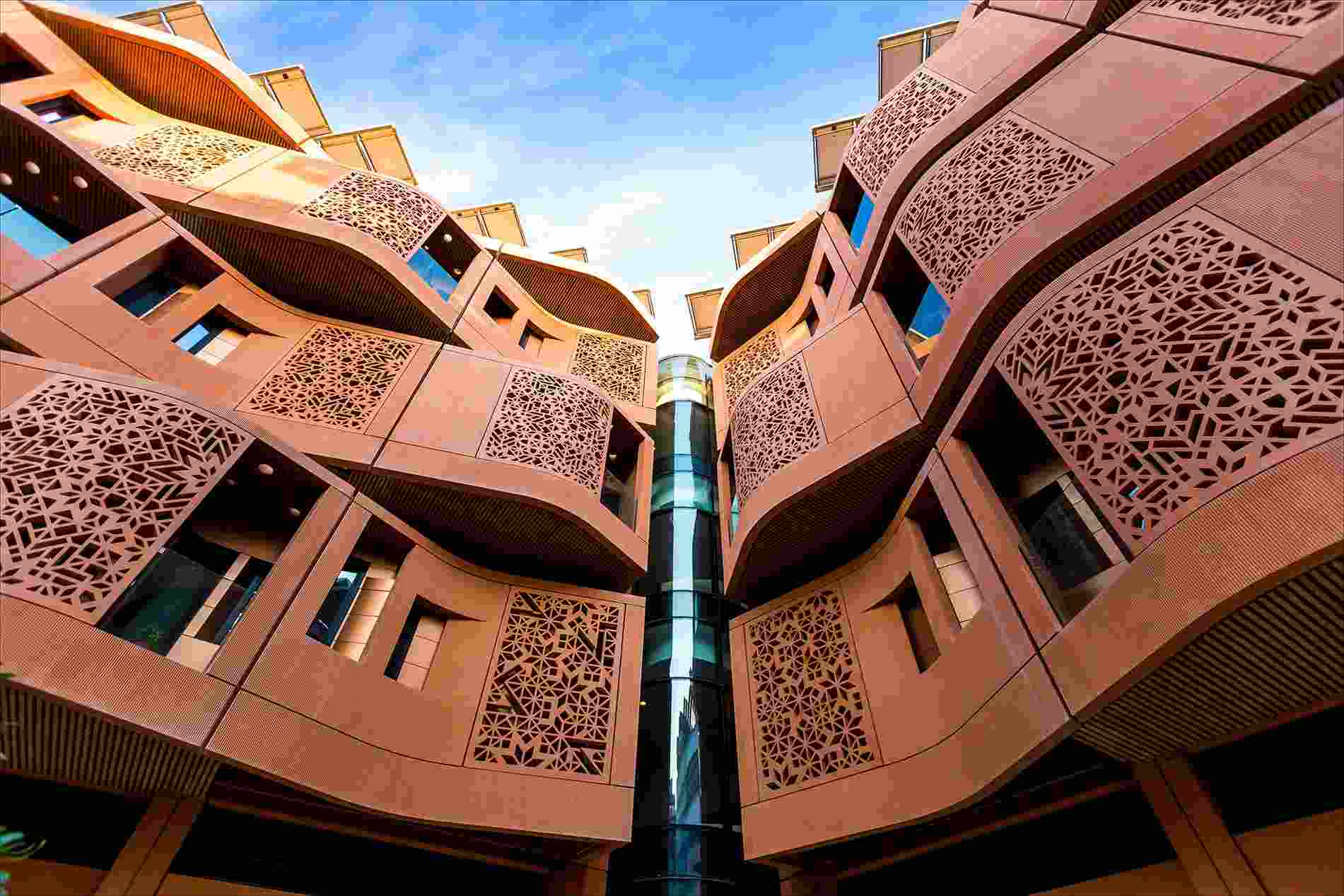
There is an interesting contrast between the UAE’s early sustainable architecture experiments and the questions being asked in Sharjah today.
Masdar City began with the promise of a radically different urban environment, where advanced engineering, renewable energy and traditional Arabic design principles would create a model for low-carbon living. Its original vision was eventually scaled back, but Masdar grew into a major international renewable energy developer. We recently revisited Masdar’s transformation into a global clean energy powerhouse.
Sharjah Architecture Triennial approaches the future of cities from another direction. Instead of asking only how technology can make buildings greener, it asks how architecture can strengthen relationships between people, places and communities.
Meanwhile, innovation in sustainable materials continues in Abu Dhabi. Companies such as Seramic Materials, which transforms industrial waste into ceramics, show how the region is moving beyond futuristic architectural concepts toward practical approaches to circular construction.
That matters in a region facing extreme heat, water scarcity, rapid urbanization and the pressures of economic and demographic change. Sustainable architecture isn’t simply a matter of installing solar panels, reducing embodied carbon or designing energy-efficient towers. It is also about creating accessible, resilient places where people can live and work together.
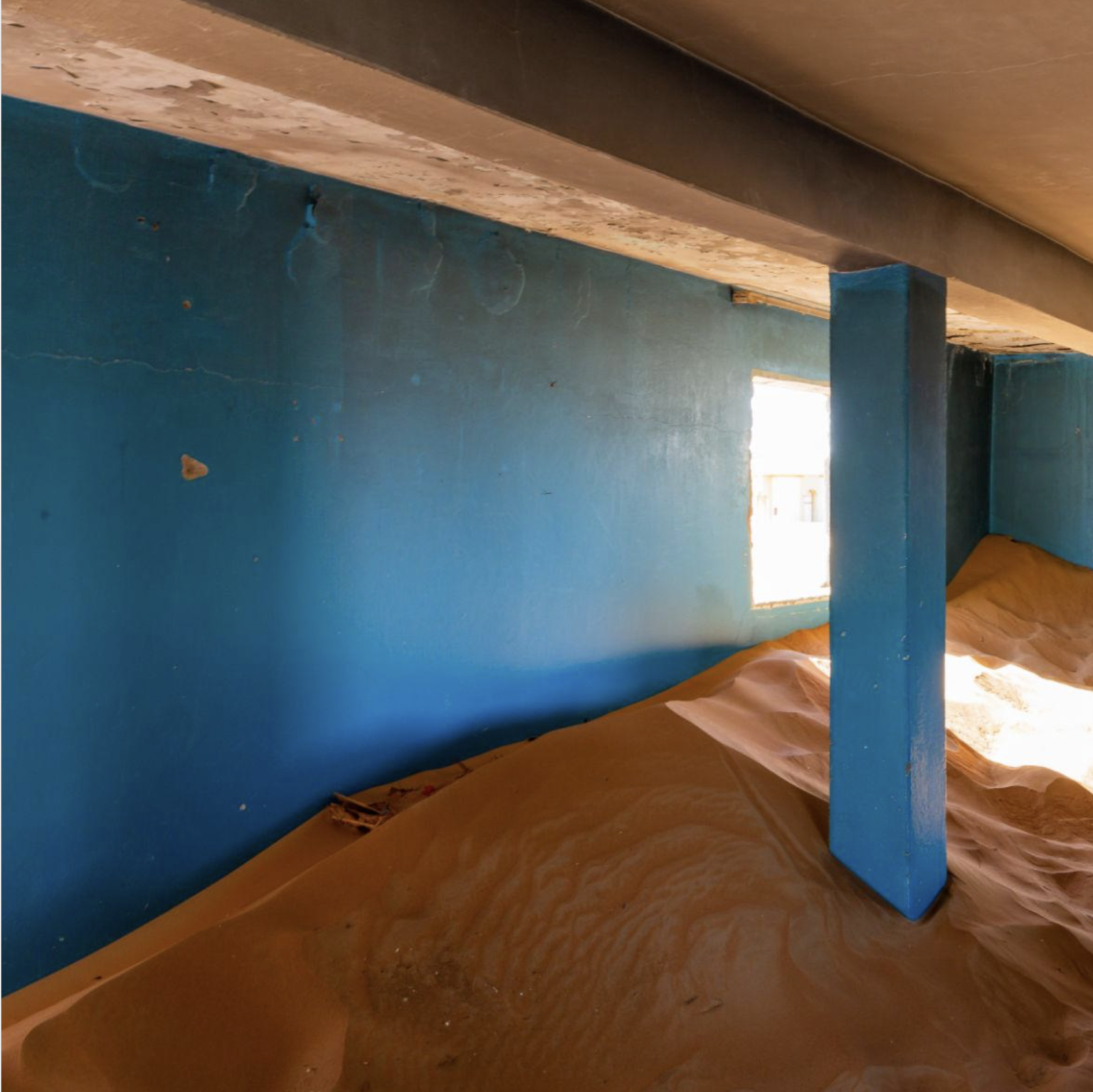
For Green Prophet, which has followed the UAE’s environmental transformation since its earliest days, it’s gratifying to see these conversations becoming broader and more ambitious.
The next generation of sustainable cities will need engineering, certainly. But it will also need imagination, shared responsibility and a deeper understanding of the communities those cities are intended to serve.
The Sharjah Architecture Triennial is an opportunity to explore what that future might look like.
The Sharjah Architecture Triennial runs from November 14, 2026, to April 14, 2027. The opening programme continues through November 19. Events are free and open to the public.