
Earth. Energy. Everything next.

Dekoda health tracker monitors your gut health from the toilet seat

In Tokyo, toilets can talk to you, warm your bottom and wash it with a perfectly aimed jet of water. They play sounds of water waves and can close the lid after you leave. But American bathroom giant Kohler has gone one step further. Its new toilet-mounted health tracker, called Dekoda, wants to know what’s going on inside your body by examining what you leave behind. They toilet seat add-on can monitor gut health.

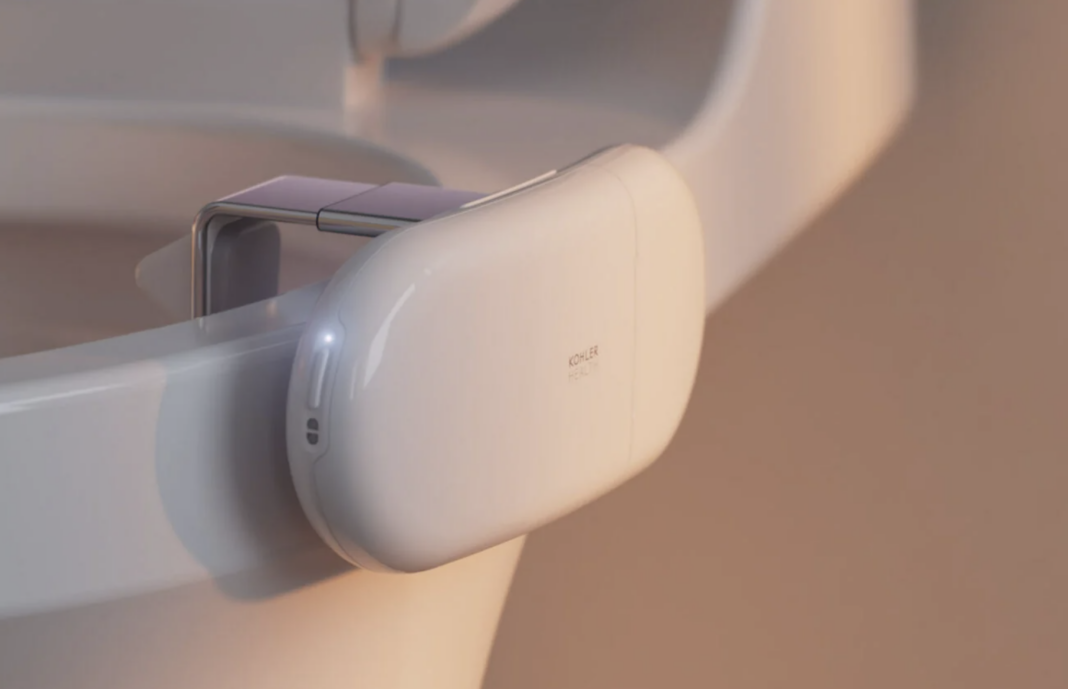
And you don’t need to mail your poop to a laboratory to get the basic information. Dekoda clips onto the toilet bowl, where optical sensors monitor stool consistency, hydration and even signs of blood that might otherwise go unnoticed.

The idea is surprisingly simple. We spend billions on smartwatches and fitness trackers, measuring our sleep, heart rates and daily steps. But what if some of our most useful health information has been going down the toilet all along?

How does Kohler’s smart toilet tracker work?
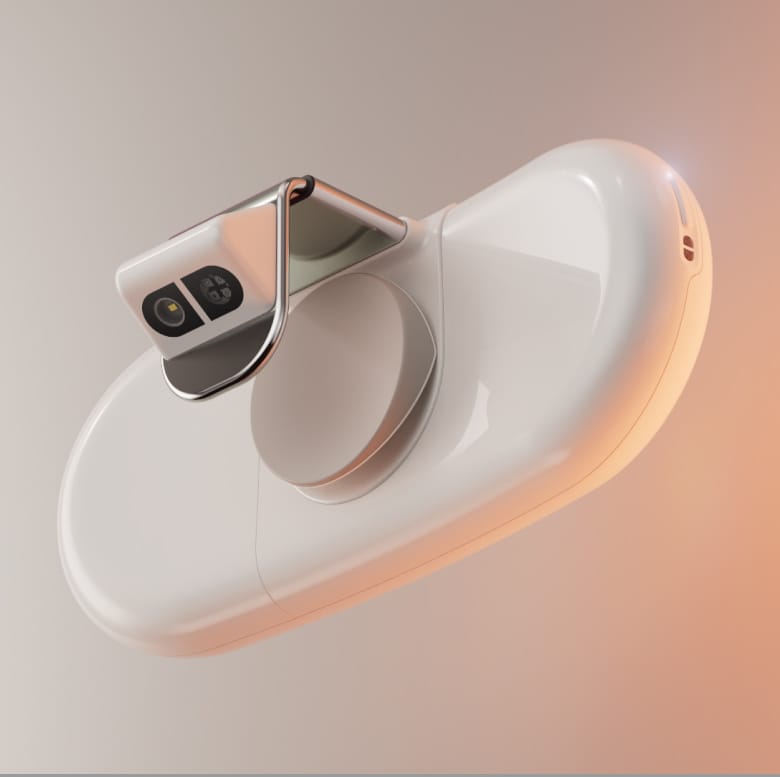
Kohler’s Dekoda smart toilet tracker clips onto the rim of a toilet bowl, using optical sensors to monitor digestive health, hydration levels and signs of blood. Credit: Kohler Health.

Developed by Kohler Health and launched in October 2025, Dekoda attaches to the rim of most white toilets using an adjustable clamp. It uses optical sensors and spectroscopy, a technology that studies how light interacts with materials, to examine urine and stool.

The device looks for three main things: digestive patterns, hydration levels and signs of blood. It classifies stool as regular, hard or loose and uses urine measurements to assess whether someone is adequately hydrated. Its sensors can also identify signs of haemoglobin, a protein found in blood.

Related: lidless toilets spread waste droplets with every flush

The data is analysed through the Kohler Health app, where users can follow trends and record information about their diet, exercise, medications and daily routines.

But don’t confuse this with a full gut microbiome test. Dekoda cannot identify the trillions of bacteria living in your digestive system or replace laboratory stool analysis. It is better understood as a bathroom-based wellness tracker that can flag changes worth investigating.

Whose poop is it anyway?
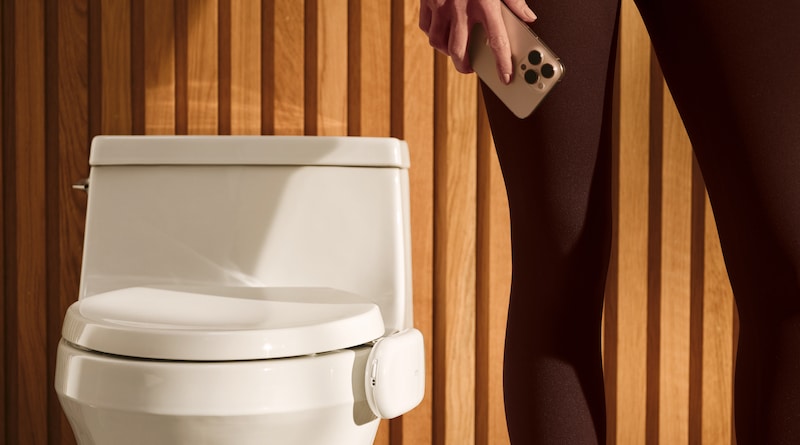
Your poop may reveal more than you think. Kohler’s new bathroom health technology tracks changes in stool consistency and hydration without requiring a sample to be mailed to a laboratory. Credit: Kohler Health.

Here’s where things get interesting. In a family bathroom, how does the toilet know whose business it’s examining? Rather than programming the different bottoms that sit on the seat, Kohler has developed a fingerprint scanner that can be mounted on the wall nearby. Each user authenticates before a bathroom visit, keeping their health records separate.

A family plan supports up to six adult accounts, meaning everyone can track their own digestive habits without accidentally claiming somebody else’s results. The system uses a rechargeable magnetic battery and sends information to an accompanying app. The company says the data is encrypted in transit, although it must be decrypted for processing. That makes privacy an important consideration for a product collecting such intimate information.

Could your toilet help you stay healthier?

Kohler sees a market among older adults, people managing chronic digestive illnesses and athletes monitoring hydration. For people living with Crohn’s disease or other digestive conditions, regularly recording bowel habits can be useful when discussing symptoms with a doctor. Older people who struggle to maintain adequate hydration might also benefit from a record of changing patterns.

Kohler Health managing director Nora Tophof explained that subtle biological changes, including microscopic blood and early signs of dehydration, can escape the human eye.

The technology is designed to make these changes easier to notice over time. However, a blood alert is not a diagnosis, and the absence of an alert doesn’t rule out disease. Medical symptoms still require proper investigation.

The bathroom becomes the next health laboratory
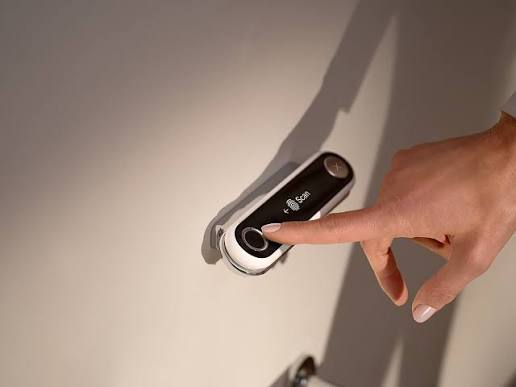
Whose poop is it anyway? Kohler’s Dekoda uses a wall-mounted fingerprint scanner to identify individual users, keeping each family member’s bathroom health data separate. Credit: Kohler Health.

The possibilities extend beyond one company’s product. Bathroom technology is beginning to move into territory once reserved for clinics, laboratories and diagnostic centres.

What happens when routine household objects become health-monitoring tools? Could toilets eventually help identify disease earlier, reduce unnecessary testing or give doctors a clearer picture of a patient’s daily health?

Dekoda was introduced at a price of $599, with an additional subscription required to access its health insights. That puts it firmly in the premium wellness market rather than making it an accessible public-health solution.

I saved my father’s life after an incident in the toilet. Could Dekoda eventually be part of a 911 solution? 

The toilet is the most important invention in public health, helping communities manage human waste and prevent disease. It’s time we started going one flush further. 

Read More

TRENDING

Coral reef sunken ship is the world’s biggest underwater lab

The historic SS United States has become the world's largest artificial reef off Florida's Gulf Coast, where marine scientists will monitor coral colonization, underwater biodiversity and the development of a new marine ecosystem. Credit: Okaloosa County.

London Museum opens underground galleries inside historic Victorian market

London Museum opens new underground galleries on November 28, 2026, transforming historic Victorian market vaults into an immersive journey through 450,000 years of London's history.

Global startups converge in Dubai for Expand North Star 2026

Startups from Canada, Italy, Thailand, Palestine and dozens of other countries will gather in Dubai for Expand North Star 2026, highlighting emerging technologies and new opportunities for international collaboration.

Sharjah Architecture Triennial opens with a new vision for collective futures

From Masdar City's pioneering sustainability experiments to the 2026 Sharjah Architecture Triennial, the UAE is reimagining architecture through community, culture, sustainable design and collective futures.

Samuel Scarpino tracks phones in the Congo to reveal early Ebola spread

Researchers have reconstructed the early spread of Ebola in the Democratic Republic of the Congo, showing how mobile phone data could help detect future epidemics before they spiral out of control.

Why Bronwyn Finnegan Chose the Nonprofit Sector Over Politics or Corporate Life

Bronwyn Finnegan could have pursued a career in politics or corporate leadership. Instead, she chose the nonprofit sector, where she focuses on financial sustainability, governance and helping mission-driven organizations build the capacity to survive and grow.

Scientists make lead-free perovskite solar cells that can weather the elements

Scientists have developed a “raincoat” for lead-free tin perovskite solar cells, helping them withstand air, moisture and heat while maintaining high efficiency.

The Essential Guide To Sustainability in Project Management

Sustainability is an approach where businesses and individuals balance the environmental, social, and economic aspects of a project such that current and future stakeholders are not overburdened with the impacts of the project in future.

Yerukim Forms a New Green Economy Where the Money is Really Green

The Yerukim members who pick up the recyclables get to keep the monetary reward, the public earns "green" bills that can be used in shops, and business owners get to be associated with environmentalism.

Choosing Riyadh over Dubai? What Investors Should Know

Saudi Arabia is deploying capital at unmatched scale to catalyze tourism and advanced industry while rewiring its power-and-water backbone. The investable frontier is widening—especially in renewables, grid storage, water efficiency/desal retrofits, and hospitality operating platforms. Prudent investors will insist on phased delivery, enforceable KPIs (energy, water, biodiversity), and RHQ/zone compliance—while pricing political-economy and reputational risks alongside growth upside.

Sell your cooking oil for biodiesel money

Want to make money on old french fry oil? Sell it.

Qatar Alternative Energy Summit Pairs Investors And Innovators

Alternative energy investors and innovators can meet n' greet in Doha, Qatar March 16 and 17.

Here’s How To Implement The Four Pillars Of Employee Engagement

If you throw a party for your work team and they are vegans, don't make it a barbecue. Know the sustainability values of your team to boost moral and retain good people.

Popular Categories