


Abortion pills, often confused with Plan B (the morning-after pill), and historically referred to as RU486 (mifepristone), are part of a broader category of reproductive health medications that women have been using for decades. But they are not the same thing.
Plan B is emergency contraception used shortly after unprotected sex to prevent pregnancy from occurring. Abortion pills, by contrast—typically a combination of mifepristone and misoprostol—are used to terminate an early pregnancy after it has already begun. These medications have become the most common method of abortion in the United States.
Related: scientist shows how her brain changes on birth control
While there are documented health effects if misused, these pills—both emergency contraception and medication abortion—have significantly increased sexual freedom and reproductive autonomy for women. And these effects catch on in the Middle East, where abortion is illegal for for the most part. Most women in the Middle East, and increasingly now in parts of America, if you can believe it, do not have reliable access to abortion pills or even Plan B.
Years ago, I worked with writer Loolwa Khazoom researching a piece for Vogue or Harper’s on an abortion boat, a Dutch-flagged ship that operated off the coast of countries like Spain when abortion was illegal. Women would be taken into international waters where Dutch physician Rebecca Gomberts could legally perform abortions on her floating clinic. She said, “I figured we would sail from country to country and help X number of women per day.”
It was a workaround that was creative, controversial, and telling.
Today, the workaround is digital and under threat.
I am not arguing here whether abortion should or should not be offered on moral or religious grounds. That is a private decision. But the fact that the United States is now moving to restrict the mailing of abortion pills like mifepristone means that some states that have outlawed abortion may end up with women’s lives on their hands.
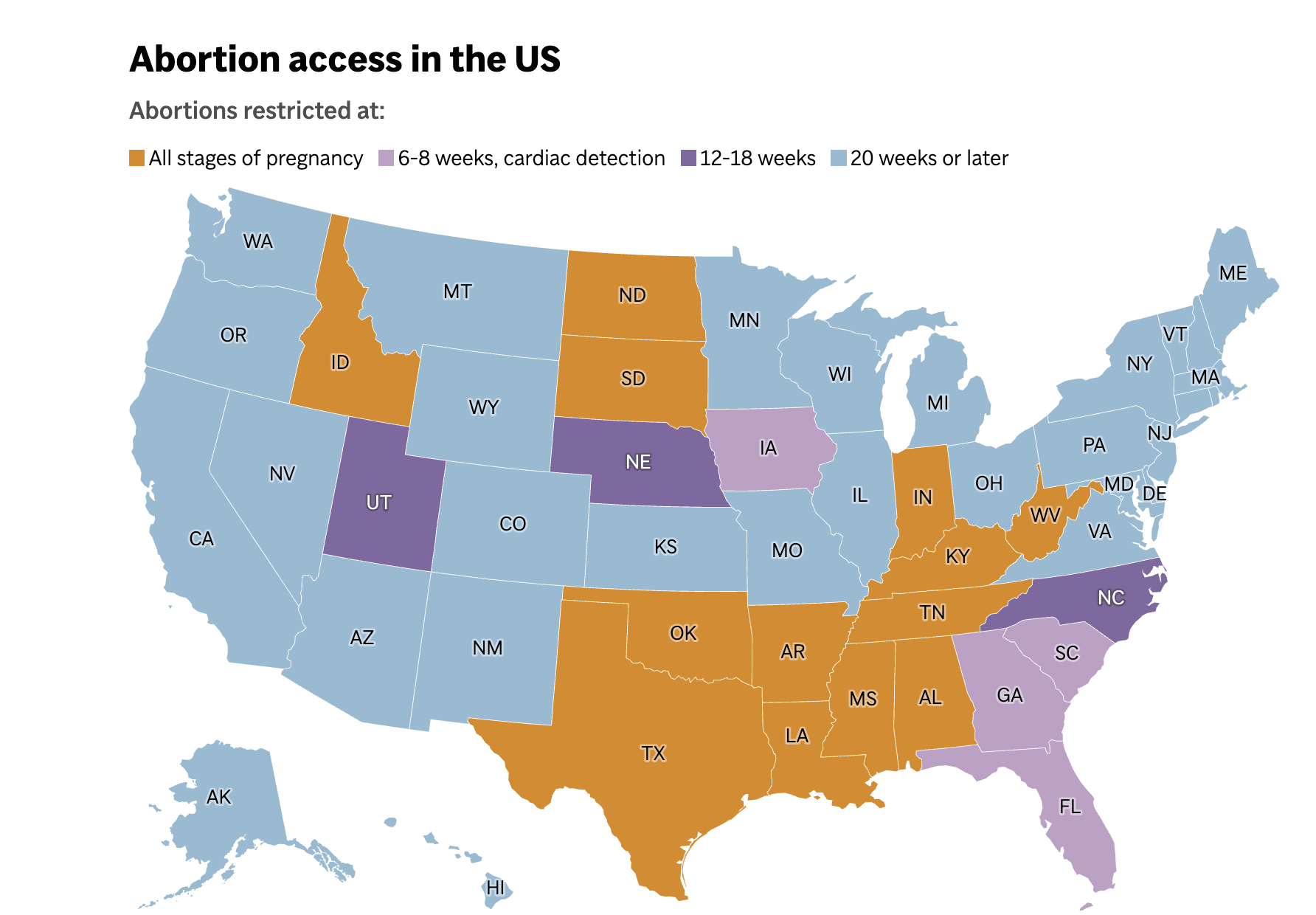
A recent federal appeals court ruling has moved to block the mailing of abortion pills and require in-person dispensing, challenging long-standing FDA guidance that allowed telehealth prescriptions and pharmacy access. Medication abortion—often prescribed online and delivered by mail—accounts for the majority of abortions in the U.S., and about one in four had been accessed via telehealth.
Related: Turkish woman first to receive womb transplant
US states where abortion is illegal
- Alabama
- Arkansas
- Idaho
- Indiana
- Kentucky
- Louisiana
- Mississippi
- Missouri
- Oklahoma
- South Dakota
- Tennessee
- Texas
- West Virginia
Like I said, there are a variety of reasons why women seek abortions.
In the Middle East, except in countries like Turkey and Israel, premarital sex is not socially accepted. Of course people have sex secretly and then deal with the consequences according to local customs and doctors who often work quietly behind the scenes. In Egypt, for instance, social pressures have led to practices like hymen reconstruction surgeries. These realities exist regardless of the law. Read here about the creative ways Muslims stay virgins in Arab countries.
In Turkey, many parts of the country are conservative and if you are renting a hotel with a man you do need to say you are married and use his last name. Honor killings still happen. In a shocking case, an 18-year woman Oya Budak was murdered by her fiance after he discovered she was pregnant by her rapist. She was raped by someone familiar to her and did not disclose this fact prior to them making an arranged married.

Women in conservative societies can face severe consequences for pregnancy outside marriage, including violence. The stakes are high. I know a doctor whose patient was killed after not receiving an abortion in time.
Restricting access to abortion pills does not eliminate abortion—it pushes it underground or across borders.
In the U.S., people are already finding ways around restrictions. Some travel across state lines to access care. Others rely on telehealth providers in states with legal protections, or order abortion pills online from international services operating in legal gray zones. Some use misoprostol-only regimens, which are widely recognized as safe and effective. Information networks, encrypted consultations, and nonprofit support systems have become part of the new infrastructure of access.
Restricting access to abortion pills will not stop abortions. It will only make them harder, riskier, and more unequal.
While I do believe marrying young and having children young might be a stable path for some (something I wasn’t taught), I will leave my kids with that decision to make.
If your are connected to the Palestinian cause, where abortions are not legal, maybe you can use some online warrior energy and help women EVERYWHERE get access to abortion pills. Here are the countries in the Middle East with access to abortion pills:
Middle East abortion access (updated)
| Country / Territory | Legal Status | Approx Limit | Code |
|---|---|---|---|
| Israel | Legal under committee approval | ~24 weeks (conditional) | 🟦 |
| Turkey | Legal on request | 10 weeks | 🟦 |
| Iran | Restricted (medical only) | Early only | 🟪 |
| Jordan | Illegal except to save life | N/A | 🟧 |
| Egypt | Illegal except to save life | N/A | 🟧 |
| Saudi Arabia | Restricted (health/reasons) | ~4 months (conditions) | 🟪 |
| UAE | Restricted (rape/incest/health) | Limited | 🟪 |
| Qatar | Restricted | Limited | 🟪 |
| Kuwait | Restricted (health reasons) | Limited | 🟪 |
| Oman | Restricted | Limited | 🟪 |
| Lebanon | Illegal except to save life | N/A | 🟧 |
| Syria | Illegal except to save life | N/A | 🟧 |
| Iraq | Illegal except to save life | N/A | 🟧 |
| Yemen | Near-total ban | N/A | 🟥 |
| Palestinian Authority (West Bank) | Illegal except to save life | N/A | 🟧 |
| Gaza (Hamas-controlled) | Near-total ban | N/A | 🟥 |



, and historically referred to as RU486 (mifepristone), are part of a broader category of reproductive health medications that women have been using for decades. But they are not the same thing.)