
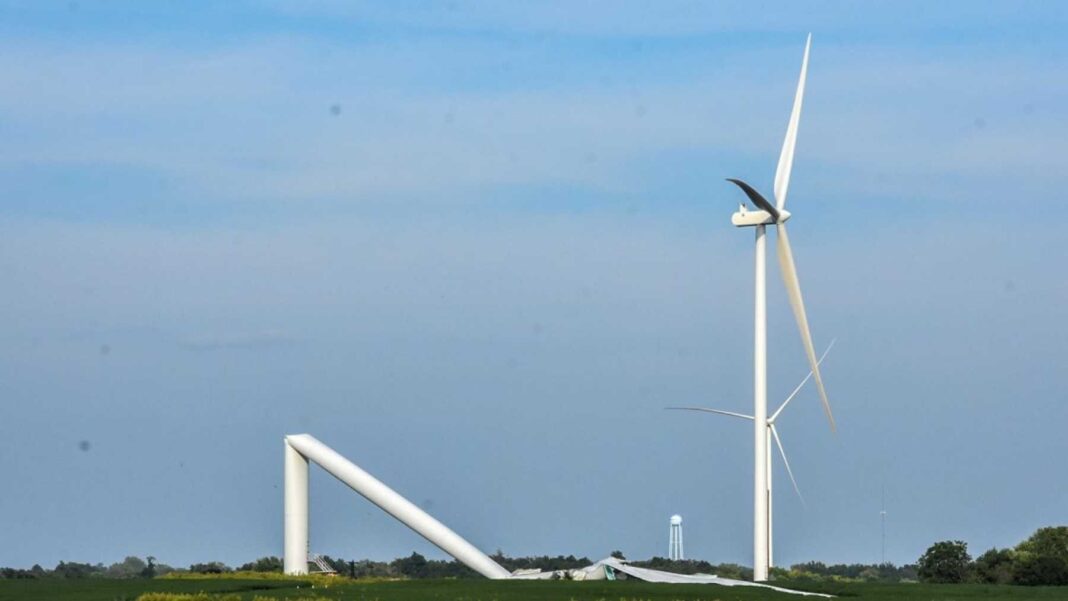

Wind turbines are monuments to clean energy, but a series of collapses in Missouri is raising questions about engineering, maintenance and public safety.
When I’m driving through the countryside and see a wind turbine rising above the fields, I think of monuments like the CN Tower, the Empire State Building or the Eiffel Tower. I remember traveling along the coast of Scotland and seeing turbines standing against the sea. There’s something serene and beautiful about their enormous blades turning against the sky. They are monuments.
But for people who live beside them, wind turbines aren’t always so romantic. There’s the constant swoosh of the blades, shadows flickering through windows at sunset, the disruption of natural landscapes and the danger to birds and bats. Some residents welcome them. Others don’t want industrial machinery interrupting their view. And then there’s another question altogether. What happens when one falls down?
Five collapses at one Missouri wind farm
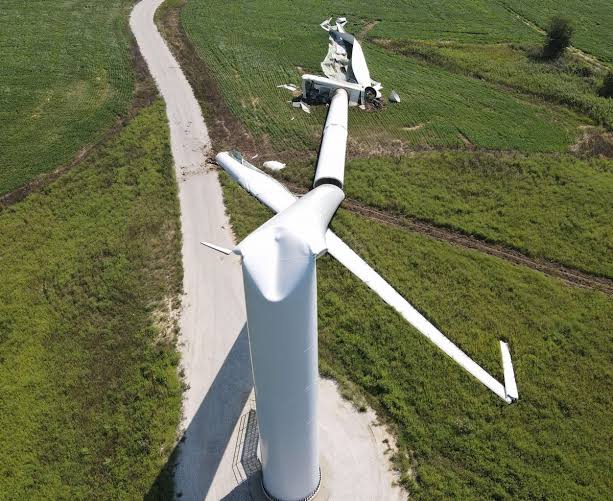
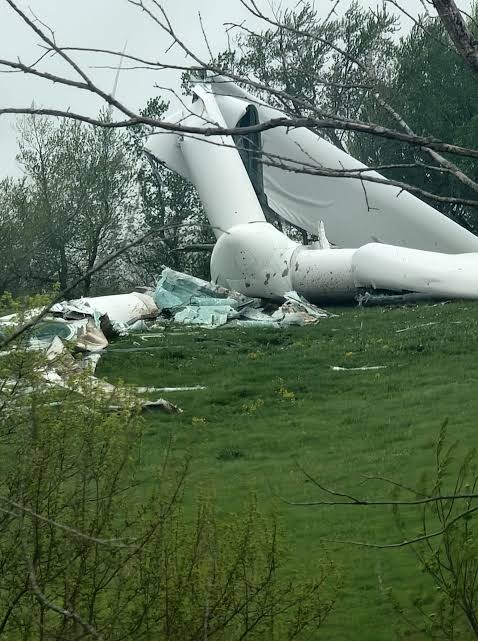
On August 26, 2026, a wind turbine collapsed in a field near Lancaster, Missouri, at the High Prairie Renewable Energy Center. Nobody was injured. It was the fourth collapse at the same wind farm since April 2024. Then, on October 24, another turbine fell near Willmathsville, bringing the total to five collapses in roughly two and a half years.
Owned by Ameren Missouri, the 400-megawatt wind farm operates 175 turbines across Schuyler and Adair counties. Following the August collapse, Ameren’s Jeff Moore said the company was conducting a comprehensive assessment to determine the cause. Earlier failures had been linked to turbine blades detaching and creating imbalances powerful enough to bring down entire towers. But the precise causes of the two 2026 collapses have not been publicly established. Imagine living beside these enormous machines and watching one fold into a hayfield.
Why do wind turbines collapse?
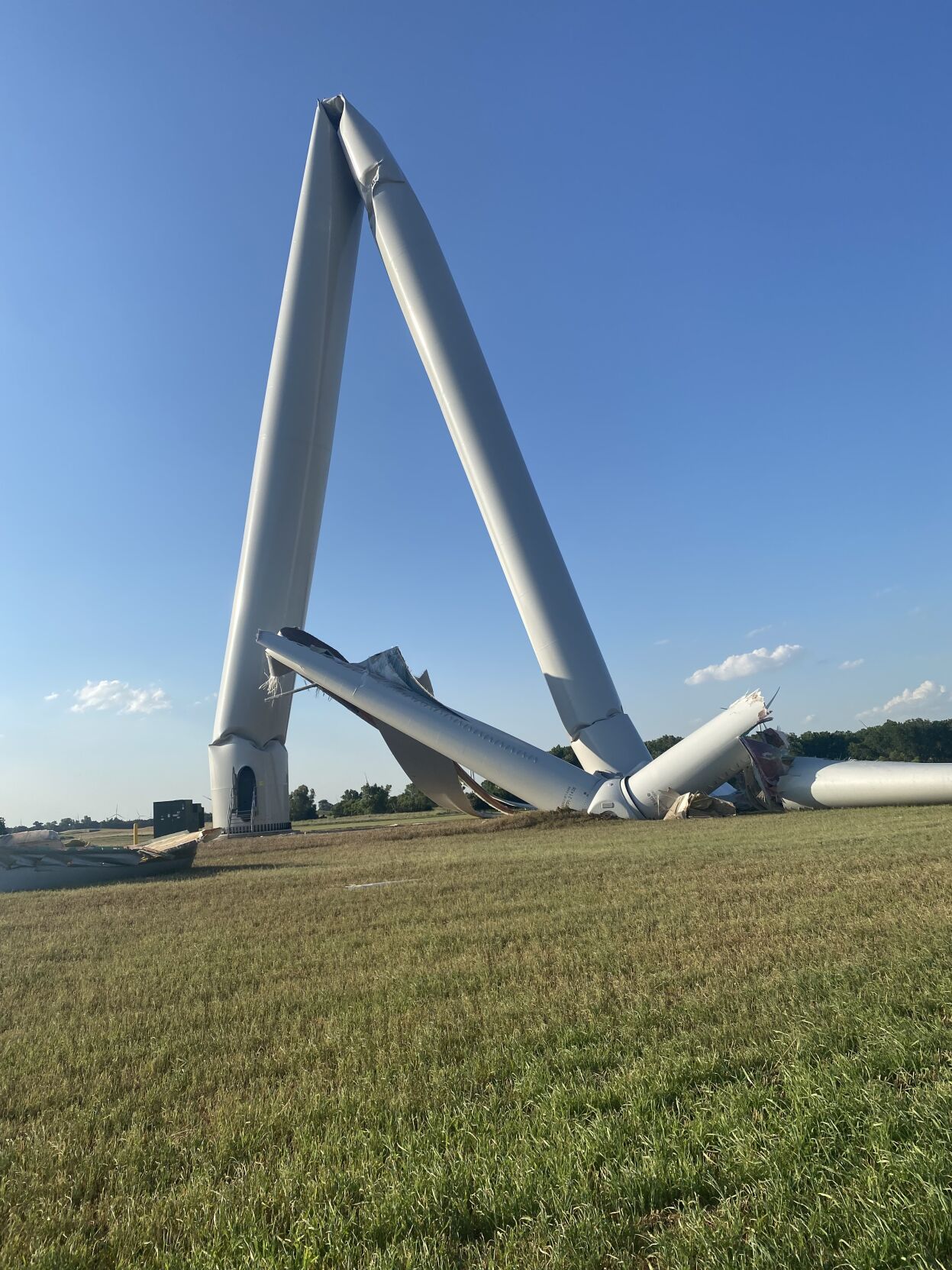
Wind turbines are designed to withstand tremendous forces, but even small defects can become dangerous over time.
A 2025 study in Engineering Failure Analysis examined a turbine accident at Japan’s Taikoyama wind farm. Researchers found that damaged high-tension bolts could dramatically shorten a tower’s fatigue life, illustrating how a small structural failure can develop into something catastrophic.
Another 2026 engineering study investigated foundation anchor bolts and how permanent deformation and concrete damage could contribute to failures. The researchers also proposed inspection methods for detecting hidden structural damage.
Neither study explains the Missouri collapses directly. But both demonstrate why routine inspections, vibration monitoring and predictive maintenance are essential as wind turbines grow larger.
What about people living nearby?
Research into wind turbines isn’t limited to engineering. A systematic review on PubMed examined 22 studies on wind turbine health effects, including noise annoyance, sleep disturbance, quality of life and shadow flicker. Although the evidence varies, the research recognizes that living near turbines can affect people’s daily experiences.
At Green Prophet, we’ve been following the environmental trade-offs of wind energy for nearly two decades. We’ve explored the dangers wind turbines pose to migrating birds, reported on Israel’s rejection of wind turbines over biosphere concerns, and looked at Germany’s plans for extraordinarily tall wind turbines.
Wind energy remains an important alternative to fossil fuels, but renewable doesn’t automatically mean harmless. These enormous machines require materials, foundations, maintenance and eventual disposal or recycling. Missouri’s repeated turbine collapses are a reminder that the clean energy transition must also be a safe one. If we’re going to build monuments to renewable energy across our landscapes, we’d better make sure they stay standing.