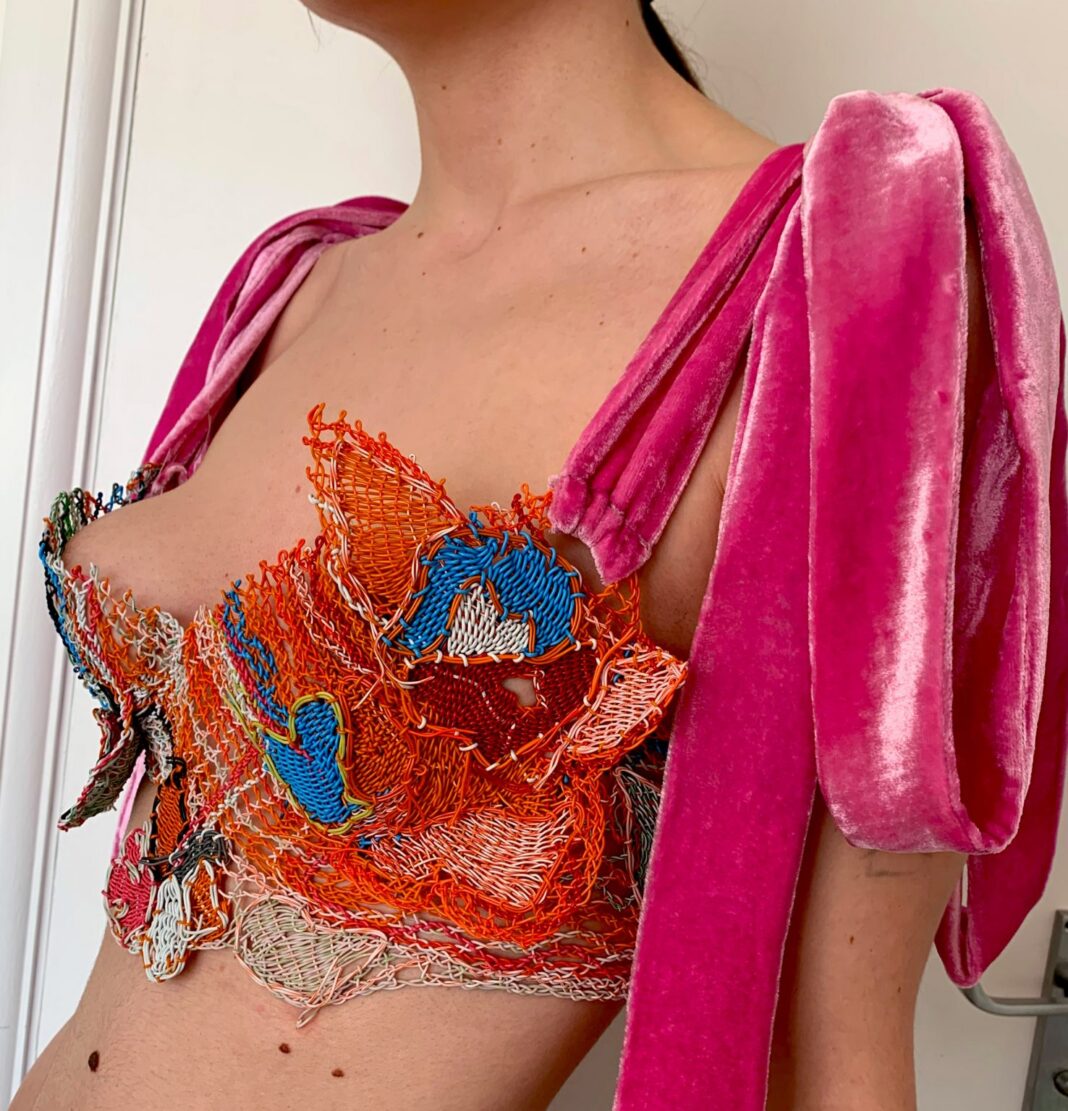

The Romanian designer is transforming electronic waste into extraordinary lace garments. Her work offers a glimpse of a fashion industry that values creativity, craftsmanship and materials too precious to throw away.

I just finished reading Built for a Better World, the new book by Jeffrey Hollender, co-founder of Seventh Generation. I also spoke with Hollender this week for an upcoming Green Prophet interview. His experience building one of the world’s pioneering environmentally responsible consumer brands offers lessons that I believe every entrepreneur on the planet should learn.
One of the biggest problems with business today is that we’ve built an entire economic system around the assumption that waste is somebody else’s problem. We manufacture, sell, consume and discard. What happens downstream, whether it’s plastic entering an aquifer, toxic chemicals reaching a river or unwanted clothing ending up in a forest, is too often treated as someone else’s responsibility.
But what if we designed businesses differently from the beginning? What if waste were not an inevitable consequence of making things, but a failure of imagination?
We are seeing young designers and material innovators attempt to answer exactly that question.
Take Stella McCartney, who has been making bold decisions about the materials used in luxury fashion for years. Her experiments with alternatives to animal leather include mushroom mycelium, while her collaboration with Balena, a bio-based material, into the soles of her S-Wave trainers. Balena is also developing materials suitable for injection molding and 3D printing, demonstrating how alternative materials can work within existing manufacturing systems.
I’ve tried on some of McCartney’s shoes myself, and I was impressed by how natural the leather-like material felt. It wasn’t plasticky. It had a softness and texture that I hadn’t expected. Still, the experience convinced me that alternatives to conventional leather can be beautiful and desirable.
We’ve also followed the development of Piñatex, the innovative material made using pineapple leaf fibers, agricultural waste that would otherwise have limited value. Unfortunately, the company behind Piñatex, Ananas Anam, entered administration in 2026. It’s a painful reminder that a clever environmental innovation does not automatically translate into a financially sustainable business.
And this is where the wider business system must change. Too many forward-thinking entrepreneurs are trying to solve problems that conventional business models helped create, only to discover that financing, manufacturing, pricing and retail expectations are stacked against them.
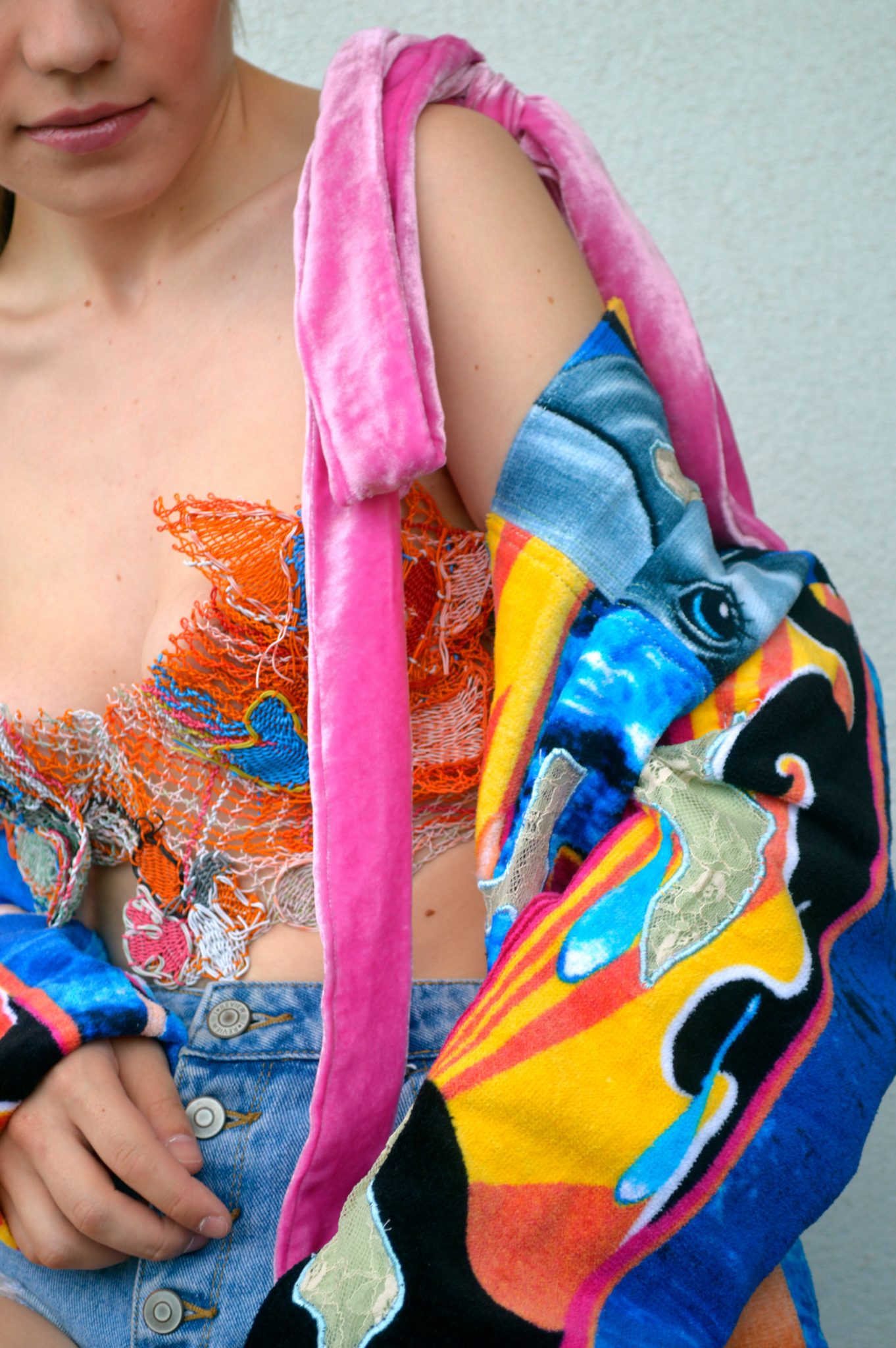
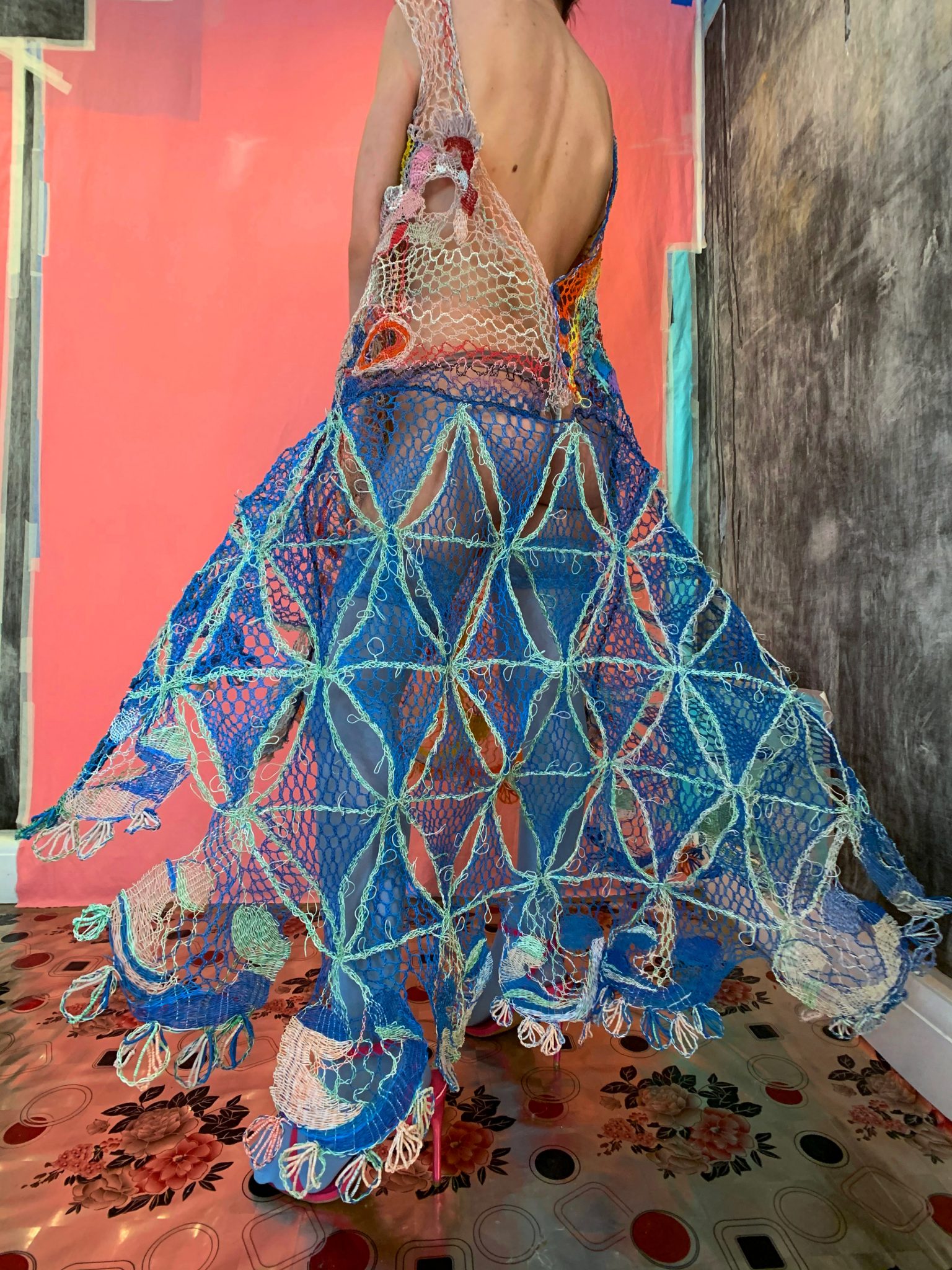
That’s why we’re delighted to see designers like Alexandra Șipa, the Romanian Central Saint Martins graduate who developed a remarkable technique for transforming discarded electrical wires into intricate, high-fashion lace.
My father was a scrapper. He collected discarded electrical wiring from the sides of roads and wherever he could find it, stripping out the valuable metals. Sometimes that involved smoldering or burning away the plastic insulation, a process that I now understand can release dangerous fumes. I’ve often wondered whether that exposure contributed to the illnesses he experienced later in life. I can’t know for certain, but it makes me think about the true human cost of the materials we discard.
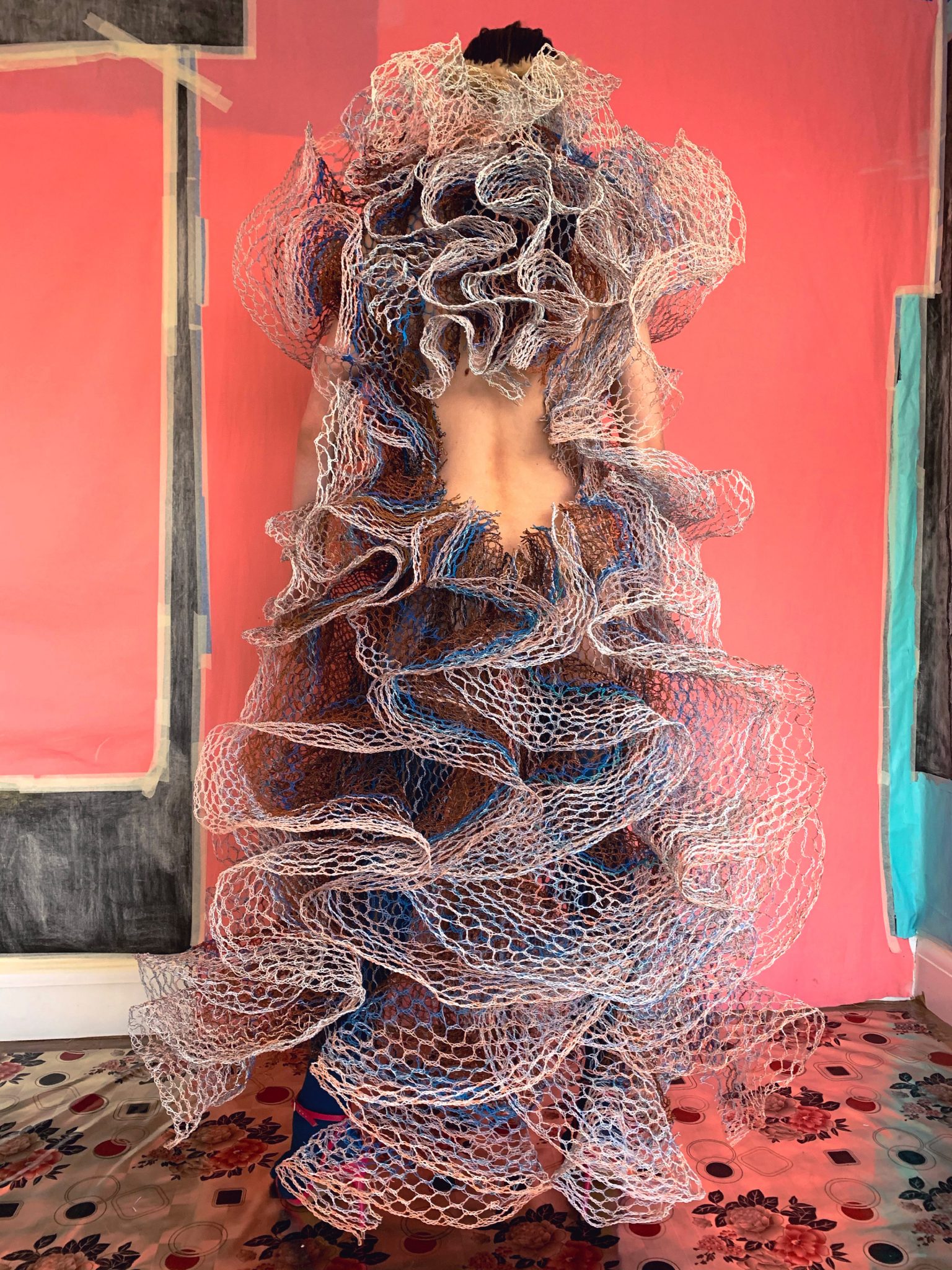
So there’s something particularly moving to me about seeing someone take the same sort of unwanted wiring and turn it into a garment that people might treasure. And treasure is the right word.
We live in an era when companies such as Shein, H&M and Zara have helped normalize a fashion culture built on speed, volume and constant novelty. Sometimes it feels as though people don’t even need to wear an outfit anymore. They can photograph themselves in a changing room, post the picture and move on to the next trend.
What happened to clothes that last? Clothes that we lend to our friends, pass down to our daughters or save for just the right occasion? Sipa’s garments suggest another future. They aren’t simply recycled clothing. They are statement pieces, handmade works of wearable art that give discarded materials a second chance.
Alexandra Șipa graduated from London’s Central Saint Martins in 2020, but her unusual approach to materials began earlier, when a pair of headphones broke during her studies. Instead of throwing them away, she noticed the colorful electrical wires inside and began experimenting with ways to transform them into lace. The idea eventually became central to her graduate collection, Romanian Camouflage, which included a spectacular dress that took more than 1,000 hours to produce.
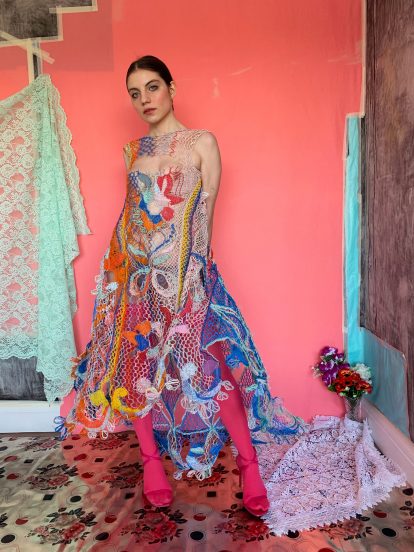
What makes her work especially interesting is its relationship with Romania, the country where she grew up. Bucharest is a city of architectural contradictions, where French-inspired classical buildings exist alongside monumental communist structures and gray brutalist apartment blocks. Against this austere urban background, Sipa noticed something else entirely: women who loved getting dressed up, who embraced glamorous clothes, decorative details and an unapologetically feminine appearance.
It’s an aesthetic my teenage daughter might describe as looksmaxxing, although Sipa’s version has far more history and humor behind it.
Her designs bring together these apparent contradictions. Delicate lace, extravagant ruffles, bright colors and elaborate silhouettes emerge from one of the least romantic materials imaginable: discarded electrical cable. The result is fashion that feels both futuristic and nostalgic, like something that might belong to a princess living in a post-industrial fairy tale.
Her grandmother’s home in Bacău provided another important source of inspiration. Sipa remembered colorful interiors, lace tablecloths, decorative household objects and a garden fence that was repeatedly painted in different colors. The weathered layers of paint, with older colors showing through the cracks, became part of her visual language. Her mother, a lingerie designer, also helped teach her to sew and later contributed to her lacework.
Sipa has also worked in the ateliers of Oscar de la Renta and Balenciaga, experiences that helped develop her understanding of couture craftsmanship. Her technique combines the intricate handwork associated with traditional Romanian lace and a contemporary interest in waste materials. Her designs have attracted attention from international fashion publications and musicians, including Charli XCX and Shygirl.
Today, Sipa is based in Bucharest, where she continues to develop artisanal clothing and accessories, working with reclaimed lace, textile remnants and other rescued materials. She has also been exploring electrical-wire lace for furniture and interior objects, extending her original experiment beyond clothing.
What excites me most is that Sipa isn’t merely creating a more environmentally conscious version of something we already know. She’s inventing an entirely different material language, one in which the industrial waste of the modern world becomes something feminine, extravagant and worth preserving.