
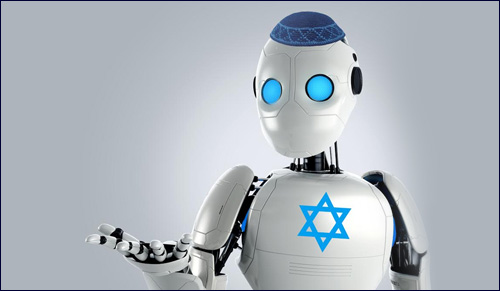

Artificial intelligence is learning to interpret Jewish religious law, but can a machine understand the human responsibility behind it?
Artificial intelligence can write poetry, diagnose diseases like cancer and help engineers design rockets. Now it is being tested on something considerably older than Silicon Valley: Jewish religious law, known as halacha. A new research project called HalachaBench tested 17 leading AI models using 60 real questions from the Israeli Chief Rabbinate’s rabbinical ordination examinations. The questions covered subjects including marriage, ritual purity, prayer, blessings and agricultural commandments.
The leading model achieved a score of approximately 80 out of 100, according to the project’s preliminary findings. Other models performed considerably worse. The results, also reported by Israel Hayom, suggest AI can already reproduce and apply substantial amounts of Jewish legal knowledge. But the researchers emphasize that an impressive score does not qualify a machine to become a rabbi or issue authoritative religious rulings.
Can artificial intelligence understand morality?
Jewish law (read here what the Talmud says about the environment) is not simply a collection of commandments. It is a living tradition of interpretation, debate, responsibility and ethical reasoning developed over thousands of years. A rabbi may be asked whether a particular activity is permitted on the Sabbath, the Jewish day of rest, but religious leadership also involves questions about marriage,Talmudgrief, family relationships, poverty and human dignity. The answer is not always found by retrieving a single passage from an ancient text.
In Pirkei Avot 1:6, an ancient collection of Jewish ethical teachings, the sages instruct people to establish a teacher, acquire a friend and judge others favorably. These are profoundly human relationships, built around trust, judgment and accountability.
An AI system can retrieve centuries of rabbinical commentary in seconds. But can it recognize when compassion should shape a conversation? Can it understand the consequences of advising a vulnerable person? Can it see the person who is standing before it? And who takes responsibility when its answer is wrong?
Ancient ethics in the age of machines
Jewish legal tradition offers a fascinating framework for examining modern artificial intelligence because it has spent centuries wrestling with conflicting obligations, competing interpretations and the relationship between law and morality. A machine might identify technically correct answers while lacking the personal experience, communal relationships and religious authority that give human judgments their meaning.
There is also an opportunity. Digitized Jewish texts, searchable commentaries and AI-assisted research could make complex religious scholarship more accessible to students and communities around the world.
The Sefaria digital library has already made thousands of Jewish texts available online, demonstrating how technology can expand access to ancient knowledge without replacing the people who interpret it. We’d be happy to investigate these questions in Christianity, Islam, Hinduism and Buddhism too.
Perhaps the real question is not whether AI can pass a rabbinical examination, but whether passing any examination is sufficient evidence of wisdom or ruling law, Jewish law, common law or sharia law.
A robot may someday know the Talmud better than any living scholar. Whether it can apply it with wisdom and sageness is another.


