
Earth. Energy. Everything next.

Hormuz swimmer Lewis Pugh highlights burning tankers and threatened marine life

British endurance swimmer Lewis Pugh has completed a 15-kilometre swim through the Strait of Hormuz, where commercial ships are being attacked, tankers are burning and oil pollution threatens some of the Middle East’s most extraordinary marine ecosystems.
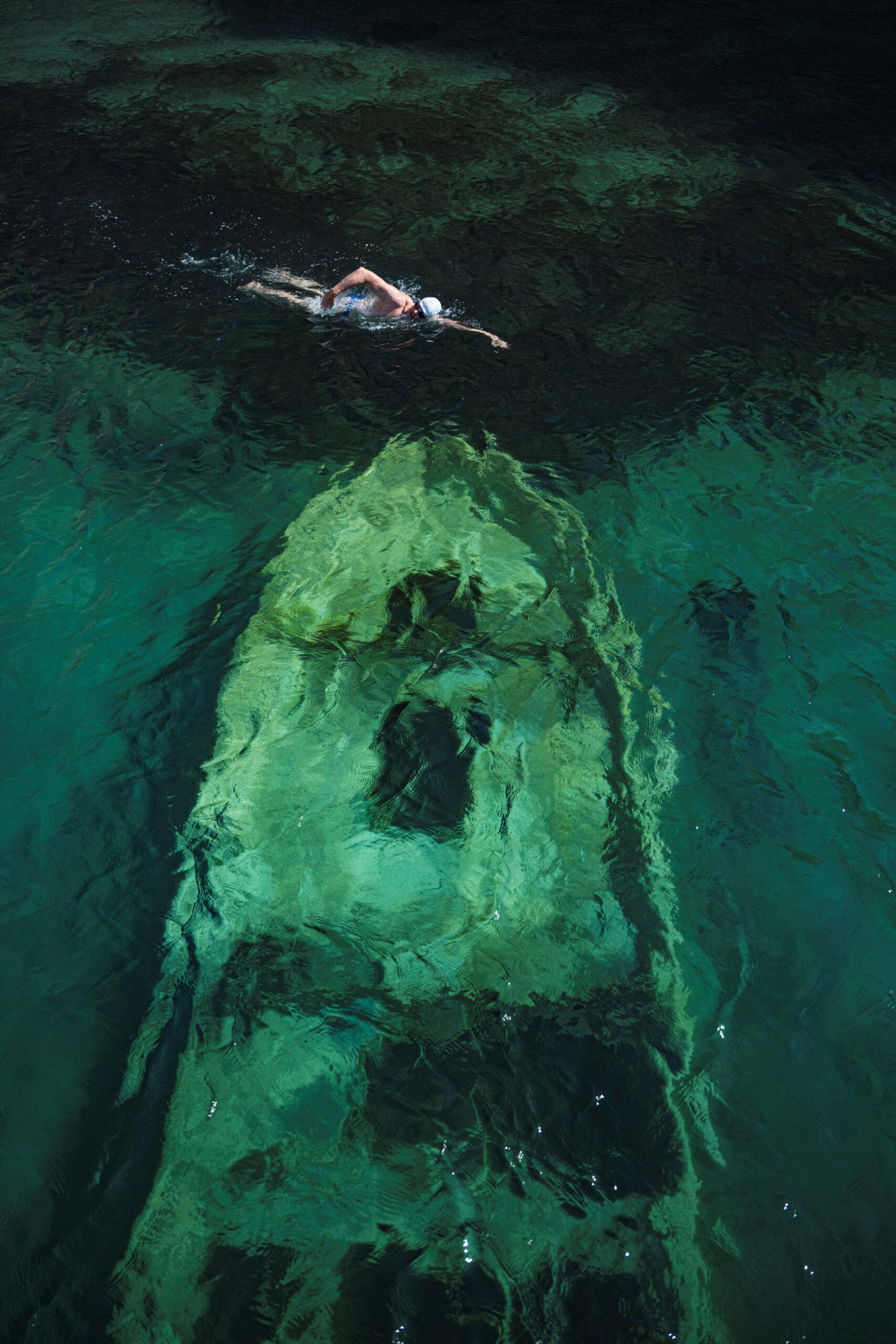
Photo: Lewis Pugh swims over a sunken vessel in the Strait of Hormuz, November 2026. Credit: Lewis Pugh Foundation.

Pugh, the United Nations Environment Programme (UNEP) Patron of the Oceans, has swum in some of the world’s most remote waters, from Antarctica to the Arctic. But this was his first swim in an active conflict zone. His message is simple: war doesn’t just kill people. It can destroy nature for generations.

On the first day, an oil tanker was struck by a projectile approximately four kilometres from where Pugh was swimming. He heard two explosions and fighter jets overhead. On the second day, he saw fireballs rising near the burning LPG carrier Tara Gas. He later passed close to the vessel, still engulfed in flames.
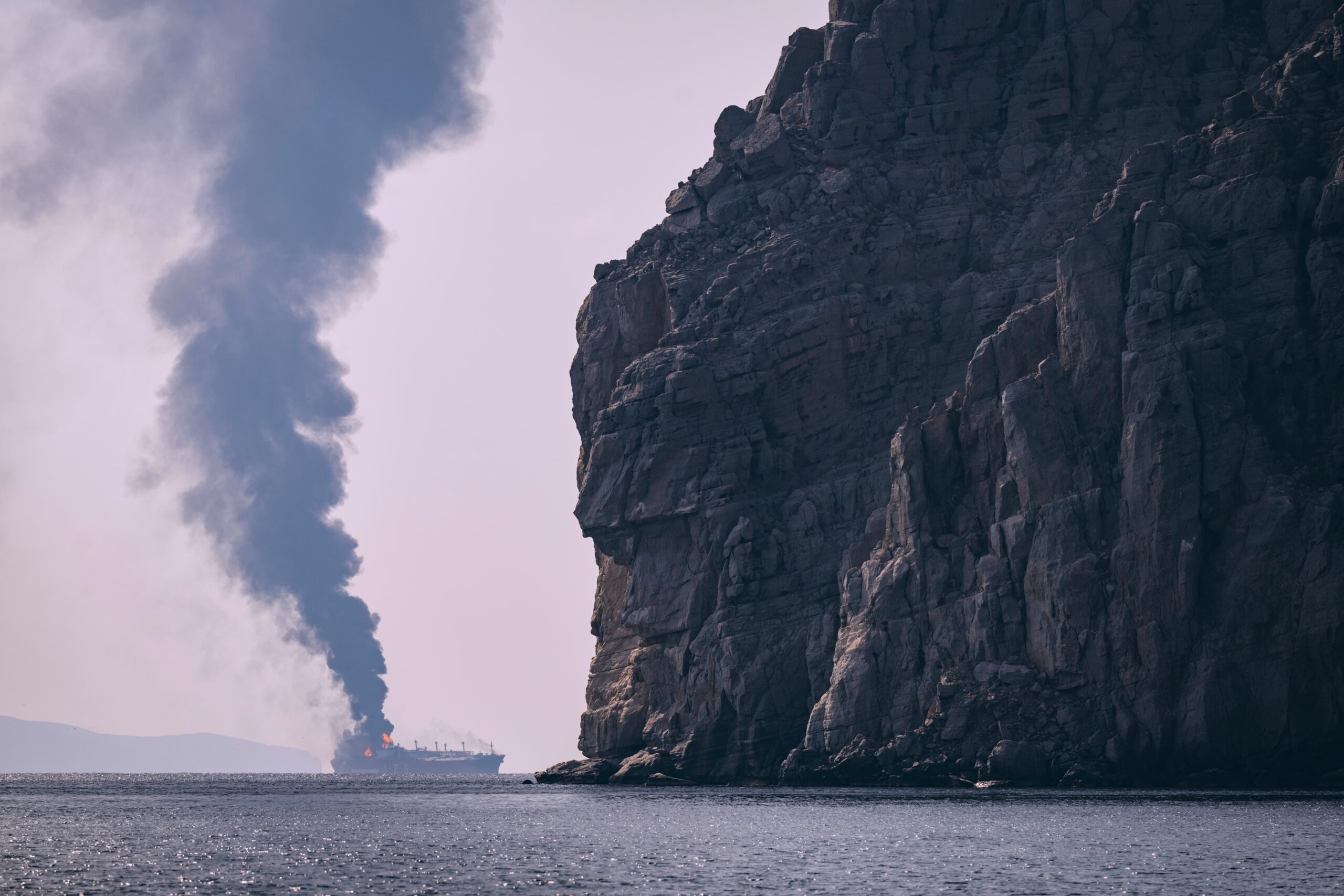
In this handout photo provided by the Lewis Pugh Foundation, taken from a boat accompanying endurance swimmer Lewis Pugh, smoke rises from a burning liquefied petroleum gas tanker in the Strait of Hormuz off the Musandam Peninsula, Oman, Tuesday, Nov. 17, 2026.

“My immediate thoughts were for the seafarers on board,” said Pugh. “The flames were enormous. These vessels carry highly flammable gases, and an attack on one can have catastrophic consequences – not just for crew members, but also on the surrounding marine environment.”

Pugh was accompanied by an experienced safety team and boat during the three-day expedition along Oman’s Musandam Peninsula.

The Strait of Hormuz is more than an oil highway
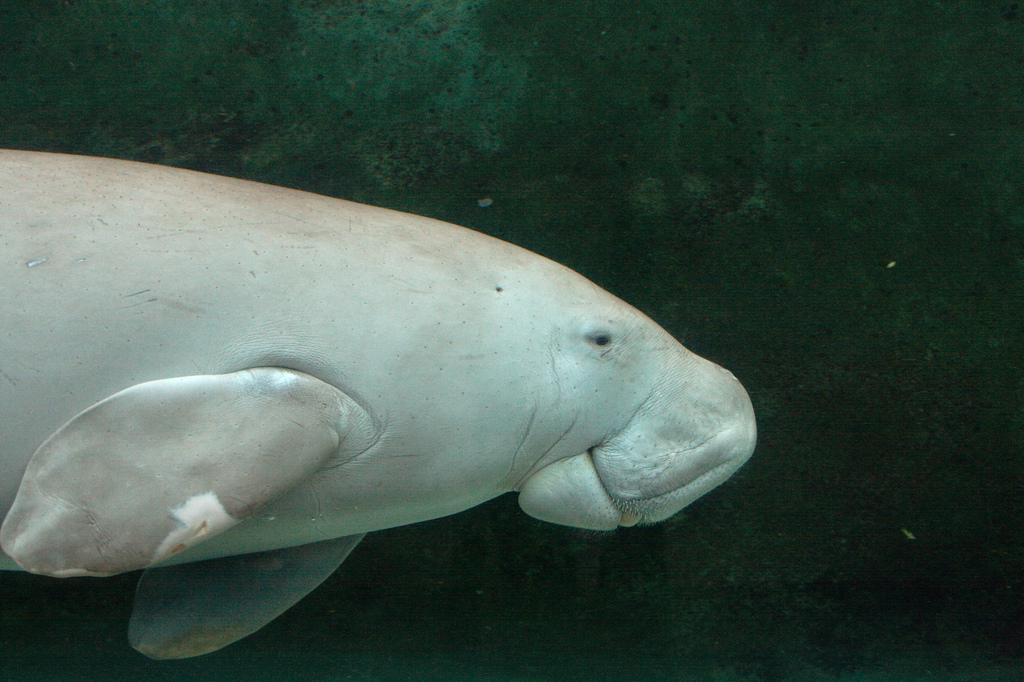
A dugong
A dugong

Most people know the Strait of Hormuz as a narrow shipping passage between Iran and Oman, carrying enormous quantities of oil to the rest of the world. It is also a remarkable natural landscape, with Oman’s dramatic fjords on one side and Iran’s mangrove forests on the other.

Beneath the surface are coral reefs, seagrass meadows and habitats supporting dugongs, whale sharks and sea turtles. These are not empty waters between hostile coastlines.

Green Prophet has examined the environmental and food security consequences of the Strait of Hormuz conflict, where disruptions to shipping threaten energy supplies, agriculture and vulnerable communities. According to United Nations figures cited by the Lewis Pugh Foundation, at least 175 vessels have been attacked since fighting began in late February 2026, with approximately 30 incidents causing significant pollution. More than a dozen Marine Protected Areas are reported to have been affected.

Oil spills threaten mangrove forests, coral reefs and marine wildlife. Heavy metals, fuel residues and toxic chemicals can persist long after damaged vessels disappear beneath the water. Attacks on desalination infrastructure also threaten drinking water supplies across the Gulf.

Burning ships and forgotten pollution
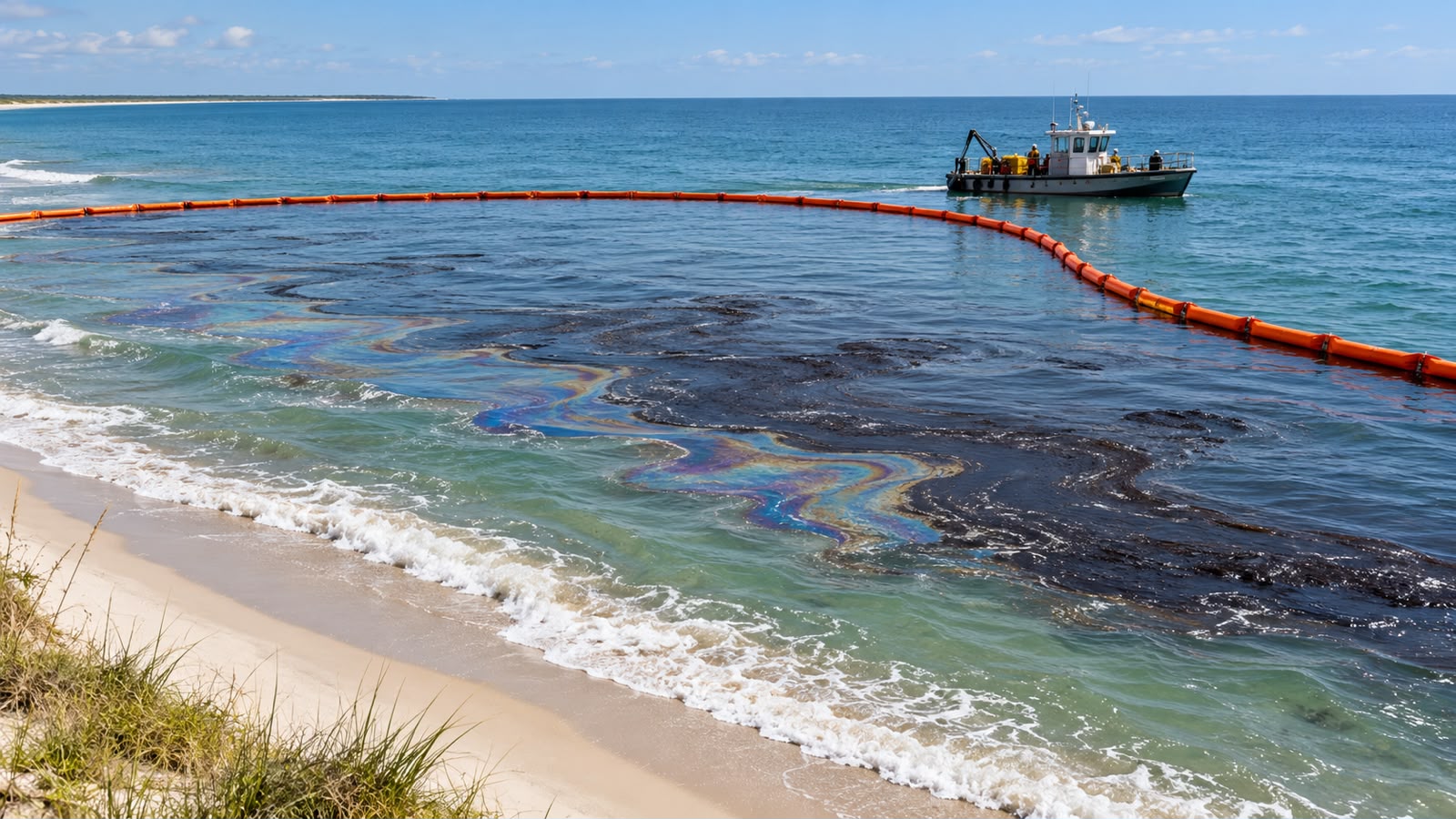
Oil spill off the coast of the UAE

In October, Green Prophet documented the oil tankers burning and commercial ships sinking across the Middle East.

Among the incidents was the sinking of the Rubymar in March 2024 following a Houthi attack in the Red Sea. The vessel carried approximately 22,000 tonnes of fertilizer, raising concerns about pollution. Another tanker, the Sounion, was attacked in August 2024 while carrying approximately one million barrels of crude oil.

Closer to Hormuz, an attack on the bulk carrier Minoan Pioneer was linked to oil pollution reaching Iran’s Qeshm Island in August 2026. Where is the environmental outrage when warfare threatens the sea? 

Iran’s extraordinary islands are already under pressure

The Iranian islands near the Strait of Hormuz were facing environmental pressures long before the latest fighting.
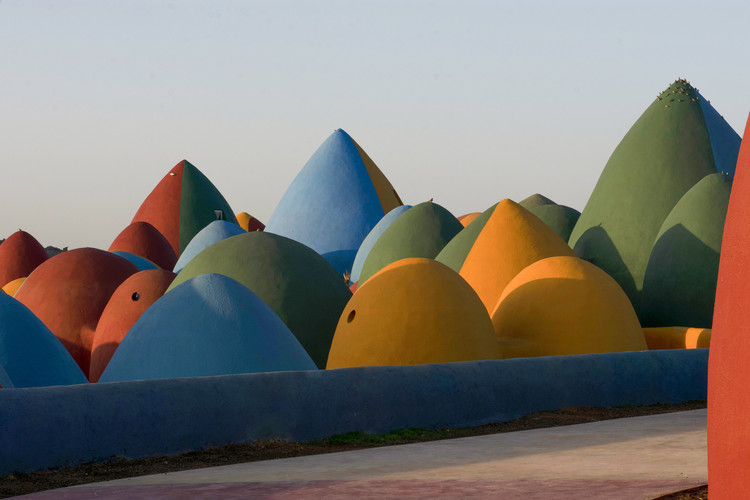
majara superadobe iran, eco architecture iran, sustainable building iran, earthbag construction iran, superadobe dome iran, natural building iran, eco resort hormuz island, sustainable tourism iran, adobe dome architecture, green building iran, eco hotel iran, earth architecture iran, environmental design iran, sustainable architecture middle east, natural materials construction iran
Hormuz Island eco project could create peace not more conflict

Hormuz Island, famous for its rainbow-coloured minerals and unusual geological landscapes, is also home to sensitive coastal habitats and sea turtle nesting areas.

In 2025, Green Prophet published concerns raised by Iranian architect and restoration specialist Ronak Roshan Gilvaei about the environmental impact of the award-winning Majara Residence on Hormuz Island.

The colourful superadobe complex received international architectural recognition, but Roshan questioned its sustainability credentials, citing coastal development and potential damage to turtle nesting habitats. The developers have defended the project’s environmental approach.

Green Prophet previously covered the superadobe architecture and earth-built homes on Hormuz Island, which attracted attention for their unconventional building techniques.

Roshan has also raised concerns about construction threatening Iran’s UNESCO-listed Hyrcanian forests. Those forests are along the Caspian Sea, far from Hormuz, but the question is similar: who protects extraordinary natural heritage when development and political interests take precedence?

Now the region’s marine ecosystems face the additional threat of war.

Nature is the forgotten casualty of war

In this handout photo provided by the Lewis Pugh Foundation, British endurance swimmer and UNEP Patron of the Oceans Lewis Pugh swims in the Strait of Hormuz off the Musandam Peninsula, Oman, Monday, Nov. 16, 2026.

“War causes immense human suffering. Lives are lost, families are torn apart, and homes, hospitals and schools can be destroyed in minutes,” said Pugh. “But there is another casualty that receives far too little attention: nature itself. And the damage can last long after the fighting has stopped.”

Pugh is calling for an end to the fighting, the reopening of the Strait of Hormuz and urgent action to address marine pollution. “We cannot hope to have peace between nations if we destroy the very systems that support life on Earth,” he said.

For nearly 40 years, Pugh has undertaken pioneering ocean swims, helping advance campaigns associated with the protection of more than 3.5 million square kilometres of ocean. His latest expedition also challenges the environmental movement to speak out when warfare destroys ecosystems.

“We campaign against plastic pollution, overfishing and climate change. We must also speak out when war destroys marine ecosystems. We must no longer remain silent,” said Pugh.

The coral reefs do not know which side fired the missile. Neither do the turtles, whale sharks or dugongs. The pollution can eventually reach the shores of people who had nothing to do with the fighting.

When the war ends, the damaged vessels and contaminated waters will remain. Cleaning them up will require cooperation across the same borders that divide the region.

The Strait of Hormuz is not just an oil highway. It is a living sea, and protecting it must be part of any lasting peace.

Karin Kloosterman
Karin Kloostermanhttp://www.greenprophet.com
Karin Kloosterman is an award-winning journalist, innovation strategist, and founder of Green Prophet, one of the Middle East’s pioneering sustainability platforms. She has ranked in the Top 10 of Verizon innovation competitions, participated in NASA-linked challenges, and spoken worldwide on climate, food security, and future resilience. With an IoT technology patent, features in Canada’s National Post, and leadership inside teams building next-generation agricultural and planetary systems — including Mars-farming concepts — Karin operates at the intersection of storytelling, science, and systems change. She doesn’t report on the future – she helps design it. Reach out directly to [email protected]

Read More

TRENDING

Oil tankers are spilling and burning in the Middle East – where is the environmental outrage?

From the Red Sea to the Strait of Hormuz, ships have burned, tankers have leaked oil and cargo vessels have sunk since October 2023. A timeline of maritime disasters, environmental damage and cleanup efforts.

The Houthis have taken Mocha. What that means for coffee and shipping routes

The Houthis have turned Yemen’s Red Sea coast into part of a global geopolitical crisis. But behind the missiles, shipping disruptions and Suez Canal headlines is Mocha — the ancient Yemeni port that gave the world its name for coffee.

Russia’s Arctic superdeep oil drill revives debunked ‘infinite oil’ theory

Russia is reviving the controversial abiotic oil theory with plans to drill superdeep holes in the Arctic. While small amounts of abiotic methane exist deep within the Earth, most geologists reject the idea that commercial oil reserves originate from non-biological processes, raising questions about the environmental cost and scientific value of the project.

Tigris River oil spill highlights Iraq’s environmental oversight and our addiction to oil

A fresh oil spill in the Tigris River, filmed by an Iraqi university student, has reignited concern over Iraq's polluted waterways. From ancient Mesopotamia to modern Basra, the country's dependence on oil has come at a steep environmental and human cost, with activists warning that unchecked contamination is putting ecosystems and public health at risk.

Dan Zaslavsky’s energy tower dream is rising again in Iran and China

The Energy Tower idea never made the leap from drawings and engineering studies to full-scale construction. But nearly two decades after most people stopped talking about it, the concept is quietly evolving in two unexpected places: China and Iran. The concept let dreamers dream and doers do - figuring out more pleasing designs and engineering.

Why Bronwyn Finnegan Chose the Nonprofit Sector Over Politics or Corporate Life

Bronwyn Finnegan could have pursued a career in politics or corporate leadership. Instead, she chose the nonprofit sector, where she focuses on financial sustainability, governance and helping mission-driven organizations build the capacity to survive and grow.

Scientists make lead-free perovskite solar cells that can weather the elements

Scientists have developed a “raincoat” for lead-free tin perovskite solar cells, helping them withstand air, moisture and heat while maintaining high efficiency.

The Essential Guide To Sustainability in Project Management

Sustainability is an approach where businesses and individuals balance the environmental, social, and economic aspects of a project such that current and future stakeholders are not overburdened with the impacts of the project in future.

Yerukim Forms a New Green Economy Where the Money is Really Green

The Yerukim members who pick up the recyclables get to keep the monetary reward, the public earns "green" bills that can be used in shops, and business owners get to be associated with environmentalism.

Choosing Riyadh over Dubai? What Investors Should Know

Saudi Arabia is deploying capital at unmatched scale to catalyze tourism and advanced industry while rewiring its power-and-water backbone. The investable frontier is widening—especially in renewables, grid storage, water efficiency/desal retrofits, and hospitality operating platforms. Prudent investors will insist on phased delivery, enforceable KPIs (energy, water, biodiversity), and RHQ/zone compliance—while pricing political-economy and reputational risks alongside growth upside.

Sell your cooking oil for biodiesel money

Want to make money on old french fry oil? Sell it.

Qatar Alternative Energy Summit Pairs Investors And Innovators

Alternative energy investors and innovators can meet n' greet in Doha, Qatar March 16 and 17.

Here’s How To Implement The Four Pillars Of Employee Engagement

If you throw a party for your work team and they are vegans, don't make it a barbecue. Know the sustainability values of your team to boost moral and retain good people.

Popular Categories