
They look like miniature bears with eight legs, eat, poop, shed their skin and can survive some of the harshest conditions known to science. Tardigrades, also known as water bears or moss piglets, are among Earth’s most resilient animals. And you might find them living in a patch of moss in your own backyard.
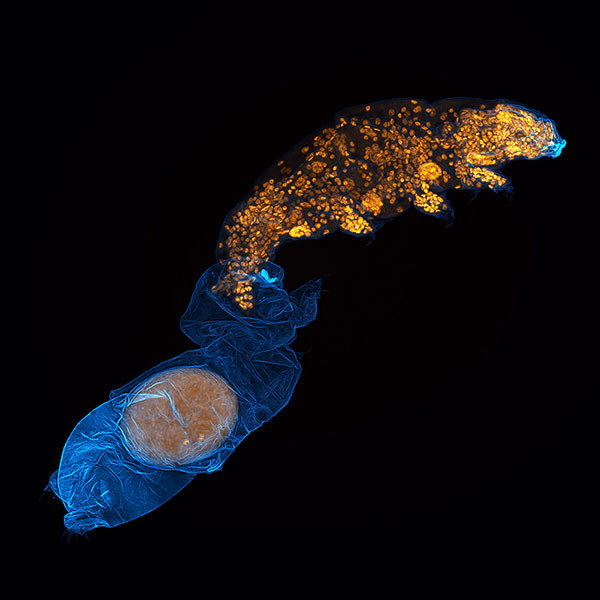
A remarkable photograph by evolutionary biologist Gonzalo Quiroga-Artigas captures a tardigrade shedding its outer skin and laying an egg inside the discarded layer. The image placed 12th in the 2026 Nikon Small World photography competition and was selected by Nature magazine among its best science photographs of October.
Green Prophet first explored the mysterious world of tardigrades and their seemingly extraterrestrial abilities back in 2013.
What do tardigrades look like?

Most tardigrades measure less than one millimetre in length. They have plump, segmented bodies and eight short legs tipped with tiny claws. They inhabit freshwater, oceans, soil, lichens and moss, including environments as remote as the increasingly green landscapes of Antarctica.
Depending on the species, tardigrades feed on algae, plant cells, bacteria and other microscopic organisms. Some even eat other tardigrades.
Can tardigrades survive in space?
In 2007, scientists sent thousands of tardigrades into orbit aboard the European Space Agency’s Foton-M3 spacecraft. Some survived direct exposure to the vacuum of space.
Their secret is a biological process called cryptobiosis. When conditions become unfavourable, many tardigrades can dehydrate, contract into a shape known as a tun and reduce their metabolic activity to barely detectable levels. When water becomes available again, surviving animals can resume their normal lives.
Their remarkable abilities raise fascinating questions about the limits of life beyond Earth, including whether plants might one day grow on the moon.
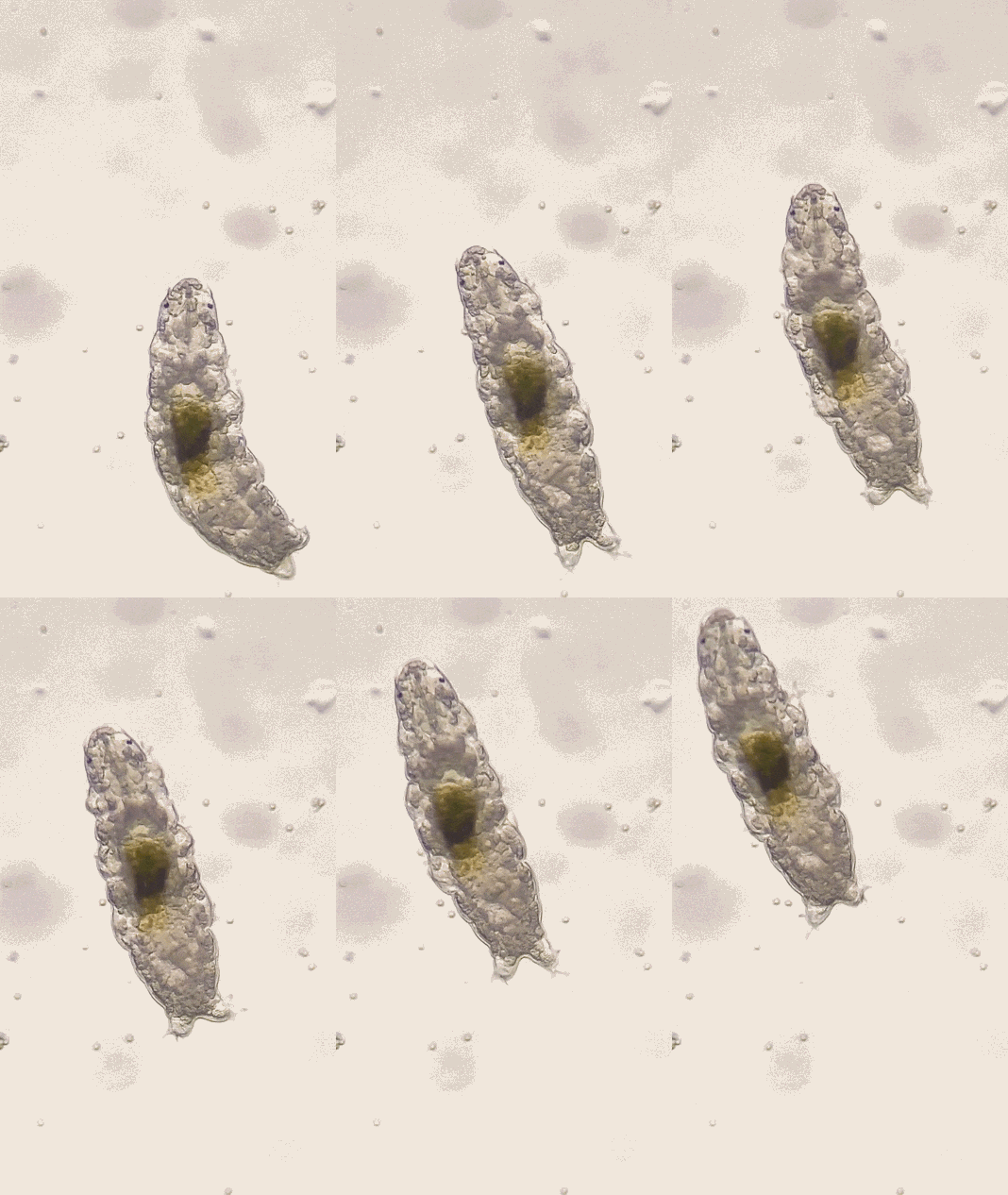
Yes, even these microscopic survivors have digestive systems and produce waste. Quiroga-Artigas also received an honourable mention in the 2026 Nikon Small World in Motion competition for a video documenting tardigrade defecation.
Tardigrades reproduce by laying eggs, sometimes depositing them inside their discarded outer skin, as captured in the award-winning photograph. They are not immortal, despite their reputation, and extreme heat and prolonged exposure to radiation can kill them.
Much like the hidden world of fungi and microbes beneath our feet, tardigrades remind us how much of Earth’s biodiversity remains invisible to the naked eye. You don’t need to travel to another planet to encounter an alien-looking creature. You might simply need a microscope and a little moss.