
I’ve probably been spending too much time at the Crystal Cave in Ontario.
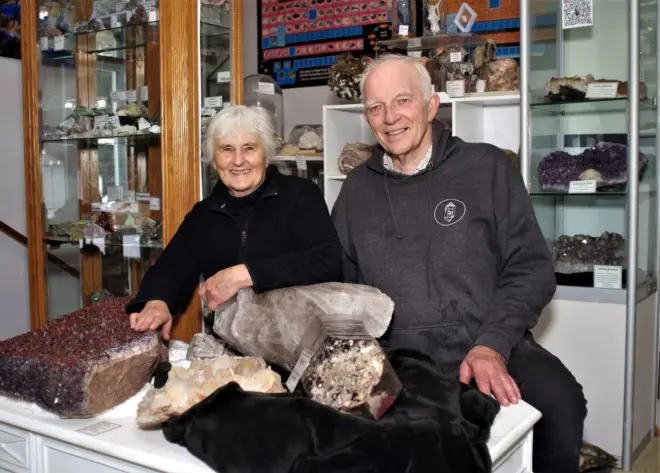
It’s in South River, a little detour if you are driving around cottage country near Muskoka, and it’s difficult to describe. Part mineral museum, part curio shop, part fairy world, it houses an extraordinary collection accumulated over some 60 years by Julia and John Breckenridge. Julia, a biologist with a background in geology, is one of the founders. If you get a chance to wander around with her, take it.
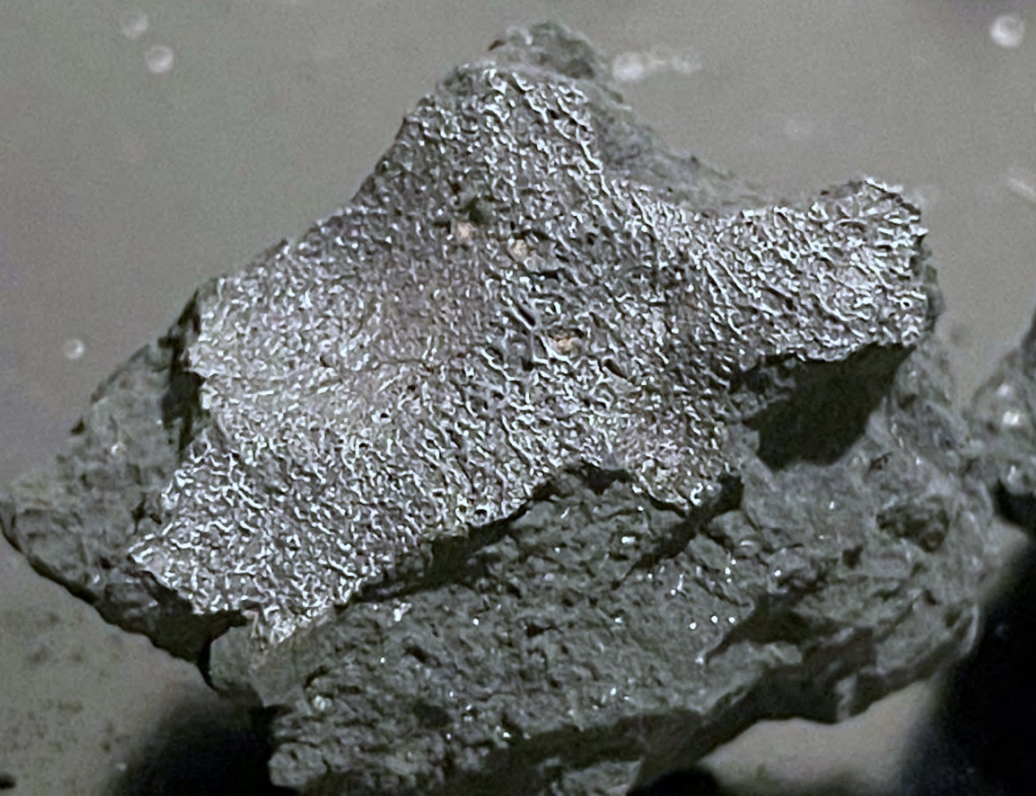
After a few visits, rocks start becoming more interesting, especially the meteors (feel the weight!) and the rocks that illuminate under UV light.
Maybe that’s why this story from the SETI Institute caught my attention. (Confession: I subscribe to their press alerts. Is that geeky?)
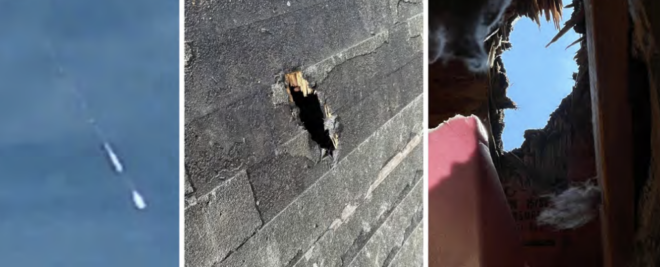
A meteorite containing what SETI calls “alien world chemistry” crashed through the roof of a home in Hillsborough, New Jersey. The meteor entered Earth’s atmosphere on July 16, 2024, travelling about 32,000 miles per hour. After breaking apart, a cloud of falling material stretched from Staten Island into New Jersey. One piece weighing more than two pounds went through a house.
The homeowner heard a crash and discovered a hole in his bedroom ceiling, along with black fragments and dust covering his bed and carpet. He also reported a strong sulfur-like smell.
Fortunately, he didn’t vacuum. He put on disposable gloves, wrapped fragments in aluminum foil and stored them in glass jars.
“Thanks to the homeowner’s quick reaction, these are the most pristine CM1/2 meteorites we know of,” said Peter Jenniskens, a meteor astronomer at the SETI Institute and NASA’s Ames Research Center. SETI has also partnered with SpaceX to find alien life in space.
Scientists found something remarkable inside: evidence of ancient, concentrated salty fluids from the meteorite’s parent asteroid. The rare (as it’s described) CM1/2 carbonaceous chondrite contained salt-rich fragments, carbon and nitrogen, a wide range of soluble organic compounds and amino acids. Researchers believe the brines formed when liquid water evaporated near the asteroid’s surface, concentrating salts.
This isn’t evidence of aliens. SETI, of course, is an organization devoted to searching for evidence of life beyond Earth, but what landed in New Jersey is evidence of extraterrestrial chemistry. Scientists studying meteorites like this are interested in whether such objects helped deliver organic material to the early Earth before life emerged.
I have my own less scientifically documented meteor story. Last summer, sitting in my forest in Ontario, I swear I saw a fireball come down into the trees perhaps 30 yards away. It may have been an optical illusion. I have no meteorite to prove otherwise.
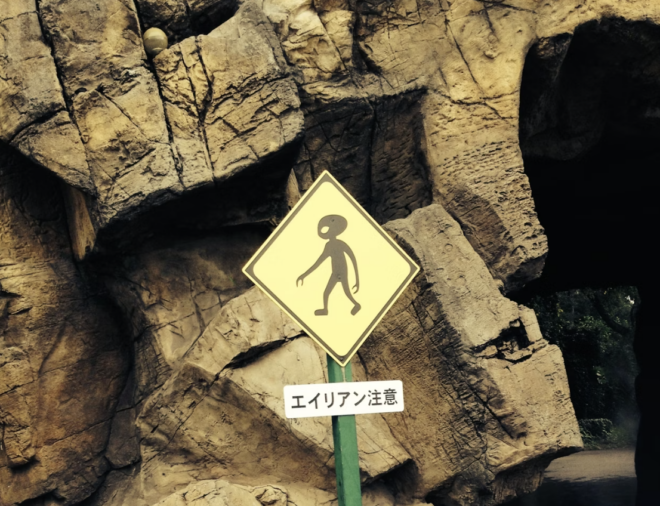
Why didn’t I run into the forest and look for it? Good question. Maybe I was afraid of aliens.
I still wonder about all that black dust on the New Jersey bed. What are we breathing in? How much material from elsewhere is quietly arriving on Earth around us? I don’t know, and this study doesn’t answer that. But it’s fun to wonder.
But a meteor crashing through somebody’s roof is also a rather dramatic reminder of home. Before we figure out how to farm Mars, I’d like to see more people growing food in their own cities and towns, on rooftops, in gardens and on little pieces of land nearby. Keep looking for aliens. And take care of the very strange and beautiful planet we’ve already got.