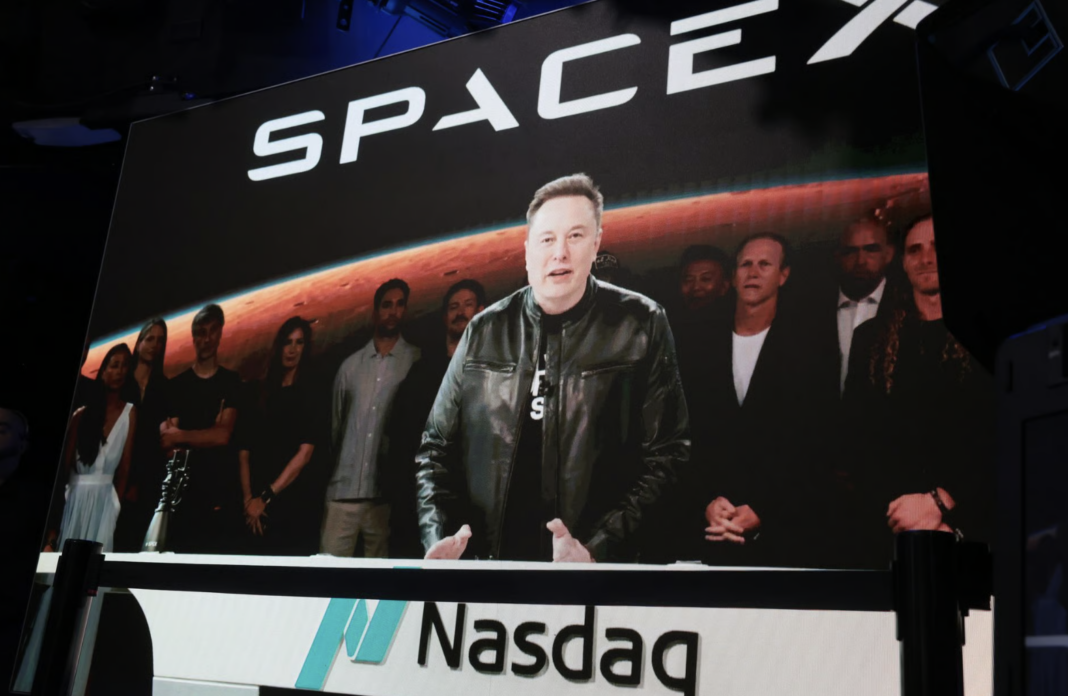

Even on paper, a trillionaire might be the most powerful force in the world today. Rising on an upward trajectory out of efforts with a basis in the 1980s’ Strategic Defense Initiative and a radical rethinking of the 1990s’ ambitious Clipper program, SpaceX (NASDAQ:SPCX) has begun to realize American ambitions in the highest physical domain. The incredibly ambitious Golden Dome project, the most-anticipated IPO in decades, and the wealthiest man in the world are only the context for the cascade of knock-on effects that this launch will catalyze.
By now it should go without saying that SpaceX has been vital to America’s civilian and military space programs. Both NASA and the United States Space Force depend on SpaceX, as do many companies in the New Space industry of more recent companies of which there are many already and more every day.
In addition, thousands of current and former SpaceX employees are becoming millionaires as a result of this IPO according to the New York Times. One big winner is a New Space company that might rescue the International Space Station: Gavin Petit’s space robotics company, Katalyst Space Technologies. This IPO will bring investment not just in SpaceX and companies with SpaceX ties like Katalyst, it might just create a gold rush for every space company; if it does, the world we live in will be radically transformed from orbit on down, and some terrestrial interests may suffer just as some benefit. This New Space revolution presents predictable challenges to environmentalists and astronomers, yet may pose serious challenges to the generative AI industry beyond the February xAI and SpaceX merger that enabled the SpaceX IPO, a merger which was valued at $1.25 Trillion at the time.
Linking xAI, which is an AI company that the US military has begun working more closely in light of conflicts the administration has with Anthropic, to SpaceX and its massive IPO may trigger a tokenomics crisis that has already been brewing. The IPO creates the conditions for a brutal price war over enterprise token budgets going on a summer diet even as Anthropic and OpenAI cut token pricing.
Reporting from Forbes argues that this might seriously dent the Anthropic and OpenAI IPOs even as companies using AI turn to solutions that are a better fit for their budgets. Further stacking the deck, xAI has acquired Cursor to begin integrating the generative AI market’s full selection of tools while thumbing its nose at rivals. This acquisition is crucial since generative AI is to using AI what an engine is to driving a car; traditional coding creates the tools that allow for AI to actually be somewhat useful instead of a slop-fueled timesuck and massive waste of money, raising the question of how vital generative AI really is to the future of software when traditional coding is what still provides the real value in generative AI use.
ROI is as yet MIA in most generative AI companies and investors have a strong incentive to buy into the New Space industry paired with practical AI that has more real-world utility. Likewise AI hardware providers, with questions about data centers’ viability becoming frequent. Beleaguered Meta may actually be well-positioned to avoid much impact from this event, having already failed to make science fiction author Neal Stephenson’s Metaverse happen (stop trying to make the metaverse happen, please) while hemorrhaging nearly as bad as the federal workforce post-DOGE.
Attracting savvy investors looking for an edge is not the only way this IPO benefits New Space. While tokenomics is forcing generative AI companies to cut prices and lose their margins, the SpaceX IPO enables SpaceX the choice of lowering its own prices for launch services, which would essentially subsidize launch services and lower the costs of entry into orbit.
Lower launch costs also mean that companies will be able to spend more of their budgets on engineering, manufacturing, and testing their products; in some case this may lower the time to market while increasing viability in the harsh environment of space.
More launch capacity, a higher launch cadence, and lower launch costs benefit New Space companies and their customers while creating terrestrial and atmospheric pollution that has faced varying amounts of oversight in the past yet now is reaching regulatory capture. The existential threat to astronomy as the objects in orbit interfere with terrestrial observation, a threat that grows with each launch as does the likelihood of Kessler syndrome (also known as collisional cascading or ablation cascade) or effect in which orbital debris creates cascade of debris collisions in LEO (Low Earth Orbit, where the majority of satellite constellations orbit before gravity pulls them into the atmosphere where they burn up releasing chemicals into the atmosphere and what doesn’t burn up falls to Earth) which can damage or even destroy anything orbiting at the same altitude.
Related: this company cleans space junk
At present there are more companies monitoring objects, more processing data, and more working on debris clean-up though the potential of the problem outpaces present solutions to it. The combined threats to both science and the environment has motivated activism even as cuts to NASA’s science program and weakening of environmental protections amplify existing problems.
Of continuing concern about AI is the environmental impact which space-based data moat and AI centers aim to address with technology that exists conceptually, yet has not been proven nor stated; what may benefit the environment more is simply reduced demand, similar to how reduced demand for meat and dairy is the only thing that would result in CAFOs (otherwise known as factory farms) no longer being operated.
One unexpected beneficiary of a New Space boom are the opportunities for Afro-Asian space companies as more accessible launch accelerates government projects in Africa’s nascent space programs while creating business for companies from Western Asia like IAI’s projects working with Morocco to Eastern Asia like Hong Kong Aerospace’s spaceport project in Djibouti, as well as proposed spaceports in Kenya and even Somalia.
While there remains speculation that Israel is planning to build an IDF base in neighboring Somaliland (which borders Somalia, Djibouti, and Ethiopian), a spaceport would have more regional benefits especially if it was linked to marine shipping lanes through Berbera and terrestrial transport systems especially if further investment was made in the Aysha to Berbera rail line. The African Space Agency based in New Cairo‘s Egypt Space City would flourish through advocacy for these regional connections to build the capacity enabling the SWANA space boom.
One IPO, many impacts across and above the world, opportunities and challenges for several industries, and potential risks that need to be addressed in order to move forward and upward together.