
Smart glasses are changing the economics of eyewear by turning conventional frames into higher-priced technology products. What used to be mainly a sale built around frame design, lenses, prescription needs and brand preference is now also a sale built around cameras, audio, AI features, app support and connected-device setup.
Ray-Ban, Oakley and Sunglass Hut show how this shift is playing out. Ray-Ban has helped move smart glasses toward mainstream buyers. Oakley is extending the category into performance eyewear. Sunglass Hut is showing how retailers may need to reorganize the shopping experience around AI glasses as a distinct product category.
Smart Glasses Are Raising the Value of an Eyewear Sale
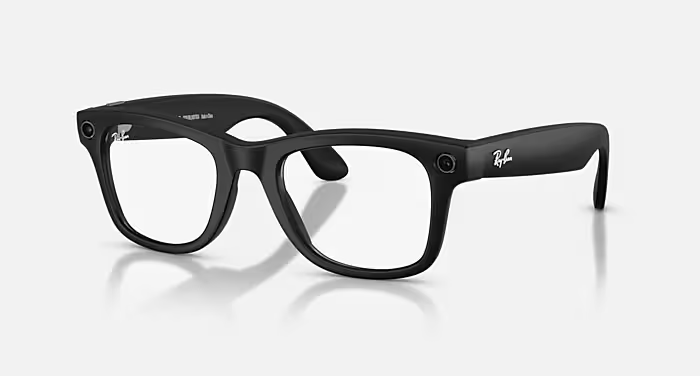
The clearest financial story is sales value. EssilorLuxottica said more than two million Ray-Ban Meta glasses had been sold by February 2025, less than 18 months after the product’s September 2023 launch. The company was also preparing production capacity of 10 million smart-glasses units per year by the end of 2026, according to Reuters reporting on its smart-glasses plans.
That momentum accelerated in 2025. EssilorLuxottica later reported more than seven million AI-glasses units sold during the full year, including both Ray-Ban Meta and Oakley Meta. This is not a pure Ray-Ban figure, but it shows how quickly smart eyewear moved from a niche experiment to a meaningful product category.
Europe is central to that story. Counterpoint Research data reported by Communications Today indicated that Western Europe accounted for 30% of global smart-glasses shipments in the second half of 2025, while the global average selling price of AI smart glasses rose to about $360. That is well above basic audio glasses and helps explain why eyewear companies and retailers are paying close attention to the category.
The higher price is not only about the frame. Smart glasses add components and capabilities that ordinary eyewear does not have: cameras, microphones, speakers, batteries, processors, Bluetooth, Wi-Fi, companion apps and AI functions. These features allow brands to position smart glasses closer to consumer electronics while still selling them through familiar optical and fashion channels.
For retailers, that creates an opportunity to increase average transaction value. But it also changes what the sale requires.
Ray-Ban: Bringing Smart Glasses to Mainstream Buyers
Ray-Ban’s advantage is familiarity. Earlier smart-glasses products often struggled because they looked too much like devices and not enough like eyewear. Ray-Ban Meta reduced that visual barrier by putting smart functionality into frames consumers already recognized.
The sales growth of Meta glasses suggests that consumers are more open to wearable technology when it comes in a familiar eyewear design. Instead of asking buyers to adopt a strange-looking device, Ray-Ban gives them a product that still feels close to ordinary glasses or sunglasses.
That matters financially because mainstream acceptance expands the addressable market. The product is not limited to technology enthusiasts. It can appeal to travelers, creators, commuters, parents, students, professionals and existing Ray-Ban customers who already understand the brand’s style language.
Product education is also part of the sale. Smart glasses are harder to explain than standard frames, so tools such as AI simulators, guided product pages and in-store demonstrations can help consumers understand what the glasses actually do before buying. Better education can reduce expectation gaps, especially around camera quality, AI capabilities, battery life, audio, privacy settings and app requirements.
This is important because expectation-based returns can be expensive. Ray-Ban has not disclosed an official return rate for Ray-Ban Meta. Its support material says returns are rare, but it does not provide a percentage. So the safest financial conclusion is not that returns have been solved. It is that clearer education may help reduce avoidable dissatisfaction.
Oakley: Opening a Performance-Eyewear Segment
Oakley brings a different financial opportunity. While Ray-Ban Meta helped make smart glasses more familiar to lifestyle buyers, Oakley gives the category a way into sport and performance eyewear. That opens the door to runners, cyclists, outdoor athletes and other active consumers who may be interested in hands-free audio and capture while they are moving.
With Oakley recording glasses, the priorities are a little different. Frame stability, lens coverage, durability and comfort can matter more when the glasses are being used during a run, ride or other outdoor activity. For a lifestyle buyer, everyday design and social use may come first. For someone buying with sport in mind, how the glasses feel and hold up during movement is likely to matter more.
This segmentation can raise the financial ceiling of the category. Smart glasses do not have to remain one general product. They can become lifestyle eyewear, performance eyewear, prescription eyewear and creator eyewear, each with different price points and buying motivations.
Market research cited in the brief indicates that Oakley Meta HSTN and Vanguard represented more than 30% of Meta’s smart-glasses shipments in Q4 2025. Because this figure comes from third-party market analysis rather than direct company disclosure, it should be treated as an estimate. Still, it supports the idea that sport-focused smart glasses quickly became commercially relevant.
Fit is especially important for Oakley. Performance eyewear buyers are more sensitive to whether a frame sits securely, works with movement and feels right on the face. Virtual try-on can help buyers assess appearance and approximate fit before purchase. That may reduce uncertainty, but it should not be overstated. Oakley has not published a specific return-rate reduction for Meta glasses, so the responsible claim is that virtual try-on may reduce buying friction, not that it has proven a specific drop in returns.
Sunglass Hut: Changing the Retail Experience
Sunglass Hut shows how smart glasses are changing retail structure. Instead of treating Ray-Ban Meta and Oakley Meta as isolated brand products, retailers are beginning to organize them into dedicated AI-glasses sections.
The dedicated Sunglass Hut Meta section shows how established retailers are beginning to organize smart glasses as a distinct category. That matters because category creation shapes consumer behavior. A shopper who sees “AI glasses” as its own area may begin comparing smart eyewear across brands, models, features and prices, rather than thinking of it as only a Ray-Ban or Oakley variation.
This can help increase discovery and support higher-value sales. Sunglass Hut also has the advantage of an established optical and fashion retail footprint. Smart glasses can be introduced through a familiar eyewear retailer instead of only through electronics stores.
But selling smart glasses is more demanding than selling standard sunglasses. Staff may need to explain pairing, app compatibility, camera features, audio quality, privacy settings, battery charging, Wi-Fi, Bluetooth and cloud-based processing. Customers may also need live demonstrations before they understand the product’s value.
That changes cost structure. A higher ticket price may improve revenue per sale, but it also requires more staff training, longer sales conversations, technical troubleshooting, warranty handling and return management. EssilorLuxottica’s Leonardo learning ecosystem is relevant here because large-scale employee education becomes more important when retail staff must sell products that sit between eyewear and consumer electronics.
What Will Determine Long-Term Profitability?

The long-term profitability of Meta glasses in Europe will depend on more than unit sales. Strong sales show demand, but retailers and manufacturers still need to manage cost, support and repeat use.
Several figures will matter over time:
- Gross margins on smart eyewear
- Manufacturing and component costs
- Staff training costs
- Warranty and repair expenses
- Return rates and return reasons
- Repeat usage after purchase
- Consumer demand for future upgrades
No official return rate has been disclosed for Ray-Ban Meta or Oakley Meta. That is an important limitation. Ray-Ban and Oakley support materials may say returns are rare, but without disclosed percentages, market observers cannot accurately calculate the return burden.
Virtual try-ons and product simulators may help reduce uncertainty. They can show shoppers how a frame may look, explain features before purchase and help customers make more informed decisions. However, their exact effect on Ray-Ban Meta or Oakley Meta returns has not been publicly measured.
There is also a sustainability and lifecycle question. Smart glasses include batteries, chips, cameras and speakers, which makes them more complicated than traditional eyewear. For a Europe-facing market, that matters because connected accessories create repair, recycling and e-waste considerations. As Green Prophet has often covered in its wider sustainable fashion and design reporting, product value increasingly depends on durability, responsible materials and how long items remain useful.
This is especially relevant because the global e-waste problem continues to grow. The Global E-waste Monitor reported 62 million tonnes of e-waste generated in 2022, with only a minority formally collected and recycled. If smart glasses scale into tens of millions of units, product lifespan and end-of-life handling will become part of the financial picture.
Conclusion
Meta glasses are reshaping Europe’s eyewear market in three clear ways. First, they are raising the value of an eyewear sale by adding cameras, audio, AI and connected-device features to familiar frames. Second, they are opening new customer segments, with Ray-Ban reaching mainstream lifestyle buyers and Oakley extending the category into performance eyewear. Third, they are forcing retailers such as Sunglass Hut to build a more demanding sales model around demonstrations, education, support and returns.
The sales data shows strong demand. More than two million Ray-Ban Meta units had been sold by early 2025, and EssilorLuxottica’s broader AI-glasses portfolio passed seven million units in 2025. Western Europe’s 30% shipment share in H2 2025 also shows that the region is a major part of the category’s growth.
But long-term success will depend on profitability, not only popularity. The winners will be the brands and retailers that can maintain demand, protect margins, manage support costs, reduce expectation-based returns and keep consumers using smart glasses long after the first purchase.