

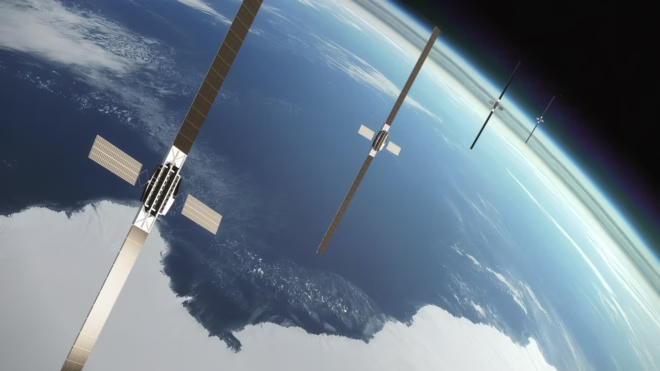
There’s so much hype about data centers in Space and so much skepticism, so is it possible? Sophia Space out of Pasadena is partnering with Apex to to find out by building and launching satellites compute modules into LEO (low Earth orbit). In practical terms this the first practical step towards data centers in space by first building edge AI in space, the kind of AI that computes where it us and doesn’t rely on a data center somewhere else.
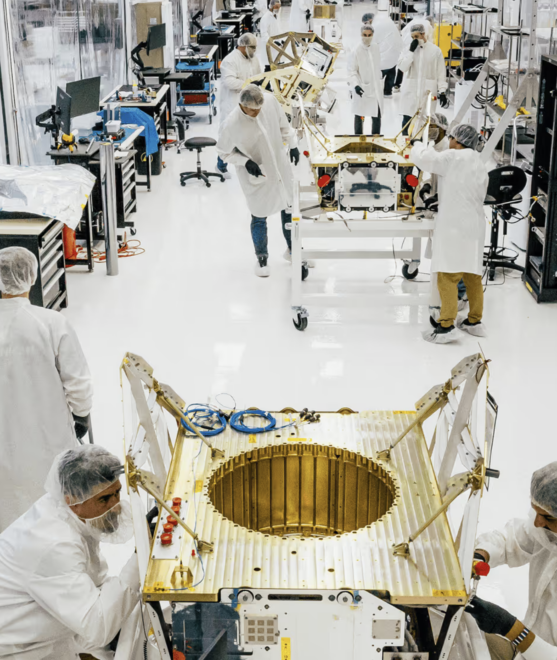
One of the major barriers to building data centers in Space is that the processing units and other electronics required to run them all produce heat. That heat needs to be dissipated in order to keep them from overheating. Since space is a vacuum that means the only kind of cooling available is radiative cooling. And radiative of cooling requires a certain amount of surface area to be effective, which can impose limits the practicality of building compute at the scales required.
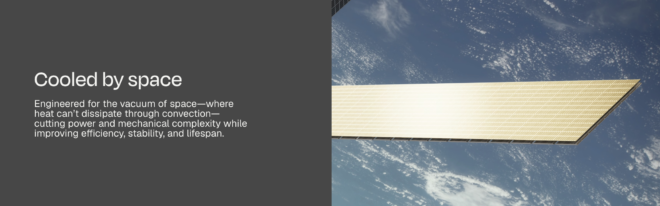
That’s why Sophia builds space-hardened TILEs (Thermal Integrated LEO Edge), sets of modular compute blades armored against the radiation of space, cooled with passive radiative cooling. Each blade is a NVIDIA edge compute module and the microcontroller unit (MCU) that manages it and interfaces with sensor options, sandwiched between solar panels on one side and radiators on the other side. And each TILE itself is designed to be clustered with other TILEs onboard a satellite bus.
Teaming up with Apex who make satellite buses, makes it possible to test in-orbit compute. Each Apex bus is an intentionally-generic chasis that Sophia’s compute gets slapped onto.
Apex bills their buses as productized, which means that they’re intended to be produced and deployed at scale.
Related: AI centers are triggering panic in the US
Scale allows for the amount of compute that AI companies are talking about needing to offset the environmental impact and land costs of terrestrial data centers. Data centers are not the only application, Apex and Sophia can partner with other New Space companies to build reliable customized satellite systems. Even individually, they have enough processing power to do work onboard without relying on systems on the ground. By using the MCU to integrate sensors, that allows for a wide range of applications such as atmospheric pollution monitoring, imaging, and climate research.
Often satellites are a bit more bespoke, yet to build a constellation (like Starlink) or a fleet of satellites (which data centers in space will need) is where scale production comes in, which is what data centers in space will be. Data centers require a massive amount of compute, more than an individual satellite.
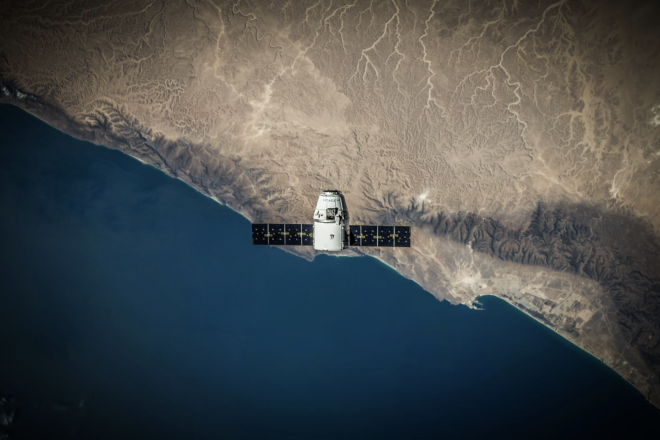
SpaceX has deployed satellites to run a Starlink bus potentially allows for mass deployment the way Starlink launches are essentially a rack of satellites that release sequentially, another necessity for a data center in space since instead of one massive facility like terrestrial data centers it will likely be a mesh network using laser communication.

Mesh networks are increasingly the most important topology in space and drones. There’s a disturbing report about the pilot that was rescued from Iran, describing the eerie coordination of Iranian drones on a mesh network coordinated like a school of fish.
Topologies are the way that a network of devices is connected and the way those connections are arranged in relation to each device. Mesh networks allow each device to directly communicate with any device around it and pass information through its neighbors. That allows both for redundancy and for reconfiguration.
A less-disturbing visual than the story about Iranian drones is watching a drone show, like China’s recent Guinness Record 22,580 drone record-breaking performance:
Similarly the World Cup has a drone scoreboard, Yoga Day had a drone show in India, and increasingly drone shows are common whether at concerts, sporting events, holidays, and probably coming to a b’mitzvah near you.
The big difference between military drones & satellites in comparison is that drone shows can be preprogrammed like voxels (3D pixels) in a 3D animation, whereas military drone swarms use edge AI for distributed computing to coordinate in real time. Satellites would still be preprogrammed while also using distributed computing for any manoeuvring and updates.
While the physics makes data centers in Space, Sophia and Apex have partnered to prove that modular scalable edge computing in orbit is possible. Their mission launches in 2027 and Sophia is not the only company aiming to build compute in the increasingly-busy orbital environment. Whether their approach allows for distributed data centers in space, edge computing will be vital to real-time navigation of the crowded space in orbit in ordee to avoid space trash and accidental collisions.
Top image: Avalanche Technologies, a company making data centers for Space