Can Scientists Predict Coral Bleaching Before It Happens?

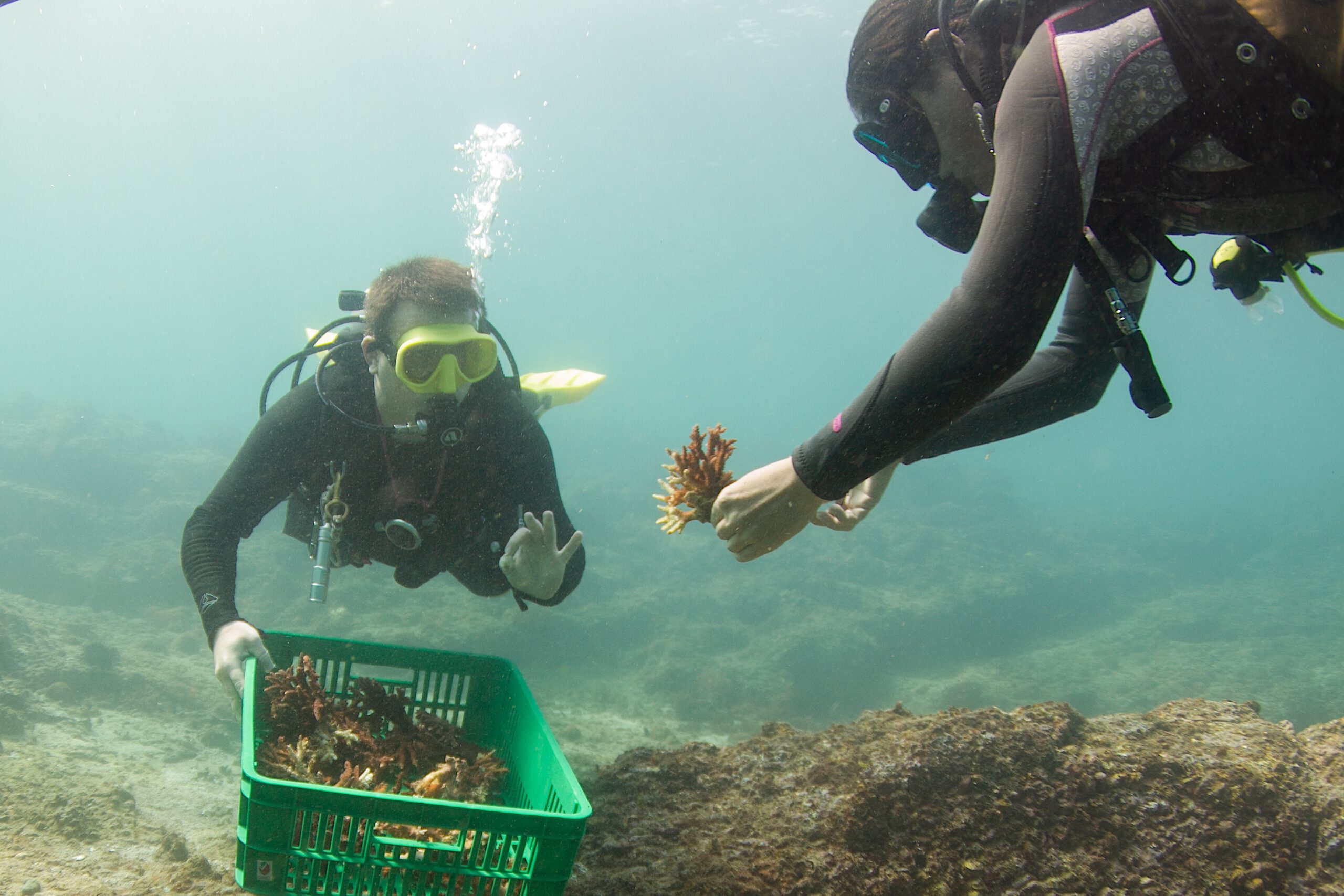
Replanting coral reefs. Photo by Freestyle Divers

Coral reefs are dying in slow motion, and much of the damage is now visible from space.

From Australia’s Great Barrier Reef to the Red Sea and the Caribbean, marine heatwaves fueled by climate change are pushing corals beyond their limits. Green Prophet has reported on coral bleaching events across the Middle East and worldwide, from warming seas in the Gulf of Aqaba to the growing threat of heat stress on tropical reefs that support fisheries, tourism and coastal protection.

Now researchers at the Woods Hole Oceanographic Institution (WHOI) in the US say they have developed a way to predict coral bleaching five to six months before it occurs, potentially giving reef managers enough time to intervene and save vulnerable corals.

The study, published in Communications Earth and Environment, introduces a new forecasting tool called the Bleaching Event Early Predictor (BEEP), which links coral bleaching on the Caribbean island of Curaçao to the alignment of three major climate patterns in the Atlantic and Pacific oceans.

“Existing bleaching forecasts track heat stress in near-real time, and also rely on generalized thresholds for predicting bleaching risk, which means they often do not provide reef managers and restoration practitioners with enough lead time to prepare and respond effectively, or the predictions are inaccurate,” said Mariya Galochkina, lead author of the study and MIT-WHOI Joint Program doctoral researcher.

“We take a different approach by using large-scale climate patterns that interact to shape regional ocean and atmosphere conditions with a time lag, which lets us identify bleaching risk months in advance.”

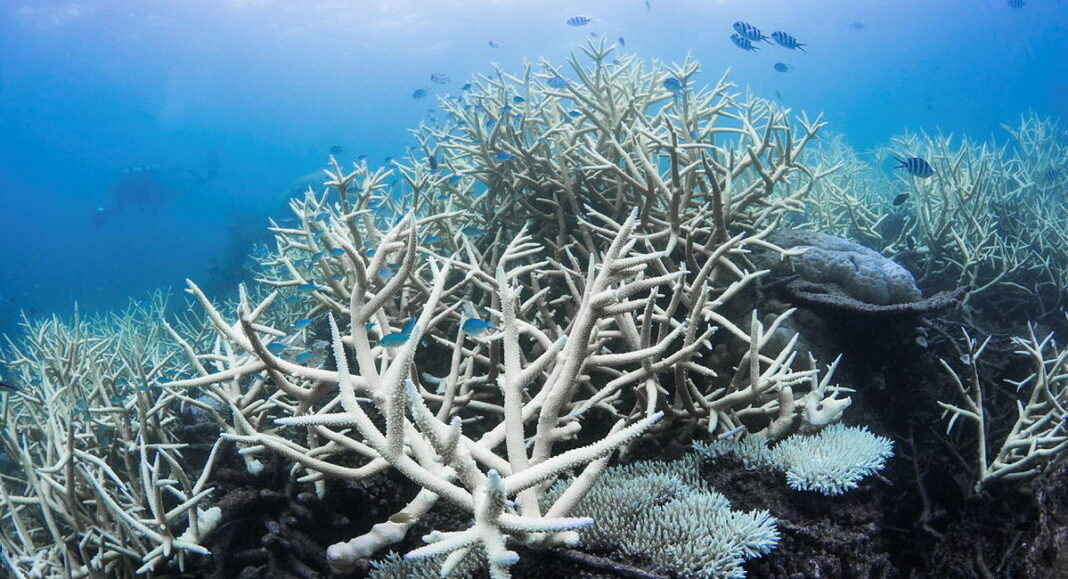
Coral bleaching occurs when ocean temperatures become too warm and corals expel the microscopic algae that provide most of their energy and vibrant colors. If temperatures remain elevated for too long, corals can starve and die.

The consequences extend far beyond the reef itself.

Coral ecosystems support approximately 25% of all marine species despite covering less than 1% of the ocean floor. Hundreds of millions of people depend on reefs for food, tourism income and protection from storms and coastal erosion.

In Curaçao, coral reefs contribute hundreds of millions of dollars annually to the local economy through tourism and fisheries. Yet the new research suggests significant bleaching events only began around 1990, after decades of ocean warming had already altered local conditions.

To uncover this history, WHOI researchers examined 44 coral cores collected from Curaçao reefs. Much like tree rings record droughts and fires, coral skeletons preserve evidence of environmental stress. Using CT scans, scientists reconstructed a 72-year bleaching record stretching from 1950 to 2022.

Their analysis revealed that bleaching events consistently occurred when three large climate systems aligned in specific ways: the Atlantic Multidecadal Variability, the El Niño-Southern Oscillation, and the North Atlantic Oscillation.
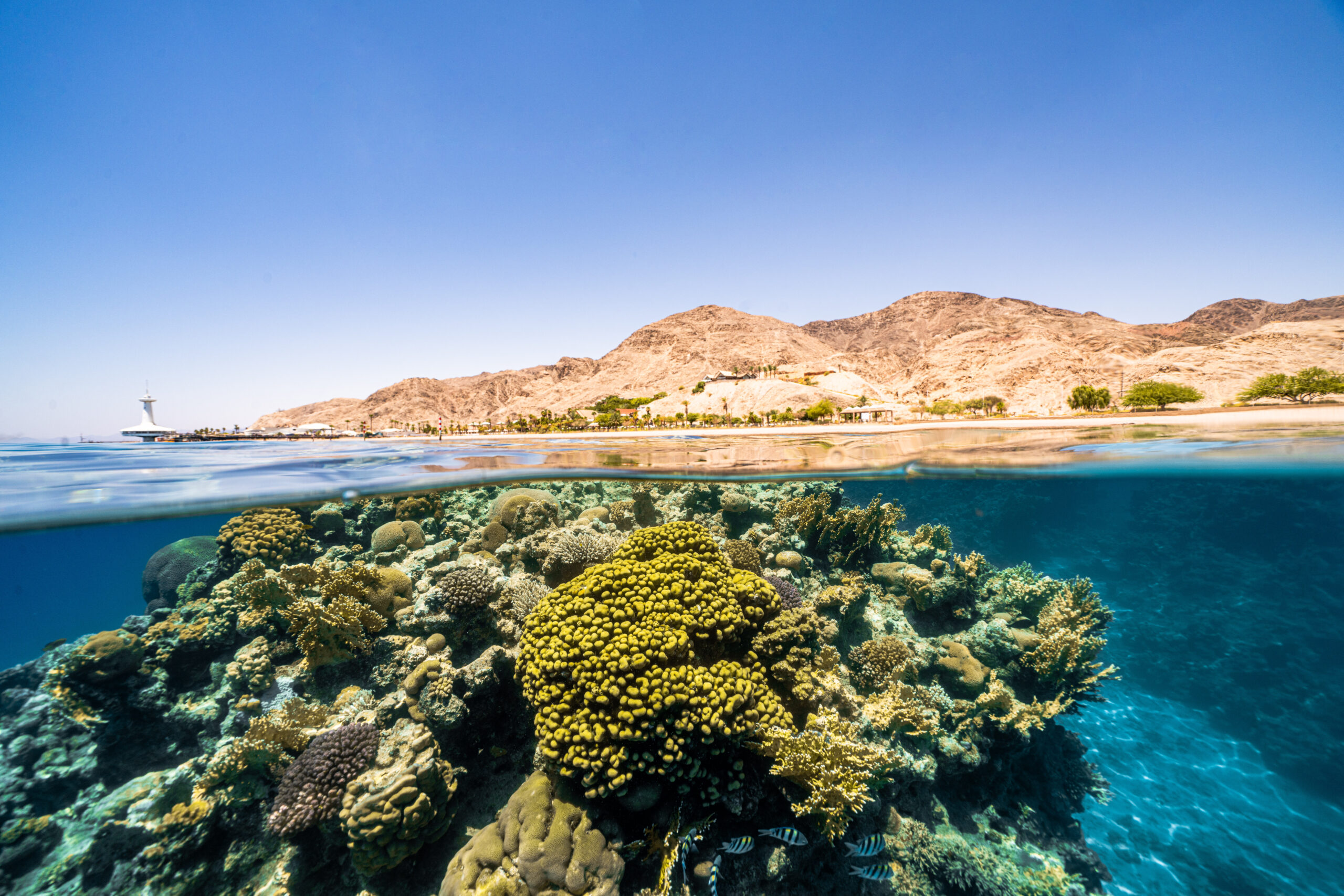
Coral reef in Eilat, Israel

When these climate patterns combine, they weaken regional winds and suppress cooling ocean currents that normally protect reefs from overheating. The result is a marine heatwave capable of triggering widespread bleaching.

“Existing global observing systems help provide critical data to climate prediction centers to monitor and skillfully predict these climate modes months in advance,” said co-author Caroline Ummenhofer, a climate scientist at WHOI.

“Capitalizing on these efforts, BEEP offers a novel tool to reef managers for risk mitigation.”

The implications could be significant for coral restoration programs. A five-to-six-month warning could allow conservation groups to relocate coral fragments from vulnerable reef nurseries into cooler waters or temporary land-based facilities before dangerous temperatures arrive.

The LEED-Platinum property seeks to minimise its environmental and literal environmental footprint by cantilevering the accommodation spaces above the coral reefs with only a few square meters of ground impact at the base of the supporting column. The result is an aerial accommodation ‘pod’ that almost seems to defy gravity and suspends the guest directly above and within the beauty of an untouched marine eco-system; an observation platform for guests to witness the fish, birds and turtles that thrive in the area. The entire project is powered by a centralized solar farm and fresh water is supplied from a solar powered desalination plant. Recycling of waste material takes place on the island minimizing the need to bring or remove materials from the site. The entire infrastructural backbone of the project forms part of a visitor experience where guest can be exposed to and learn about the approach that goes into making the project a truly self-sustained human development. The design language of the resort compliments the uniqueness of the site. The approach to the façade design has been to minimize visual impact, employing a highly reflective stainless-steel skin polished to a mirror finish. These reflective orbs float, almost imperceptible, reflecting the colors and surface patterns of the ocean, the intense colors of the sky as they change throughout the day. This approach serves to lessen the visual impact of the architecture on the surrounding environment while also greatly improv the building’s energy performance with a near 100% reflection of the solar gain at the mirror surface. These heavily insulated spaces can be effectively cooled with minimal energy losses.
Shebara visitors – will they be able to protect the reef?

The researchers say the forecasting framework currently applies to Curaçao but could potentially be expanded to reefs across the Caribbean and eventually other tropical regions.

The study also highlights the value of long-term climate monitoring and publicly available scientific data.

“Our work shows how basic science can be rapidly translated into solutions for real-world challenges, but these breakthroughs don’t come from thin air,” said Anne Cohen, senior scientist at WHOI and co-author of the study.

“They’re built on decades of investment in fundamental research and continuous Earth-system monitoring, including satellites. And BEEP is only possible because the agencies that monitor our planet make that data freely available.”

While early warnings cannot stop climate change, they may help reduce some of its ecological damage.

Scientists estimate that the world has already lost roughly half of its shallow-water coral reefs since the 1950s. Mass bleaching events that once occurred every few decades are becoming more frequent as ocean temperatures continue to rise.

“Coral reefs are among the most vulnerable ecosystems on the planet,” said Cohen. “Advances like this give us a better chance to protect them in a warming ocean.”

The WHOI team hopes to expand BEEP into a broader regional forecasting system that could help governments, conservation organizations and reef restoration programs prepare for bleaching events before they occur.

“Our research and understanding of the global climate system can help lead to practical solutions for one of the ocean’s most urgent challenges,” said Cohen.

For coral reefs facing an increasingly hot future, six months’ warning could make the difference between survival and collapse.


Read More

TRENDING

Wave wind energy for Nvidia’s next AI energy boom?

As AI factories consume unprecedented amounts of electricity, NVIDIA is looking beyond chips and data centers to the ocean. The company recently spotlighted Israel's Eco Wave Power and its wave energy projects in Jaffa and Los Angeles, highlighting how AI, digital twins and renewable energy can work together to meet future power demands. The collaboration reflects a growing realization that the future of artificial intelligence may depend as much on clean energy infrastructure as it does on computing power.

Weston Higginbotham found dead in a Kyoto forest: is climate anxiety part of the story?

In some ways, Weston has become a symbol of a generation wrestling with environmental and technological anxiety. Friends and family described him as deeply concerned about environmental issues. Reports also noted that he questioned the growing role of artificial intelligence in daily life, even reportedly disagreeing with his mother about her use of AI.

Billie Eilish’s Mom Takes the Stage at Hollywood Climate Summit — But Does Hollywood Still Care About Climate Change?

Hollywood once promised to help save the planet. Leonardo DiCaprio warned of climate catastrophe from awards stages. Celebrities flew to climate conferences. Studios pledged greener productions. Streaming platforms rushed to commission environmental documentaries. But in 2026, with the aftermath of wildfires, heatwaves and floods becoming routine, a question lingers: Does Hollywood still care about climate change?

Lyme Disease And The Great Outdoors

Planning on being outdoors a lot this summer? We...

10 Amazing Facts About the Sidr Tree

Most people in the West have never heard of the Sidr tree. That's strange when you think about it. This tough, thorny desert tree has fed people, bees, birds, and camels for thousands of years. It appears in Islamic tradition. Its honey sells for astonishing prices.

Yerukim Forms a New Green Economy Where the Money is Really Green

The Yerukim members who pick up the recyclables get to keep the monetary reward, the public earns "green" bills that can be used in shops, and business owners get to be associated with environmentalism.

Choosing Riyadh over Dubai? What Investors Should Know

Saudi Arabia is deploying capital at unmatched scale to catalyze tourism and advanced industry while rewiring its power-and-water backbone. The investable frontier is widening—especially in renewables, grid storage, water efficiency/desal retrofits, and hospitality operating platforms. Prudent investors will insist on phased delivery, enforceable KPIs (energy, water, biodiversity), and RHQ/zone compliance—while pricing political-economy and reputational risks alongside growth upside.

Sell your cooking oil for biodiesel money

Want to make money on old french fry oil? Sell it.

Qatar Alternative Energy Summit Pairs Investors And Innovators

Alternative energy investors and innovators can meet n' greet in Doha, Qatar March 16 and 17.

Here’s How To Implement The Four Pillars Of Employee Engagement

If you throw a party for your work team and they are vegans, don't make it a barbecue. Know the sustainability values of your team to boost moral and retain good people.

Locals From Rishon Fight IKEA

Big Box stores are a pretty new concept in Israel, and thank God that not every Israeli city wants them in their backyard. A word from someone who has see the beautiful farmland around her hometown Newmarket, Ontario stripped and converted into vulgar strip malls of big box shops: they have no place in a healthy and sustainable town or city.

The Jewish National Fund Meets An Inconvenient Truth

According to the JNF, it has transformed thousands of acres of barren land into green forests in Israel. They state that each person emits about 23 tons of carbon per year, estimating that each tree planted can absorb one ton of carbon in its lifetime. That's a whole lot of trees you'd need to be planting. Could so many fit in Israel?

How to quiet noise from construction in your office

Streets need to be resurfaced in New York but the humming and grinding noise is unsettling. Noise is environmental pollution. 

Popular Categories