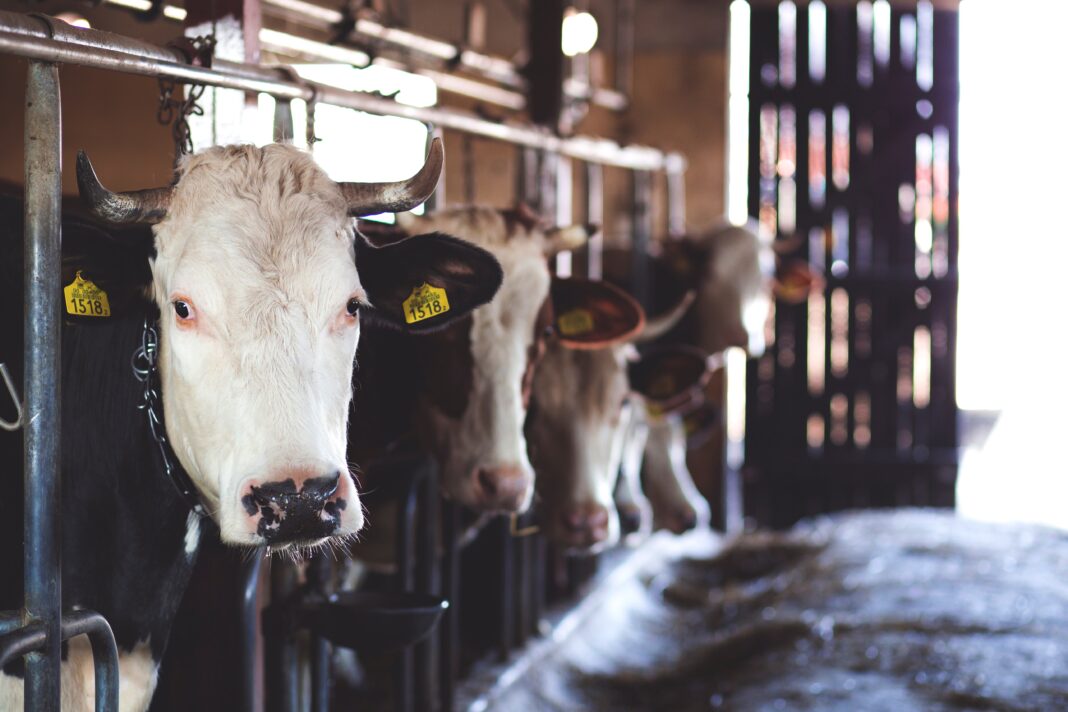

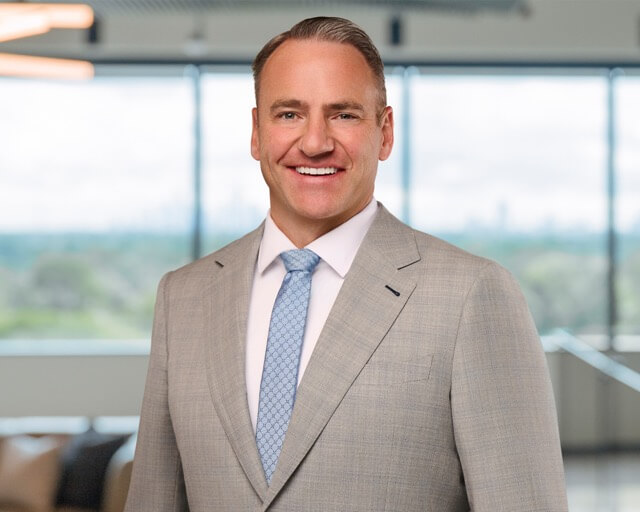
Karl Studer occupies an unusual position in American business. As President of Quanta Services, he oversees electrical infrastructure operations across the United States, Canada, and Australia, managing thousands of employees and multibillion-dollar projects. Yet when he returns to his hometown of Rupert, Idaho, he steps into an entirely different role: active cattle rancher and farmer, managing operations that produce the beef and crops most Americans consume daily.
This dual perspective has given Studer uncommon insight into one of America’s most significant but overlooked challenges: the widening distance between everyday consumers and the realities of agriculture. Welcoming guests from many walks of life to his ranch has shown him how much of daily food production now sits outside the direct experience of most Americans, with implications for policy, economics, and the long-term viability of American food production.
The contrast between these two worlds exposes a cultural divide that threatens not just agricultural literacy, but the sustainability of the family farming operations that have traditionally anchored rural American communities. For Studer, who navigates both spheres daily, bridging this gap has become more than an academic concern. It is essential to preserving knowledge and systems that society depends upon but increasingly has fewer chances to observe firsthand.
Sharing the Ranch with Guests from All Walks of Life
Studer regularly welcomes guests from a wide range of backgrounds to his ranch and dairy operations in Idaho. Many are accomplished in their own fields, whether business, infrastructure, or other industries, yet the basic mechanics of food production often sit outside their day-to-day frame of reference. That is not a reflection on the visitors themselves so much as a sign of how far modern professional life has drifted from the land.
Studer observes that many guests are surprised by what actually goes into getting milk to the table or producing the beef and crops most households rely on. The steps involved, the labor, the timing, and the economics tend to be unfamiliar even to people who manage sophisticated operations in their professional lives. Hosting visitors at the ranch and dairy consistently reveals that professional accomplishment in other fields does not translate into familiarity with agricultural production.
The gap extends beyond typical urban-rural stereotypes. Even among people who work in industries adjacent to agriculture, such as the energy infrastructure that powers irrigation systems or the transportation networks that move crops to market, practical knowledge of farming and ranching has largely disappeared. It reflects broader demographic shifts that have concentrated Americans in metropolitan areas while reducing direct contact with agricultural operations.
Studer, who grew up in rural Idaho, knew a different relationship with food production. In the world he was raised in, having meat and potatoes on the table from your own land was what prosperity looked like. For Americans in urban areas, that fundamental connection to food sources has been severed, and the implications extend well beyond individual knowledge gaps.
When consumers do not understand the economics, labor requirements, and challenges of food production, they are less equipped to make informed decisions about agricultural policy, trade agreements, or land use regulations. The disconnect shapes everything from zoning debates to international trade policy, with urban majorities often unaware of how their decisions impact rural communities.
The challenge extends to the next generation. While Studer’s children developed motor skills, responsibility, and work ethic through daily ranch responsibilities, many children in urban and suburban areas grow up without encountering agricultural animals, planting, harvesting, or understanding the daily rhythms that govern food production. The skills and values transmitted through agricultural work, such as problem-solving, mechanical aptitude, long-term thinking, and connection to natural cycles, are increasingly absent from how Americans raise children. This represents not just a loss of agricultural knowledge, but a broader shift in how young people develop practical capabilities.
The Economic Sustainability Challenge
The knowledge gap Studer observes among visitors to his operation reflects a deeper structural challenge in American agriculture: the rapid aging of the farming population and the near-impossibility of new entrants joining the field. In his view, there are few people in their forties actively building agricultural operations today. Meanwhile, farmers in their sixties and seventies are retiring, and the economics make it nearly impossible to pass these operations to the next generation without substantial outside income supporting them.
The mathematics tell the story. Agricultural operations that once supported a single family now require scales roughly three times as large, while land values have increased roughly fivefold. Studer describes the barrier to entry as almost impossible, with operations needing to be significantly larger than a generation ago and worth substantially more, creating a challenging economic equation for succession.
This reality creates an intergenerational challenge. Parents who spent their lives building agricultural operations often cannot transfer them to their children without those children having substantial non-agricultural income. For young people without family connections to agriculture, entering farming or ranching independently has become financially unfeasible. The capital requirements, land costs, and equipment expenses place agricultural entrepreneurship beyond reach for most potential entrants.
Meanwhile, economic pressures facing existing operations continue intensifying. Commodity prices have stagnated or declined while input costs have multiplied. Core commodity prices have not kept pace with the rising costs of equipment, supplies, and land, producing thin margins and leaving operations vulnerable to market disruptions or weather challenges.
Policy decisions made far from farm country can compound these challenges for operators like Karl Studer. Trade policies and tariff negotiations that receive minimal media attention in urban centers can significantly impact rural economies. When policymakers and voters do not understand agricultural economics, they are more likely to support measures that sound reasonable in theory but create unintended consequences in practice.
The consolidation trend adds complexity. As family operations face economic pressures, some are absorbed by larger agricultural corporations while others convert to different uses. In Idaho and Western states, purchasers from high-cost-of-living areas sometimes acquire farms and ranches for non-agricultural purposes. Studer sees this as reducing actual agricultural production and decreasing the number of families deriving livelihoods from farming, while being careful to note that it represents complex economic forces rather than simple criticism.
The trajectory appears challenging. Looking two decades ahead, the sustainability of family farming operations faces significant questions. Without interventions, whether through policy adjustments, innovative financing models, or cultural shifts that revalue agricultural work, the industry faces structural challenges that could reshape American food production substantially.
Bridging the Understanding Gap
The urban-rural divide in understanding food production represents more than an educational gap. It is a knowledge discontinuity with implications for policy formation, economic development, and societal resilience. When most citizens lack direct connection to food production, agriculture becomes abstracted or invisible. Policy debates about agricultural subsidies, water rights, and land use occur without meaningful input from people who understand practical realities.
Studer’s observations at his ranch reveal how extensive this disconnect has become. Accomplished guests who manage sophisticated budgets and complex supply chains in their professional lives arrive at the operation and encounter processes unfamiliar to their experience. Many express genuine interest in the complexity and labor agricultural operations require. The reaction is not a criticism of these visitors. It reflects how completely urban and rural experiences have diverged.
The challenge extends beyond individual knowledge to systemic preparedness. Societies where most citizens do not understand food production face vulnerabilities when agricultural crises emerge, whether from climate disruption, disease outbreaks, or supply chain interruptions. The COVID-19 pandemic briefly exposed these vulnerabilities when processing facilities faced disruptions, though for most Americans the lesson proved temporary.
For Studer, who navigates both worlds daily, the divide creates urgency. His career journey has exposed him to decision-makers and influencers who shape policy and public opinion, while his agricultural work grounds him in the realities those decisions affect. Bridging this gap, helping guests from varied backgrounds understand food production realities and what threatens future sustainability, has become part of his broader mission.
The visits he hosts at the ranch serve this purpose. These experiences expose guests to agricultural realities they have never encountered, planting seeds of understanding even if they do not transform participants into farmers. At minimum, they create awareness that food production involves substantially more complexity than supermarket logistics suggest.
Building Sustainable Understanding
Studer’s perspective, informed by dual roles in corporate leadership and agricultural production, suggests that reconnecting Americans with food production realities is not merely nostalgic. It is about equipping citizens to understand fundamental systems society depends upon, and creating conditions where future generations can choose agricultural careers without facing insurmountable economic barriers.
The challenge requires both cultural and economic approaches. Culturally, Americans need more exposure to agricultural realities, not through sanitized tourism, but through genuine understanding of the work, economics, and challenges involved. Economically, policy adjustments might help make agricultural entry more feasible for younger generations without existing family operations.
Karl Studer continues expanding his operations with an eye toward multi-generational sustainability. In his view, growth is not pursued for its own sake, but to create opportunities for the next generation and to allow something meaningful to be passed on. His approach combines business development with legacy planning, attempting to build operations large enough to sustain multiple families while passing on values and capabilities that farming and ranching develop.
The urban-rural divide in understanding food production will not close quickly. It results from decades of economic and demographic shifts that concentrated Americans in metropolitan areas while reducing the farming population to less than two percent of the country. But for Studer, addressing this divide matters, not just for agricultural policy, but for maintaining knowledge and capabilities that have sustained society for generations.
When guests leave the ranch with a new understanding of food production realities, they carry that knowledge back to boardrooms, policy discussions, and personal conversations. It is a modest contribution to bridging a significant divide. And for Karl Studer, who has spent his career building infrastructure and connections, building understanding between urban and rural America represents a natural extension of his work.
The question is whether sufficient Americans will gain this understanding before the generational transition in agriculture reaches critical thresholds. For now, one ranch in Idaho continues hosting visitors of all types and backgrounds, one conversation and visit at a time, working to narrow a gap that affects both rural livelihoods and urban food security. The work continues because the alternative, allowing this knowledge discontinuity to widen further, carries risks that extend far beyond agriculture itself.