

A bite from a tick can do more than leave an itchy welt and Lyme disease. For some people, it can rewrite what you eat for dinner forever. This latest finding makes me wonder if vegans are in cahoots with nature. And we know that tick bites increase in a warming planet. A conspiracy to eat more camel meat?
Alpha-gal syndrome, or AGS, is a tick bite-associated red meat allergy that can make people react to beef, pork, lamb, venison, gelatin (beef-derived), dairy, and even some pharmaceuticals derived from mammals. Unlike peanut or shellfish allergies, the reaction often comes hours after eating, which is one reason the condition has been so hard to diagnose. The disease is currently being spotted in the wealthiest areas such as Martha’s Vineyard and Nantucket.
The Nantucket Cottage Hospital reported 26 cases of Alpha-gal syndrome in recent years, with a sharp spike showing 14 cases reported early in the season alone. It could be that wealthier people report incidence of the sudden allergy to red meat more frequently because they are able to access medical facilities easily.
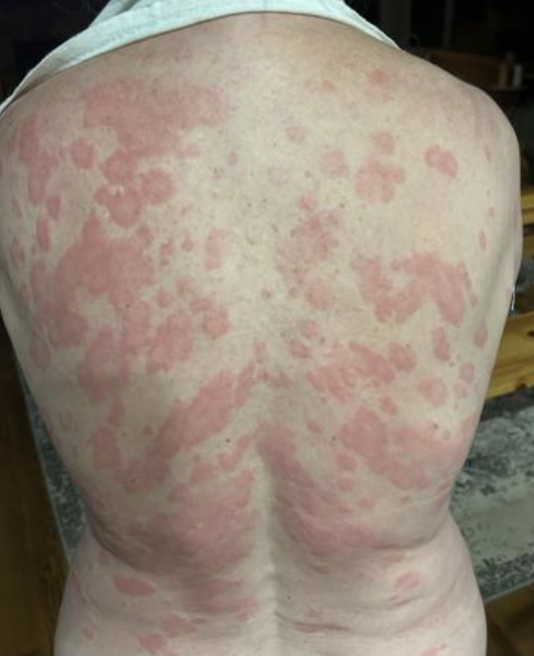
The US Centers for Disease Control and Prevention says more than 110,000 suspected cases were identified between 2010 and 2022, but because AGS is not nationally notifiable and many cases are missed, as many as 450,000 Americans may be affected. The condition has been described by Beef Research as potentially the 10th most common food allergy in the United States.
The culprit is not a virus or bacterium. It is a sugar molecule: galactose-alpha-1,3-galactose, known as alpha-gal. It is found in most mammals, including cows, pigs, sheep, deer and rabbits, but not in humans or other primates. When certain ticks bite, their saliva can introduce alpha-gal or alpha-gal-bearing molecules into the human bloodstream. In some people, the immune system begins producing IgE antibodies against it.
Then, suddenly the next steak you eat, rare or medium, it doesn’t matter – it can become a threat.
Meat meets the Lone Star Tick
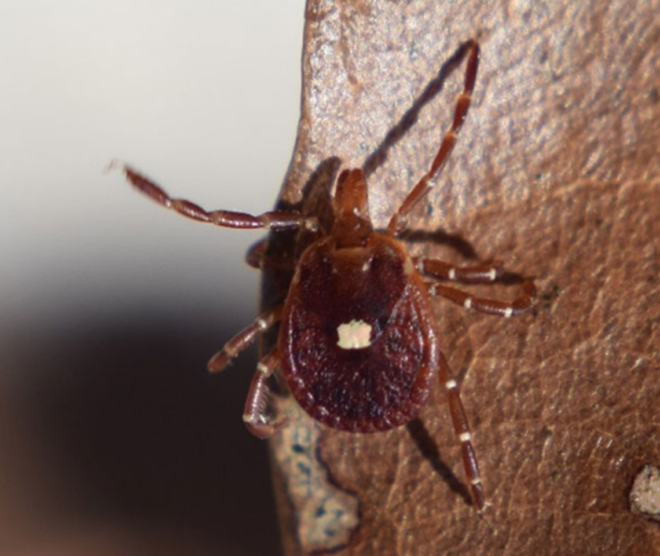
The lone star tick, Amblyomma americanum, is the tick most closely associated with alpha-gal syndrome in the United States. The female is marked by a white dot on her back (see the image above) and she is known as an aggressive feeder. Researchers at the University of Georgia explain that when a lone star tick bites a mammal such as a deer or raccoon, its saliva can pick up alpha-gal molecules. If that tick later bites a person, it may deliver alpha-gal into the human bloodstream.
“In some people, the immune system mistakenly treats alpha-gal sugars in certain foods they eat as a threat,” UGA researchers explain, leading to reactions that can range from hives and gastrointestinal distress to life-threatening anaphylaxis.
Parastoo Azadi is one of the UGA researchers studying the biology behind alpha-gal syndrome. In 2019, she led a team to characterize carbohydrates in the tick saliva and showed that some tick species—lone star and blacklegged—are more prone to having alpha-gal sugars than others.
“We are still in the early stages of understanding the syndrome, but our basic research is essential for developing future treatments,” says Azadi, director of CCRC Service and Training.
The strange delay is part of what makes AGS so difficult. Most food allergies strike within minutes. Alpha-gal reactions often appear two to six hours after eating meat or another mammalian-derived product. That means a person can eat a burger at dinner, go to bed, and wake up in the middle of the night with hives, vomiting, breathing trouble or potentially fatal collapsing blood pressure.
The CDC lists possible symptoms including itchy rash, nausea, vomiting, diarrhea, shortness of breath, swelling of the lips or throat, dizziness, faintness and severe stomach pain. The delay may happen because alpha-gal is often attached to fats, which are digested and absorbed more slowly than protein allergens in the stomach.
The discovery of the allergy came through an unexpected route: cancer medicine. Patients receiving the drug cetuximab were having severe allergic reactions during their first infusion. Researchers including Thomas Platts-Mills and Scott Commins at the University of Virginia helped show that the reactions were linked to IgE antibodies against alpha-gal. The geographic overlap between those reactions, red meat allergy cases and lone star tick habitat helped reveal the tick connection.
What scientists still do not fully understand is why some people develop AGS after a few tick bites while others are bitten repeatedly and never become allergic. Some of us are allergic, and others are not. Why? The answer to this may reveal an antidote.
At the University of Georgia, Azadi and colleagues are studying the sugars in tick saliva. Her team has shown that some tick species, including lone star ticks and blacklegged ticks, are more prone to carrying alpha-gal sugars than others.
Donald Champagne, a professor of entomology at UGA, says alpha-gal alone may not explain everything. It’s like studing HIV-AIDS in the early days: “Tick saliva must contain alpha-gal to induce the allergy,” Champagne said. “But the sugar is not enough on its own. Other ticks carry alpha-gal, yet their bites don’t trigger the syndrome. That suggests an additional factor.”
Tick saliva is their biochemical toolkit and it contains compounds that reduce inflammation, stop blood from clotting and help numb the skin so a tick can feed for days without being noticed as it gorges on your blood. Those same molecules may also influence how the human immune system reacts.
“The immune system is extraordinarily complex, and so is tick saliva,” Champagne said. “With so many interacting components, it’s difficult to pinpoint which ones drive alpha-gal sensitization.”
A 2023 Scientific Reports study found that lone star ticks fed on human blood produced significantly higher levels of alpha-gal in their salivary glands than ticks fed on bovine blood, with large variation among individual ticks. The authors suggested that high alpha-gal levels in tick salivary glands may help explain why some bites sensitize people and others do not.
The problem is not confined to the United States. In Australia, the paralysis tick, Ixodes holocyclus, has been linked to mammalian meat allergy. Other tick species in Europe, Asia, South Africa and South America have also been investigated as possible AGS triggers.
For now, there is no cure. People with alpha-gal syndrome must learn to avoid obvious and hidden meat ingredients. That can mean no beef, pork, lamb or venison. For some, it also means avoiding dairy, all kinds of gelatin unless fish based or vegan, glycerin, magnesium stearate, “natural flavors,” meat broths, some vaccines, some medications and even fumes from cooking meat.
“We emphasize the lifestyle piece of this, because there is no cure,” said Debbie Nichols, cofounder of the nonprofit Two Alpha Gals. “Some people think it is the end of their lives. They won’t be able to eat this or that forever. But the truth is that when I was eating red meat, I felt so sick. And even though I got this diagnosis and had to give up these things, it was worth it to feel as good as I do now.”
Researchers are also exploring treatments. A University of Michigan-led team reported in 2024 that a nanoparticle treatment prevented tick-borne red meat allergy in mice by retraining the immune system to ignore alpha-gal-like allergens. “There is the potential here for a platform technology that can be used to address a variety of food-allergic responses,” the researchers said.
But human treatments remain years away. For now, prevention means avoiding tick bites: wear long sleeves and pants in tick habitat, use repellents, check the body after time outdoors, shower after coming inside, and remove ticks quickly and carefully. Miriam wrote a guide on how to avoid tick bites and what to do when you get them. Get her guide here.