Printing coral reefs in Abu Dhabi

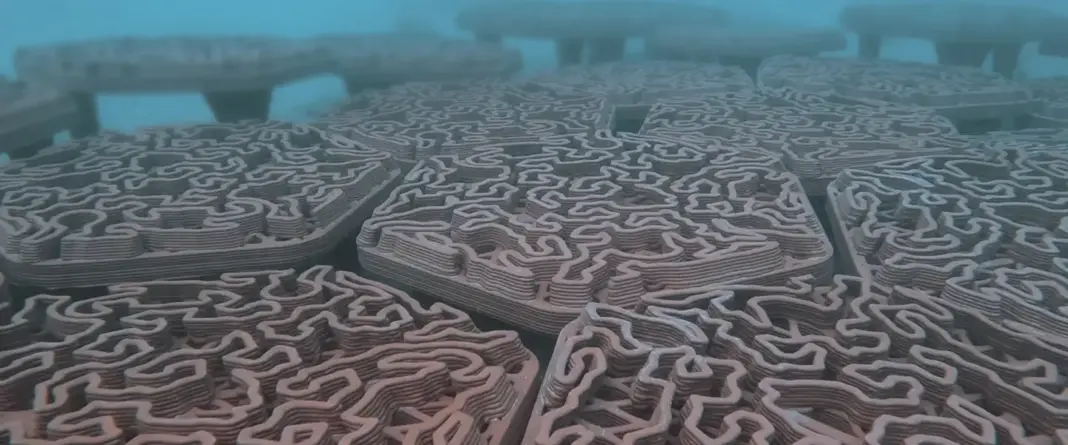
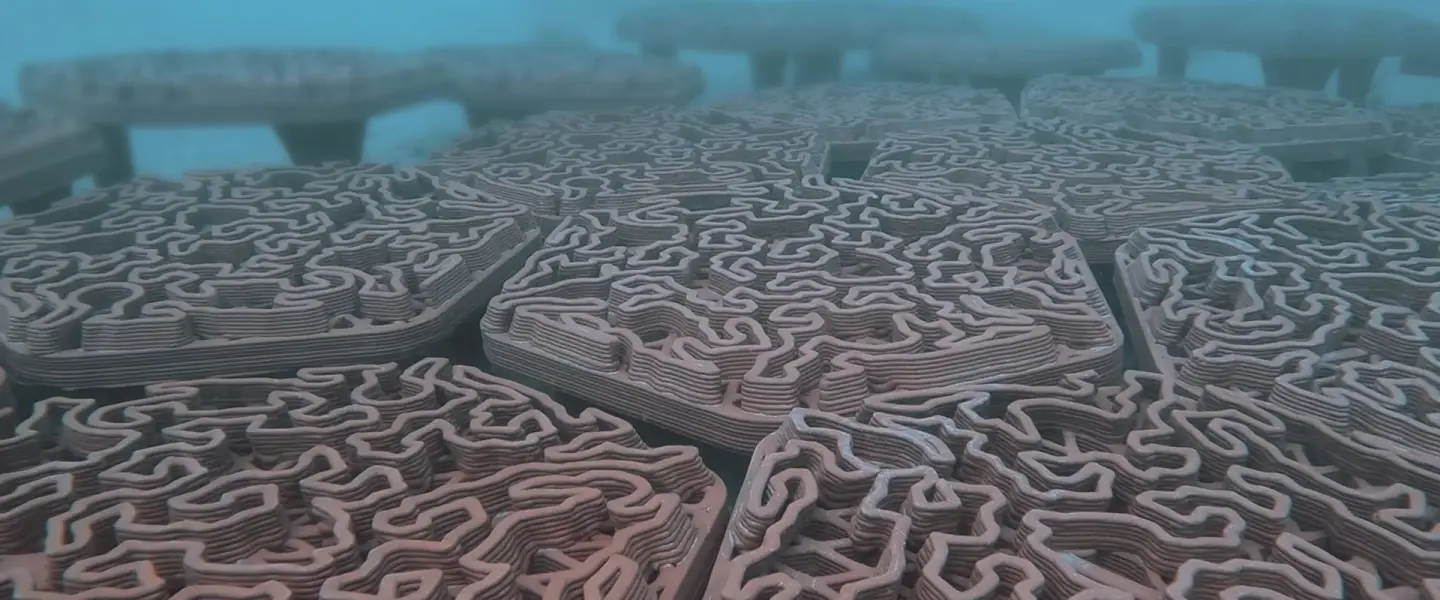
A 3D printed terracotta tile used in Abu Dhabi, UAE

ADQ, an Abu Dhabi-based investment company, the Environment Agency – Abu Dhabi (EAD), the region’s largest environmental regulator, and Archireef, a climate technology company based in Hong Kong, have deployed artificial 3D printed terracotta reef tiles to aid coral restoration in the Persian Gulf off the shore of Abu Dhabi.

The tiles were designed by a team of marine biologists and architects and produced through custom 3D clay printing in Archireef’s new production facility.
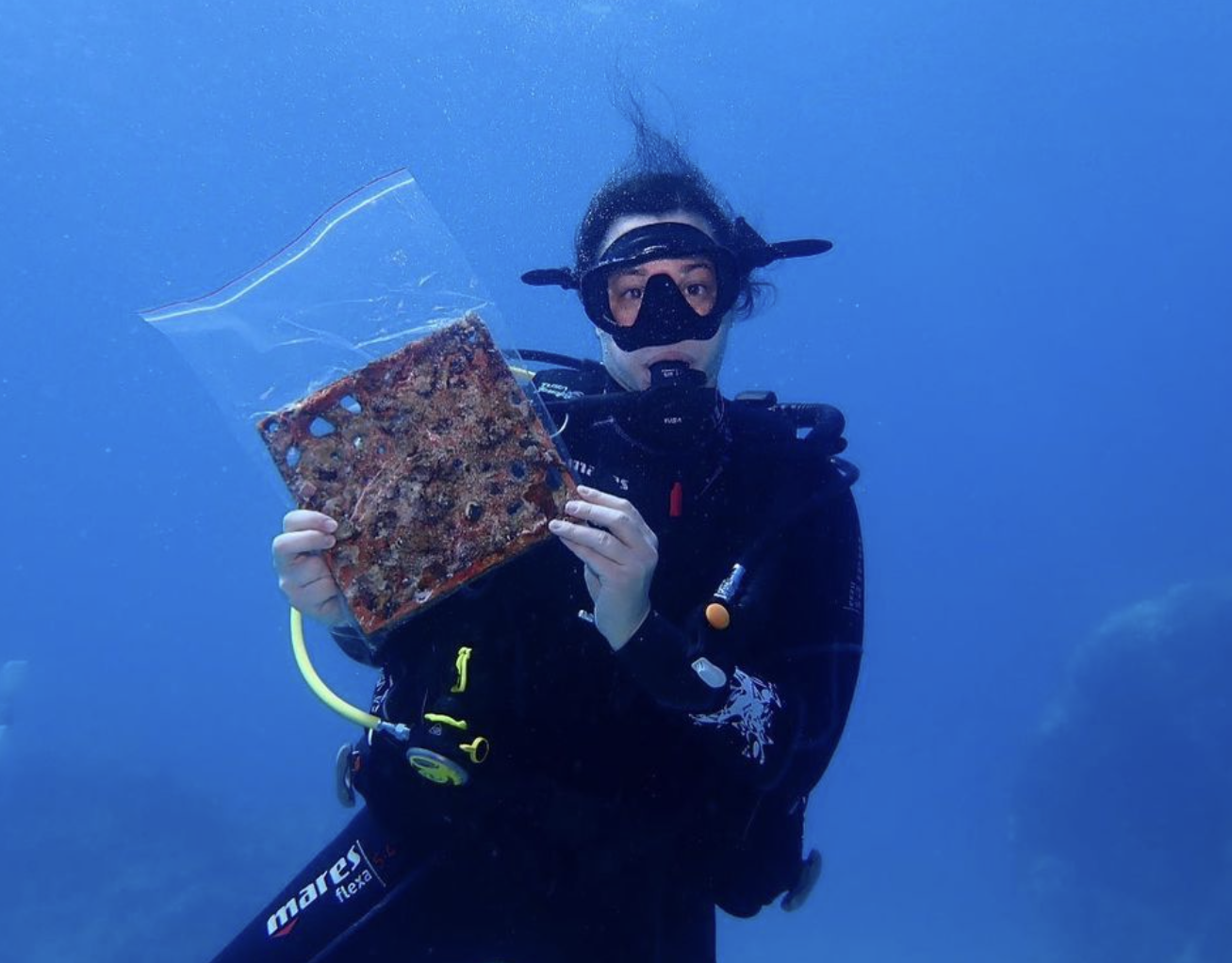
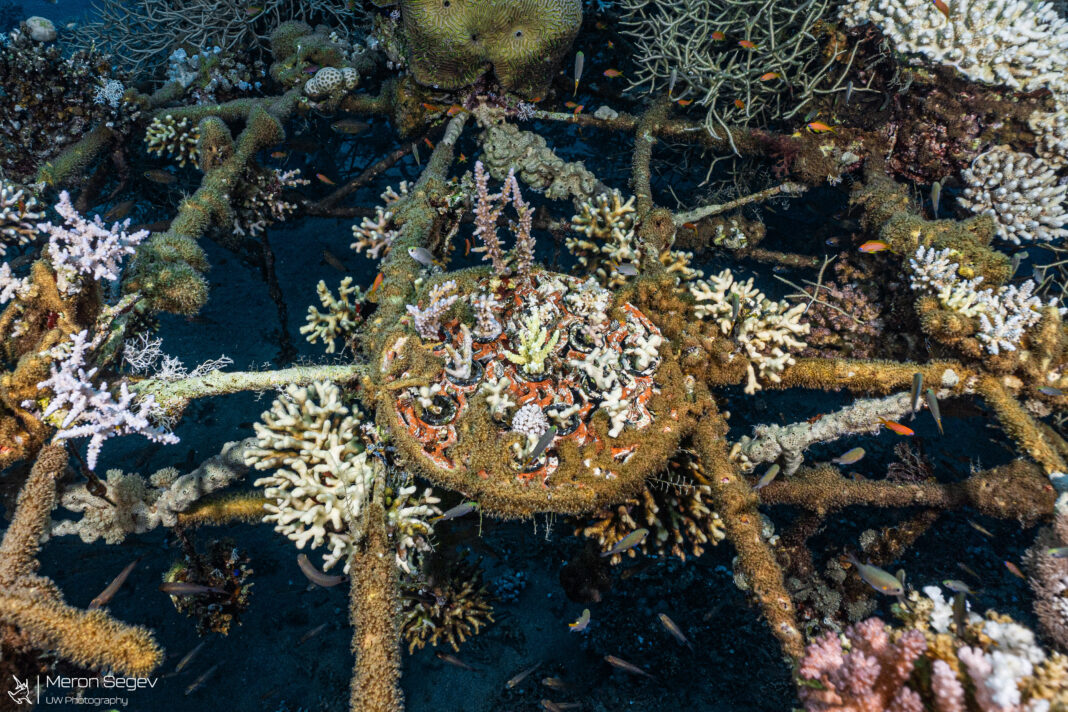
Natalie Levy works with artificial, terracotta reefs to restore life in the Red Sea
Natalie Levy works with artificial, terracotta reefs to restore life in the Red Sea.

The partnership between ADQ and Archireef funds research and development of eco-engineering solutions for marine biodiversity restoration – combining scientific research with the use of the latest technologies in 3D printing, IoT, and AI.

Related: Artificial Reefs in the Red Sea

“Our partnership with Archireef brings a unique and innovative coral restoration method to Abu Dhabi to safeguard our Emirate’s natural environment and promote sustainable development. It is a memorable moment for ADQ to be part of this project providing a lifeline to endangered coral reefs, which is the first of its kind in the UAE and the wider region.

Underlining our commitment to adopting practical solutions powered by R&D and innovation to address environmental challenges, this biodiversity restoration initiative aligns with our ESG aspirations, and we believe it will have a positive impact not only on our planet but also on local communities we operate in,” said Anas Jawdat Albarguthi, Chief Operating Officer at ADQ.

Source: Archireef.

In contrast to other types of artificial reefs, the 3D printed terracotta reef tiles are environmentally friendly and engineered to closely mimic the natural pattern of corals and prevent sedimentation build-up, which is a major threat for corals. It basically chokes them.

The plantation site is at Um Khorah Island in the Al Dhafra Region, in Abu Dhabi, housing around 1,200 coral fragments grown in specialized nurseries, owned by EAD.

Abu Dhabi waters are home to 34 different types of hard coral. In 2017 alone, the Emirate lost most of its corak, 73% of its reefs, due to mass coral bleaching, caused by an increase in water temperature due to climate change, manmade coastal disruption and the shipping industry and pollution.

::Archireef

Read More

TRENDING

Code Red from the Galapagos: human drugs and sunscreen are polluting the sea

Millions of visitors swim in the pristine waters of the Galápagos each year, but new research suggests sunscreen chemicals and other human-made pollutants are reaching even the islands' most protected marine habitats. Scientists are calling for urgent monitoring to safeguard one of Earth's most iconic ecosystems.

Etihad offers free travel insurance to any visitor to the UAE

Talk about a way to woo your visitors. Etihad, the UAE's national carrier has decided to offer free travel insurance to visitors heading to the UAE.

Can Scientists Predict Coral Bleaching Before It Happens?

Now researchers at the Woods Hole Oceanographic Institution (WHOI) in the US say they have developed a way to predict coral bleaching five to six months before it occurs, potentially giving reef managers enough time to intervene and save vulnerable corals.

Abu Dhabi Put QR Codes on 100,000 Native Trees. Damage One and It Could Cost You $2,700

The Sidr Tree (Ziziphus spina-christi) also known as the jujube tree, may be the most culturally significant of them all. Mentioned in Islamic tradition and valued for its medicinal properties and prized honey, the Sidr has become a symbol of resilience across the Arabian Peninsula.

Elkhorn corals planted to restore reef diversity

The project centers on “Flonduran” corals, which are offspring of Florida elkhorn corals bred with elkhorn corals from Honduras. These new corals are being evaluated alongside Florida elkhorn corals of the same age that are outplanted side by side in natural reef habitats to assess whether the new genetic diversity can enhance coral resilience and reduce coral bleaching during Florida’s warm summers.

Yerukim Forms a New Green Economy Where the Money is Really Green

The Yerukim members who pick up the recyclables get to keep the monetary reward, the public earns "green" bills that can be used in shops, and business owners get to be associated with environmentalism.

Choosing Riyadh over Dubai? What Investors Should Know

Saudi Arabia is deploying capital at unmatched scale to catalyze tourism and advanced industry while rewiring its power-and-water backbone. The investable frontier is widening—especially in renewables, grid storage, water efficiency/desal retrofits, and hospitality operating platforms. Prudent investors will insist on phased delivery, enforceable KPIs (energy, water, biodiversity), and RHQ/zone compliance—while pricing political-economy and reputational risks alongside growth upside.

Sell your cooking oil for biodiesel money

Want to make money on old french fry oil? Sell it.

Qatar Alternative Energy Summit Pairs Investors And Innovators

Alternative energy investors and innovators can meet n' greet in Doha, Qatar March 16 and 17.

Here’s How To Implement The Four Pillars Of Employee Engagement

If you throw a party for your work team and they are vegans, don't make it a barbecue. Know the sustainability values of your team to boost moral and retain good people.

Locals From Rishon Fight IKEA

Big Box stores are a pretty new concept in Israel, and thank God that not every Israeli city wants them in their backyard. A word from someone who has see the beautiful farmland around her hometown Newmarket, Ontario stripped and converted into vulgar strip malls of big box shops: they have no place in a healthy and sustainable town or city.

The Jewish National Fund Meets An Inconvenient Truth

According to the JNF, it has transformed thousands of acres of barren land into green forests in Israel. They state that each person emits about 23 tons of carbon per year, estimating that each tree planted can absorb one ton of carbon in its lifetime. That's a whole lot of trees you'd need to be planting. Could so many fit in Israel?

How to quiet noise from construction in your office

Streets need to be resurfaced in New York but the humming and grinding noise is unsettling. Noise is environmental pollution. 

Popular Categories