Battling the Blaze: Israel’s Wildfire Response

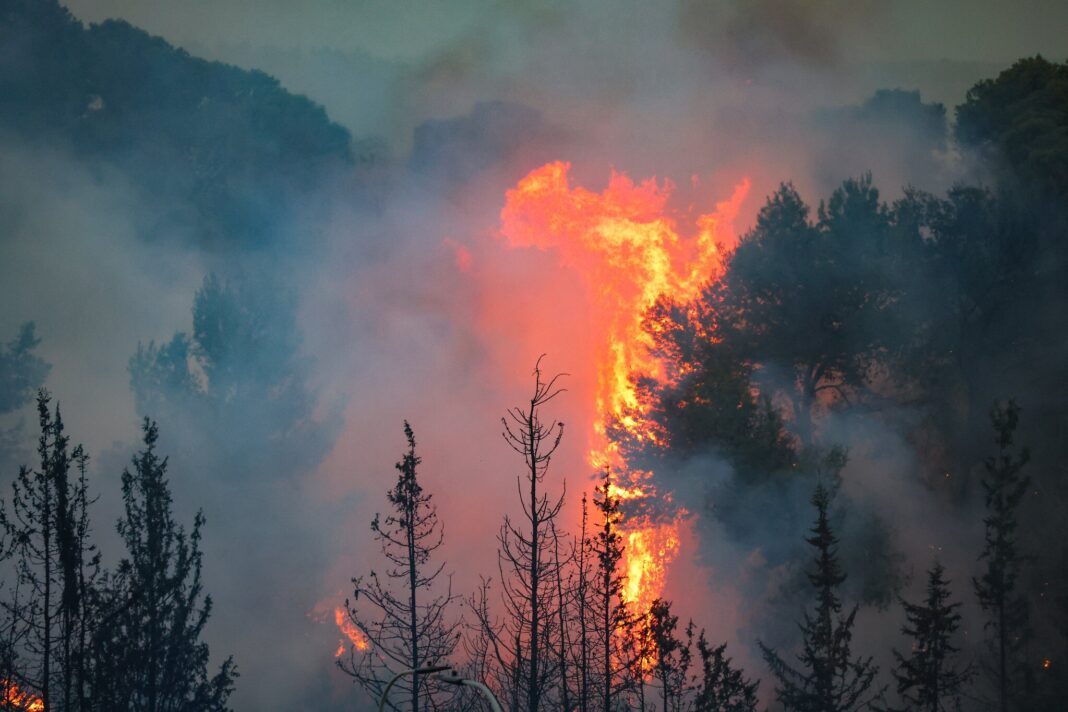
Jerusalem hills ablaze, April 2025

On a dry, windy afternoon in late April 2025, the hills west of Jerusalem ignited and burst into an inferno. Flames, fed by the hot desert winds, spread through the Israeli mountains, crossing into parts of the West Bank and forcing thousands to evacuate. Smoke billowed over the country’s capital, shrouding one of the world’s most important and historic cities in a haze.


The blaze was one of the largest in Israel’s recorded history. Over 6,000 acres of forest, open land, and human development were burned. Dozens of communities were threatened, and the event prompted a national emergency. But beyond the damage, the fire was part of a larger story: Israel is fighting a climate crisis, and the country’s ability to protect its people, land, and overall environment is being tested like never before.

See Related Article: California wildfires will hurt your lungs as toxic burnt building pollution drifts

The fires did not come out of nowhere. Initially, there were warnings and alerts about the heightened chance of a wildfire. These warnings occurred when a group of fires broke out on April 30th. Neve Shalom, Beit Shemesh, Eshtaol, and Latrun are some of the major hotspots for the origin and spread of the fires. 


In a country where every square meter of land is precious, the mobilization of resources had to be fast. Approximately 200 teams of firefighters, including aerial assistance, were deployed within minutes of the outbreak. Evacuation orders were efficient and precise to ensure no civilian lives were lost. The discipline and respect of the Israelis are the prominent reasons more lives were not lost. Additionally, international aid was provided, and the IDF provided a variety of support to help contain the fire.   
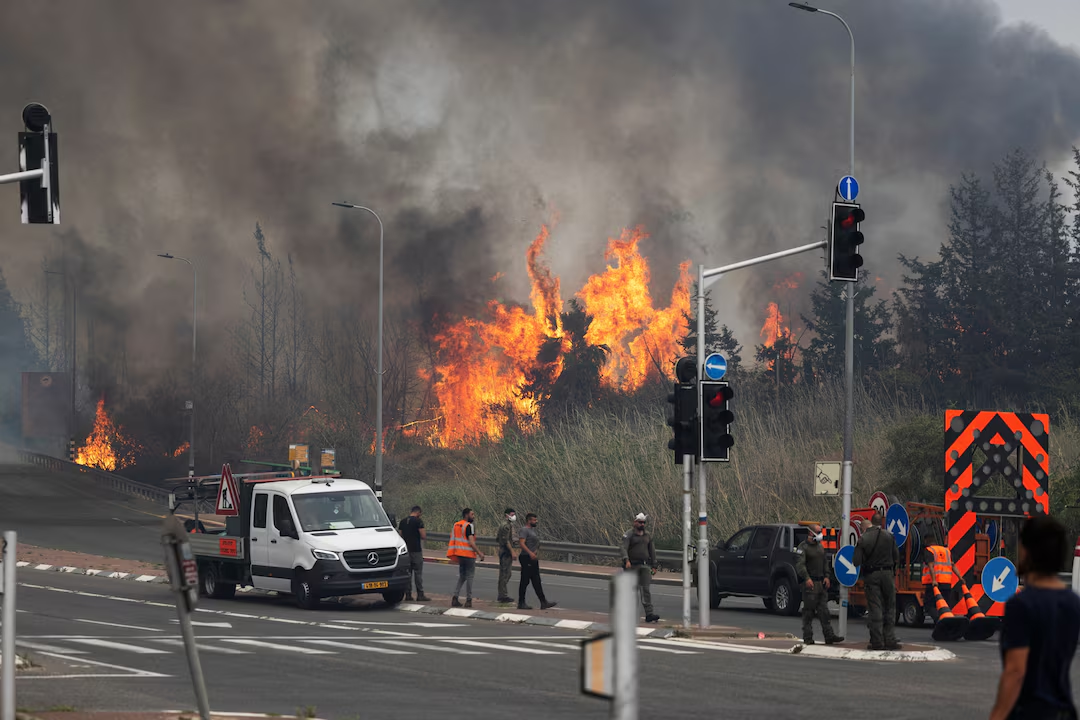
Assistance at the scene of a fire

The environmental fallout of the wildfires was severe. Parks, natural lands, and protected lands were wiped out. Habitats for birds, reptiles, mammals, and all natural life were destroyed in hours. 


The burning of the forest was a big blow to the country, not only because of aesthetic, economic, and environmental interests, but also for reasons of patriotism. A big part of modern Israel’s story is the revival of the forest and the battle against desertification. Since Israel was declared a state, trees were planted to help stabilize soil, provide carbon and oxygen, as well as to combat the aforementioned desertification. The loss of all of this wildlife will take years to heal. But, if the prior progress Israel has already made before the fires is taken into account, the public should be hopeful of a quick recovery. Lessons from past fires have been factored into the recovery.  

See Related Article: Greenpeace Responds to Israel Carmel Fire and States “Climate Changes are Already Here”

Wildfires are not a new issue for Israel. However, their size, intensity, and frequency are increasing. A critical cause of wildfires is the increased likelihood and frequency of heat waves. The increasing heat, along with the decreasing amount of water each year, creates a perfect storm for fires to burn.
Firefighters battling the flames

Like most political, environmental, or humanitarian issues for Israel, there is a trend of intersectionality. The West Bank is connected to Israel, and the fires affected them, too. In parts of the West Bank with limited Israeli authority, unmanaged forests and illegal activities amplify risk. Cross-border cooperation and participation in efforts are needed to help prevent fires.   


The fire exposed Israel’s firefighting resource gap. The Israel Fire and Rescue Authority is severely understaffed. When fires like April’s occur, firefighting resources are stretched thin. There have been announcements of efforts to divert more resources toward fire safety. Additionally, new updates to the forest-management guidelines have been made to help stop fires from becoming too large. 


One effect of the fires was the air quality. Jerusalem’s air quality was the worst in the world for a stretch of days. This caused large public safety concerns and prompted officials to urge residents to stay inside and limit strenuous activity outside. 


Reforestation will continue in the coming months. Volunteers, schools, outside governments, and many other helpful participants have provided support. New fire management and mitigation strategies are being employed. The strength of Israel’s emergency response was tested and will continue to be. Constantly updating guidelines and adding more resources will allow Israel to respond to disasters like this. 


Max Izaks
Max Izaks
Max Izaks is an environmental studies student at the University of Colorado Boulder. His academic work focuses on climate policy, environmental justice, and urban sustainability, with a particular interest in the intersection of environmental policy, justice, and law. Max has participated in educational and cultural programs abroad, including a specialized educational trip to Israel, where he broadened his professional experience. Max brings a global perspective and a commitment to finding and communicating environmental challenges and solutions. Reach out directly to [email protected]

Read More

TRENDING

Weston Higginbotham found dead in a Kyoto forest: is climate anxiety part of the story?

In some ways, Weston has become a symbol of a generation wrestling with environmental and technological anxiety. Friends and family described him as deeply concerned about environmental issues. Reports also noted that he questioned the growing role of artificial intelligence in daily life, even reportedly disagreeing with his mother about her use of AI.

Billie Eilish’s Mom Takes the Stage at Hollywood Climate Summit — But Does Hollywood Still Care About Climate Change?

Hollywood once promised to help save the planet. Leonardo DiCaprio warned of climate catastrophe from awards stages. Celebrities flew to climate conferences. Studios pledged greener productions. Streaming platforms rushed to commission environmental documentaries. But in 2026, with the aftermath of wildfires, heatwaves and floods becoming routine, a question lingers: Does Hollywood still care about climate change?

Can Scientists Predict Coral Bleaching Before It Happens?

Now researchers at the Woods Hole Oceanographic Institution (WHOI) in the US say they have developed a way to predict coral bleaching five to six months before it occurs, potentially giving reef managers enough time to intervene and save vulnerable corals.

10 Amazing Facts About the Sidr Tree

Most people in the West have never heard of the Sidr tree. That's strange when you think about it. This tough, thorny desert tree has fed people, bees, birds, and camels for thousands of years. It appears in Islamic tradition. Its honey sells for astonishing prices.

5 projects to help kickstart your company’s sustainability journey 

True progress happens when environmental ambition meets action. Decarbonizing efficiently is possible for any business in any sector, but actually getting started can sometimes feel daunting.   The trick? It’s to start small and build momentum. Here are five potential projects to help you get started.  

Locals From Rishon Fight IKEA

Big Box stores are a pretty new concept in Israel, and thank God that not every Israeli city wants them in their backyard. A word from someone who has see the beautiful farmland around her hometown Newmarket, Ontario stripped and converted into vulgar strip malls of big box shops: they have no place in a healthy and sustainable town or city.

The Jewish National Fund Meets An Inconvenient Truth

According to the JNF, it has transformed thousands of acres of barren land into green forests in Israel. They state that each person emits about 23 tons of carbon per year, estimating that each tree planted can absorb one ton of carbon in its lifetime. That's a whole lot of trees you'd need to be planting. Could so many fit in Israel?

How to quiet noise from construction in your office

Streets need to be resurfaced in New York but the humming and grinding noise is unsettling. Noise is environmental pollution. 

EarthX and a blueprint for sustainable investing

Trammell S. Crow, a Dallas-based businessman and father of four, is focusing his efforts on impact investing, and media that focuses on saving the planet through EarthX.

Mining Afghanistan’s Mineral Discoveries Similar to Avatar

Now that American forces in Afghanistan are commemorating the longest period of any war that America has been involved in, including the 1965-73 Vietnam War, the recent discoveries of large and extremely valuable mineral and metal deposits may finally bring to light a reason to continue the presence of US fighting forces in this war torn and backward country.

From Pilot Plant to Global Stage: How Aduro Clean Technologies’ 2026 Expansion Signals a Turning Point for Chemical Recycling Investors Like Yazan Al Homsi

The company's Next Generation Process (NGP) Pilot Plant in London, Ontario, has officially moved into initial operating campaigns, generating the kind of structured, repeatable data that separates laboratory promise from commercial viability.

Nobul’s Regan McGee on Shareholder Value: “Complacency Is the Silent Killer” 

Why the governance framework designed to protect shareholders so...

Should You Invest in the Private Market?

startustartup Unlike public stock exchanges, which offer daily trading, strict...

Popular Categories