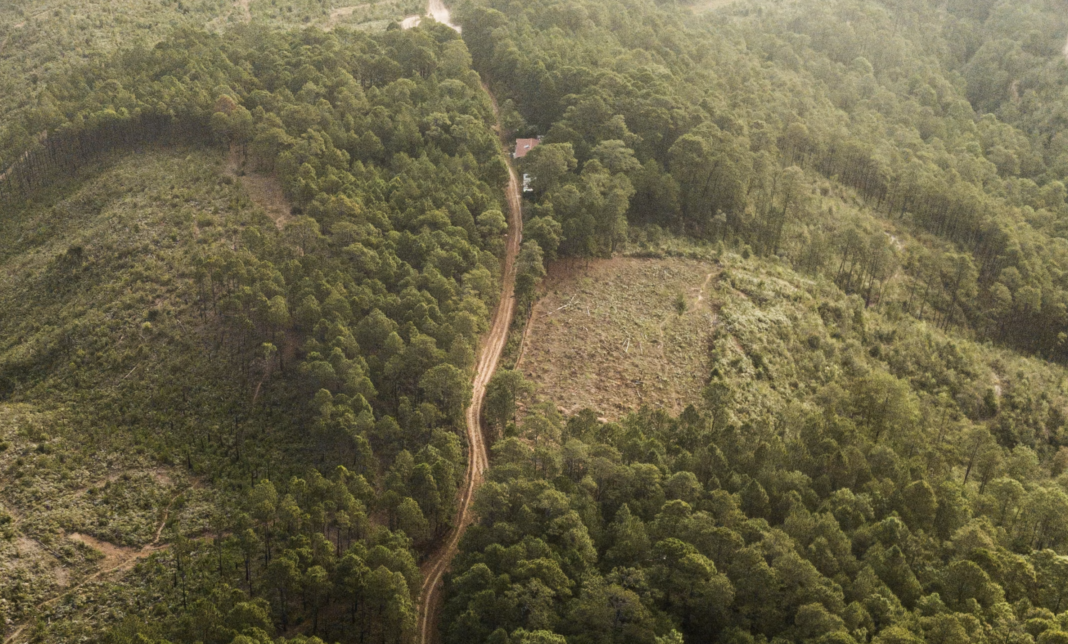


For the first time scientists have determined that due to the ongoing deforestation in the Amazon basin in recent decades, the number of thunderstorms and rain in the region has decreased significantly, and the area over which they occur has shrunk.
This is opposite to what happens in other places, says climate change expert Colin Price: “In most areas of the world, global warming has resulted in an increase in the number of thunderstorms, but in this study we discovered that precisely in those areas where deforestation has increased the number of storms actually decreased, even with rising temperatures,” he says.
These findings are worrying because a decrease in the amount of storms leads to a decrease in the amount of rain, which in turn causes further damage to the forests. This is a dangerous feedback loop, which could severely damage the forests that provide the earth with a significant portion of the oxygen in the atmosphere and absorb a large portion of the carbon dioxide emitted by us into the atmosphere.”

The research was led by Prof. Colin Price and graduate student Raam Beckenshtein at Tel Aviv University in Israel. The research was published in the Quarterly Journal of the Royal Meteorological Society.
What’s happening here? Price who has studied weather events and climate change for decades, postulates: “The Amazon tropical rainforests are the largest in the world and play a critical role in regulating the earth’s climate. These forests are often called ‘the lungs of the earth’, because through the process of photosynthesis the forests produce a significant portion of the oxygen in the atmosphere and absorb a large amount of its carbon dioxide – a greenhouse gas that makes a significant contribution to climate change.”
Cutting down the rainmakers
The rainforests themselves produce their own rain,” says Price. “The trees emit water vapor via evaporation into the air that eventually condenses and forms clouds and rain above the rainforests. The forests influence the local and regional rainfall.”
The researchers point out that these important processes are currently in danger due to the extensive activity of deforestation in the Amazon, from cutting down trees for wood and clearing areas for agriculture, infrastructure development, and mining.
In the 30 years between 1990 and 2020, forests whose total area is larger than the entire continent of Europe were destroyed in the Amazon basin. To sum up: the destruction of rainforests impacts global oxygen levels, while increasing the greenhouse gases in the atmosphere, and disrupts natural rainfall patterns that may lead to further drought in some areas. In addition, the trees that have been cut down are often burned, releasing additional carbon dioxide into the air and contributing to global warming.
In this study the researchers tracked changes in thunderstorms in the Amazon basin in recent decades using a variety of mapping and tracking technologies.
“We expected to find an increase in the number of storms due to global warming, as has been observed in many regions of the world, but to our surprise we found the opposite trend: a decrease of 8% over 40 years.
“Further analysis revealed that most of the decrease was observed precisely in those areas where the rainforests were replaced by agriculture or other human activity. The decrease can be explained by the fact that the absence of the forests significantly reduced the moisture in the air, which is the source of energy and moisture needed for the formation of thunderstorms.
“The result is fewer thunderstorms, fewer clouds, less rain, and consequently less growth of the forest. This creates a dangerous feedback loop that can cause the forests to dry out and significantly reduce the vital contribution of the ‘Lungs of the Earth’ to oxygen production and carbon dioxide absorption.”
Where is the Amazon Forest and how can you help?
The Amazon is a vast biome that spans eight rapidly developing countries—Brazil, Bolivia, Peru, Ecuador, Colombia, Venezuela, Guyana, and Suriname—and French Guiana, an overseas territory of France.
Take deforestation from your diet
Many of the foods we eat are grown on land cleared for beef and soy and palm oil. Eat less beef, palm and soy and it will help.
Buy Amazon Land for preservation
Find a local group near you pooling funds to buy Amazon forests that can be reserved for preservation.
Find ways to support indigenous people
Decision makers and corporations create the fate for the Amazon. Support local people and help them develop sustainable incomes that don’t require slashing and burning the lungs of the planet.