


Feb, 2020 update: This business is no longer viable. But we kept the story in our archives for you to enjoy. And perhaps make the next idea of this kind work.
If you’ve been reading from the United States about the organic olive oils, vegetables and honey coming out of the Middle East, you’ll be excited to hear about a chance to buy into sustainable Israeli farming through Negev Nectars.
Run by Marvin Israelow and Green Prophet writer Jeff Yoskowitz (below), Negev Nectars launches this month. For $180 plus shipping, customers get three shipments a year including olive oil, honey, date syrup, preserves, and just about anything else that can be stuffed into a shipping container.

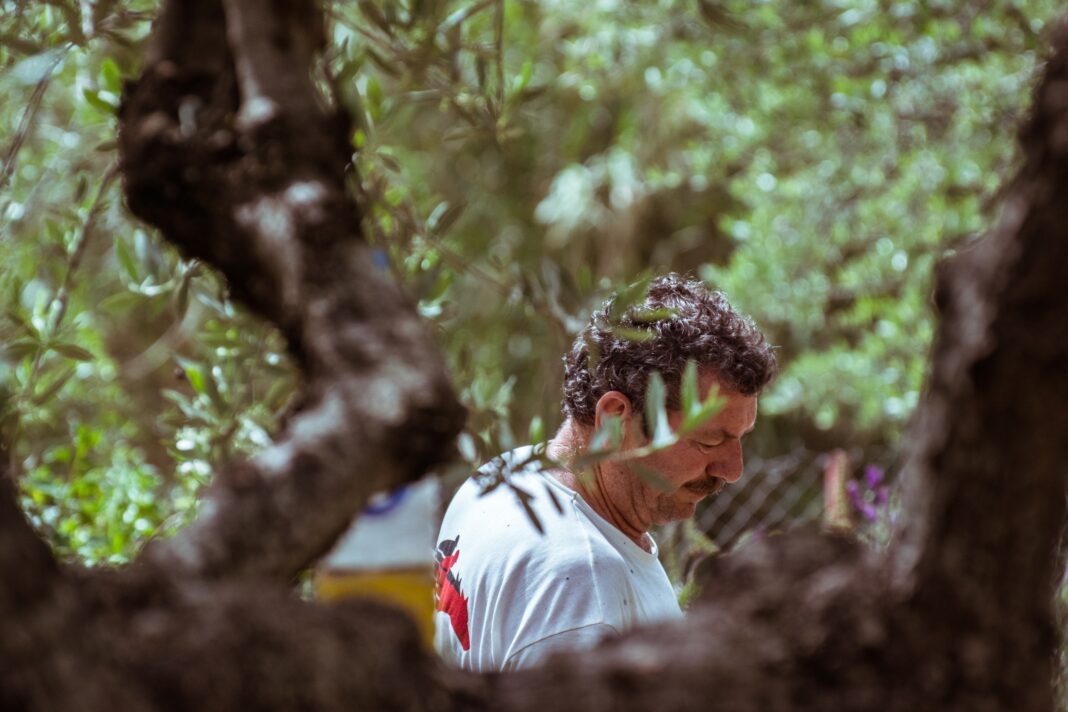
Producers include an olive oil grower, left, in Mitzpeh Ezuz (which also hosts WWOOF volunteers, which we wrote about), a spice grower at Sde Boker, and dried fruit from Kibbutz Neot Smadar.
To find out more about this international CSA, GreenProphet asked Jeff some questions:
Why the Negev, and why not all of Israel?
Many of our growers use brackish water, when possible, and are using the most innovative water saving techniques. Thus, Negev Nectars is helping answer the age-old desert question, as well as providing an economic boost to growers in this one region.
Who is your target audience?
We are targeting anybody who is interested in high quality organic and sustainable products, and specifically those interested in buying quality Israeli products, who want to connect with and have a direct impact on Israel’s small farmers who we hope they will one day visit.
How many shares do you hope to sell this season?
We hope to sell 800 shares… Like a bio-dynamic farm whose growth depends solely on its cows and how much land they can effectively graze and fertilize, Negev Nectars’ growth is dependent on how much olive oil our one grower in Ezuz can produce. Many of our other producers are small too, and as the business grows we plan to invest more in their land so we can grow–at a reasonable pace–in tandem.
I live in Israel. Can I visit the Negev Nectars farms? Can other CSA members visit farms when they come to Israel?
We have put information about our partner farms (which operate independent of Negev Nectars, as well) on our website, and are soon to be adding contact information and lodge information for visits. Assuming that the dates work out with our partner farms, many would welcome a visit, and some, including Orlyya farm, have built ecologically sensitive Tzimmers in the desert that boast no flush toilets and other green innovations. The visits to the farms will be a help to the farms and we encourage everyone, including Israelis and other CSA members, to be in touch and visit.
Have you thought about importing Palestinian organic goods?
Right now we’re focused specifically on the Negev region. We are, however, looking into ways to support Bedouin communities and have met with the director of Bustan to discuss those possibilities. We’re already planning for the second year of the CSA and considering Bedouin cosmetics and other potential products. Right now, unfortunately, the few Bedouin producers are working on too small of a scale. We’re looking into planning for the next year with them.
Some will say that while Negev Nectars is importing organics, the carbon footprint of trans-Atlantic shipping will negate any environmental benefits. Would you please share your thoughts on that issue?
It’s something we’ve thought a lot about. The reality is that most of the products we are bringing over cannot be grown or produced in the Northeast, our main market. Now similar products are shipped from the Mediterranean, the Middle East and trucked over from California, and many are not organic and produce a huge carbon footprint. While there is a demand for products such as olive oil in the US, as well as a demand for Israeli products, there will continue to be large-scale producers focused exclusively on the bottom-line. Our partner farms are small-scale and very ecologically focused — we thus see our work as a lessening of the carbon footprint.
Our other goal is to reduce the carbon footprint in Israel produced by industrial agriculture. The ultimate goal to come out of this venture is NOT to drown the US in a sea of Israeli olive oil and other products, but to provide yet one more market for Organic agriculture in Israel and a test ground for sustainable growing practices in the desert. For example, Doron, our olive grower in Ezuz, is looking to grow more olive trees and will be empowered to do so because of Negev Nectars. Soon you’ll see more of his oil in Israel too. Our hope is that more farmers in Israel will see the benefit of going Organic and to have more dunams in Israel be growing without harmful chemicals.
What is your favorite Negev Nectars product?
I absolutely love the olive oil and appreciate its unique tastes with any meal. I’m also really excited about Neot Smadar’s Sesame Date Spread and their Silan (date syrup), which they say is the best in all of Israel, a claim with which I would agree. I’m also looking forward to the herbs, specifically the za’atar of the first shipment and the Lemon Geranium of future shipments from Orlyya farm.




[…] cheese with anise seed and organic onion jam for you. For those living in the US there is Negev Nectars, a project that supports farms in the Negev by having US customers commit to receiving three […]
[…] rice, quinoa cooks up light, yet satisfies hunger. Get it organic if you can, and wash the grains before you start […]
[…] no shortage of organic cuisine. From LovEAT café in Tel Aviv to Mizpe Hayamim in the Galilee and Negev Nectars in the south, this country is chock-full of good organic […]
I would like to get more info from you about the products
I would like to get more info from you about the products
I would like to get more info from you about the products
.@greenprophet Negev Nectars Imports #Israeli Organics http://j.mp/26ollh http://j.mp/356Xt