Dan Zaslavsky’s energy tower dream is rising again in Iran and China

A giant Energy Tower
A giant Energy Tower by Professor Dan Zaslavsky of the Technion

For decades, the Energy Tower by Dan Zaslavsky was one of the most audacious clean-energy ideas never built. And it was the first story we covered when Green Prophet was founded in 2007!

Dan Zaslavsky date unknown

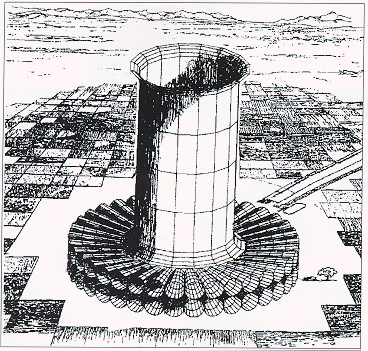
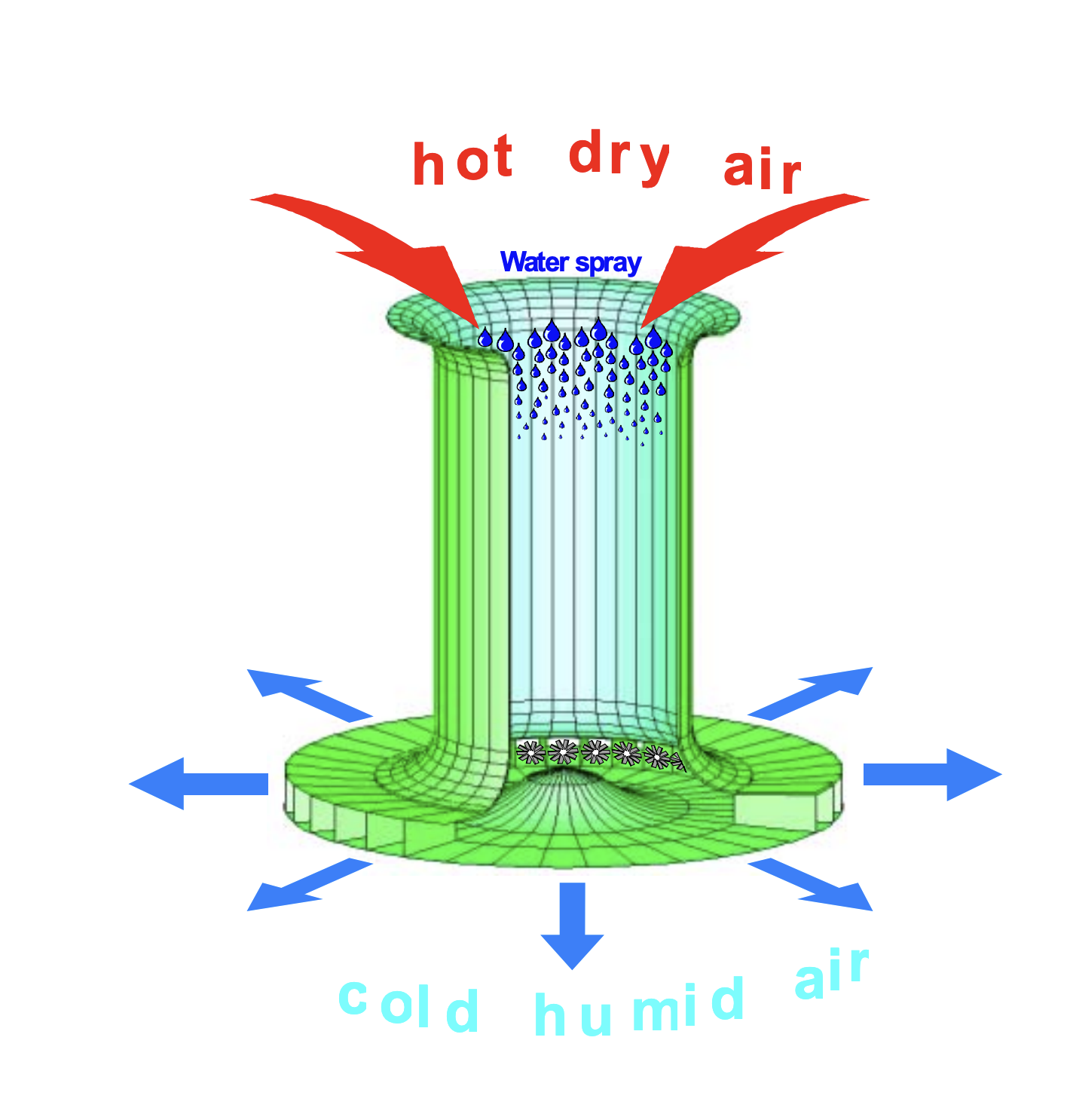
Conceived by Dr. Phillip Carlson and championed by Professor Dan Zaslavsky of the Technion in Israel, the Energy Tower proposed something almost magical: spray seawater into the top of a giant desert tower, cool the hot air, let it plunge downward at high speed, and generate electricity through turbines at the base. The hotter and drier the desert, the better it would work. Zaslavsky envisioned towers over 1,000 metres tall rising from the Negev, Jordan Valley, and Red Sea region, generating power day and night while potentially producing fresh water.
Energy Tower
The Energy Tower

The idea never made the leap from drawings and engineering studies to full-scale construction. We have the original PDF proposal and science —> LINK HERE

The UN advertised its potential in 2001 but noted then that the $20M USD cost to build it was limiting. But nearly two decades after most people stopped talking about it, the concept is quietly evolving in two unexpected places: China and Iran. The concept let dreamers dream and doers do – figuring out more pleasing designs and engineering.
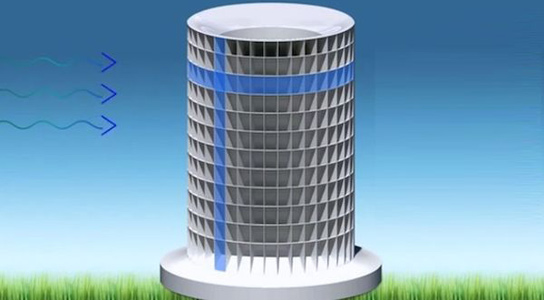
The Downdraft Energy Tower

China turns the Energy Tower into a climate machine
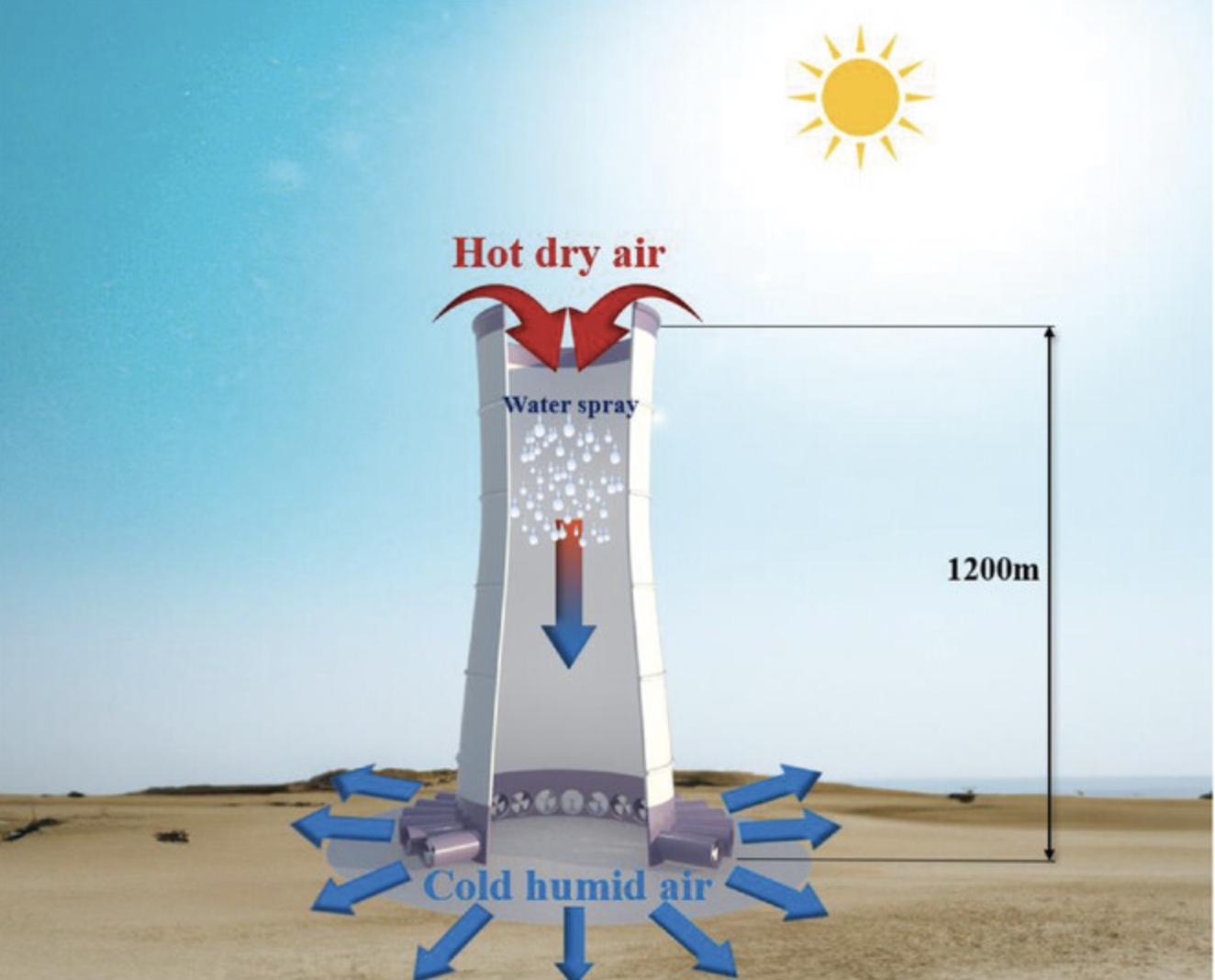
The Chinese methane paper, on the other hand, is much closer to the original Energy Tower because it explicitly describes spraying water into the top of the tower to create the downdraft, exactly as Carlson and Zaslavsky envisioned.

In 2023, researchers from the University of Edinburgh, Wuhan University of Technology and other institutions revisited the downdraft Energy Tower concept with a new purpose: removing methane from the atmosphere. Their study proposed that the humid air released from a downdraft tower could increase the formation of hydroxyl radicals, the atmosphere’s primary cleanser and the main natural sink for methane.

Downdraft Energy Tower (DET)

The researchers estimated that a tower 1,200 metres high and 400 metres in diameter could generate roughly 380 MW of electricity while simultaneously helping remove atmospheric methane. They calculated that a single Jordan-based tower could remove approximately 12.5 tonnes of methane per day under ideal conditions.

Whether those numbers hold up in practice remains to be seen. No commercial-scale downdraft Energy Tower has yet been built. But the research marks a remarkable shift. The tower is no longer viewed merely as a power plant. It is being reimagined as a tool for climate remediation.

Iran transforms the tower into a vertical oasis
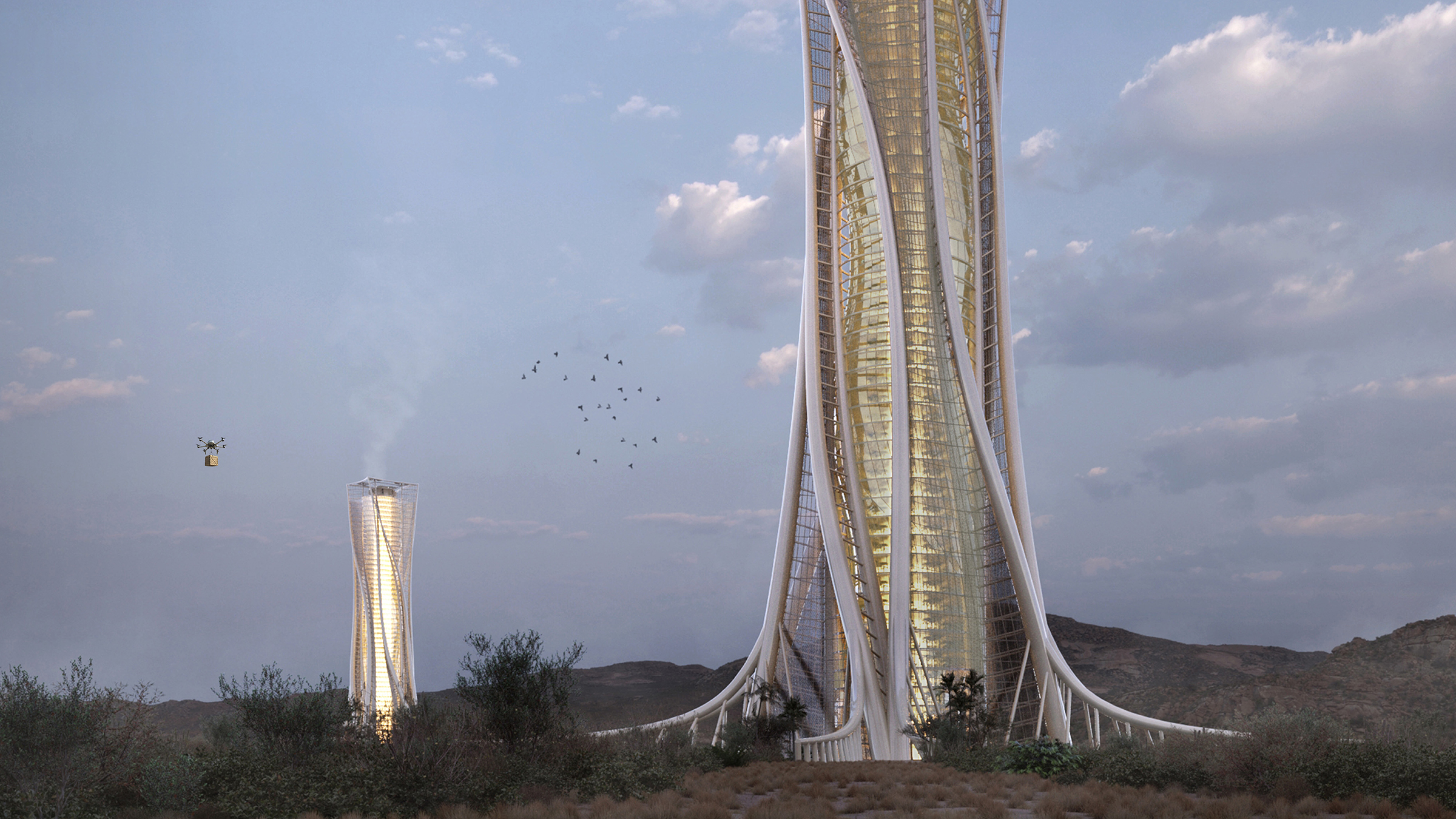
Energy Tower from Iran
Iranian Energy Tower

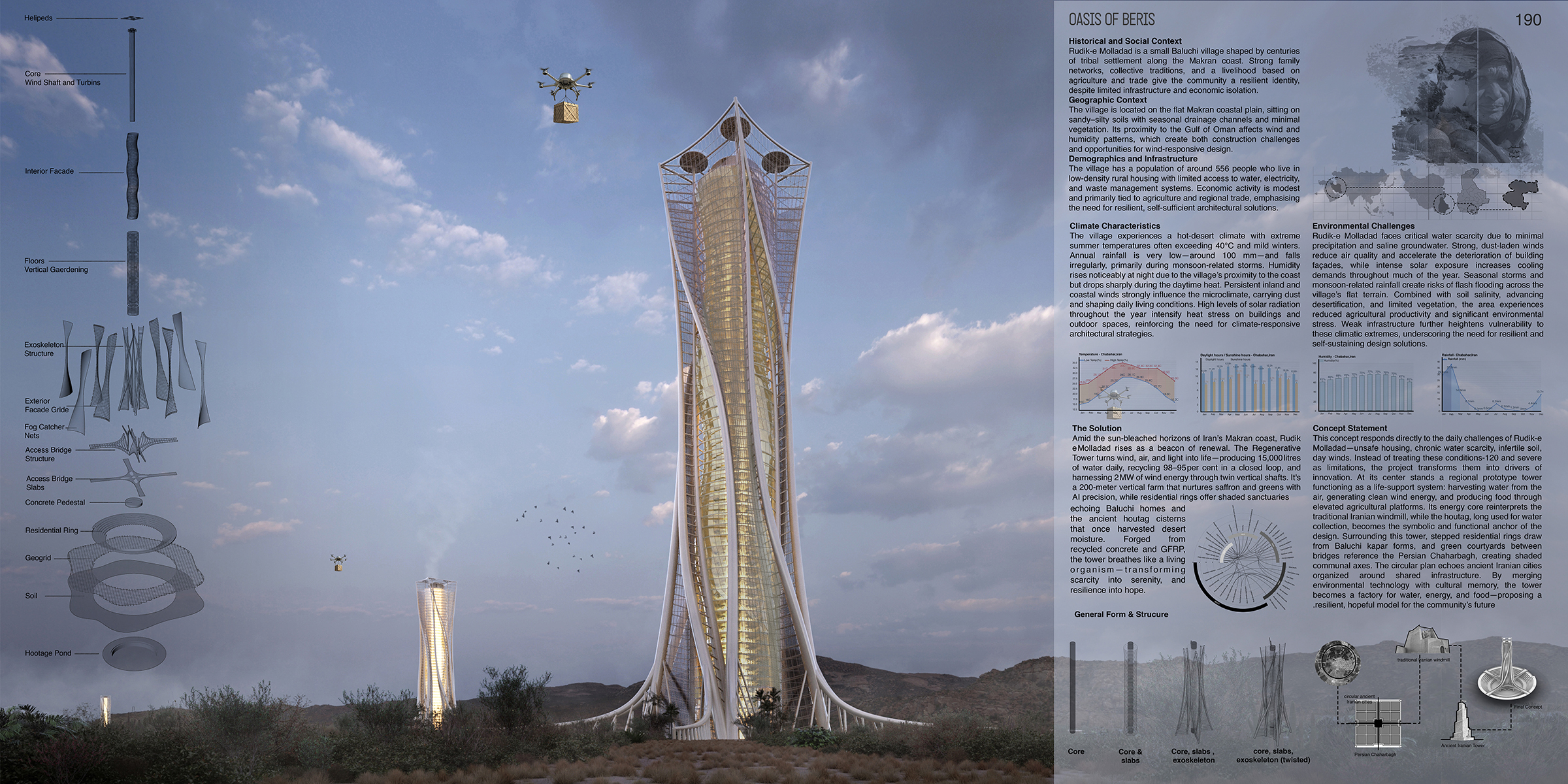
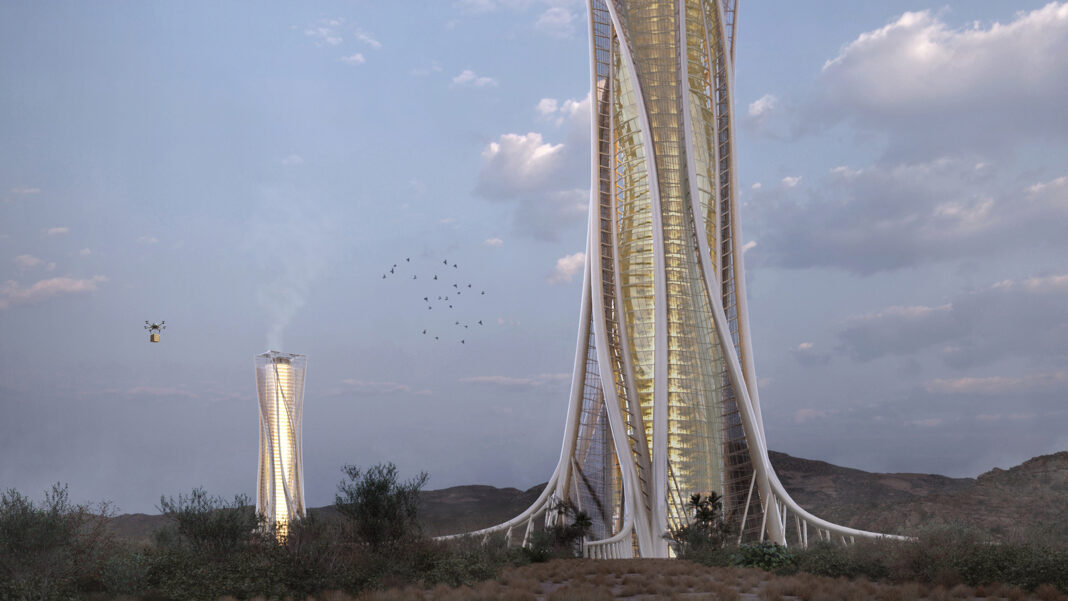
Meanwhile, a team of Iranian architects received an Honorable Mention in the 2025 Skyscraper Competition for their “Regenerative Tower” proposal on Iran’s Makran coast.

Unlike Zaslavsky’s energy-focused concept, the Iranian project imagines the tower as an entire ecosystem. The design combines wind energy generation, atmospheric water harvesting, food production, housing and climate adaptation in a single 200-metre structure.

The tower’s twin wind shafts generate energy. A butterfly-like exoskeleton captures moisture from the air. Vertical farms produce vegetables, fruit and medicinal crops. Residential rings provide shaded housing inspired by traditional Baluchi architecture. The project claims it could generate up to 15,000 litres of water per day while recycling nearly all of its water in a closed-loop system.
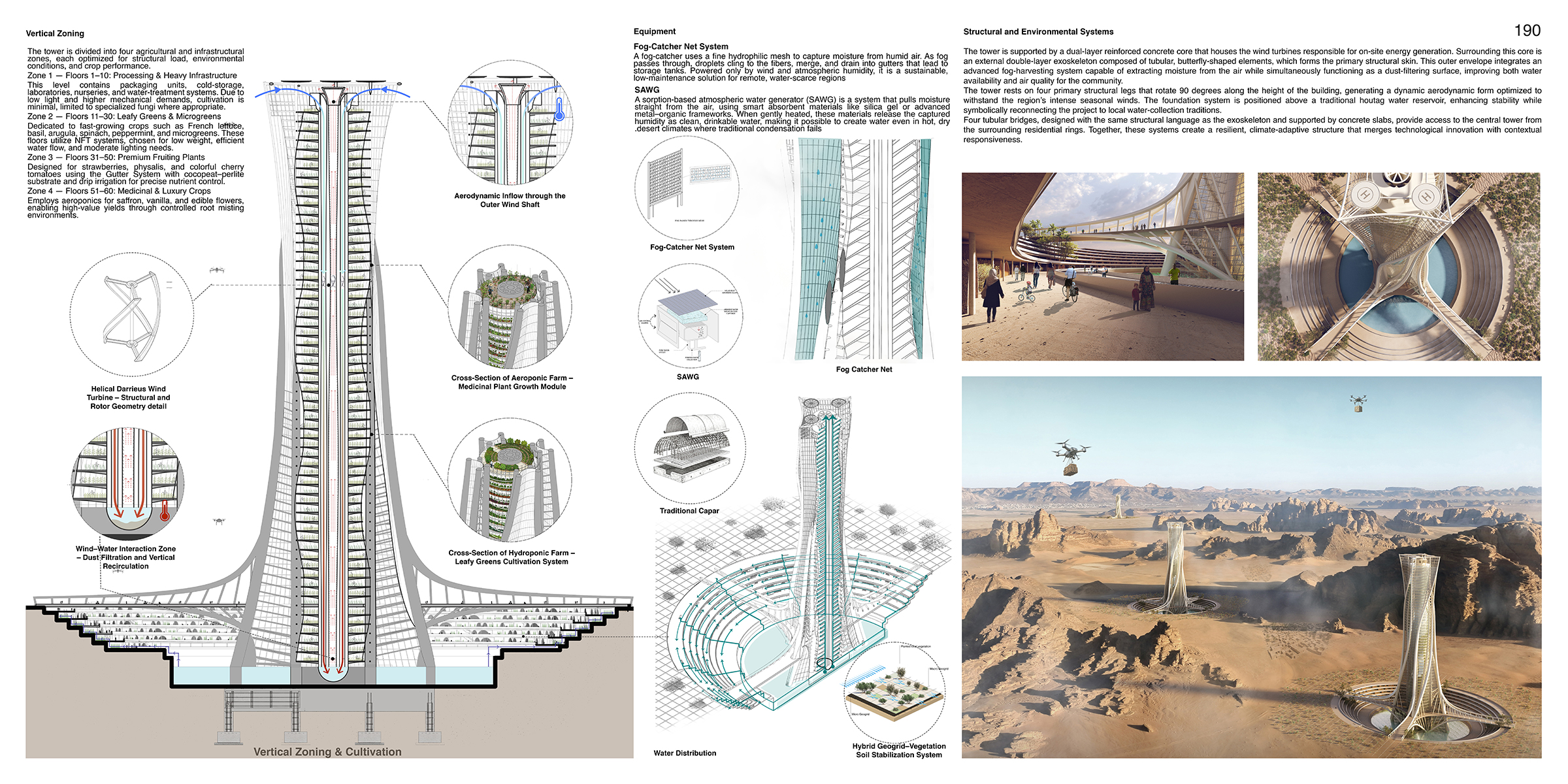
Iran energy tower
Iran’s Energy Tower

Although the project does not explicitly employ the classic evaporative downdraft system developed by Carlson and Zaslavsky, its philosophy is strikingly similar: use desert heat, wind and humidity not as obstacles but as resources.

What links these projects is not simply a tower. It is a way of thinking.

Carlson and Zaslavsky believed deserts should not be viewed as barren landscapes waiting for resources to be imported. They believed deserts themselves contained enormous untapped energy. Heat, dryness, wind and seawater could be transformed into electricity, water and prosperity.

China’s methane-removal research expands the concept into the realm of climate engineering. Iran’s Regenerative Tower expands it into urban design and community resilience.

Neither project has yet delivered a functioning tower. But both suggest that Zaslavsky’s dream may have been ahead of its time. From the engineering literature, Carlson appears to have been an American engineer/inventor, and the concept emerged in the United States before being adopted and extensively studied in Israel during the 1970s–1990s. The Israeli work is much better documented than Carlson’s own biography.

Nearly half a century after its invention, Dan Zaslavsky’s giant Energy Tower may finally be finding its moment.

Karin Kloosterman
Karin Kloostermanhttp://www.greenprophet.com
Karin Kloosterman is an award-winning journalist, innovation strategist, and founder of Green Prophet, one of the Middle East’s pioneering sustainability platforms. She has ranked in the Top 10 of Verizon innovation competitions, participated in NASA-linked challenges, and spoken worldwide on climate, food security, and future resilience. With an IoT technology patent, features in Canada’s National Post, and leadership inside teams building next-generation agricultural and planetary systems — including Mars-farming concepts — Karin operates at the intersection of storytelling, science, and systems change. She doesn’t report on the future – she helps design it. Reach out directly to [email protected]

Read More

TRENDING

Israeli Hydrogen Startup H2Pro Are Trying to Solve Clean Energy’s Hardest Problem

The company has attracted backing from major investors including Breakthrough Energy Ventures, the climate fund founded by Bill Gates, along with industrial partners such as Sumitomo, ArcelorMittal, and Temasek, a multi-billion dollar company that owns Singapore airlines. H2Pro has raised more than $100 million USD and is moving from pilot projects toward commercial-scale deployments.

Desalination experts debunk Aqua Solaire, the floating desalination barge

AI makes it easy to dream, develop, and create images of what could be world-changing ideas, until the reality sets in. A new project making the rounds is Aqua Solaire, an allged French concept for a solar-powered desalination vessel designed to bring drinking water to coastal communities facing drought, storms, and infrastructure failures.

Hormuz 2026 Conflict Poses an Energy and Food Security Dilemma in a Warming World

As tensions rise in one of the world’s most critical maritime chokepoints, the ripple effects go far beyond oil—touching food systems, climate pressures, and regional stability

We’ve lived through the past 11 of the hottest years on record

Have we forgotten about global warming when the world...

How to quiet noise from construction in your office

Streets need to be resurfaced in New York but the humming and grinding noise is unsettling. Noise is environmental pollution. 

EarthX and a blueprint for sustainable investing

Trammell S. Crow, a Dallas-based businessman and father of four, is focusing his efforts on impact investing, and media that focuses on saving the planet through EarthX.

Mining Afghanistan’s Mineral Discoveries Similar to Avatar

Now that American forces in Afghanistan are commemorating the longest period of any war that America has been involved in, including the 1965-73 Vietnam War, the recent discoveries of large and extremely valuable mineral and metal deposits may finally bring to light a reason to continue the presence of US fighting forces in this war torn and backward country.

From Pilot Plant to Global Stage: How Aduro Clean Technologies’ 2026 Expansion Signals a Turning Point for Chemical Recycling Investors Like Yazan Al Homsi

The company's Next Generation Process (NGP) Pilot Plant in London, Ontario, has officially moved into initial operating campaigns, generating the kind of structured, repeatable data that separates laboratory promise from commercial viability.

Nobul’s Regan McGee on Shareholder Value: “Complacency Is the Silent Killer” 

Why the governance framework designed to protect shareholders so...

Should You Invest in the Private Market?

startustartup Unlike public stock exchanges, which offer daily trading, strict...

How to build a 100-year-company

Kongō Gumi is a Japanese construction company, purportedly founded in 578 A.D., making it the world's oldest documented company. What can we learn about building sustainable businesses from them?

How AI Helps SaaS Companies Reduce Repetitive Customer Support Work

SaaS products are designed for large numbers of users with different levels of experience, and also in renewable energy.

Popular Categories