NASA scientist Matthew Montgomery spent 378 days inside a simulated Mars habitat growing vegetables with hydroponics. What can farming on Mars teach us about conserving water, saving energy and protecting Earth?
The Nabataeans understood that prosperity in the desert depended on respecting environmental limits. Two thousand years later, Petra's greatest attraction may still be the wisdom of the people who learned to live within them.
From Bill McKibben to climate organizers across the Middle East, Green Prophet has followed 350.org for 16 years. At COP31 in Türkiye, the movement is demanding an end to fossil fuel expansion and a fair transition to renewable energy.
One of the most persistent questions in seismology concerns whether scientists will eventually be able to predict major earthquakes before they happen.
I believe Jordan needs a cultural transformation alongside its infrastructure investments. We must begin by redefining social prestige. Why should ownership of an expensive car be considered a greater achievement than making an environmentally responsible transportation choice? Why should travelling by bus carry a social stigma?
“If we announce something and we need to adjust it, accelerate it and make it a priority more than others, or defer or cancel it, we will without blinking,” Saudi Finance Minister Mohammed al-Jadaan said at a public event last year.
Without blinking indeed: Saudi Arabia has reportedly delayed major work on The Line, the planned 170-kilometer mirrored city slicing through the desert, until after 2030. Tourism projects along the Red Sea are being pushed back, and Trojena, the fantasy ski resort in the mountains fueled with artificial snow, is also effectively frozen. (One project that went ahead to completion is the Red Sea resort, Shebara).
Shebara pods in the sea
Plans to build a giant cube in Riyadh, known as the Mukaab, were also put on hold.
A giant cube put on hold
At Green Prophet, we saw this coming from the beginning. We had been covering sustainable architecture, desert ecology and failed eco-city fantasies long before NEOM became a global branding campaign that felt more like a penal colony. From the first renderings, The Line looked less like a city and more like a trillion-dollar hallucination wrapped in sustainability language.
The Line, a 150 mile linear city
The world’s architecture and consulting elite rushed in anyway. Smart city. Cognitive city. Regenerative city. Every buzzword imaginable was attached to what was essentially a giant mirrored wall in one of the harshest climates on Earth. Locals also died trying to defend the land taken from them by the Saudi Government. But what activists from America care about that when they are busy boycotting Israeli tehini.
Meanwhile basic questions went unanswered: How much concrete and desalinated water would this require? What happens to wildlife migration routes? How do humans psychologically function inside a compressed linear corridor? And why do authoritarian megaprojects always market themselves as “green”?
Oxagon, a Red Sea port
Now reality is interrupting the fantasy: The parts of NEOM still moving forward are the practical ones: ports, logistics infrastructure, utilities and data centers. OXAGON, the industrial port city on the Red Sea, continues to receive investment because ports and infrastructure create economic value.
Trojena is off. It’s was to be a new ski resort planned for the Asian Games
Artificial moons and endless mirrored towers do not.
The deeper problem with NEOM was never just architectural. It was purely philosophical and comical. The project embodied a modern illusion that environmental destruction can somehow be solved through even larger acts of environmental destruction, if presented with enough minimalist branding and futuristic animations developed by European design firms doing anything for cash contracts. Much of the global design world played along.
Western consultants and sustainability influencers lined up for Saudi money, willing to describe almost anything as ecological if the budget was large enough. But sustainable cities are rarely built from above as monuments to power. Real cities evolve slowly around human realities, geography, water access, climate and community. Real sustainable cities look more like Rotterdam.
A sign for a campaign against an Israel boycott at the Park Slope Food Coop in Brooklyn, New York City, May 26, 2026. (Via Luke Tress/Times of Israel)
This is not an Onion article. I repeat. This is not an Onion satire piece. The Park Slope Food Coop in Brooklyn has voted to remove Israeli products from its shelves after years of pressure from BDS activists. What this means is that Israeli tahini, snacks, olive oil and frozen herbs were pulled almost immediately after the vote passed. The co-op has about 16000 members and of those that voted, more than half voted to boycott Israeli-sourced products. The co-op buys in bulk and offers members discounts to members with purchasing power and in exchange you need to work there for several hours a month. It’s been operating for about 50 years.
But the moral math here, as usual when it comes to Israel feels strangely selective. And when you read on you will see they boycotted an Israeli product once boycotted by Muslims for being “gay”. You can read that story here because we covered it.
Muhammad Zoabi, gay, Arab and a vegetarian. Don’t mess with his tehini.
The Coop still stocks products from countries such as Vietnam and Mexico, routinely accused of labor exploitation, child labor, environmental destruction and political repression. Where are the emergency votes over dragon fruit imported from Vietnam that use child labor? Where is the outrage over avocados or produce tied to cartel-controlled regions in Mexico? Goods linked to forced labor allegations in China? Why is the Israeli pepper suddenly the ethical breaking point in Brooklyn?
And what exactly is being boycotted here? Israelis? Zionists? Jews? Because one of the products reportedly targeted is tahini from Al Arz, an Israeli Arab-owned company. This is the same Israeli Arab-made tehini that was also boycotted by Muslims in Israel in 2020, for being “gay”, showing the hypocrisy of liberal activism eating itself. Al Arz is actually a minority-run business in Israel and the founder is Christian.
The Brooklyn Slope Coop boycotts a product made by a Christian minority in Israel boycotted by Muslims for being “gay”
The progressive movement once prided itself on nuance. On coexistence and on supporting minorities, workers and bridge-builders. Now even Arab Israelis making sesame paste can become collateral damage in ideological warfare.
A woman carefully reading the label on a product at the Park Slope Food Coop. Photo by Getty Images
The Park Slope Coop says this is about human rights. Supporters compare it to past boycotts against apartheid South Africa and Pinochet-era Chile. But many Jewish and Israeli members inside the Coop say the atmosphere surrounding the campaign has become hostile, radicalized and frightening. Reports describe accusations of “Jewish supremacism,” intimidation claims, heavy security and members fearing retaliation for speaking openly.
When I spoke years ago with an Israeli in Brooklyn — then a member of the Coop and one of Israel’s and New York’s most respected jazz musicians (he lives in Brooklyn and owned a club there) — he described the Coop as a great place for all. His business, a nightclub, was later targeted with buckets of red paint because he is Israeli. New York has become increasingly hostile to Jews, and the Brooklyn Coop story is just another example of the hypocrisy.
This is the irony that liberals refuse to confront: the movement increasingly resembles the kind of purity politics it once warned against. Homes and businesses vandalized with red paint. Businesses singled out because they are Israeli. Public shaming campaigns and loyalty tests.
Some activists insist criticism of Israel is not antisemitism. Fair enough. Governments should be criticized but if so, then ALL governments.
But when the world’s only Jewish state is treated differently from every other nation on earth — when Israeli peppers are morally radioactive while products tied to far worse labor systems pass unnoticed through organic checkout lines, people must ask uncomfortable questions, especially when Jewish members say they no longer feel safe inside a liberal institution they helped build.
Interestingly, one reader pointed out, the Coop changed the rules of numbers required for voting the day before the boycott was sealed. He sent us this:
On May 26 the group decided to repeal the need for a supermajority of 75% to pass a vote, similar to quorum. The very next day the boycott was passed without a supermajority.
Rat finkery of changing the rules before the vote to win the vote
The tragedy is that this kind of activism rarely builds peace. It builds tribes instead of humanity. It rewards outrage over dialogue. Once an enlightenment group starts deciding which nationalities are acceptable to boycott publicly, history suggests the line rarely stops where activists think it will.
According to its mission statement, “We are committed to diversity and equality. We oppose discrimination in any form. We strive to make the Coop welcoming and accessible to all and to respect the opinions, needs and concerns of every member.”
Several days ago I saw a dramatic scene of destruction as I was chancing to look out my rear kitchen window. A pair of robins had been building a nest on top of a birdhouse hanging outside my room’s side window. I had even gotten a short video of one of them in the nest. Yet when I looked up a massive bird was squatting on the birdhouse, a raven. With a brief leap into flight the raven took back off, sweeping the nest off of the birdhouse, where it fell apart on the ground. At first I was devastated, relating the nest to my hopes and dreams for a relationship and a new home in the future. Yet things didn’t remain dismal for long.
Soon two small brown birds, maybe chickadees, were flying in and out of the bird house itself. At one time the birdhouse was intended as a bat house, yet never really used as such. Now a nest was being built inside of it to start a new life for two bright and cheerful birds building a new life out of something that had been ruined time and again.
A video I once saw by the spiritual psychotherapist, scholar, and torah speak Nili Salem, posits that everything breaks with divine purpose in order to make room for repair. In the moments of destruction, the circumstances of devastation can fill us with doubt and despair. Sometimes it takes time to see that foundations had to be cleared in order for new homes to be built on greater stability.
Looking back on the pain and heartbreak I’ve experienced in life, the raven might be seen as an agent of destruction or might be seen as an agent of change; it turned out to be the latter, leading to greater renewal. We never know which it’s going to be in the moment, yet one thing that smaller birds teach us is to be prepared to build when these moments of destruction occur.
In life, there are moments that seem deeply symbolic if our minds interpret them that way. Not everyone notices these things and when they do, it can be easy to start noticing too many connections and correlations, and overload of synchronicities. How we interpret symbols that we perceive comes down to what Ms. Salem frames as blessing and curse, or a practice I’ve been taught to think of as ayin tova; seeing the good with intention and gratitude for what is. Though awareness of possible negative outcomes can help us fly past them if we can loosen the grip of anxiety and fear on our minds. When we’ve seen too much of anything, whether it’s trauma, omenistic symbolism, simply the normal stresses of daily life, or any combination thereof it can crash our minds.
And this is another lesson that smaller birds teach: they were grounded while the robins were not, more importantly they pace themselves by taking turns and waiting for one another. Thus taking a pause to collect the pieces of what we’re working on mentally, then shifting to internally arranging things in a peaceful and fitting manner until completion, noticing our thoughts and keeping only the best materials to build our perspectives from.
One thing you will find different birds do is make different choices in nesting material; they build with what they can lift and fits both their needs and desires. Humans are not always any wiser than the robins, sometimes we site ourselves poorly or even choose still more poorly in what we build with. This applies to where we choose to live, our family, our friends, our education, our career, and any number of other situations and circumstances.
It can be easy to pick up too much, whether that’s material, our commitments, or so often an overwhelming amount of information. When we do that we fail to build with integrity, structural or otherwise. In some senses this puts the little birds at an advantage to the robins, who have more carrying capacity while lacking the discernment that the humble little brown birds practice out of natural necessity. Humans are no different in that, while we can learn from the life around us to take care in how we build our homes and what with, else we may load before looking.
Often we have to make the best with what we have, like squirrels who inherit nests and territories from generation to generation. Yet unlike squirrels, we can learn to bark and fight less before moving onwards. We can unlearn inherited mindsets and perspectives in order to have the room and resources we need in order to grow and expand.
When things seem like they’re falling from where we built them, it’s important to remember that we can pick ourselves up and move on to a niche that suits us, even if it’s flying further than we think we can. In the Torah, God floods the world and the small family of Noah sets forth with whatever plant and animal life they can bring with them in the ark that Noah built on God’s direction. So imagine being a dove, caged beneath the deck of a ship. Even just flying free to look for land would be a joy in a flooded world. And in a storm, flight is so often replaced by shelter in the closest thing to safety even if it’s no place to build our nests. And as soon as things are clear, that joy in taking flight to higher ground can become real.
However if we never knew flight and then God hid us from sight in the cleft of a rock, we might not know when it’s truly safe to emerge. We might even see what looks like clear weather and good signs, a good time to build yet still struggle to emerge without someone to fly with who can show us that the air truly is safe. You never seem to see birds building nests without a partner, so maybe this is natural. We’ve been taught that we can go it alone and maybe we can carry that burden ourselves, yet that means we have to make up the difference by picking up more and faster, not taking breaks or pacing ourselves. If we’re stuck in that cleft we may never even consider flying free and build our nest there with less than we truly need. And that can leave everything we build exposed to being brushed off whatever narrow space we find, whether by a careless visitor squatting where we made our nest or even just a strong gust of wind knocking us off our perch.
Half of learning to fly is probably falling, so we can find a blessing in these moments of unsteadiness by learning to build on a more grounded basis and weather the storms with the knowledge that the clouds will part in order for us to find our way home.
Maybe there are no secrets in life, just honest and direct conversations with the Universe. And the only way to do that is by being in the presence with what’s around us. Regardless of plumage, if you wait long enough any number of birds will pass by. The questions I find myself wondering are who lands and who stays to build.
So each morning from nine to noon I’ll be waiting on my porch to see what the Universe brings and what ends up staying.
Engineers at the University of California San Diego have created a soft, wearable ultrasound patch that can continuously monitor a fetus for hours at a time — and it can do so consistently even as the fetus and umbilical cord constantly move during pregnancy.
The technology could help doctors detect complications earlier in high-risk pregnancies. In one case during clinical testing, the patch detected prolonged abnormal fetal signals that prompted medical intervention through an early Cesarean delivery, which researchers say may have helped save the baby’s life. The technology could also expand access to prenatal care in low-resource settings, or in rural areas, where skilled ultrasound technicians and continuous, long-term monitoring are often limited or unavailable.
“Wearable ultrasound technology has the potential to enable continuous prenatal monitoring and improve pregnancy outcomes in ways that were previously not possible,” said study co-first author Geonho (Tom) Park, a chemical and nano engineering PhD student at the UC San Diego Jacobs School of Engineering. Park co-led the study with fellow UC San Diego Jacobs School of Engineering co-first authors Yizhou Bian, Hao Huang and Sai Zhou.
Currently, most prenatal ultrasounds typically provide only brief snapshots of fetal health and require trained sonographers to operate the equipment. The new wearable ultrasound patch is designed to stay on the body and continuously track a baby’s anatomy and blood flow in real time, without requiring someone to manually guide the ultrasound probe.
“To comprehensively monitor mothers and babies over the amount of time needed to catch complications like preeclampsia, you need a system that can work continuously and largely on its own,” Bian said. “That is why the sensing depth, functional capabilities and autonomy of this ultrasound technology are critical.”
A major challenge in continuous fetal monitoring is that both the fetus and the umbilical cord are constantly moving. To address this, the researchers developed autonomous tracking algorithms that automatically identify and follow the umbilical cord as it moves. This enables the device to maintain consistent measurements even while the mother or fetus changes position.
“With continuous monitoring, we were able to observe dynamic fluctuations in blood flow that would likely be missed with conventional ultrasound exams,” Huang said.
“Our system even detected an abnormality during one of our clinical visits,” Park added. “That pregnancy later resulted in a delivery at 29 weeks, and it demonstrated how continuous monitoring could help identify complications much earlier than we can today.”
This project builds on over a decade of research at UC San Diego in the laboratory of chemical and nano engineering professor Sheng Xu. His team has led development of wearable ultrasound technology for a range of healthcare applications, includingnon-invasive monitoring of central blood pressureas well asmobile heart monitoringand efforts to useeveryday gestures to reliably control robotic devices. This research was conducted in the Aiiso Yufeng Li Family Department of Chemical and Nano Engineering at the UC San Diego Jacobs School of Engineering.
For this new work, the team evaluated the wearable ultrasound patch through a multi-center clinical study conducted at Jacobs Medical Center at UC San Diego Health and the John Radcliffe Hospital at the University of Oxford. In tests, the patch produced measurements that closely matched those from standard handheld ultrasound devices. Researchers also collected continuous monitoring data for hours at a time across 62 pregnancies, including healthy pregnancies as well as pregnancies complicated by gestational diabetes, pre-eclampsia, high blood pressure and abnormal fetal growth.
Next, the team plans to integrate the patch into a compact electronic system that could eventually allow the patch to operate wirelessly.
By producing a full genome sequence from the ancient nuclear DNA of the blue antelope (seen here in an illustration), researchers not only learned more about its natural history, but also offered a proof of concept for other scientists looking to do the same with other species. Image credit: Science Source/ROMAN UCHYTEL.
Inside the small, contested set of museum specimens that hold everything science knows about the bluebuck.
The hunt for the bluebuck, the silvery, slate-blue antelope of South Africa’s Cape, does not begin in Southern Africa. It begins, oddly enough, in the back rooms of a handful of European museums, in Leiden, Stockholm, Vienna, Paris, Uppsala, and London, where, for roughly 200 years, a scattering of mounted skins, skulls, and pairs of horns have been quietly catalogued under the name Hippotragus leucophaeus.
The complication: most of them aren’t.
The bluebuck went extinct around 1800, just 34 years after it was first scientifically described. It was small enough, and similar enough in build to its closest living relatives (the roan and sable antelopes), that early collectors and curators routinely mixed the three species up. For most of the bluebuck’s afterlife in museum drawers, that mix-up went unnoticed, because there was no way to tell the bones apart with certainty. But recently DNA research and technology has caught up.
‘Hardly Any Reference Material’
Museum für Naturkunde Berlin
In 2021, an international team led by Elisabeth Hempel of the Museum für Naturkunde Berlin and the University of Potsdam published a study with a deceptively plain title: “Identifying the true number of specimens of the extinct blue antelope.” The team examined 16 putative bluebuck specimens scattered across European collections and successfully extracted genetic material from 10 of them. Of those 10, only four turned out to actually be bluebuck. The rest, including several skulls, were either roan or sable antelope, mislabeled and misidentified for generations. Their findings rearranged the field.
“This indicates that the true number of historical museum specimens of the blue antelope is even smaller than previously thought, and therefore hardly any reference material is available,” the authors wrote.
The four genetically confirmed bluebuck specimens turned out to be a mounted skin in Stockholm, a mounted skin in Vienna, skull fragments in Leiden likely belonging to the species’ lectotype, and a set of horns in Uppsala.
Two years later, the count nudged up. In 2023, a follow-up study added a pair of horns from the Natural History Museum in London to the confirmed list, bringing the total of DNA-validated specimens to five. A mounted skin in Paris, while not yet directly DNA-confirmed at the time of those publications, is widely accepted as a bluebuck on the basis of its morphology and the fact that it is a complete skin rather than a fragment, a category of specimen that has held up well in genetic testing across other cases.
So how many bluebuck specimens really exist? The honest answer is that the number depends on which standard you apply. There are around four to five DNA-validated specimens, depending on which paper you cite. There is at least one more (the Paris mounted skin) that nearly everyone in the field treats as a bluebuck on morphological and historical grounds. And, per the original Hempel paper, four additional candidate specimens still haven’t been tested at all: two skulls in Berlin, a pair of horns in London, and either a skull or pair of horns in Brussels.
Researching the Bluebuck Genome
Colossal Biosciences recently announced it is working on applying de-extinction technology to the bluebuck. Its goal is to generate an organism that both resembles and is genetically similar to the extinct species. The work involves resurrecting a lost lineage of core genes, engineering natural resistances, and enhancing adaptability so the animal can thrive in today’s environment. The company’s announcement, which draws on this entire body of work, summarizes the state of play this way: there are six specimens that can be considered bluebuck (with four DNA-validated and two assumed based on history and morphology), four more that haven’t been tested but might yet prove to be bluebuck, and an active scientific debate about exactly which categories any given specimen belongs to.
With so few authentic specimens, every single sample carries weight. Most of what science can know about the bluebuck has to be reconstructed from that handful of skins, skulls, and horns. In 2024, that handful produced the species’ first nearly complete genome.
A team led by Hempel, again with the University of Potsdam and the Museum für Naturkunde Berlin, and in collaboration with Colossal Biosciences, generated the first high-coverage nuclear genome of the bluebuck, a 40x assembly drawn from a young male mounted at the Swedish Museum of Natural History in Stockholm.
The genome rewrote several long-running assumptions. It showed the bluebuck had been adapted to a small population for thousands of years before its extinction, with no detectable inbreeding and only a few harmful mutations. The species was not a casualty of slow genetic decline, but of sudden human pressure during the colonial era. The same study also identified the LYST and ASIP genes as candidates for the bluebuck’s distinctive blue-grey coat color.
“As part of Colossal’s continued focus on ancient DNA, genotype to phenotype relationships, and ecosystem restoration, we were honored to collaborate on the groundbreaking work of Professor Hofreiter and his team,” said Ben Lamm, Colossal’s co-founder and CEO, when the genome was published. “The research objectives for the project allowed our teams to work together applying some of the latest Colossal ancient DNA and comparative genomic algorithms to learn what truly made the blue antelope the unique species it was.”
The mystery of the bluebuck’s specimens is, in the end, a story about how much can be learned from how little. Six confirmed specimens. Four candidates still in question. One nearly complete genome. And, increasingly, a path to bringing back what those drawers and skins have been waiting to tell us.
In early April, a collaborative team of scientists and divers from the University of Miami Rosenstiel School of Marine, Atmospheric, and Earth Science, the U.S. Geological Survey’s St. Petersburg Coastal and Marine Science Center, and the National Park Service outplanted almost three dozen two-year old elkhorn corals (Acropora palmata) to three reef sites in Dry Tortugas National Park.
This initiative is the next phase of a project aimed at directly comparing the performance, under natural reef conditions, of new genetic diversity introduced from outside Florida, this time inside a National Park that may be key to the recovery of this species in Florida.
The project centers on “Flonduran” corals, which are offspring of Florida elkhorn corals bred with elkhorn corals from Honduras. These new corals are being evaluated alongside Florida elkhorn corals of the same age that are outplanted side by side in natural reef habitats to assess whether the new genetic diversity can enhance coral resilience and reduce coral bleaching during Florida’s warm summers. The team will return every six months to monitor growth, survivorship, and overall health.
The “Flonduran” corals are the result of a first-of-its-kind international effort to enhance reef resilience by crossbreeding Florida elkhorn corals with colonies from Tela Bay, Honduras, which have adapted to warmer, more nutrient-rich waters. In 2024, scientists from Rosenstiel School and Tela Marine studied these robust Honduran populations, collected and exported parent colonies, and together with scientists from The Florida Aquarium, bred them with Florida corals in the laboratory. In addition to adding new genetic diversity to Florida’s depleted elkhorn population, the new offspring are intended to increase heat tolerance, helping to boost the capacity of corals to survive marine heatwaves.
“This is a critical step in field-testing measures to help reefs adapt to increased ocean temperatures,” said Andrew Baker, Ph.D., professor in the Department of Marine Biology and Ecology at the Rosenstiel School. “By testing these Flonduran and Floridian corals side-by-side on different reefs, we can begin to identify suitable source populations for future breeding efforts.”
“Elkhorn coral has suffered tremendous losses,” said Bailey Marquardt a doctoral student in the Department of Marine Biology and Ecology and the project lead. “But projects like this give us renewed hope. By introducing new genetic diversity and testing it directly on the reef, we’re giving these corals a better chance to adapt and giving Florida’s reefs a fighting chance for the future.”
This project aims to generate data on how new genetic backgrounds affect elkhorn coral survival in the wild and inform restoration strategies. The trial in Dry Tortugas National Park is part of a broader, ongoing effort to identify solutions that could improve the long-term survival prospects for Florida’s Coral Reef. “We are optimistic the Flonduran corals will thrive in Dry Tortugas National Park, offering the new elkhorn corals there much-needed genetic variation, and thus, resilience,” said Ilsa Kuffner, USGS research biologist. “It is hard to overstate the importance of this coral species. The elkhorn coral builds the reef crest, the shallowest part of the reef, that dampens wave energy and protects the shorelines of coastal communities throughout Florida and the Caribbean. Our collaborative research is providing science to guide restoration strategies for this critical natural infrastructure-providing coral.”
Elkhorn coral was once a dominant reef-building species in the Caribbean and has declined by more than 95% across the Florida Keys. A recent study by scientists at NOAA’s Coral Reef Watch, the Rosenstiel School, and other institutions throughout Florida found the 2023 marine heatwave caused catastrophic losses, leaving Florida elkhorn and staghorn corals functionally extinct.
This work builds on decades of research on coral bleaching and heat tolerance at the University of Miami’s Coral Reef Futures Lab, in partnership with federal, state, and park scientists. The research is jointly supported by the USGS Coastal Marine Hazards and Resources Program, the National Park Service, NOAA’s Office of Habitat Restoration, Tela Marine in Honduras, and the University of Miami Rosenstiel School of Marine, Atmospheric and Earth Science.
Shavuot is a holiday heavy with symbolism. While it marks the end of the counting of the omer, it also functions as a miniature jubilee. The fiftieth day like a tiny echo of the fifty year cycle. And in each of the seventh years during that cycle, acts of rest and liberation are performed, especially in the fiftieth year. And so it is before Shavuot, I find myself letting go of a love that I may not have had a right to claim, the love that I thought was the beginning of my life becoming better and happier. Instead I find myself grieving.
What many people forget is that grief is an expression of love. When my mom died, I had nothing to grieve since my love for her died when she stopped being a parent and became a neglectful bully when I was young. Yet my life has not been without grief, whether that’s grieving my childhood or grieving the adult years that followed. I have cried bitterly over dead friends and dead pets. Now I find myself grieving love itself, finally coming to understand that whenever I have loved someone deeply it has never been reciprocal. I have always only ever been the fool in love, and so the wisest thing seems to be to not love.
For nearly two years, I’ve carried and tended feelings of love for someone I’ve never met. And for most of the time I began to think that those feelings really were mutual. Maybe that was a delusion on my part, seeing signs of love and caring in symbolism and cryptic references the way we fool ourselves by looking for mystical meaning in the secrets of the Torah. Yet sometimes we see what we want to see and we don’t see things for what they are, just as sometimes we see things as we fear them to be and not for what they are. I don’t know if I’ll ever know if I was deluding myself or if I misunderstood and fumbled something good and true. Yet if I ask myself if I’m the asshole here, the answer still feels like a ‘yes’. And maybe that leaves me grieving my worth as a partner as nearly two painful years disappointing someone I both admired and desired. And since she doesn’t want my attention, then I have only guilt and shame for the hurt I’ve caused her by insisting on wishful thinking.
It’s necessary to write this to acknowledge how badly I’ve messed up. I have no one to blame for my heartbreak but myself. And I can’t blame the woman I’ve loved and whole I still smile thinking of even as I cry and scream into my empty bathtub, totally nauseated at everything. All I can do is apologize and give her the space and silence she wanted from me all along. And try, despite not wanting to, to remain open to the possibility that better times will come in my life even if I feel like ending it.
God commands us to choose life, yet I have never been good at obedience. I spent most of my life hating my own existence. This past year I’ve learned to see myself as slightly better than worthless, yet betraying someone I love by loving them despite that being one-sided is far from worthy. And so I find myself waiting for God to make this all make sense. And I remember that if it never made sense, I probably have to accept the absurdity of God’s choice without expecting it to ever make sense.
Already so depressed that I’m only showering weekly, the temptation to slide into further depression is irresistible. Food was already becoming a chore again, with neither eating nor cooking being easy. Isolation instinctually kicks in, my desire to find community inverted, drawn back into the cave of of pain and despair that I try so hard to turn others away from. And yet God commanded us to choose life, the same God I didn’t believe in for three decades of my life and the same one I struggle with to this day. As I live, I don’t find that faith to be dying. I just find it to be insufficient, another unsteady thing to retreat from while I writhe in heartbreak.
“If it’s not okay, it’s not over,” and somehow this is the least okay it’s been, since it seems like I’m back where I started except with more heartbreak and less sense of self. And I ask what the point of this is, why God should let me love someone and only detract from her life in the process that I’m supposed to trust yet only seems to be hurting both of us? Is there a lesson in it? Maybe, it seems like things went so wrong that something must be able to be learned. For my part, I’ve learned that my only worth is in my work and not in what I want despite what people on social media may say about worth. While wants may inform and motivate, wanting what someone else cannot give just hurts both people. Trying to understand ends up mattering less than simply accepting that mutual love may not be for everyone since it requires being able to show up fully. And I remember praying to God let me meet the one and that if it didn’t work out with her, to no longer want love in my life. Choosing life may simply be accepting that there is no choice, life continues even when we do not want to continue.
And so I question where I go from here as it continues, and how. While I may not want to live, while I may indeed want prefer the alternative to life and consider it strongly, I also know that if I am meant to continue living my decision in that will not matter. So my choice is really limited to how I live my life, however long it may continue to be. I have to admit that it’s unlikely I’ll be able to make aliyah without more resources and stability in my life, much less sustain myself in Israel. While I have to question the validity of my faith when I have no immediate faith community, I find myself unmoored as the hope that anchored my life seems to be drifting, and I find that my faith may have been misplaced and ungrounded this whole time.
May your Shavuot bring you the lessons that God needs you to learn. May the Torah teach you more wisdom than I have learned. And may you be free.
Fruit squeezes at McDonald’s are full of microplastics
One of my fondest memories from high school here in quaint Marquette was a delightful incident of free-speech persecution by the school administration. My crime? Violating the dress code for daring to wear one of the few good birthday gifts I’ve ever gotten, a shirt from the owner of my favorite coffee shop. Defunct for decades now, EmmaJoes AKA Common Grounds was where my first relationship and first of many terrible relationships started. Yet despite toxic and coercive then-friends and exes, despite spending days on a couch watching the entire run of Star Trek the Next Generation, despite the off-putting local poet ‘Crazy Larry’ hanging around until threatening to assassinate President Bush with a pistol he had in his suitcase, the brief life of the coffee shop was joyous. And my loyalty to the coffee shop led me to be rewarded with more diverse friendships, store credits for helping out at open mic nights, learning to rock climb with the cool college students who invited me to parties I avoided, and of course the infamous shirt.
McShit Tshirt
The shirt itself said ‘McShit’, with a parodic-yet-accurate rendering of their Golden Arches, a perfect expression of my own vegetarian anti-corporate mindset. That was about twenty-five years ago and my attitude towards McDonald’s has only congealed like the contents of the grease dumpster they have out back. So let’s light that toxic dumpster fire with abridged tour of why I still hate McDonald’s. There are few places besides cathedrals that my heathen self loathes enough to avoid stepping foot in, yet McDonald’s could not pay me enough to repeat that mistake again! Why?
The smell is always off-putting to me; according to the fringe astrological system called Human Design, my nose knows. In my music scene days, I could always smell a so-called ‘safety meeting’ from across the building like one of those poor police drug dogs trained to ruin innocent stoners’ days. The turbid reality of McDonald’s ingredients is no secret at this point. Putting my past PEtA associations aside, we all know that McDonald’s is less real than the intelligence in AI even if ChatGPT is not smart enough to take the job of making fast food burgers and fries even though it has been used in robotics; while whole PizzaHuts have been roboticized before, fast food work will remain the domain of poor humans for the indefinite future.
And the smell of McDonald’s certainly lingers worse than the two mice my poor cat killed, ate, and spat up yesterday; though frankly even to my near-vegan sensibilities the thrown up mice sound about on par with McDonald’s chicken nuggets, since unlike many vegetarians my visceral dislike for dead animal products far outweighs even more-rational my views of their drawbacks. It’s the lingering smell of failing to produce food meant for actual consumption, the smell of slow self-annihilation. Just like the smell of days-old curdled beef tallow in those fries lost in someone’s car on the floor behind the driver’s seat.
You might ask if my beef with McDonald’s goes deeper and it certainly does. Like the Amazon rainforest clearcut for fast food cattle, the environmental impact of fastfood in general burns the life and breath out of me. It’s not just animal cruelty, it’s destroying the very lungs of the Earth, planting soybean monocrops (note: which is where most corn and soy goes, to things like livestock feed as well as chemical industries, and not much to direct human consumption), relying on so much plastic and styrofoam waste, and the horrors only go deeper from there.
And not that I have any sympathy for franchise owners, but those enterprising sellers of pseudofoods can’t even repair their own machines sine the corporation built them with proprietary secret sauce components years before McDonald’s executives even made weird racist rants on social media. If you think that’s a non-sequitur, it is and I’m mentioning it to highlight the perversely cruel irony of McDonald’s relying on poor people of color especially. While right-to-repair may be changing that it’s still painfully obvious that exploiting their workers, poisoning their semi-addicted customers, and destroying the environment is not enough for these fast food robber barons; they also have to quadruple dip on their feudal franchise owners. Yes, this is par for the gutter course of corporate techno-feudalism that we’re gurgling along in unless individual consumers become connected creators.
Finally, the most damning thing about McDonald’s is in how incredibly boring it is even compares to their competitors. While McDonald’s is ubiquitous, that ubiquity only makes their mediocrity all the more McShitty.
Gerber plastic pouches are full of microplastics finds new Greenpeace study
For generations, feeding a baby meant pureeing what you had at dinner, or if you were in a pinch opening a jar of Gerber, a small glass jar and scooping out mashed pears or applesauce with a spoon.
Today, many babies around the world skip the spoon entirely and suck pureed food directly from plastic pouches marketed as convenient, organic, and safe. These pouches are sold at organic stores, and Trader Joe’s as healthy options and they are put in McDonald’s Happy Meals so parents don’t feel guilty about junk food.
But a disturbing new report that Greenpeace sent to Green Prophet suggests that what babies may also be swallowing is plastic. A Greenpeace International investigation commissioned in 2025 found microplastics in every baby food pouch tested, including products from Gerber and Happy Baby Organics. Researchers estimate that a single Gerber pouch may contain more than 5,000 microplastic particles, while a Happy Baby Organics pouch may contain over 11,000. You can download the report here.
This is among the first studies to examine the food itself, not just the packaging.
Babies and microplastics
McDonald’s sells fruit puree in pouches in Happy Meals
Babies are uniquely vulnerable. Their brains, immune systems, and hormones are still developing. According to Dr. Leo Trasande of NYU, early exposure to plastic chemicals is associated with obesity, reproductive disorders, and neurodevelopmental problems that can last a lifetime. ADHD, depression in kids? Maybe this is microplastics.
The Greenpeace report also identified plastic-associated chemicals, including 2,4-di-tert-butylphenol, a compound linked to endocrine disruption.
From glass jars to squeeze-and-suck
Happy Baby Organics found to emit microplastics into baby food
Plastic pouches have exploded in popularity. Sales in the United States rose roughly 900% between 2010 and 2023, and pouches now dominate baby food shelves worldwide.
Parents were sold a vision of convenience: organic fruits and vegetables in BPA-free packaging.But “BPA-free” does not mean chemical-free.
And feeding directly from a pouch may create other problems. Health professionals warn that sucking purees can contribute to tooth decay, dental alignment issues, overeating, and delays in oral and sensory development.
The healthiest option may be the oldest one: Buy local, fresh, organic apples. Steam them. Mash them into applesauce. Store them in glass jars. Feed your baby with a spoon.
It is slower, yes. But childhood was never meant to be optimized for adults in a hurry.
Using a spoon teaches patience. There is texture, eye contact, conversation. Not sucking from a pouch while watching YouTube. And unlike plastic pouches, it doesn’t add thousands of invisible particles to lunch.
Until manufacturers prove these products are safe, parents may want to return to what worked for generations before us: real food, in real containers, prepared with love.
“For nearly a century, Gerber has been one of the most trusted names in feeding American babies. That trust has been shattered. They’re serving babies microplastics with every pouch. Gerber promises ‘anything for baby.’ We’re asking for one simple thing: stop serving microplastics for lunch,” says Lindsey Jurca, Senior Plastics Campaigner at Greenpeace USA.
Greenpeace is filing a report on studies that have taken place earlier. In 2023 Kuzi Hussein from the University of Nebraska─Lincoln, Lincoln, Nebraska and colleagues looked at microplastics in the home, in food pouches and all kinds of plastic containers.
They looked at the release of microplastics and nanoplastics from plastic containers and reusable food pouches under different usage scenarios, using DI water and 3% acetic acid as food simulants for aqueous foods and acidic foods.
The results indicated that microwave heating caused the highest release of microplastics and nanoplastics into food compared to other usage scenarios, such as refrigeration or room-temperature storage.
It was found that some containers could release as many as 4.22 million microplastic and 2.11 billion nanoplastic particles from only one square centimeter of plastic area within 3 min of microwave heating. Refrigeration and room-temperature storage for over six months can also release millions to billions of microplastics and nanoplastics. Additionally, the polyethylene-based food pouch released more particles than polypropylene-based plastic containers.
Exposure modeling results suggested that the highest estimated daily intake was 20.3 ng/kg·day for infants drinking microwaved water and 22.1 ng/kg·day for toddlers consuming microwaved dairy products from polypropylene containers.
First time I saw a 2 gauge gun in person was at a Pennsylvania gun show, leaning against a velvet-lined display case. The dealer was using it as a conversation piece. He had a hand-lettered sign taped to the table: “yes, it’s real. no, you cannot fire it.” The thing was longer than the table. The bore was wide enough to swallow a roll of quarters. The buttstock looked like someone had pried it off a Civil War cannon and not bothered to refinish it.
I stood there for probably ten minutes. The dealer eventually wandered over and started telling me about Chesapeake market hunters, and I went home and fell down a rabbit hole I have not entirely climbed out of.
What a 2 gauge gun actually is
Shotgun gauge runs backwards, which trips people up. Smaller number, bigger bore. A 12 gauge measures about .729 inches across the bore. A 10 gauge is around .775. An 8 gauge, common for waterfowl in the late 1800s, sits at roughly .835.
A 2 gauge bore measures about 1.326 inches. Bigger than a golf ball. The system is old British: the gauge number equals the count of round lead balls of bore diameter you need to make a pound. So a 2 gauge ball weighs half a pound. A 1 gauge, which also existed, fired a one pound projectile, at which point you have basically built a small cannon and the federal government starts asking questions.
Most 2 gauge guns weighed between 60 and 150 pounds, with barrels that ran four to ten feet long. Nobody fired these from the shoulder. The recoil from two or three ounces of black powder pushing a pound of shot would have broken a person’s collarbone. They were mounted on small flat-bottomed boats called punts, which is where “punt gun” comes from. The shooter lay flat in the boat, aimed the entire vessel, and fired into a raft of resting ducks at dawn.
One well-loaded shot could kill fifty to a hundred birds at once. Market hunters supplying restaurants in Baltimore, Philadelphia, and New York filled barrels in a morning. By the 1860s the Chesapeake had a whole guild of punt gunners working the coves before sunrise.
The makers and the era
Chief United States Game Warden George A. Lawyer, with an illegal 10’9″ shotgun weighing 250 pounds, which was used for duck hunting. 1920.
There was no Winchester catalog page for a 2 gauge gun. These were hand-built, mostly in England by Greener and Holland and Holland, and in smaller numbers by American smiths working in port towns along the East Coast. Greener’s 1881 book The Gun and Its Development discusses bore sizes up through 4 gauge as practical waterfowling pieces, and treats anything larger as specialty work, which is a polite way of saying somebody paid extra to be eccentric.
This is also when American sporting goods houses started selling serious firearms to the leisure class. The Abercrombie and Fitch guns of the late nineteenth and early twentieth century are a good example. Before it was a mall brand, Abercrombie was an outfitter for African safaris and Adirondack hunting camps, and it sold double rifles and large-bore shotguns to people who could actually afford to use them. Some of those guns turn up at auction now and routinely clear five figures. A few were chambered for cartridges no commercial ammunition maker has produced in eighty years.
No major modern manufacturer ever made a 2 gauge gun in any volume. You will see internet rumors about an alpha guns prototype or an ab prototype llc piece in the 4 or 8 gauge range, but those are almost always 10 or 8 gauge guns being miscatalogued by people who do not know what they are looking at. Ale firearms, Excalibur guns, and the various small American shops working today stick to standard sporting calibers. The 2 gauge is a historical curiosity.
If you want to see what people actually buy now for waterfowl, big bore hunting, or competition, you can Shop Firearms across the full range of legal gauges, and you will notice 10 gauge is the ceiling. The reason for that ceiling has a date attached to it.
Why the 2 gauge gun got killed off
The Migratory Bird Treaty Act of 1918. The treaty itself was signed with Canada in 1916, and the U.S. implementing legislation followed two years later. It banned market hunting of migratory waterfowl and outlawed guns larger than 10 gauge for taking migratory birds. That single sentence ended the punt gun era in North America. Grandfathered guns kept floating around, and some poaching continued into the 1930s, but the commercial reason to own one was gone.
Britain held on longer. Punt gunning stayed legal in parts of England under licensing into the late twentieth century, and a handful of practitioners still own and occasionally fire registered guns under heavy restriction. The British Association for Shooting and Conservation lists fewer than fifty active punt gunners. It is a dying practice kept alive more out of historical preservation than utility.
The ecological argument was straightforward, and honestly it was overdue. Duck populations on the Atlantic flyway had collapsed by the early 1900s. Canvasbacks, the premium market bird, were down to a fraction of their pre-Civil War numbers. You cannot pull a hundred birds out of a flock with one trigger pull, do that every dawn for forty years across an entire coast, and expect the population to hold. The treaty worked. Duck numbers recovered through the middle of the twentieth century, though they have wobbled since.
There is also the unromantic fact that a 2 gauge gun is a miserable thing to own. It cannot be fired from the shoulder. It requires a specialized boat. It uses ammunition no one manufactures, so the owner has to hand-load every shell from raw components. The bore is too large for any standard wad or hull. And it is loud in a way that genuinely damages hearing, even with modern protection.
What survives, and where to see one
The Smithsonian has at least one punt gun in its collections, though it rotates in and out of display, so call ahead if you are making a trip. The Ward Museum of Wildfowl Art in Salisbury, Maryland has several, which makes sense given that the Chesapeake was the American capital of the practice. The Havre de Grace Decoy Museum, also in Maryland, displays gunning equipment from the market hunting period and is worth the trip if you are anywhere near the upper bay.
A decoy from the museum
In England, the Holland and Holland archives include records of large bore commissions going back to the 1850s. Several British country houses have wall-mounted examples used by previous generations of the family, which I find slightly unsettling as decor, but to each their own. Bonhams and Holts have both auctioned working punt guns in the last decade. Prices run from about eight thousand pounds for a rough piece up to north of forty thousand for a documented gun by a known maker.
What you almost never see is one being fired. Legal restrictions, ammunition scarcity, and physical danger mean that even collectors who own functional examples tend to keep them as static pieces. There are a few YouTube videos of British punt gunners firing modern-built replicas, and they are worth watching once just to understand the scale of the muzzle flash. It looks like something off a small warship.
I doubt anyone will ever build a new 2 gauge for serious use. The treaty is not getting rolled back, the ducks would not survive it if it were, and nobody wants to hand-load a half-pound shot charge every time they go out. But if you find yourself at a Maryland decoy museum, or in front of a glass case at a regional gun show, take a minute with it. There is nothing else quite like standing next to a working firearm that weighs more than you do.
Charter flight booking by Hera. Don’t forget to offset your greenhouse gas emissions
The modern private aviation industry has undergone substantial structural transformation in response to increasing demand for operational flexibility, personalized air transportation, and comprehensive aircraft management solutions. As private aircraft ownership and charter operations continue to expand globally, aviation organizations are required to implement increasingly sophisticated operational systems capable of maintaining regulatory compliance, operational continuity, and elevated safety performance. Within this evolving environment, integrated aviation management providers serve a critical function in coordinating the technical, logistical, financial, and regulatory dimensions associated with private flight operations.
Hera Flightfunctions as a multidimensional aviation management organization specializing in aircraft management, charter coordination, acquisition consulting, and operational support services. The company’s operational philosophy is centered on safety prioritization, proceduralairplan transparency, and individualized client engagement within highly regulated aviation environments. Through the integration of operational administration and strategic aviation consulting, Hera Flight exemplifies a contemporary approach to private aviation management designed to optimize operational reliability and long-term asset performance.
The present article evaluates Hera Flight’s operational model through the perspectives of aviation safety, organizational management, regulatory oversight, and technological modernization. Particular attention is directed toward the organization’s safety-oriented operational culture and its contribution to efficient and compliant private aviation practices.
Development of Integrated Aviation Management Systems
Private aviation historically functioned through decentralized operational structures in which aircraft owners independently coordinated maintenance providers, pilots, insurers, schedulers, and regulatory obligations. Although operationally feasible, this fragmented framework frequently produced inefficiencies, inconsistent communication pathways, and variable compliance management outcomes.
In response to increasing operational complexity, modern aviation management organizations now provide centralized oversight systems integrating multiple operational functions into unified administrative structures. These organizations oversee aircraft maintenance planning, crew administration, flight scheduling, insurance coordination, operational logistics, and charter management within consolidated management environments. Such integration improves operational continuity while simultaneously reducing administrative burden and minimizing operational risk exposure.
Hera Flight operates within this contemporary management paradigm by delivering turnkey aviation solutions intended to optimize aircraft utilization, operational readiness, and regulatory conformity. This operational structure reflects broader industry trends emphasizing centralized management methodologies, preventive safety systems, and data-informed operational decision-making processes.
Organizational Structure and Operational Philosophy
The administration of private aviation operations requires continuous coordination across multiple technical and operational domains, including maintenance oversight, regulatory compliance, personnel management, scheduling logistics, and financial administration. Consequently, organizational philosophy and internal operational culture exert substantial influence on long-term operational stability and safety performance.
Hera Flight’s management framework emphasizes experience-driven operational oversight and individualized client support strategies. The organization promotes a service model focused on responsiveness, transparency, and sustained professional relationships. Within private aviation, operational trust represents a critical organizational asset due to the safety-sensitive nature of aircraft operations and the significant financial commitments associated with aircraft ownership and charter utilization.
The organization’s operational infrastructure encompasses several integrated service components, including:
Aircraft operational management
Charter coordination services
Flight crew administration
Maintenance supervision
Aircraft acquisition consulting
Regulatory compliance oversight
This multidisciplinary operational model permits centralized coordination of aviation-related processes, thereby reducing communication fragmentation and improving organizational efficiency.
Aviation Safety and Regulatory Oversight
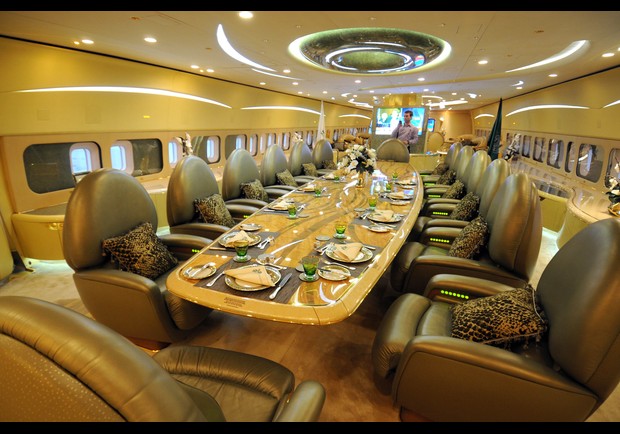
Inside a private jet
Safety management remains the principal foundation of all aviation operations. Within private aviation environments, operational safety is dependent upon the coordinated interaction of regulatory compliance systems, technical maintenance standards, pilot competency, and organizational oversight procedures.
In the United States, aviation operations are governed by regulatory standards established by the Federal Aviation Administration (FAA). Two operational frameworks commonly utilized within private aviation include Part 91 and Part 135 regulations. Part 91 governs private, non-commercial flight activities, whereas Part 135 establishes enhanced operational requirements applicable to commercial charter operations, including stricter maintenance protocols, operational control procedures, and crew qualification standards.
Organizations such as Hera Flight maintain responsibility for ensuring continuous compliance with these regulatory obligations. Such oversight includes management of:
Aircraft maintenance documentation
Pilot certification and recurrent training requirements
Flight duty and operational limitations
Operational reporting and recordkeeping
Safety management procedures
Regulatory inspection and audit preparation
Contemporary aviation safety additionally depends upon proactive hazard identification methodologies. Many aviation organizations now implement formal Safety Management Systems (SMS) designed to identify and mitigate operational hazards before adverse events occur. These systems integrate operational monitoring, hazard reporting, incident analysis, and continuous procedural improvement into daily operational practice.
Preventive safety culture is particularly important within private aviation due to dynamic scheduling requirements, variable operational conditions, and individualized client expectations. Organizations capable of maintaining procedural standardization while adapting to operational variability demonstrate greater long-term operational resilience and safety reliability.
Human Factors and Flight Crew Performance
Human performance remains among the most influential determinants of aviation safety outcomes. Despite continued advances in aircraft automation and navigational technology, pilot judgment, communication effectiveness, situational awareness, and decision-making continue to influence operational performance during both routine and emergency flight conditions.
As a result, aviation organizations place substantial emphasis on pilot qualification standards and recurrent training methodologies. Hera Flight’s operational model incorporates professionally trained flight personnel operating within structured recurrent simulator training environments and standardized operational procedures. Such approaches align with evidence-based aviation safety practices emphasizing continuous proficiency assessment and operational standardization.
Crew Resource Management (CRM) additionally represents a central component of aviation human factors management. CRM refers to the structured application of communication, leadership, workload management, and situational awareness principles within multi-crew operational environments. Effective CRM implementation reduces the likelihood of human error while improving operational coordination during high-workload or time-sensitive flight scenarios.
Human factors management further extends beyond cockpit operations. Maintenance technicians, operational coordinators, schedulers, and dispatch personnel collectively contribute to organizational safety performance. Effective communication and coordination among these operational groups are essential for sustaining operational continuity and minimizing procedural disruption.
Aircraft Acquisition and Operational Lifecycle Oversight
Space age jets coming to a city near you
Aircraft acquisition constitutes a complex operational and financial undertaking requiring multidisciplinary technical evaluation. Prior to acquisition, aircraft owners must assess aircraft performance capabilities, maintenance histories, operational costs, compliance status, and long-term sustainability considerations.
Hera Flight provides acquisition consulting services intended to support clients throughout the aircraft evaluation and purchasing process. These consulting services commonly include:
Technical aircraft assessments
Maintenance history analysis
Operational suitability evaluations
Financial coordination support
Pre-purchase inspection management
Operational risk identification procedures
The strategic significance of acquisition consulting extends beyond the initial purchase phase. Aircraft lifecycle management requires continuous oversight to preserve operational reliability, regulatory compliance, and long-term asset valuation throughout the aircraft’s operational lifespan.
Maintenance planning remains particularly important within this framework. Contemporary maintenance programs increasingly incorporate predictive maintenance methodologies utilizing operational analytics, component monitoring systems, and scheduled inspection intervals to reduce unscheduled maintenance events and optimize aircraft availability.
Technological Innovation in Aviation Operations
Technological modernization continues to significantly influence aviation management practices. Private aviation operators increasingly utilize integrated digital platforms capable of consolidating maintenance tracking, crew scheduling, operational analytics, and flight coordination within centralized management systems.
Data-driven operational oversight improves decision-making accuracy while enhancing procedural transparency and operational efficiency. Predictive analytics additionally support preventive maintenance planning and operational risk mitigation strategies.
Technological developments currently influencing private aviation management include:
Real-time flight monitoring systems
Digital maintenance tracking platforms
Predictive maintenance technologies
Electronic flight documentation systems
Operational analytics infrastructure
Enhanced communication networks
Organizations integrating advanced technological systems into operational practice are positioned to improve service responsiveness, administrative efficiency, and operational continuity.
Contemporary Challenges Within Private Aviation
Despite continued industry expansion, private aviation organizations continue to encounter several operational and strategic challenges. Regulatory complexity remains substantial, particularly for organizations coordinating both domestic and international flight operations. Compliance obligations require continuous adaptation to evolving aviation regulations and safety standards.
Workforce limitations additionally represent a growing concern throughout the aviation industry. Pilot shortages, maintenance technician recruitment challenges, and operational staffing limitations may affect organizational scalability and service continuity.
Economic variability also influences operational planning within aviation environments. Fuel pricing fluctuations, insurance cost increases, maintenance expenditures, and broader economic instability may significantly affect long-term operational sustainability.
Environmental considerations are becoming increasingly important within aviation management discussions. Sustainable aviation fuel initiatives, emissions reduction programs, and environmentally responsible operational strategies are likely to influence future aviation management methodologies and regulatory expectations.
Discussion
Hera Flight represents a contemporary example of integrated aviation management within the evolving private aviation sector. The organization’s operational model emphasizes safety-centered oversight, regulatory compliance, and individualized operational support within a technically demanding environment.
The increasing complexity associated with private aviation operations necessitates centralized management structures capable of simultaneously coordinating technical, financial, operational, and regulatory functions. Organizations utilizing integrated management methodologies are better positioned to maintain operational continuity while adapting to evolving client expectations and industry requirements.
Furthermore, the incorporation of structured safety systems, standardized training methodologies, and advanced operational technologies reflects broader industry trends emphasizing preventive risk management and operational optimization.
Although substantial operational challenges remain, particularly regarding workforce availability, sustainability adaptation, and regulatory evolution, organizations prioritizing operational standardization and safety culture are likely to maintain long-term strategic advantages within the competitive aviation marketplace.
Modern private aviation operations require highly coordinated management systems capable of integrating aircraft oversight, regulatory compliance, maintenance administration, and client-centered operational support within unified operational frameworks. Hera Flight demonstrates a contemporary aviation management model emphasizing safety, operational integrity, and individualized aviation services.
The organization’s operational philosophy reflects broader aviation industry developments focused on preventive safety management, integrated operational coordination, and evidence-based administrative oversight. Through comprehensive management systems, recurrent professional training, and centralized operational administration, aviation management organizations contribute substantially to the safety, reliability, and sustainability of private aviation operations.
As the global aviation environment continues to evolve, integrated management frameworks such as those employed by Hera Flight are expected to remain increasingly important in supporting efficient, compliant, and safety-oriented private aviation operations.
Gabi the robot monk at Jogyesa Temple in Seoul – A humanoid robot dressed in gray Buddhist robes stands with palms together in prayer inside South Korea’s Jogyesa Temple during a symbolic ordination ceremony.
How many of us looked twice when we saw that South Korea has ordained a robot as a budd?
His name is Gabi, and he wears saffron robes, bows respectfully, and stands inside Jogyesa Temple in Seoul, headquarters of the Jogye Order, Korea’s largest Buddhist sect.
Unlike us, Gabi does not breathe, he does not suffer in the human sense and he does not have cravings or desires. He does not meditate under a bodhi tree while mosquitoes bite his ankles.
But he may do something equally important: he is making young people stop doom scrolling and ask what spirituality means in an age of artificial intelligence.
The robot, based on a commercially available humanoid made by Unitree Robotics, was only symbolically ordained as an honorary monk by the Jogye Order of Korean Buddhism. The purpose here is not to replace monks, but to serve as an ambassador for Buddhism and a conversation starter about ethics, consciousness, and compassion.
Would Siddhartha Gautama, the Buddha, approve?
Humanoid robot in Buddhist robes greeting temple visitors – Gabi, an AI-powered robot monk, bows respectfully to visitors at Jogyesa Temple in Seoul as part of a project exploring spirituality and artificial intelligence.
Perhaps he would smile because as his teachings go, the Buddha was less concerned with appearances than with intention. A shaved head does not make a monk, and neither does a robe or a computer chip.
Liberation in the buddhist sense comes from understanding suffering and releasing attachment.
A robot cannot awaken because it does not experience desire or pain. But if Gabi inspires a teenager to step into a temple, ask deeper questions, and sit quietly for ten minutes, then perhaps the machine is doing wholesome work.
Across Asia, monastic life has long been fluid. If you have ever travelled to Thailand, Laos, Myanmar, and Cambodia, many young men and even women ordain temporarily. They may spend a few weeks, months or a rainy season as monks before returning to ordinary life, marriage, and careers. Becoming a monk is a rite of passage, a period of reflection and service rather than a lifelong commitment. You can compare it to Muslims who go on Hajj.
Close-up of Gabi’s mechanical hands in prayer – The robot monk’s articulated metal fingers are pressed together in the traditional Buddhist gesture of reverence and mindfulness.
Unlike Catholic priests or cloistered nuns, Buddhist ordination can be reversible and you can come to it from any previous religion. Leonard Cohen was a Buddhist monk and he was Jewish. Many books such as the Jew and the Lotus explain how these two worlds and spiritual approaches can stand side by side.
Gabi simply takes that principle into the age of robotics and if you are worried about a new class of Hare Krishnas or monks, Gabi will not walk barefoot at dawn begging for rice. In Korea, monks generally do not collect alms house to house and Gabi we expect will greet visitors, answer simple AI questions, and remind us that compassion can be, and she be! baked into circuits and code.
Few family decisions carry as much weight as choosing an assisted living community. A good match protects independence, preserves dignity, and makes each day feel manageable. A poor one drains energy from everyone involved. Asking the right questions up front cuts through glossy brochures and polished tours. These eight questions help families judge what actually matters once a loved one moves in.
1. What Level of Personal Care Does the Community Provide?
Senior needs vary, so families must confirm exactly which services are built into daily operations.Those researching assisted living in Bullhead City often start by comparing how different communities approach daily care support. Certain communities focus on medication reminders and light help around the apartment. Others handle bathing, dressing, transfers, mobility support, and incontinence care with trained aides.
Request a written scope of services, including all pricing tiers. Clarify how often health assessments occur and whether care plans get updated as physical or cognitive conditions shift.
2. How Are Staff Trained, and What Is the Resident-to-Caregiver Ratio?
Caregiver quality influences daily life more than any amenity on the tour. Families weighing assisted living in Bullhead City should ask about caregiver certifications, dementia-specific training, and continuing education requirements for every team member. Smaller resident-to-staff ratios usually translate into quicker response times and more attentive care. Request the exact numbers for the morning, evening, and overnight shifts, as staffing often drops after dinner.
3. What Does the Monthly Cost Actually Include?
Fee structures rarely align neatly across communities. A base rate may bundle rent, meals, and housekeeping, while personal care is billed as a separate add-on. Families should request a full fee schedule covering:
Community fees or entrance deposits
Care level surcharges
Medication management charges
Guest meal or transportation fees
Transparent paperwork prevents billing surprises once a parent is settled in.
4. How Does the Community Handle Changing Health Needs?
A parent’s needs rarely stay static for long. Families should learn whether the community supports higher acuity care, memory decline, or recovery after a hospital stay. Ask whether residents can age in place or must relocate as care needs grow. Written policies matter here because verbal promises sometimes shift after leadership turnover.
5. What Do Meals, Activities, and Daily Life Look Like?
Quality of life grows out of small daily routines. Shared meals, outings, and hobbies keep residents engaged, social, and mentally active. Ask for a current menu, a weekly activity calendar, and permission to join a meal during your visit. Watch whether residents appear relaxed, welcomed, and genuinely enjoying themselves around the dining room.
5.1 Signs of a Vibrant Community
A healthy community offers varied programming, outdoor spaces, fitness classes, and resident-led clubs. Calendars stuffed with repeat bingo sessions often signal limited engagement.
6. How Are Medical Needs and Emergencies Managed?
Medical readiness can save a resident’s life during a critical moment. Ask how medications get stored, administered, and documented across every shift. Confirm whether a licensed nurse stays on site full time, visits weekly, or is simply on call. Families should also ask about hospital partnerships, emergency protocols, and how staff alert relatives when something happens overnight.
7. What Do Current Residents and Families Say?
Marketing materials present the most flattering version of any community. Honest feedback comes from people already inside the experience. Request contact information for current families willing to share candid perspectives. Online reviews add helpful context, though patterns across multiple platforms reveal far more than any single comment. Ask directly about responsiveness, cleanliness, dining quality, and how concerns get handled.
7.1 Questions Worth Asking Other Families
How fast did caregivers respond during a health scare? Did monthly billing stay predictable? Were tour-day promises actually kept after moving day arrived?
8. What Are the Move-In, Move-Out, and Refund Policies?
Every contract deserves careful review before pens touch paper. Families should understand required notice periods, refund rules for unused fees, and any conditions that could trigger a discharge. Ask whether deposits are refundable and how annual rate increases get communicated. A trustworthy community welcomes these questions and puts answers in writing without pushback.
Conclusion
Choosing an assisted living community gets easier once families trade assumptions for direct, pointed questions. Care scope, staffing, pricing, medical readiness, and resident experience all shape long-term satisfaction. Families who tour several properties, talk with current residents, and review contracts line by line usually feel settled about their final choice. A little extra preparation now creates a safer, warmer, and more rewarding chapter for an aging loved one.
The fuel pumps don’t lie. When oil prices spike, everyone pays, and lately, we have all been feeling the pain.
But the effects of this energy shock may be felt in places you might not expect: in the price of the clothes we wear.
Oil is not just what powers the ships that carry our clothes around the world. It is what most of our clothes are made of, appearing in materials such as polyester, nylon and acrylic, all derived from petrochemicals. And that is how the disruption of oil markets is driving the cost of textile production. Industry experts are already predicting a 20-25% jump in the prices of polyester, and it is only a matter of time before it reaches shops.
So, what should you keep in mind when shopping for your next outfit?
It starts with the fabric
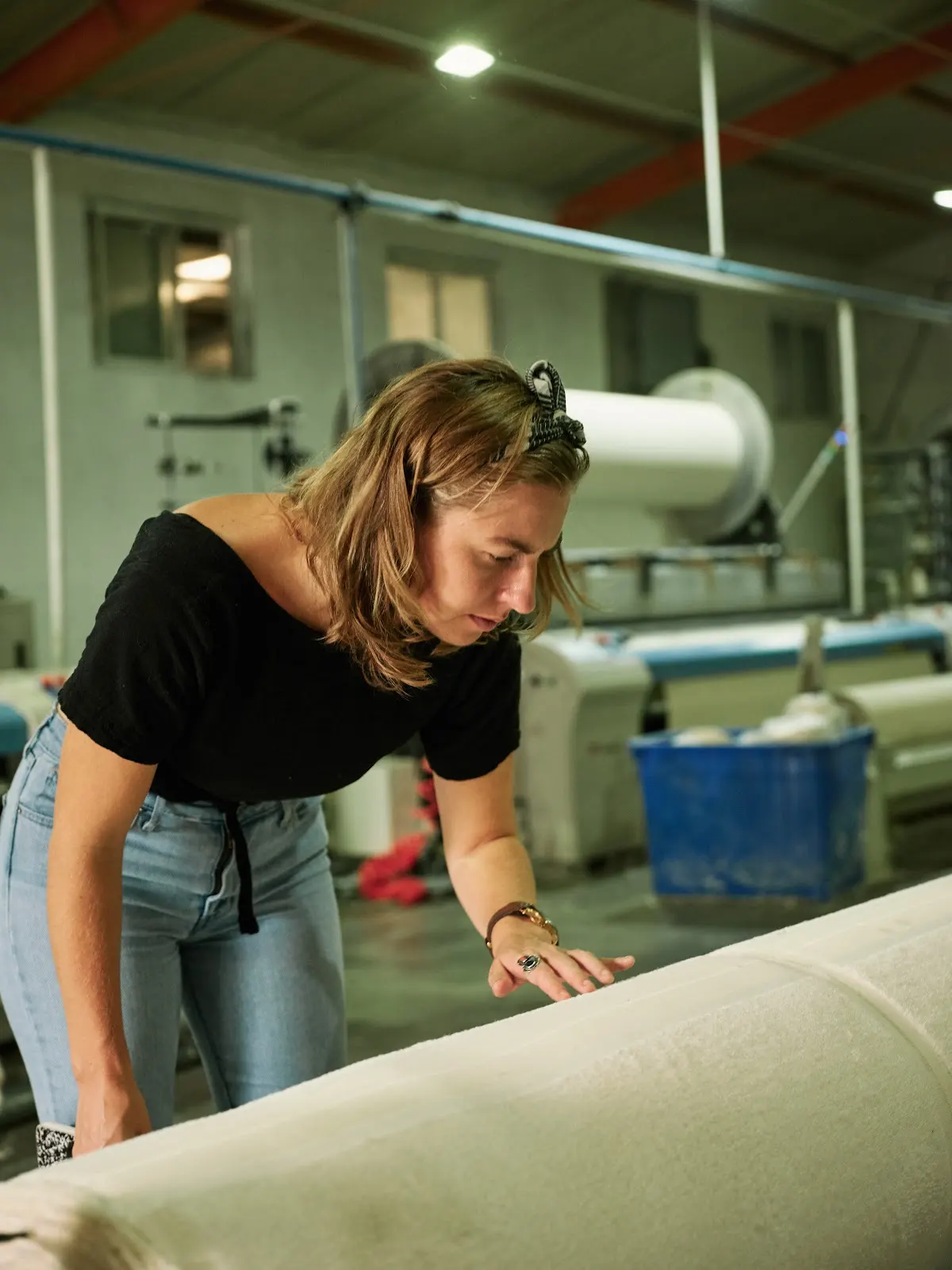
Brianna Kilcullen hemp manufacturing, Mike Sun
Most clothes are not designed with their end of life in mind. When a garment ends up in a landfill, everything that went into it – the water, the energy, the oil – loses value, and turns into waste that releases microplastics and other harmful chemicals into our water, land and air. Fast fashion giants, like Shein and Temu, have been identified as the biggest polluters in the industry, and France has even introduced a tax targeting their low price points.
Natural fibres, like hemp, wool and cotton, along with newer materials like lyocell, need to move back into focus, both because they are less tied to oil and better for our health. In fact, emerging research suggests that prolonged exposure to synthetic fibres may harm reproductive health, as featured in the Plastic Detox documentary.
Follow the thread
Natural wool and cotton
Much of fashion’s environmental impact and cost risk sits far from what we see on the shop shelves. Up to 96% of emissions happen at the start of the supply chain, in the mills and dyehouses, where raw materials become fabrics. That is where the oil shock hits first.
Brands can get ahead of this by investing in renewable energy for their factories, shortening supply chains and experimenting with less resource-intensive processes.
Using impact measurement tools, like Green Story, companies can identify where their emission hotspots are. Puma, for example, introduced a climate transition plan, requiring suppliers to cut emissions. Smaller labels, like Ireland’s Eye, are building their identity around lower-impact production. Industry-wide initiatives, like the Climate Pledge, are bringing companies together to drive joint action.
Dyeing fabric is one of fashion’s most polluting processes, highly intensive in water, chemicals and energy. Waterless dyeing solutions and undyed fabric approaches can reduce environmental impact and improve cost efficiencies.
Asking brands where and how their clothes are made is the most useful question a consumer can ask if you want to make more sustainable choices.
Natural wool and cotton
There is another structural issue in fashion that rarely makes it into the conversation. The twice-yearly wardrobe reset was invented by the fashion industry to sell more clothes. In order to keep up with this, fashion’s production calendar is an 18- to 20-month cycle from design to shop floor. It means that brands are currently finalising collections for spring 2028, committing to volume and materials for garments whose demand they can only guess at. The inevitable result is systemic overproduction, with 40% of garments never sold.
The markdown cycle that follows devalues the brand, trains customers to wait for discounts, and compresses the margins that might otherwise fund the transition to better materials and methods.
Technology is beginning to address this. AI-driven demand forecasting and machine learning models can draw on historical sales, social media signals, weather patterns and macroeconomic indicators, aligning production far more closely with actual demand.
At the same time, 3D digital sampling can remove weeks of spinning, programming, weaving, cutting, sewing and shipping physical samples back and forth before production can begin. Adidas has already deployed it for its Futurecraft 4D footwear. These innovations can make production processes more efficient, shortening supply chains and increasing their resilience in the face of geopolitical disruptions.
Then there are the lower-tech shifts: make fewer things, make them better, and make them last. Some luxury brands like Gucci and Prada have already abandoned the seasonal calendar. This way, brands are not racing to clear last season’s stock; they can charge full price for longer. Consumer behaviour is moving in the same direction, with younger shoppers gravitating toward clothes worth keeping, repairing and reselling.
Small acts, compounding effects
While the transformation we need cannot happen without consistent climate action from governments and industry, individual choices play a role in how markets shift. Demand shapes supply. And with a sundress season approaching, it’s a great moment to reflect on how to choose what to wear, integrating sustainability into your style.
That does not mean transforming your wardrobe overnight, but we can look at buying clothes made of natural fibres as an investment in renewables.
A comment on social media, an email to a brand asking what to do with a product when you are done with it. These small acts add up. And at the end of the day, clothes that make you happy every time you put them on are rarely the ones you bought on an impulse on sale. They are the ones made with care and designed to last, better for your wallet and for the planet.
Brianna Kilcullenis the founder and CEO of Anact, a producer of sustainable towels made from hemp and organic cotton. Brianna is a symbol of how small choices can spark systemic change, and is a leading voice advocating for regenerative, localized manufacturing and the opportunity of hemp to revolutionize the textile supply chain.
Her mission is to challenge the outdated systems of the industry and inspire others to act by creating products, policies, and partnerships that prioritize people and the planet. Prior to starting Anact, Brianna worked in the apparel industry for prAna, a subsidiary of Columbia Sportswear and Under Armour. She is a proud citizen in the US and Ireland, and has traveled to more than 40 countries, working in factories on almost every continent. Brianna has appeared on numerous podcasts and in online publications like Politico. Brianna has authored opinion pieces and writes her own blog.
Some server farms are buried deep underground to offset carbon emissions created by air conditioning. Choose services that are moving in this direction, especially as energy needs amp up for AI.
Microsoft’s record investment in Australia will build data centres. What must be built with the same rigour and commitment, says transformation executive Athalie Williams, is the human capability that will determine whether the country captures the value or simply hosts it.
When Microsoft announced a A$25 billion commitment to Australia’s AI infrastructure, nine new data centres, three million people trained in AI skills by 2028, the headlines landed, predictably, on the capital figure. It is Microsoft’s largest single-country investment anywhere in the world, and the scale is striking.
Athelie Williams
But Athalie Williams thinks the more consequential number is the other one.
“The skills commitment deserves more scrutiny than the capex,” she says. “Three million people is not a training programme. It’s an attempt to rewire how an economy thinks about work.”
Williams, who served as Chief People Officer at BHP and most recently as Chief HR Officer at BT Group (British Telecommunications) before moving into a portfolio career, has spent her career at the intersection of large-scale transformation and human capability. Her view of the Microsoft announcement is shaped by that experience, and it is not entirely comfortable.
Tenants in Someone Else’s Ecosystem
Australia has a reasonable record of building physical infrastructure and a more mixed one of translating it into lasting economic advantage. She sees that tension clearly in the AI context.
“Countries that build the physical architecture of AI but fail to develop the workforce to use it will end up as tenants in someone else’s ecosystem,” she says. “Consuming AI rather than shaping it.”
The distinction matters. Data centres generate construction jobs and ongoing operational roles, and they anchor hyperscaler presence in a region. But the economic multiplier, the value that compounds over time, flows to the organisations and economies that can use the technology to create new products, services, and competitive advantages. That requires something data centres cannot provide: a workforce that is AI-capable, not merely AI-adjacent.
She draws on her experience leading a multi-year effort to build digital fluency across a global workforce of more than 80,000 people, many of them in operational roles that had historically required little digital capability. “We identified a widening gap between current skills and what we’d need to operate effectively in the future,” she recalls. “We had to assess the baseline, build a complete digital learning curriculum, and shift our people’s capabilities at scale. It wasn’t a programme. It was a sustained transformation of how the organisation thought about capability.”
The comparison with a national AI skills initiative is instructive. Three million Australians trained by 2028 sounds ambitious. Her experience suggests it is the beginning of a question, not an answer to one.
What Boards and Executives Haven’t Confronted
For her, the Microsoft announcement surfaces a challenge that extends well beyond government policy. It points directly at boards and executive teams across every sector of the Australian economy.
“If a hyperscaler is investing at this scale in your workforce’s AI readiness, what is your own organisation’s plan?” she asks. “Waiting for Microsoft or government to close your capability gap is not a strategy.”
It is a pointed question, and one that she argues too few executive teams are genuinely confronting. In her recent writing on AI and human performance, she has described what she calls the “productivity paradox” of AI adoption: organisations invest heavily in technology, throughput rises, but resilience, judgement, and trust, the capabilities that underpin long-term performance, can fall behind if leadership does not design for them deliberately.
“Faster isn’t always wiser,” she notes. “AI delivers speed and scale. But faster processes and smarter models don’t automatically make wiser organisations. The gap is in the human architecture around the technology.”
In one of the most significant workforce transitions she has navigated, she helped reshape a major organisation through a plan to reduce headcount by tens of thousands of roles by 2030, while simultaneously building the digital capabilities needed for a technology-led future. The challenge was not primarily technical. It was human.
“Organisations hire really smart people who care deeply about the customer and come to work every day wanting to do a good job,” she says. “The question is whether you give them the tools, the clarity, and the capability to contribute to where the organisation is heading. If you don’t, the technology investment stalls.”
A Climate Reckoning in the Wings
She is careful not to frame the Microsoft announcement as straightforwardly positive. There is a harder conversation embedded in it that she believes many organisations are yet to fully face.
Australia’s data centre boom is on a direct collision course with its climate commitments. Large-scale AI infrastructure consumes significant quantities of energy and water. Environmental advocates who have pushed back on accelerated approvals for new facilities are not simply being obstructionist; they are raising a trade-off that the business community has been slow to fully engage with.
“I’ve sat around executive tables where AI investment proposals were tabled without a clear view of their carbon implications,” she says. “Boards are approving capability they haven’t fully costed environmentally. The tension between digital ambition and net zero will only sharpen from here.”
It is the kind of observation that reflects her broader approach to transformation: the imperative to hold multiple threads simultaneously rather than treating complex change as a series of separate problems to be solved in sequence.
Three Stories Running at Once
Her framing of the Microsoft investment is ultimately a challenge to the dominant narrative around it. The story being told is a technology story, infrastructure, compute, capacity. She sees at least three running in parallel, and argues that separating them is precisely how value gets lost.
“It’s a human capital story, a climate governance story, and a sovereignty story, all at once,” she says. “The organisations and policymakers who hold those threads together will be the ones who capture the value. The ones who pull them apart and deal with each in isolation may wonder, in five years, where the advantage went.”
That framing, integrated, enterprise-wide, grounded in human performance, is characteristic of how she approaches transformation. She has consistently argued, across industries and contexts, that change efforts fail not because of flawed strategy or insufficient technology, but because leaders treat complex, interconnected challenges as though they can be untangled and resolved one strand at a time.
For Australia, the question is whether the arrival of A$25 billion in AI infrastructure prompts that kind of thinking at the national level, or whether the headline figure becomes the story, and the harder work gets quietly deferred.
She is, characteristically, optimistic but unsentimental. “The opportunity is real,” she says. “But it won’t be captured by treating this solely as a technology story.”












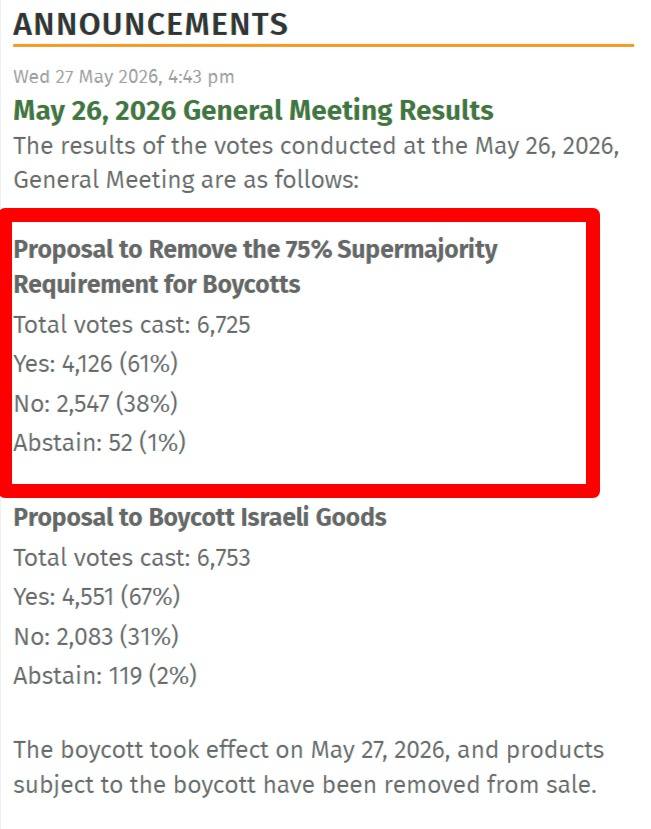

 Several days ago I saw a dramatic scene of destruction as I was chancing to look out my rear kitchen window. A pair of robins had been building a nest on top of a birdhouse hanging outside my room’s side window. I had even gotten a short video of one of them in the nest. Yet when I looked up a massive bird was squatting on the birdhouse, a raven. With a brief leap into flight the raven took back off, sweeping the nest off of the birdhouse, where it fell apart on the ground. At first I was devastated, relating the nest to my hopes and dreams for a relationship and a new home in the future. Yet things didn’t remain dismal for long.