
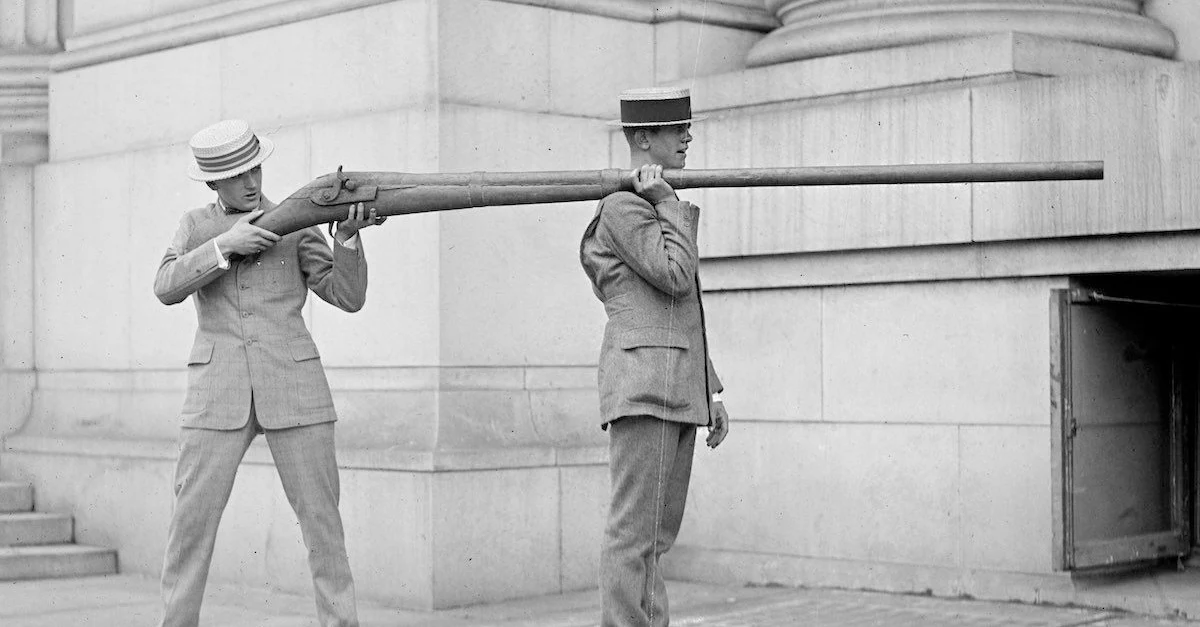
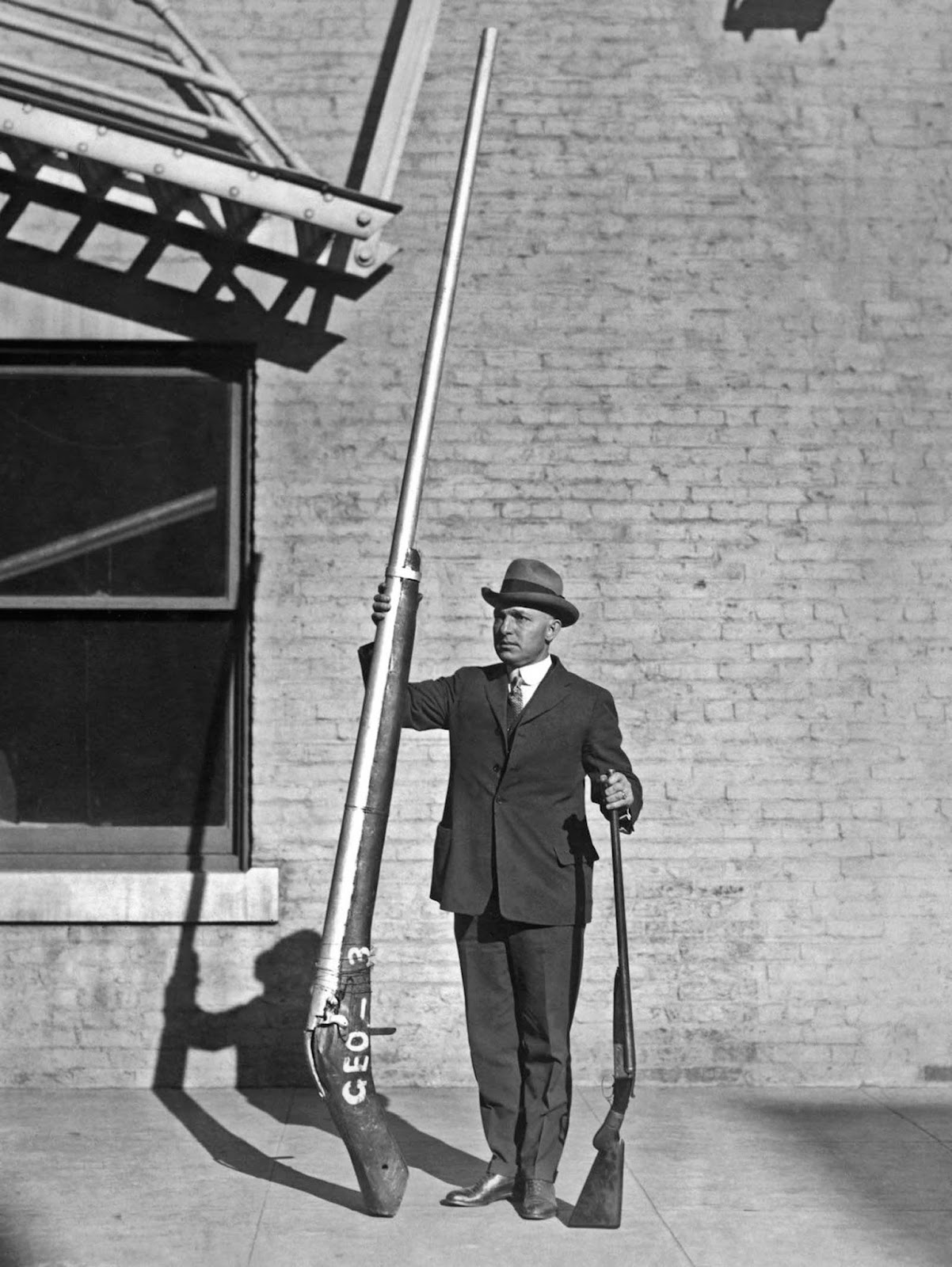
First time I saw a 2 gauge gun in person was at a Pennsylvania gun show, leaning against a velvet-lined display case. The dealer was using it as a conversation piece. He had a hand-lettered sign taped to the table: “yes, it’s real. no, you cannot fire it.” The thing was longer than the table. The bore was wide enough to swallow a roll of quarters. The buttstock looked like someone had pried it off a Civil War cannon and not bothered to refinish it.
I stood there for probably ten minutes. The dealer eventually wandered over and started telling me about Chesapeake market hunters, and I went home and fell down a rabbit hole I have not entirely climbed out of.
What a 2 gauge gun actually is
Shotgun gauge runs backwards, which trips people up. Smaller number, bigger bore. A 12 gauge measures about .729 inches across the bore. A 10 gauge is around .775. An 8 gauge, common for waterfowl in the late 1800s, sits at roughly .835.
A 2 gauge bore measures about 1.326 inches. Bigger than a golf ball. The system is old British: the gauge number equals the count of round lead balls of bore diameter you need to make a pound. So a 2 gauge ball weighs half a pound. A 1 gauge, which also existed, fired a one pound projectile, at which point you have basically built a small cannon and the federal government starts asking questions.
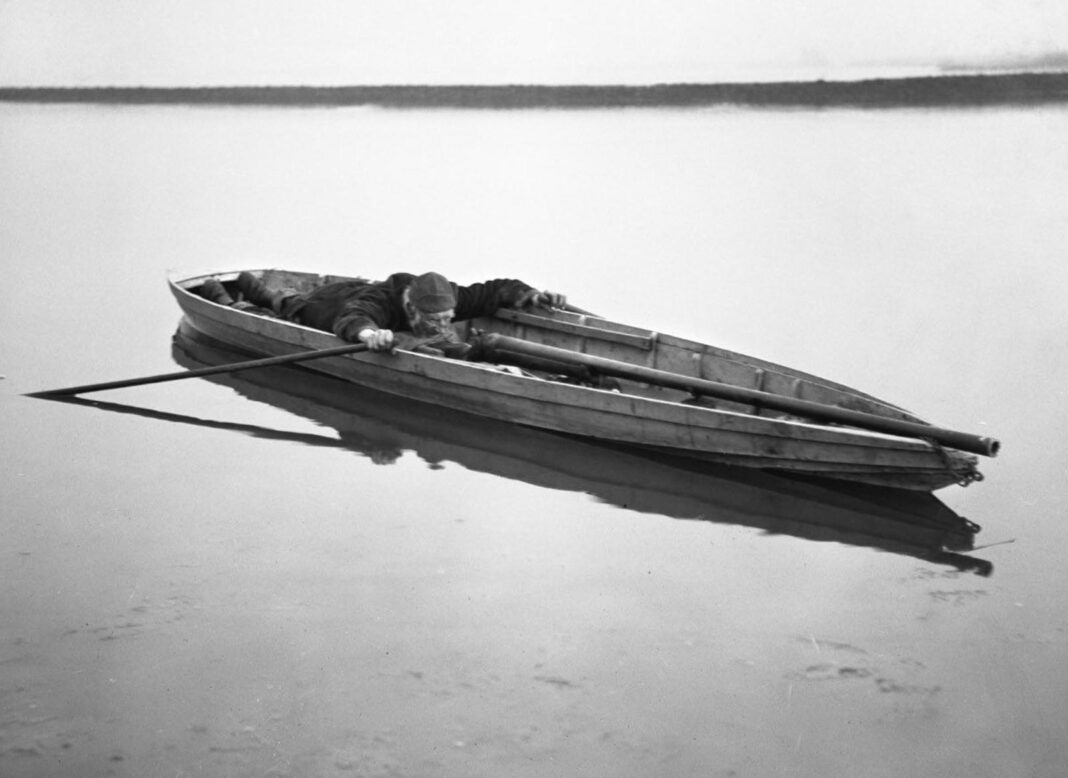
Most 2 gauge guns weighed between 60 and 150 pounds, with barrels that ran four to ten feet long. Nobody fired these from the shoulder. The recoil from two or three ounces of black powder pushing a pound of shot would have broken a person’s collarbone. They were mounted on small flat-bottomed boats called punts, which is where “punt gun” comes from. The shooter lay flat in the boat, aimed the entire vessel, and fired into a raft of resting ducks at dawn.
One well-loaded shot could kill fifty to a hundred birds at once. Market hunters supplying restaurants in Baltimore, Philadelphia, and New York filled barrels in a morning. By the 1860s the Chesapeake had a whole guild of punt gunners working the coves before sunrise.
The makers and the era
There was no Winchester catalog page for a 2 gauge gun. These were hand-built, mostly in England by Greener and Holland and Holland, and in smaller numbers by American smiths working in port towns along the East Coast. Greener’s 1881 book The Gun and Its Development discusses bore sizes up through 4 gauge as practical waterfowling pieces, and treats anything larger as specialty work, which is a polite way of saying somebody paid extra to be eccentric.
This is also when American sporting goods houses started selling serious firearms to the leisure class. The Abercrombie and Fitch guns of the late nineteenth and early twentieth century are a good example. Before it was a mall brand, Abercrombie was an outfitter for African safaris and Adirondack hunting camps, and it sold double rifles and large-bore shotguns to people who could actually afford to use them. Some of those guns turn up at auction now and routinely clear five figures. A few were chambered for cartridges no commercial ammunition maker has produced in eighty years.
No major modern manufacturer ever made a 2 gauge gun in any volume. You will see internet rumors about an alpha guns prototype or an ab prototype llc piece in the 4 or 8 gauge range, but those are almost always 10 or 8 gauge guns being miscatalogued by people who do not know what they are looking at. Ale firearms, Excalibur guns, and the various small American shops working today stick to standard sporting calibers. The 2 gauge is a historical curiosity.
If you want to see what people actually buy now for waterfowl, big bore hunting, or competition, you can Shop Firearms across the full range of legal gauges, and you will notice 10 gauge is the ceiling. The reason for that ceiling has a date attached to it.
Why the 2 gauge gun got killed off
The Migratory Bird Treaty Act of 1918. The treaty itself was signed with Canada in 1916, and the U.S. implementing legislation followed two years later. It banned market hunting of migratory waterfowl and outlawed guns larger than 10 gauge for taking migratory birds. That single sentence ended the punt gun era in North America. Grandfathered guns kept floating around, and some poaching continued into the 1930s, but the commercial reason to own one was gone.
Related: hunting in the Middle East is a sport and a crime
Britain held on longer. Punt gunning stayed legal in parts of England under licensing into the late twentieth century, and a handful of practitioners still own and occasionally fire registered guns under heavy restriction. The British Association for Shooting and Conservation lists fewer than fifty active punt gunners. It is a dying practice kept alive more out of historical preservation than utility.
The ecological argument was straightforward, and honestly it was overdue. Duck populations on the Atlantic flyway had collapsed by the early 1900s. Canvasbacks, the premium market bird, were down to a fraction of their pre-Civil War numbers. You cannot pull a hundred birds out of a flock with one trigger pull, do that every dawn for forty years across an entire coast, and expect the population to hold. The treaty worked. Duck numbers recovered through the middle of the twentieth century, though they have wobbled since.
There is also the unromantic fact that a 2 gauge gun is a miserable thing to own. It cannot be fired from the shoulder. It requires a specialized boat. It uses ammunition no one manufactures, so the owner has to hand-load every shell from raw components. The bore is too large for any standard wad or hull. And it is loud in a way that genuinely damages hearing, even with modern protection.
What survives, and where to see one
The Smithsonian has at least one punt gun in its collections, though it rotates in and out of display, so call ahead if you are making a trip. The Ward Museum of Wildfowl Art in Salisbury, Maryland has several, which makes sense given that the Chesapeake was the American capital of the practice. The Havre de Grace Decoy Museum, also in Maryland, displays gunning equipment from the market hunting period and is worth the trip if you are anywhere near the upper bay.
In England, the Holland and Holland archives include records of large bore commissions going back to the 1850s. Several British country houses have wall-mounted examples used by previous generations of the family, which I find slightly unsettling as decor, but to each their own. Bonhams and Holts have both auctioned working punt guns in the last decade. Prices run from about eight thousand pounds for a rough piece up to north of forty thousand for a documented gun by a known maker.
What you almost never see is one being fired. Legal restrictions, ammunition scarcity, and physical danger mean that even collectors who own functional examples tend to keep them as static pieces. There are a few YouTube videos of British punt gunners firing modern-built replicas, and they are worth watching once just to understand the scale of the muzzle flash. It looks like something off a small warship.
I doubt anyone will ever build a new 2 gauge for serious use. The treaty is not getting rolled back, the ducks would not survive it if it were, and nobody wants to hand-load a half-pound shot charge every time they go out. But if you find yourself at a Maryland decoy museum, or in front of a glass case at a regional gun show, take a minute with it. There is nothing else quite like standing next to a working firearm that weighs more than you do.