
Baby fruit pouches ejecting microplastics into every serving

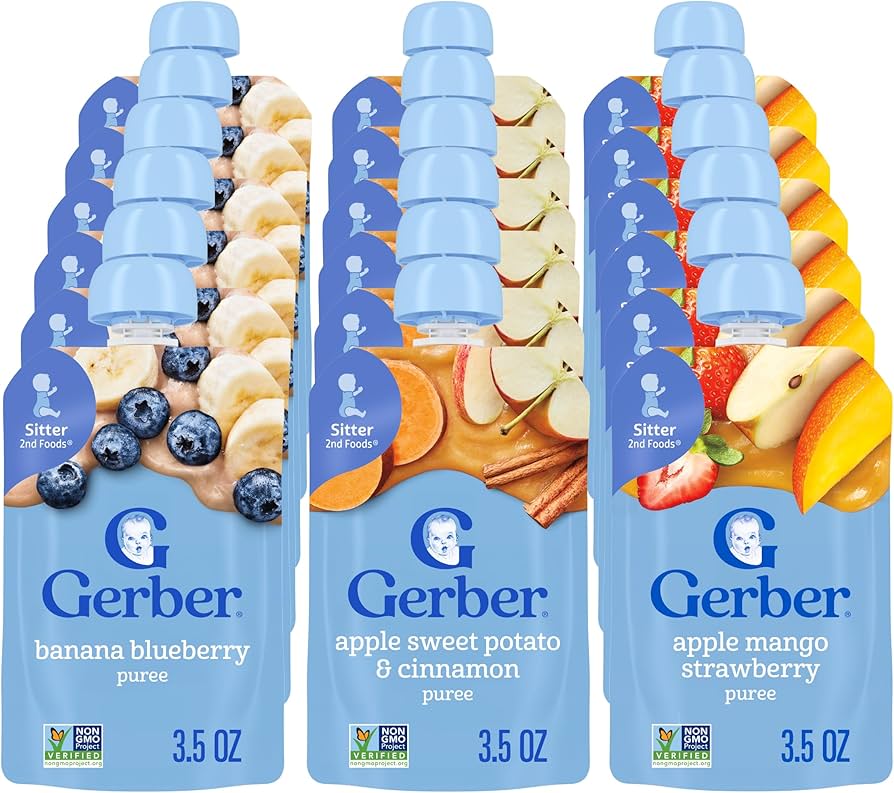
Gerber plastic pouches are full of microplastics
Gerber plastic pouches are full of microplastics finds new Greenpeace study

For generations, feeding a baby meant pureeing what you had at dinner, or if you were in a pinch opening a jar of Gerber, a small glass jar and scooping out mashed pears or applesauce with a spoon.

Today, many babies around the world skip the spoon entirely and suck pureed food directly from plastic pouches marketed as convenient, organic, and safe. These pouches are sold at organic stores, and Trader Joe’s as healthy options and they are put in McDonald’s Happy Meals so parents don’t feel guilty about junk food.

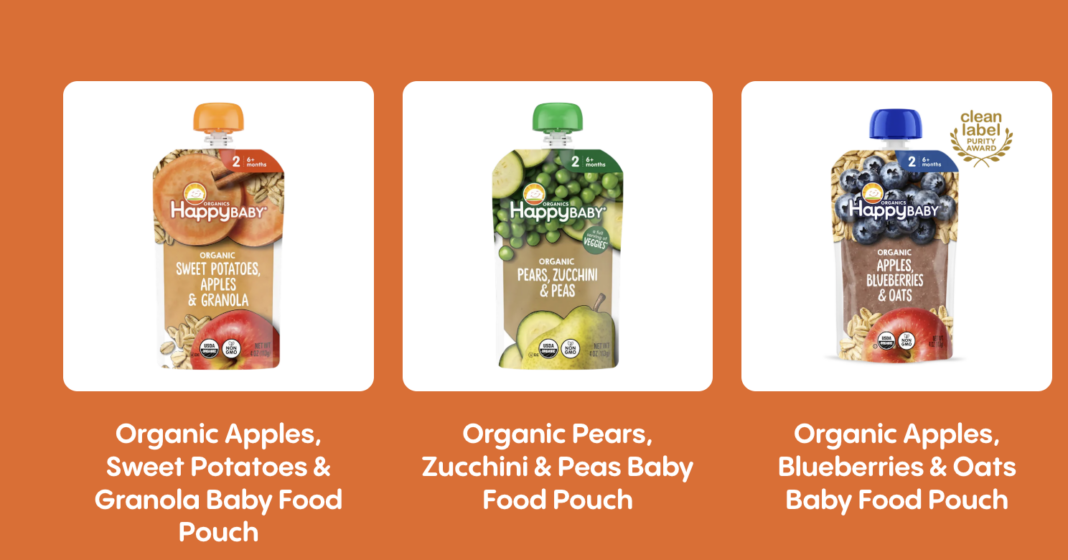
But a disturbing new report that Greenpeace sent to Green Prophet suggests that what babies may also be swallowing is plastic. A Greenpeace International investigation commissioned in 2025 found microplastics in every baby food pouch tested, including products from Gerber and Happy Baby Organics. Researchers estimate that a single Gerber pouch may contain more than 5,000 microplastic particles, while a Happy Baby Organics pouch may contain over 11,000. You can download the report here.

This is among the first studies to examine the food itself, not just the packaging.

Babies and microplastics
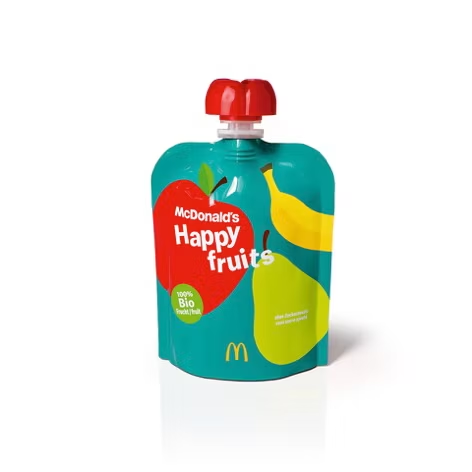
McDonald's sells fruit puree in pouches in Happy Meals
McDonald’s sells fruit puree in pouches in Happy Meals

Microplastics are now everywhere. Green Prophet has reported on them in the air we breathe, the food we eat, and even in orthodontic products such as Invisalign. Scientists have detected microplastics in human blood, placentas, lungs, and breast milk.
Now they are showing up in baby food.

Babies are uniquely vulnerable. Their brains, immune systems, and hormones are still developing. According to Dr. Leo Trasande of NYU, early exposure to plastic chemicals is associated with obesity, reproductive disorders, and neurodevelopmental problems that can last a lifetime. ADHD, depression in kids? Maybe this is microplastics.

The Greenpeace report also identified plastic-associated chemicals, including 2,4-di-tert-butylphenol, a compound linked to endocrine disruption.

From glass jars to squeeze-and-suck
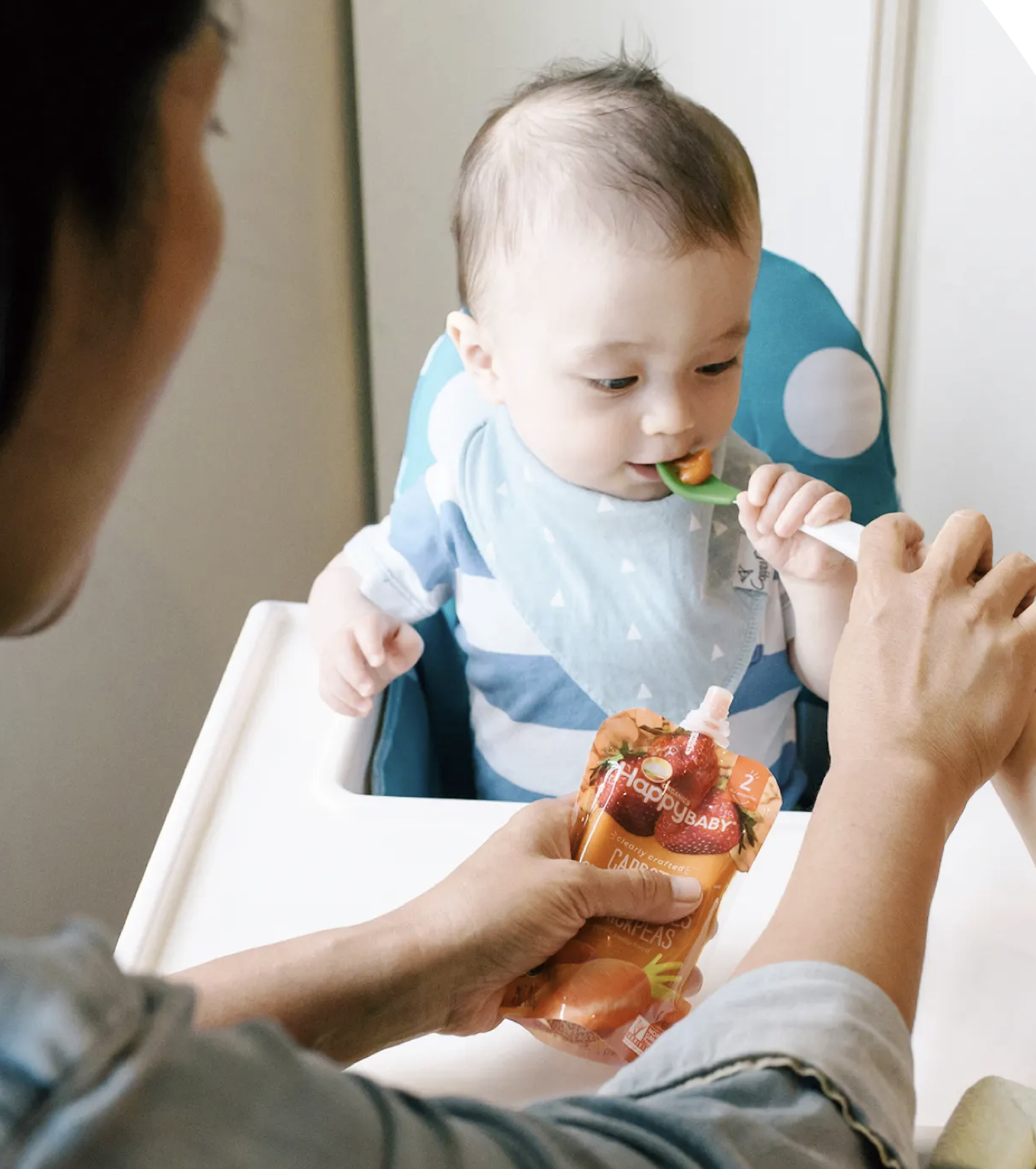
Happy Baby Organics
Happy Baby Organics found to emit microplastics into baby food

Plastic pouches have exploded in popularity. Sales in the United States rose roughly 900% between 2010 and 2023, and pouches now dominate baby food shelves worldwide.
Parents were sold a vision of convenience: organic fruits and vegetables in BPA-free packaging.But “BPA-free” does not mean chemical-free.

And feeding directly from a pouch may create other problems. Health professionals warn that sucking purees can contribute to tooth decay, dental alignment issues, overeating, and delays in oral and sensory development.

The healthiest option may be the oldest one: Buy local, fresh, organic apples. Steam them. Mash them into applesauce. Store them in glass jars. Feed your baby with a spoon.
It is slower, yes. But childhood was never meant to be optimized for adults in a hurry.

Using a spoon teaches patience. There is texture, eye contact, conversation. Not sucking from a pouch while watching YouTube. And unlike plastic pouches, it doesn’t add thousands of invisible particles to lunch.

Until manufacturers prove these products are safe, parents may want to return to what worked for generations before us: real food, in real containers, prepared with love.

“For nearly a century, Gerber has been one of the most trusted names in feeding American babies. That trust has been shattered. They’re serving babies microplastics with every pouch. Gerber promises ‘anything for baby.’ We’re asking for one simple  thing: stop serving microplastics for lunch,” says Lindsey Jurca, Senior Plastics Campaigner at Greenpeace USA.

Greenpeace is filing a report on studies that have taken place earlier. In 2023 Kuzi Hussein from the University of Nebraska─Lincoln, Lincoln, Nebraska and colleagues looked at microplastics in the home, in food pouches and all kinds of plastic containers.

They looked at the release of microplastics and nanoplastics from plastic containers and reusable food pouches under different usage scenarios, using DI water and 3% acetic acid as food simulants for aqueous foods and acidic foods.

The results indicated that microwave heating caused the highest release of microplastics and nanoplastics into food compared to other usage scenarios, such as refrigeration or room-temperature storage.

It was found that some containers could release as many as 4.22 million microplastic and 2.11 billion nanoplastic particles from only one square centimeter of plastic area within 3 min of microwave heating. Refrigeration and room-temperature storage for over six months can also release millions to billions of microplastics and nanoplastics. Additionally, the polyethylene-based food pouch released more particles than polypropylene-based plastic containers.

Exposure modeling results suggested that the highest estimated daily intake was 20.3 ng/kg·day for infants drinking microwaved water and 22.1 ng/kg·day for toddlers consuming microwaved dairy products from polypropylene containers.


Karin Kloosterman
Karin Kloostermanhttp://www.greenprophet.com
Karin Kloosterman is an award-winning journalist, innovation strategist, and founder of Green Prophet, one of the Middle East’s pioneering sustainability platforms. She has ranked in the Top 10 of Verizon innovation competitions, participated in NASA-linked challenges, and spoken worldwide on climate, food security, and future resilience. With an IoT technology patent, features in Canada’s National Post, and leadership inside teams building next-generation agricultural and planetary systems — including Mars-farming concepts — Karin operates at the intersection of storytelling, science, and systems change. She doesn’t report on the future – she helps design it. Reach out directly to [email protected]

Read More

TRENDING

Baby teeth read like tree rings paint a picture of toxins in early life

A new study from the Icahn School of Medicine at Mount Sinai in New York offers a striking insight into how the environments we are born into can quietly shape our brains years later. By analyzing naturally shed baby teeth, the ones tucked under pillows for the tooth fairy, researchers have reconstructed a detailed timeline of exposure to environmental metals during pregnancy and early infancy.

Lululemon pants leech PFAS and plastics into bodies, Texas attorney general claims

Back in late 2025, Green Prophet began asking uncomfortable questions about what’s really inside your yoga pants, from transparency failures (yes, those infamous see-through leggings) to the less visible and scarier issue: Your sweat is unlocking microplastics and chemical coatings sitting in the most absorbent parts of the human body.

Is artificial turf bad for your health?

Artificial turf, the green plastic stuff that is supposed to look like grass, was sold to many home-owners as a clever compromise: a green-looking surface that makes you feel homey, but which needs no mowing. It survives heavy use, and in dry places like Middle East deserts, and in California or Texas, it can replace thirsty lawns. But it is toxic.

How plastics can increase food poisoning

Banerjee’s research team is among the first to examine the interactions between foodborne pathogens and plastic particles, thereby advancing this emerging field from a food safety perspective.

erthos uses AI to scale bio-plastics that work in industry

AI and bio-plastics have a formidable crew looking to solve the plastics problem. It uses AI to match opportunities to existing machinery.

How to quiet noise from construction in your office

Streets need to be resurfaced in New York but the humming and grinding noise is unsettling. Noise is environmental pollution. 

EarthX and a blueprint for sustainable investing

Trammell S. Crow, a Dallas-based businessman and father of four, is focusing his efforts on impact investing, and media that focuses on saving the planet through EarthX.

Mining Afghanistan’s Mineral Discoveries Similar to Avatar

Now that American forces in Afghanistan are commemorating the longest period of any war that America has been involved in, including the 1965-73 Vietnam War, the recent discoveries of large and extremely valuable mineral and metal deposits may finally bring to light a reason to continue the presence of US fighting forces in this war torn and backward country.

From Pilot Plant to Global Stage: How Aduro Clean Technologies’ 2026 Expansion Signals a Turning Point for Chemical Recycling Investors Like Yazan Al Homsi

The company's Next Generation Process (NGP) Pilot Plant in London, Ontario, has officially moved into initial operating campaigns, generating the kind of structured, repeatable data that separates laboratory promise from commercial viability.

Nobul’s Regan McGee on Shareholder Value: “Complacency Is the Silent Killer” 

Why the governance framework designed to protect shareholders so...

Should You Invest in the Private Market?

startustartup Unlike public stock exchanges, which offer daily trading, strict...

How to build a 100-year-company

Kongō Gumi is a Japanese construction company, purportedly founded in 578 A.D., making it the world's oldest documented company. What can we learn about building sustainable businesses from them?

How AI Helps SaaS Companies Reduce Repetitive Customer Support Work

SaaS products are designed for large numbers of users with different levels of experience, and also in renewable energy.

Popular Categories