

Microplastics aren’t just polluting the sea. They are polluting us.
Plastics from dollar store products, packaging for our every day lives and industry have been a problem for decades, and the more scientists learn about plastic pollution the more serious the problems are shown to be for the environment and the health of all living things.
Today there are about 380 million tons of plastic produced each year, a similar weight to all the people on earth. At the same time, it is estimated that only 60% of that production gets landfilled, burned, or recycled. The rest of the plastic production ends up somewhere in the environment. Like in our bodies.
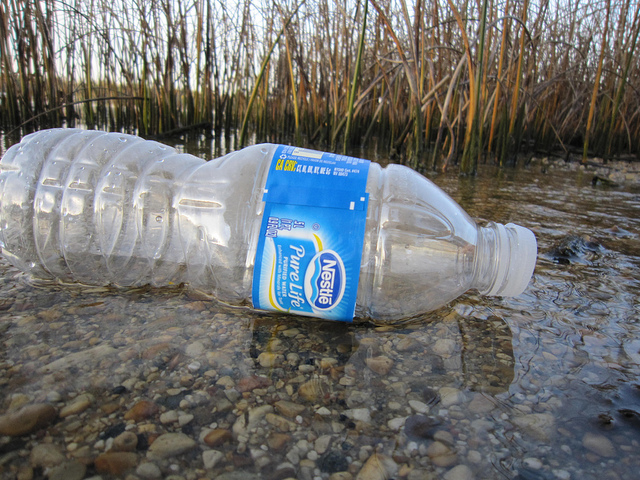
Consider that one study found that bottled water contained an average of 10,000 microplastic particles per liter. The researchers concluded that the source for the microplastic particles was composed of PP and PET, which are major ingredients of bottle caps. The problem of microplastics in bottled waters is widespread geographically.
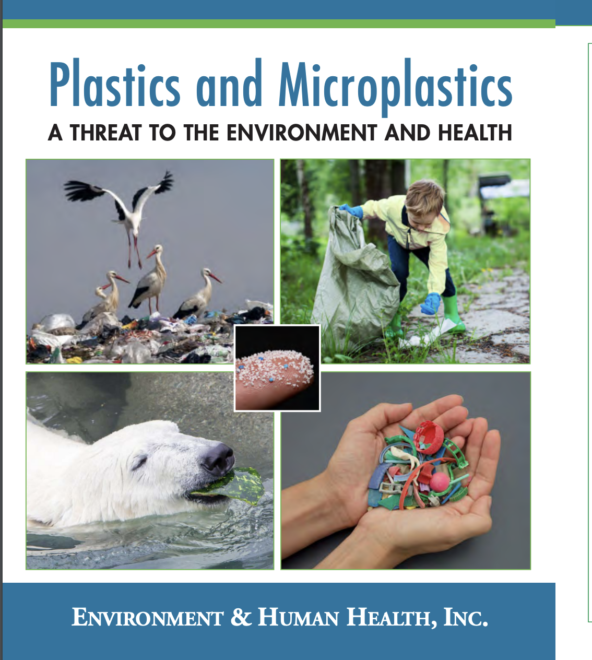
Environment and Human Health, Inc. (EHHI), a non-profit organization of physicians and public health professionals, is releasing its newly published research report on the dangers of plastics and microplastics to the environment and to health. Green Prophet offers you the link the report here. Links to PDF.
The report calls for sweeping policy initiatives that need to be enacted by international, federal, state, and city governments, as well as calling on corporations to institute new policies that will better protect the public from harmful plastic and microplastic exposures. Some consider the surge in Covid due to microplastic exposure.
Plastic formulations include numerous additives, often toxic substances, that are incorporated to give the plastic products their desired characteristics. In addition, plastics can absorb an endless number of chemicals and harbor microbes, both of which can be harmful to plants, wildlife, and humans. They are in cosmetics, shampoo and microplastics get ejected from our clothing in the washing machine.
Forget about BPA. That’s the smaller problem.
Large plastic items – like bottles, food packaging and bags – break down into microplastics, that are tiny bits of plastic smaller than a grain of rice, and sometimes even much smaller than that.
There is probably no other contaminant as abundant as microplastics or one so widely distributed in the global environment. Because of their small size they are found in fruits, vegetables, in water, in beer and even our salt. That’s why many people buy pink salt from the Himalayas to avoid ingesting more plastic.

How this affects health varies with the size. We know that fish eat microplastics and big fish and large birds eat large pieces of plastic. Whales have been found to die from eating too many plastic bags. Plastic fish netting entangles marine life, often killing turtles, seals, and other large marine animals.
Gaboury Benoit, Ph.D., Professor of Environmental Chemistry, Yale University, Member of EHHI, and author of the report, explained, “Almost 500 scientific studies were reviewed in the writing of this report, and they show that each of us ingests and inhales millions of microscopic plastic particles each year.
Microplastics carry chemical additives and coatings as well as potentially pathogenic microbes. Disturbingly, their impact on human health is not yet known.”
Plastics in your fetus
Hugh Taylor, M.D. Chair of Yale’s Department of Obstetrics and Gynecology and member of EHHI said, “Exposures to microplastics is perhaps most concerning during pregnancy. Microplastics are found in the placenta and can cross the placenta. The developing fetus is particularly vulnerable to toxic exposures. Pregnant women should avoid plastics as much as possible and our legislators should prioritize protecting them.”
“Dr. Taylor’s observations concerning microplastics, made from the vantage point of the Chair of Yale’s Department of Obstetrics and Gynecology, are extremely important, given the long term and multigenerational actions of some of these chemicals, and the fact that microplastics are extensively distributed through food and water which creates a threat to future generations,” said David Brown, Sc.D., toxicologist and member of EHHI.
In laboratories researchers working with microplastics have found that they cause irritation and inflammation of the digestive tract. Microplastics also trigger toxic responses in human cells and model organisms. The possibility that these findings translate into animal and human health effects are yet to be fully researched and determined.
People routinely ingest microplastics when eating food and drinking beverages. They inhale microplastics by breathing indoor and outdoor air.
Because almost all microplastics come from the breakdown of larger plastic items, it is impossible to control the amount of microplastics without reducing or stopping the production of plastic. A single plastic water bottle can break down into many trillions of microplastic particles.
“We need to stop plastic production at its source. This will take international agreements between nations, regulations in the United States at all levels of governments, and include the cooperation of industry and the efforts of individual citizens,” said Nancy Alderman, President of Environment and Human Health, Inc.
A solution? Go plastic free if you can. Lobby. Support research for plastic alternatives. Buy products that last. Avoid Dollar Store throwaways. Buy clothes made to last, made from natural fibers.
Read the report so you can be armed with facts, and not just opinions.