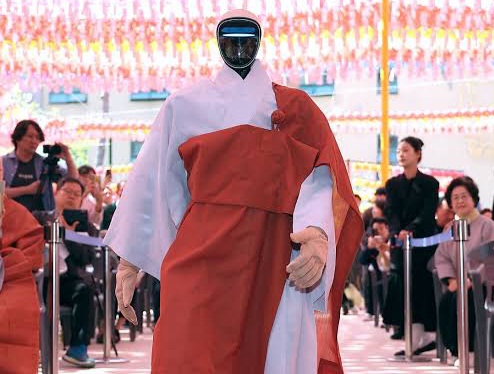

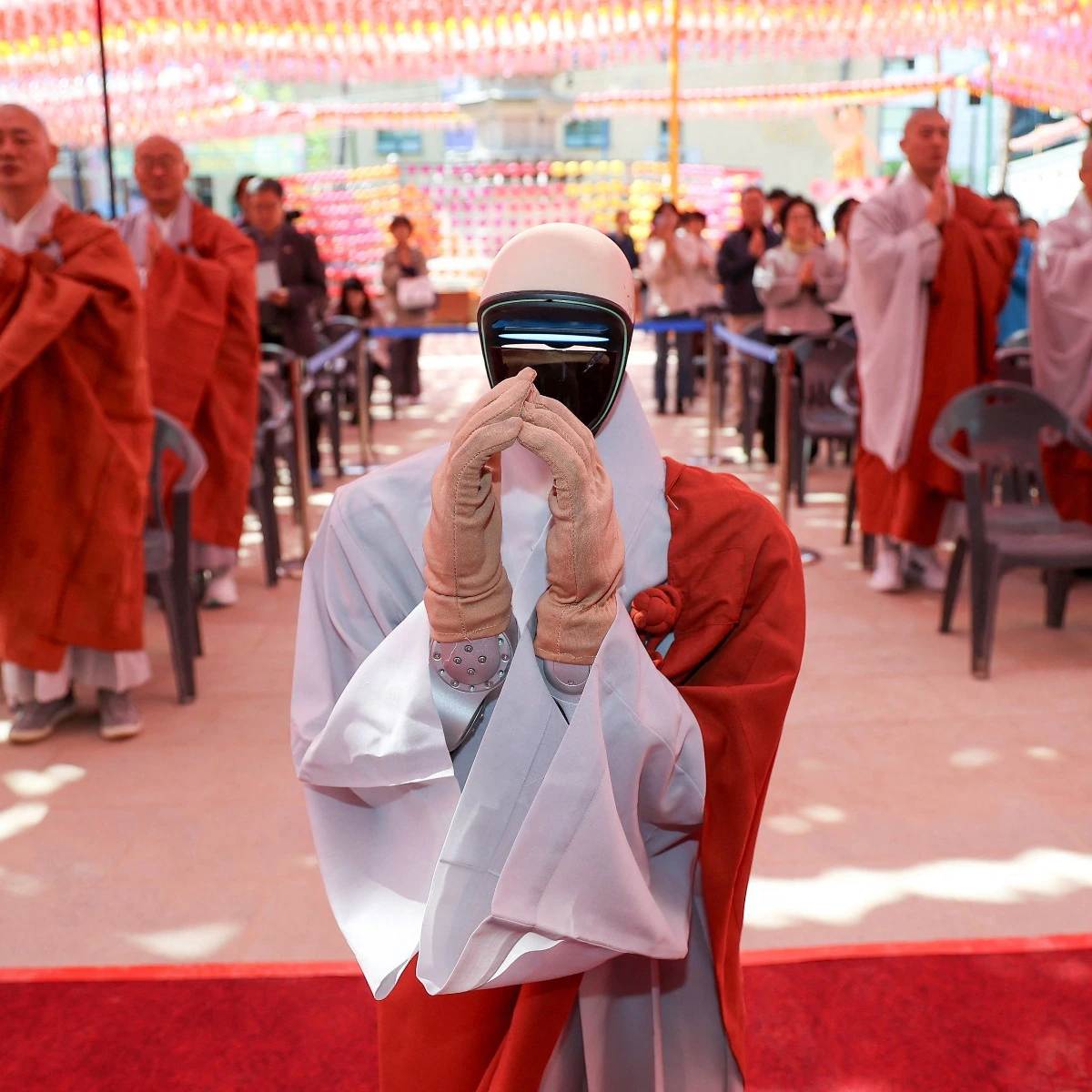
How many of us looked twice when we saw that South Korea has ordained a robot as a budd?
His name is Gabi, and he wears saffron robes, bows respectfully, and stands inside Jogyesa Temple in Seoul, headquarters of the Jogye Order, Korea’s largest Buddhist sect.
Unlike us, Gabi does not breathe, he does not suffer in the human sense and he does not have cravings or desires. He does not meditate under a bodhi tree while mosquitoes bite his ankles.
But he may do something equally important: he is making young people stop doom scrolling and ask what spirituality means in an age of artificial intelligence.
The robot, based on a commercially available humanoid made by Unitree Robotics, was only symbolically ordained as an honorary monk by the Jogye Order of Korean Buddhism. The purpose here is not to replace monks, but to serve as an ambassador for Buddhism and a conversation starter about ethics, consciousness, and compassion.
Would Siddhartha Gautama, the Buddha, approve?
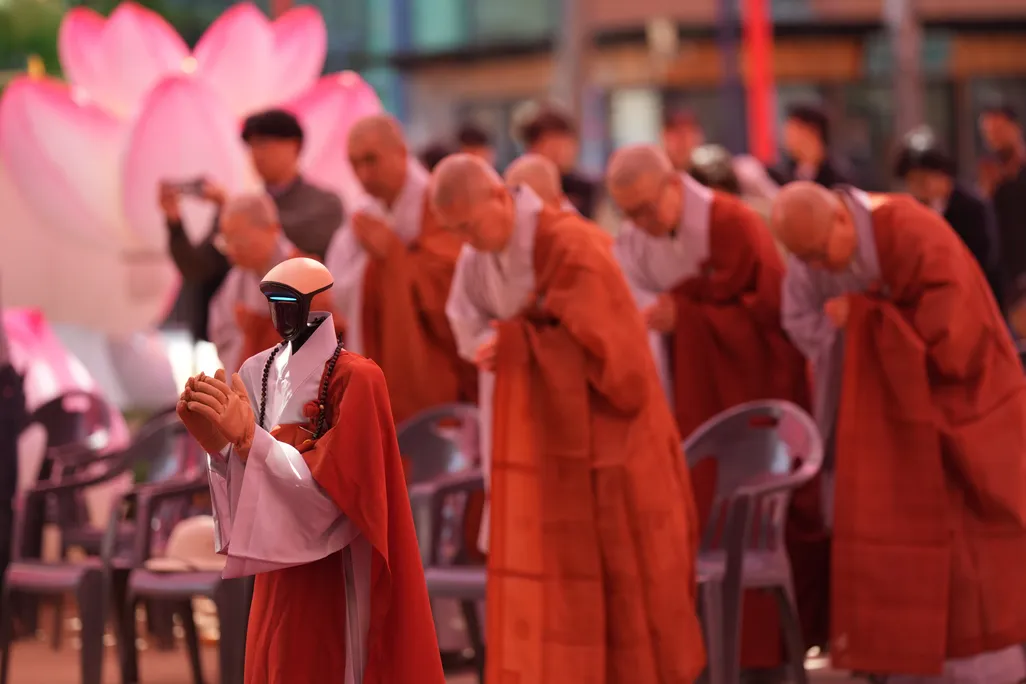
Perhaps he would smile because as his teachings go, the Buddha was less concerned with appearances than with intention. A shaved head does not make a monk, and neither does a robe or a computer chip.
Liberation in the buddhist sense comes from understanding suffering and releasing attachment.
A robot cannot awaken because it does not experience desire or pain. But if Gabi inspires a teenager to step into a temple, ask deeper questions, and sit quietly for ten minutes, then perhaps the machine is doing wholesome work.
Across Asia, monastic life has long been fluid. If you have ever travelled to Thailand, Laos, Myanmar, and Cambodia, many young men and even women ordain temporarily. They may spend a few weeks, months or a rainy season as monks before returning to ordinary life, marriage, and careers. Becoming a monk is a rite of passage, a period of reflection and service rather than a lifelong commitment. You can compare it to Muslims who go on Hajj.
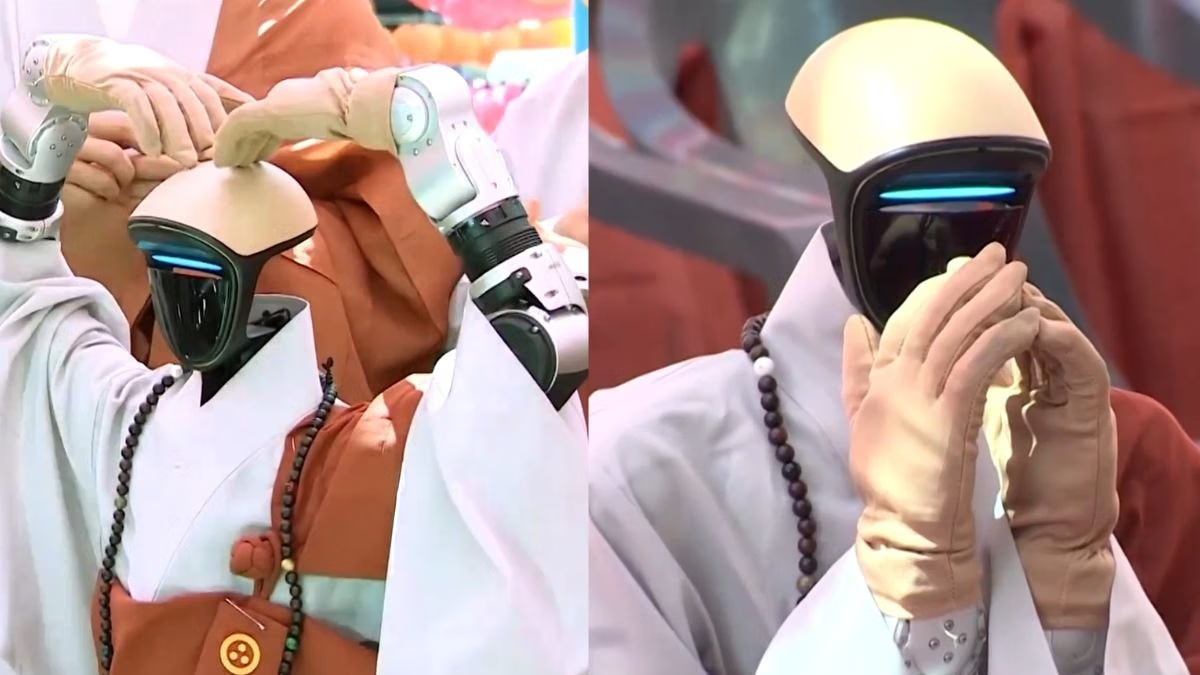
Unlike Catholic priests or cloistered nuns, Buddhist ordination can be reversible and you can come to it from any previous religion. Leonard Cohen was a Buddhist monk and he was Jewish. Many books such as the Jew and the Lotus explain how these two worlds and spiritual approaches can stand side by side.
Gabi simply takes that principle into the age of robotics and if you are worried about a new class of Hare Krishnas or monks, Gabi will not walk barefoot at dawn begging for rice. In Korea, monks generally do not collect alms house to house and Gabi we expect will greet visitors, answer simple AI questions, and remind us that compassion can be, and she be! baked into circuits and code.