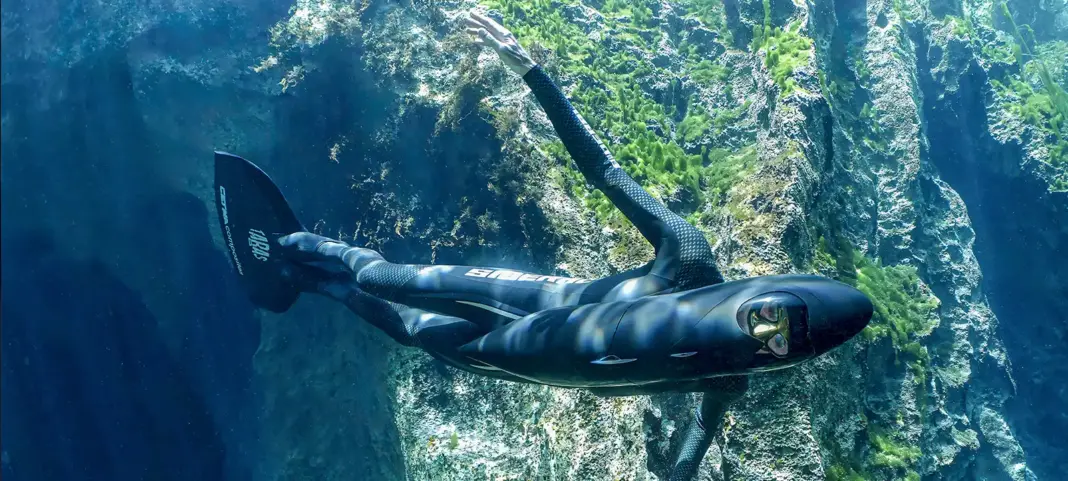

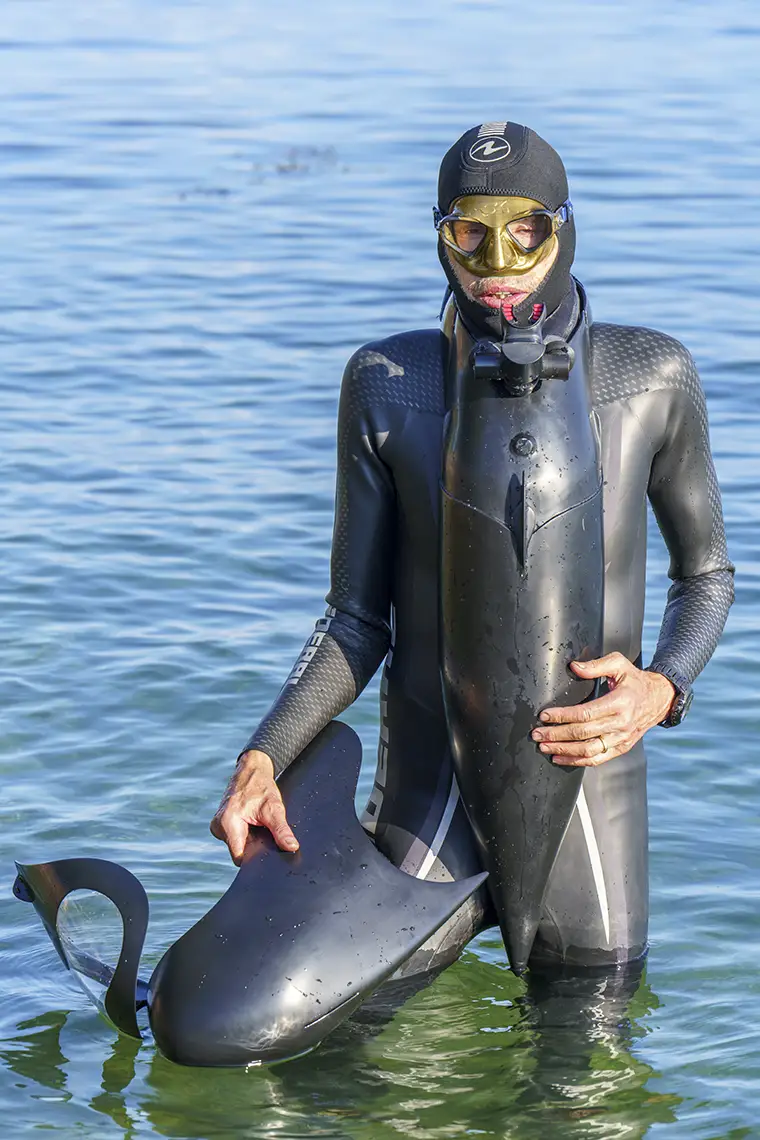
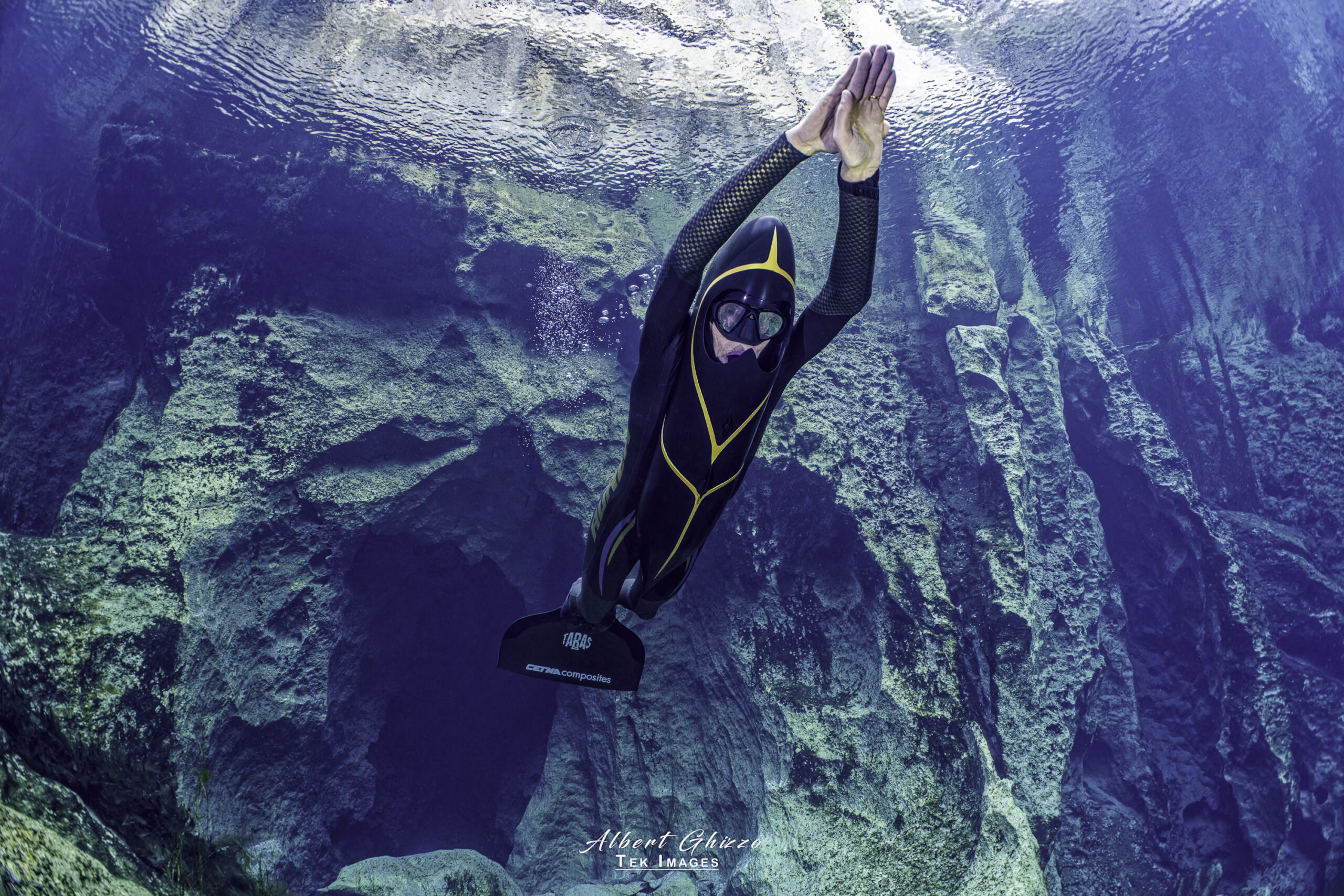
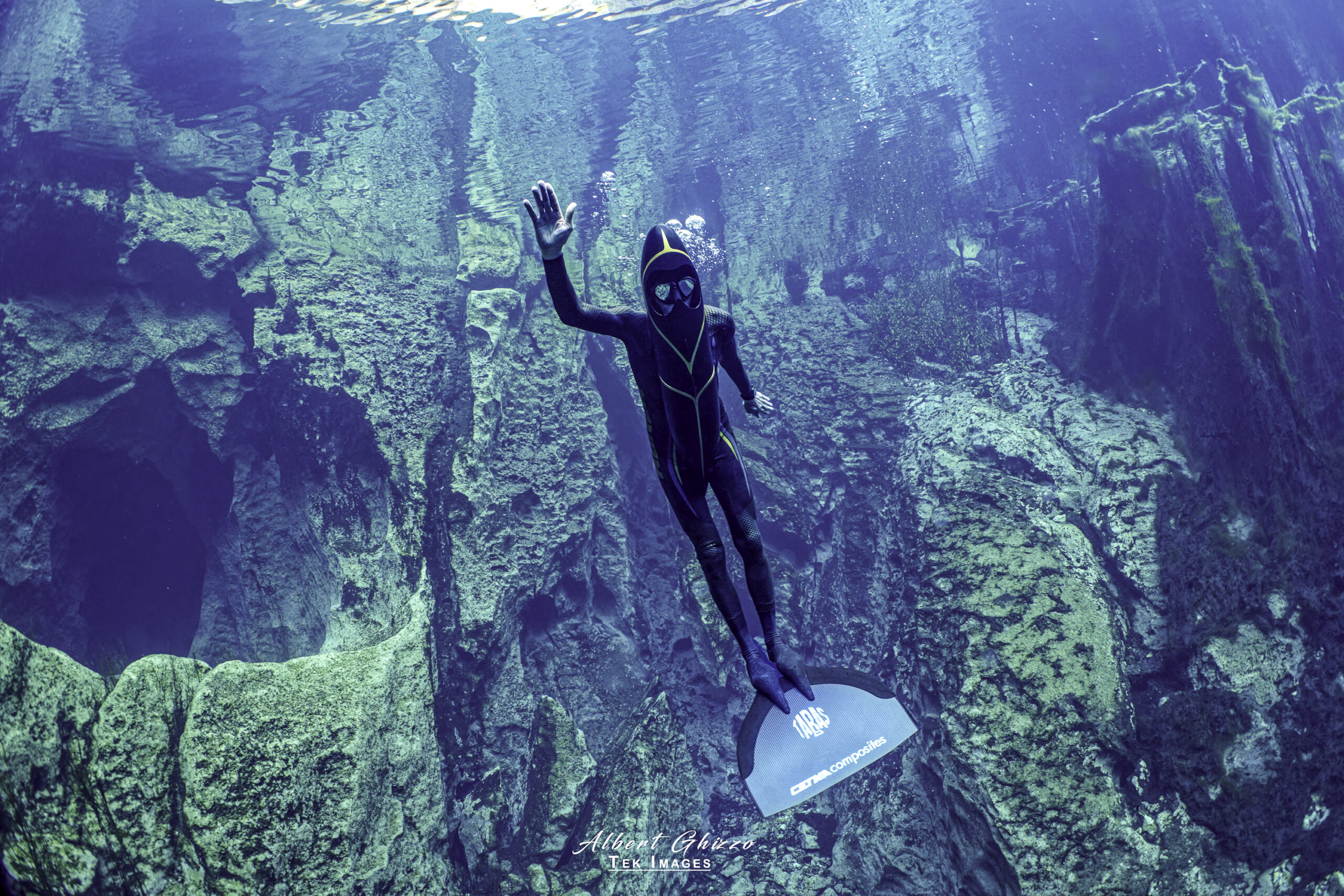
A retired Swiss biology teacher has built one of the most unusual diving devices ever featured on Green Prophet: a sleek, fish-shaped underwater breathing system called Hydrophilis. Inspired by the hydrodynamics of marine animals and refined through dozens of test dives, the compact rebreather allows its inventor, Oliver Isler, to glide underwater with dramatically less effort than conventional scuba gear.
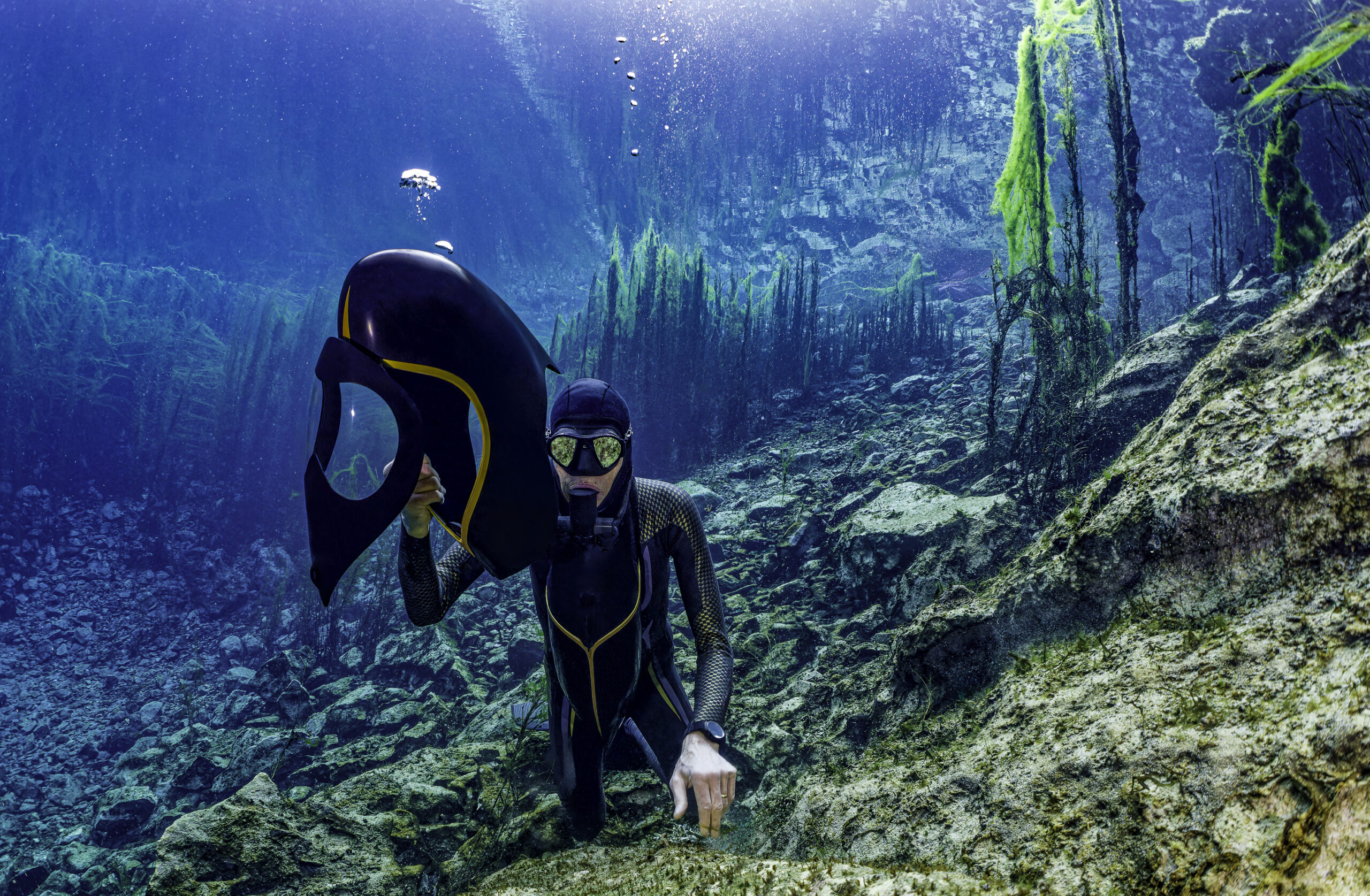
When Green Prophet first wrote about Hydrophilis, readers were fascinated by its futuristic form and almost mythical appearance. Some compared it to a dolphin, others to a torpedo. Later, commenters made some funny and crude jokes about the diving gear.
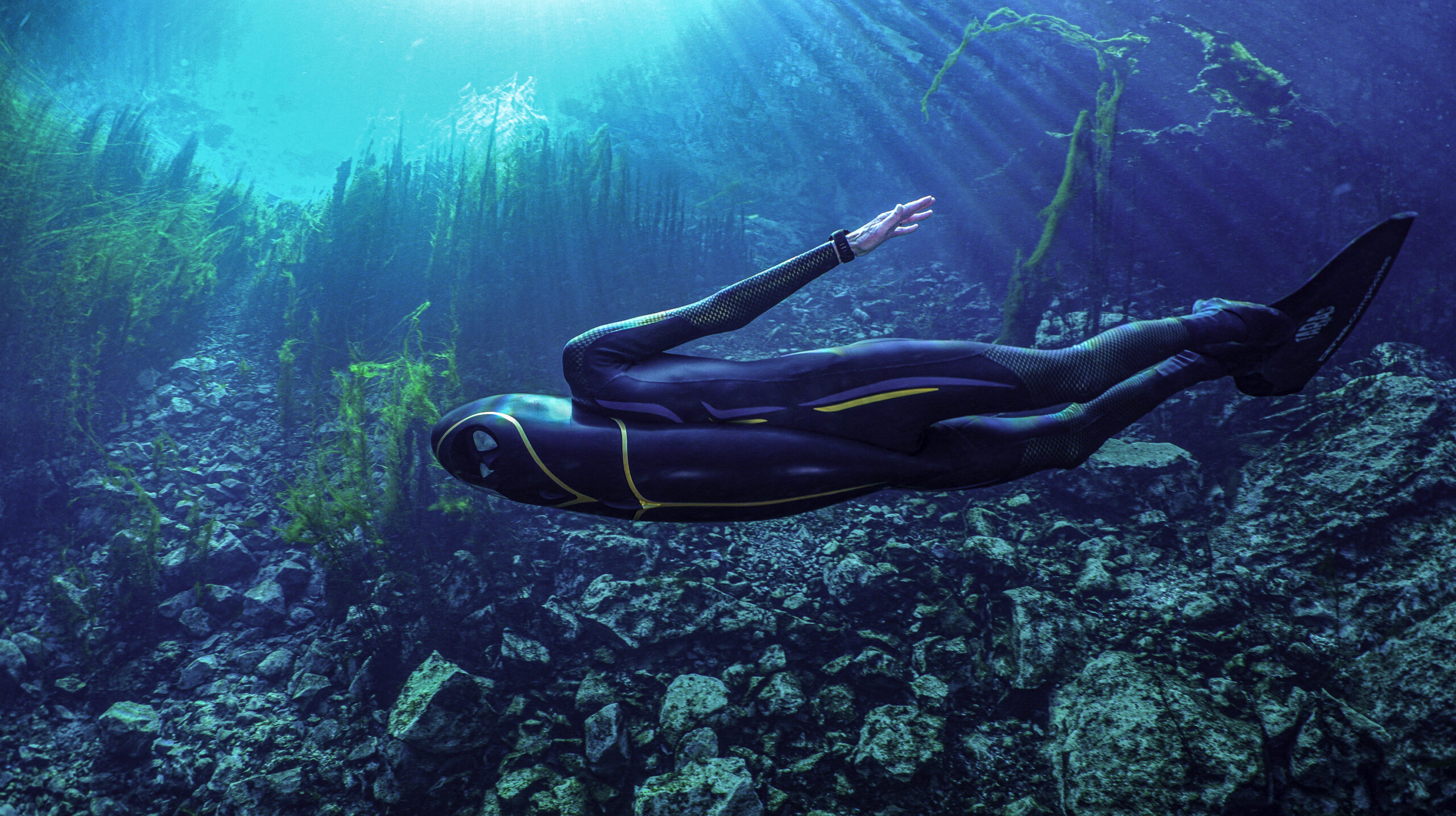
Since then, Isler has continued testing and refining the prototype in Swiss lakes and warm-water seas, completing 54 dives and proving that his idea is far more than a whimsical experiment.
Isler is not an engineer. Before retirement, he taught biology in a Swiss secondary school. His ambition was not to launch a company or disrupt the diving industry, but to create a device that would allow him to move through the water as effortlessly and quietly as possible. “The search for symbiosis — to blend into the marine environment — means seeking ease of movement and discretion, in order to disturb the local fauna as little as possible,” he tells Green Prophet in an exclusive interview.
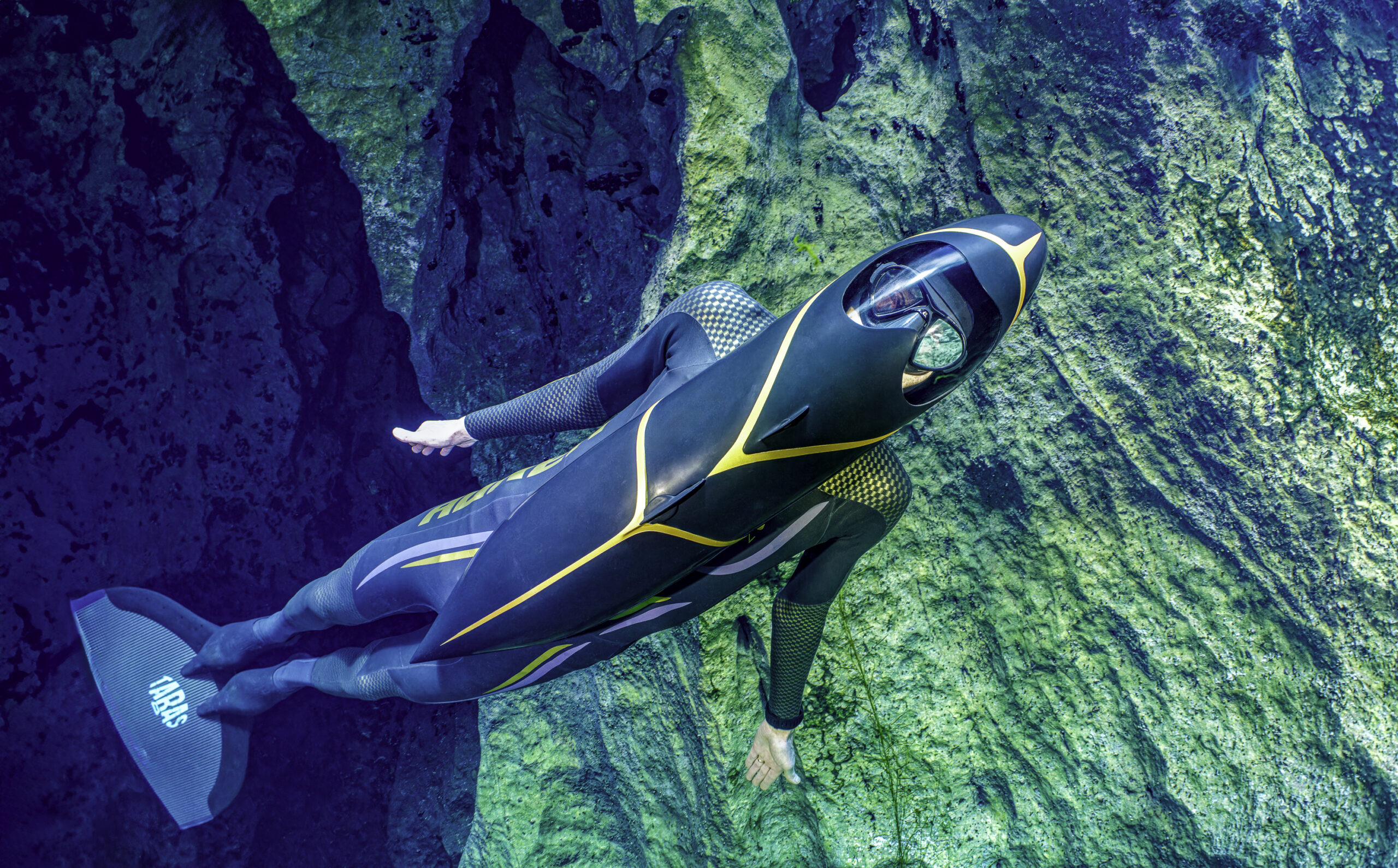
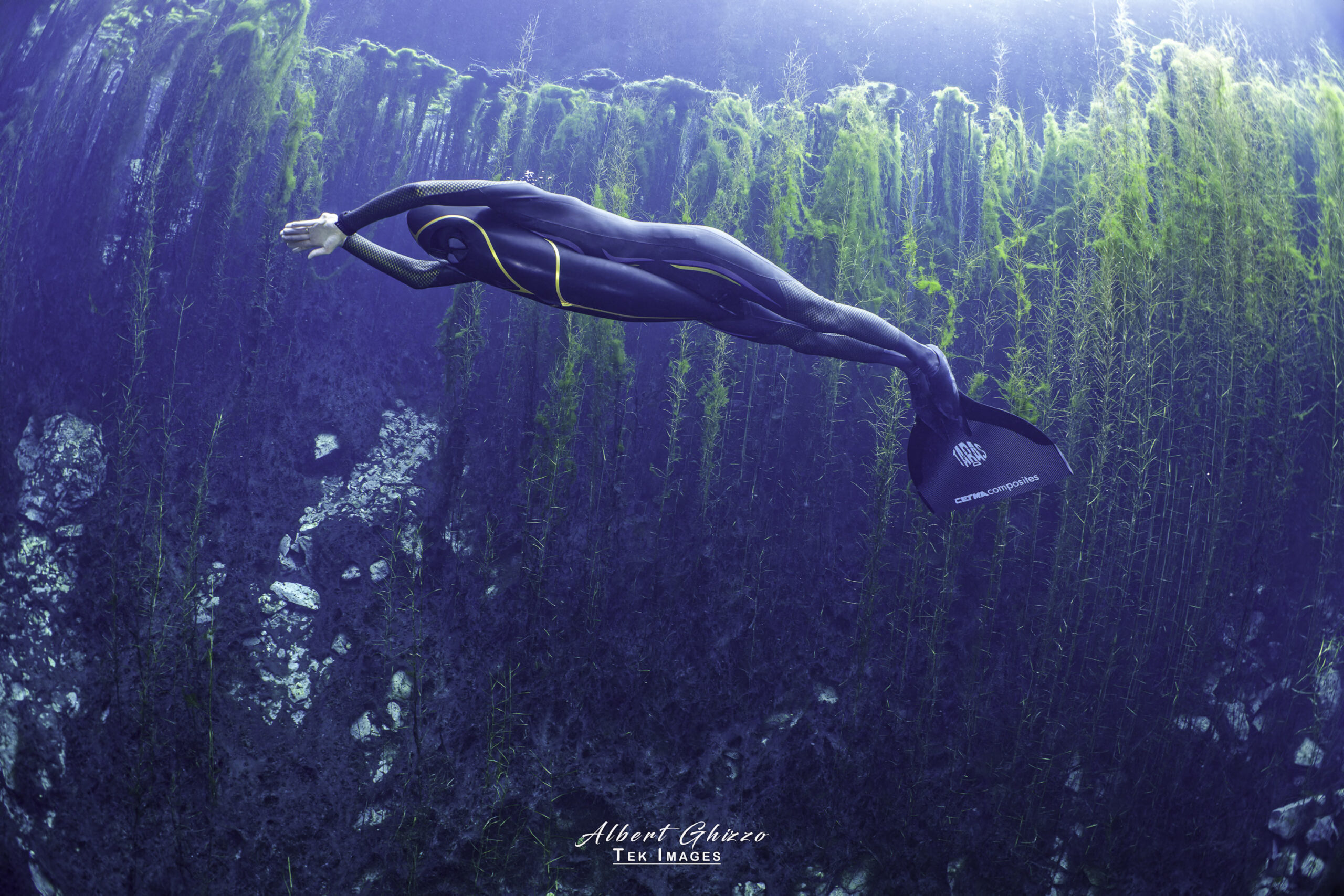
To achieve this, he adopted a NACA airfoil profile, the same aerodynamic geometry used in aircraft wings and submarine bodies. The result is a streamlined shell that dramatically reduces drag.
Faster Than Conventional Scuba
Traditional scuba equipment places cylinders, hoses, and buoyancy devices across a diver’s back and sides, creating significant resistance in the water on the back side of the diver. Hydrophilis was built different.
At age 75, using a soft monofin designed for endurance rather than speed, Isler reached 2.2 meters per second in a swimming pool. By comparison, he says that conventional scuba divers rarely exceed 0.7 meters per second even under intense effort. This reduction in drag means less energy expenditure, less noise, and a more meditative experience underwater. You can become one with the water instead of being pressured to maintain buoyancy.
How the Hydrophilis System Works
Hydrophilis is a miniature closed-circuit rebreather. Instead of releasing bubbles with every breath, the diver reuses exhaled gas after carbon dioxide is absorbed by soda lime.
The prototype Isler built includes:
A 1-liter, 300-bar cylinder
A custom 3-liter counterlung
Integrated soda lime scrubber
Modified mouthpiece
Compact helmet and fairing
Weighted belt using dense cobalt shot
Isler dives with pure oxygen to depths of 6 meters, with 90 to 100 minutes of autonomy, or with Nitrox 55 to 20 meters, where he achieves 45 to 50 minutes of dive time.
He says it’s safety through simplicity: Unlike commercial rebreathers, Hydrophilis has no redundant backup system. If anything fails, Isler removes the helmet and ascends directly to the surface while exhaling. This is the nature of the system. Using traditional systems, a diver would face nitrogen poisoning requiring a decompression chamber.
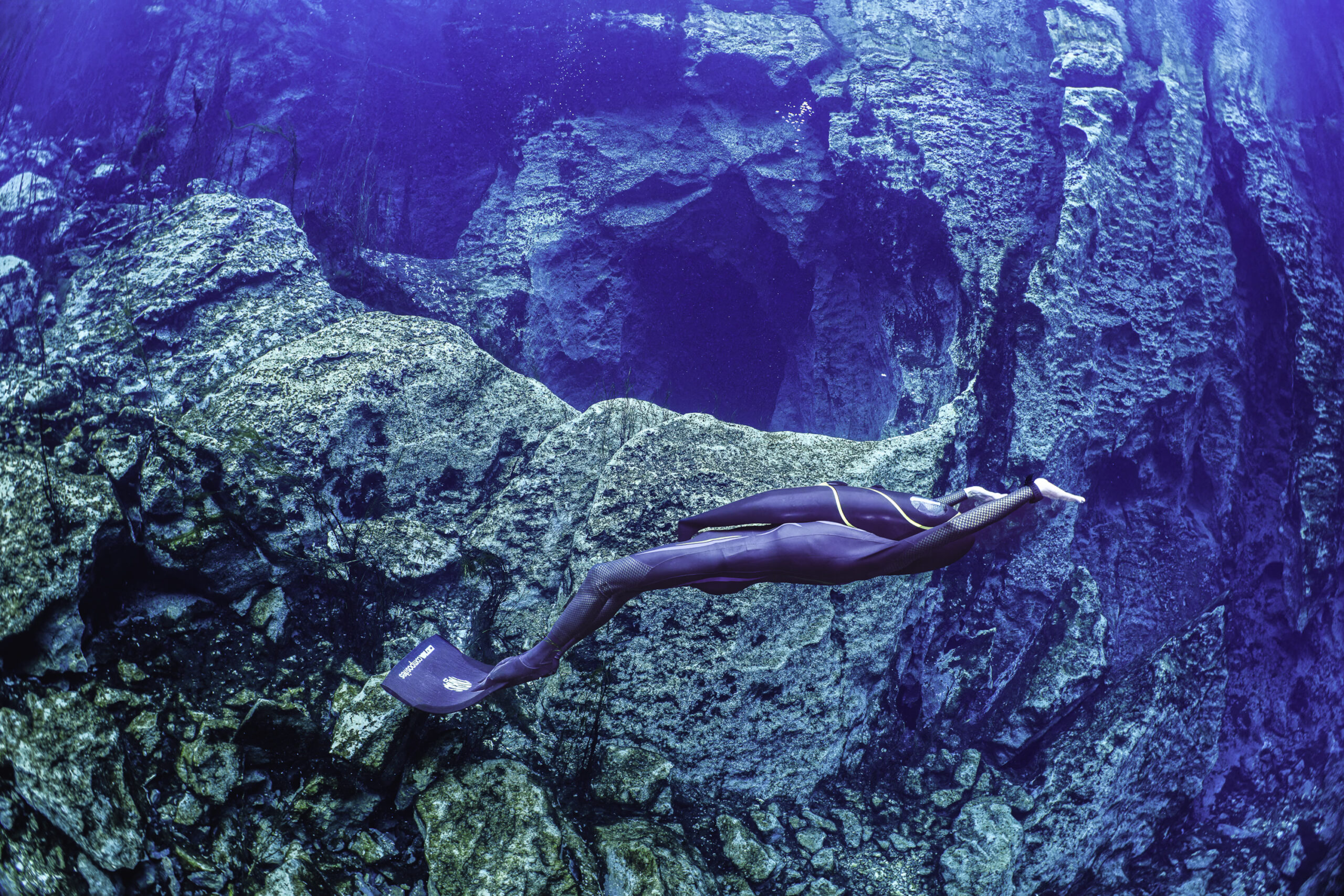
“With pure oxygen or Nitrox 55%, even from 20 meters, no decompression stop is required,” he says. The philosophy is radical miniaturization rather than electronic complexity.
Will Hydrophilis Ever Be Sold?
Probably not, he says. But would Cousteau be happy? Hell yeah!
Certification standards currently require a counterlung volume of at least 5 liters, while Hydrophilis uses only 3 liters, which Isler says is entirely sufficient. He also questions whether there is a large commercial market for a device requiring soda lime and specialized training.
“My primary goal has always been to explore this hydrodynamic concept and enjoy the experience myself, without aiming for commercialization.”
Hydrophilis is not intended to replace scuba: “I see Hydrophilis as a freediver who does not need to hold their breath,” Isler says.
That may be the best description of this extraordinary invention: a personal experiment in biomimicry, engineering, and underwater grace.
For those who dream of moving like a fish, Oliver Isler has shown that sometimes the most compelling innovations come not from corporations, but from curious individuals willing to challenge convention.
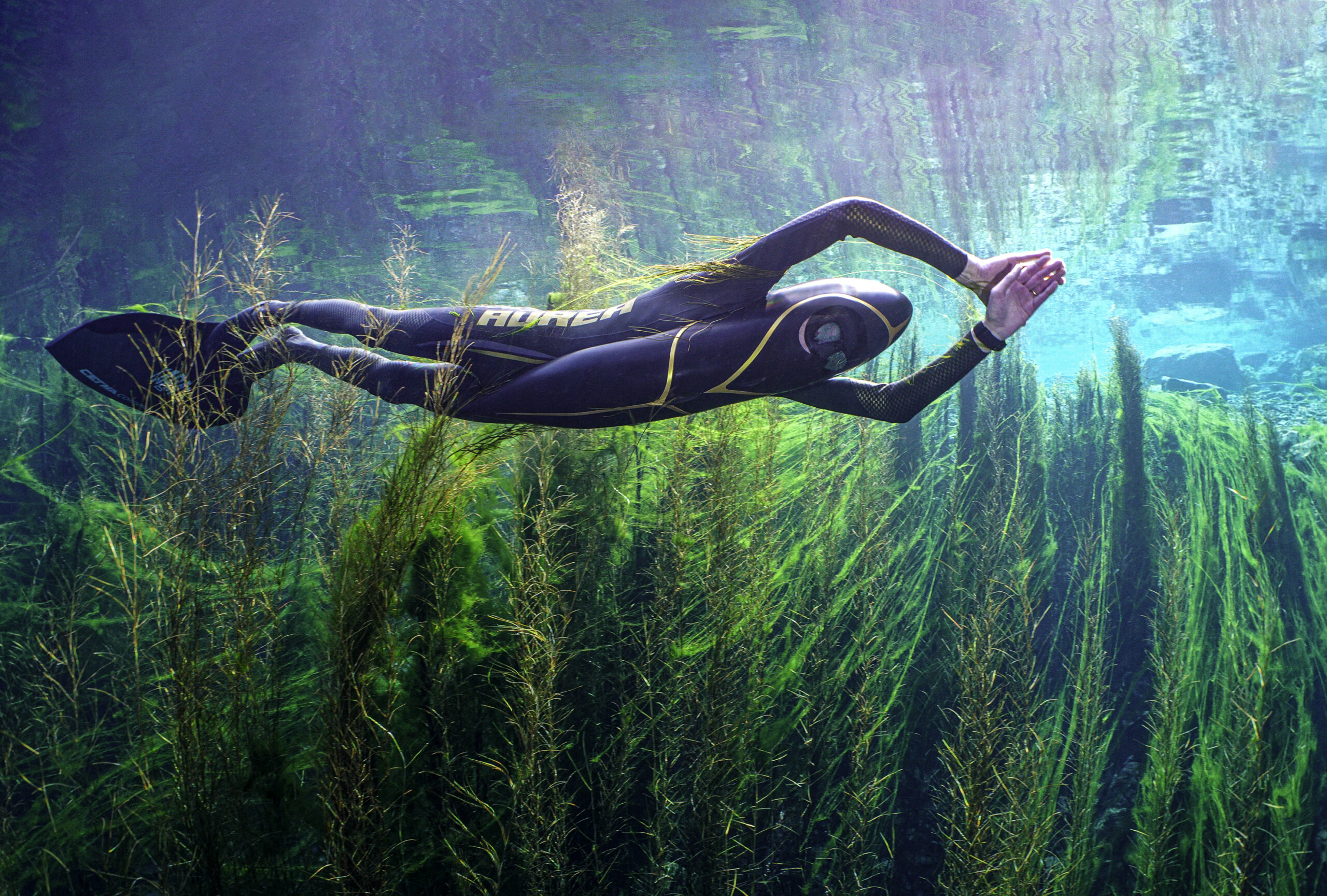
Below is our Q&A interview with Oliver Isler, in his own words:
Green Prophet: Your design seems inspired by fish, dolphins, and the natural shapes of marine animals. Was your goal to mimic nature, or was the streamlined form primarily driven by hydrodynamic engineering?
The goal was to achieve a streamlined shape with minimal drag (resistance to forward motion). While I did want to disturb marine animals as little as possible, the constraints of physics led me to adopt a NACA profile. So it was primarily a technical constraint.
Green Prophet: You are a retired biology teacher, not a professional diving engineer. How did your background in biology shape the concept of Hydrophilis?
I am not a diving engineer. Before retiring, I was a biology teacher at a secondary school. The search for symbiosis — to “blend into” the marine environment — means seeking ease of movement and discretion in order to disturb the local fauna as little as possible.
Green Prophet: Scuba diving equipment has remained largely unchanged for decades. Why do you think there has been so little innovation in underwater breathing systems?
That is a broad question! Indeed, there have been relatively few changes. That said, the basic equipment is functional, and for a standard diver who simply wants to observe the underwater world, it is sufficient. In addition, a second regulator has very often been added, which has further improved safety.
Green Prophet: What are the main performance advantages of Hydrophilis compared with traditional scuba gear?
The original idea was truly to achieve the best possible penetration through the water. Dive duration is not greater than with traditional scuba equipment, but it is very good considering the extremely compact size. Improved hydrodynamics inevitably result in a major reduction in drag, while also allowing faster movement.
I conducted a speed test in a swimming pool. At 75 years old, using a soft monofin (stiffness 3 on a scale of 8), intended more for endurance swimming than pure speed, I was able to reach 2.2 meters per second, which is not bad for my age! With traditional scuba gear, it is difficult to reach even 0.7 m/s under intense effort.
Regarding safety, the only real advantage is the reduced effort required to move forward. Otherwise, in case of a problem, the procedure is simply to return to the surface. With pure oxygen or Nitrox 55%, even from a depth of 20 meters, no decompression stop is required. Therefore, in the event of a breathing-system failure, ascent is normally straightforward.
Without going as far as meditation, the pleasure of effortless movement is obviously present on every dive.
Green Prophet: Switzerland has a history of precision engineering and unusual inventors. Do you think there is something in Swiss culture that encourages independent experimentation?
Difficult to answer. Does the serious — sometimes overly serious — and orderly Swiss mentality encourage people to break free from that psychological framework by attempting somewhat unconventional experiments? Perhaps, but that is only a hypothesis, and I am not sure it is something specifically Swiss.
Green Prophet: Some people on social media have mocked the appearance of Hydrophilis. How do you respond to criticism and jokes about your invention?
With social media, one must expect every possible reaction: supportive or mocking. Comparing my prototype to a penis is not particularly flattering. My hypothesis is that those who reacted that way did so emotionally, without even taking the time to read my article in In DEPTH. Or are they frustrated? Perhaps.
My response to that kind of reaction is this: people who never attempt anything, who have no projects or challenges in their lives, certainly avoid failure. That is true. But I do not envy them, because I find such an existence somewhat dull.
I also believe that any innovation may first be rejected before eventually being accepted.
Green Prophet: Without a traditional backup air source, how do you manage safety if the breathing system fails underwater?
As I explained earlier, safety does not depend on someone else. I trained to simulate a failure scenario. In such a case, I remove the helmet (see photos) and ascend, freediving if necessary, while exhaling slightly to avoid pulmonary overexpansion. Once at the surface, I simply swim back to the boat, for example.
A different protocol would be incompatible with miniaturization, since there is no room for a backup system.
Green Prophet: Do you see Hydrophilis as a replacement for scuba diving, or as an entirely different category of underwater experience?
I see Hydrophilis more as a different approach. Something like a freediver who does not need to hold their breath!
It will never compete with traditional scuba diving, but rather offer a different way of diving and moving through the marine environment.
Green Prophet: What was the greatest engineering challenge in building such a compact underwater breathing system?
For optimal penetration through the water, the fairing had to occupy the smallest possible volume. Miniaturization therefore became an obsession, while still respecting breathing-hose diameters and mouthpiece dimensions compatible with effortless breathing.
For example, I had to modify a mouthpiece so that it would take up the least possible space. The miniature cylinder (1 liter / 300 bar), with its optimal shape, the soda lime filter integrated into the body of the prototype, and the counterlung specially built to conform as closely as possible to the interior of the fairing were all part of this process.
The weighting system as well, using cobalt shot (18 g/cm³), is worn underneath the freediving suit.
Green Prophet: Could Hydrophilis ever become a commercial product?
I honestly have no idea.
The major issue with certification is that the required counterlung volume is at least 5 liters. Mine is about 3 liters, which is entirely sufficient. So it would first require convincing certification experts to change their mindset so that such a design could be recognized. Not simple.
Then there is the question of whether there would even be a market for Hydrophilis. That is uncertain as well, because the use of soda lime means it will never become a true mass-market product.
Personally, my primary goal has always been to explore this hydrodynamic concept and enjoy the experience myself, without aiming for commercialization.
Could it inspire similar projects in the future? Time will tell.