
“AI video pilots look great, but never scale. The unit economics that were fine at ten cameras are fatal at ten thousand,” says Ron Kimmel, founder and CSO of Lumana.
I have been writing about technology and the environment for long enough to recognize a familiar pattern. A technology arrives promising to make the world smarter, faster or cleaner, and only later do we start asking about the physical infrastructure underneath it.
Cloud computing is a perfect example. The word itself makes computing sound almost weightless. But there is nothing weightless about a data center. It is concrete, steel, servers, cooling systems, transmission lines, water and enormous amounts of electricity.
Now AI is accelerating that physical buildout. In 2025, U.S. data centers consumed an estimated 312.6 terawatt-hours of electricity, accounting for nearly 40 percent of global data center power consumption. According to Goldman Sachs Research, U.S. data center power demand is forecast to more than double from 31 GW in 2025 to 66 GW by 2027, driven largely by AI infrastructure.

So when I came across California-based Lumana, an AI video intelligence company founded by former Intel executives, I wasn’t only interested in what its artificial intelligence could see. I wanted to know where all that video goes, how much computing it requires, and whether we really need to send everything to the cloud.
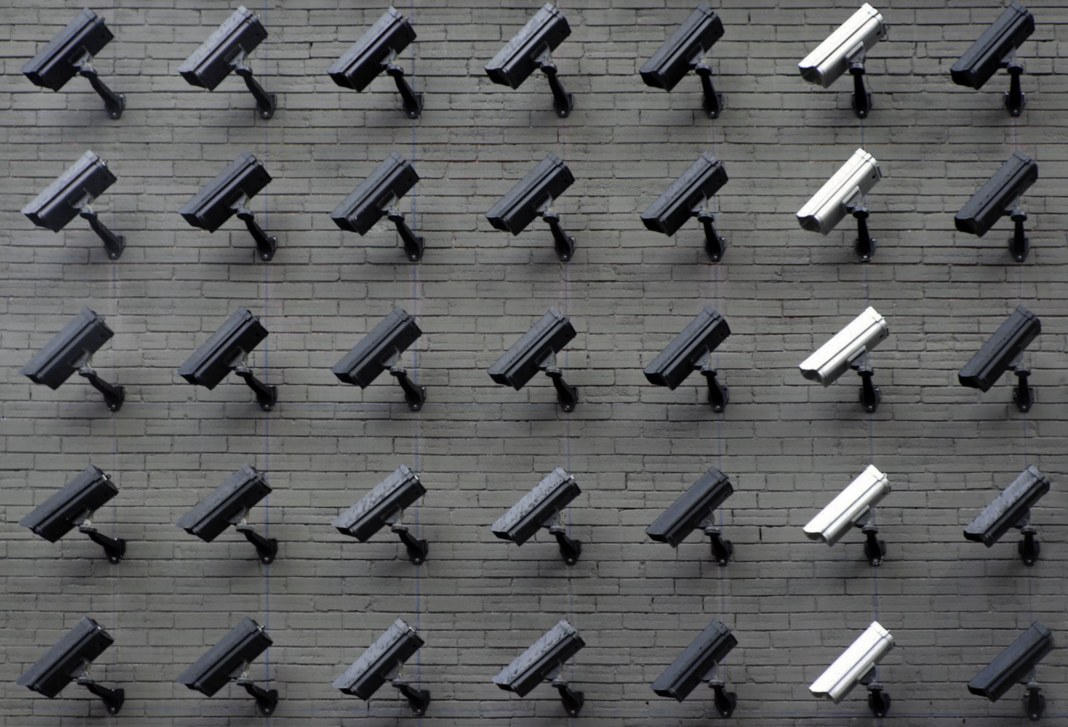
Walk into a bank, supermarket, warehouse, university campus or stadium and cameras are everywhere. Most of the time, nothing particularly interesting is happening. But there is an obvious appeal to giving those cameras intelligence. Instead of recording an incident for somebody to discover later, AI can potentially recognize theft, aggression, a fall or another unusual event while it is happening.
But how do you make a system “see” everything without paying to deeply analyze everything?
Lumana has already connected more than 50,000 cameras, with customers including numerous Fortune 500 companies across the United States. The company raised a $40 million Series A led by Wing Venture Capital in 2025, bringing total funding to $64 million.
Lumana’s Chief Scientific Officer (CSO) Ron Kimmel previously spent nearly a decade at Intel in senior scientific roles and is currently a professor at Israel’s leading Technion Institute of Technology. According to Kimmel, at Lumana’s scale, AI isn’t only an intelligence problem: it is an infrastructure problem.
“At ten cameras, almost any architecture works,” he tells Green Prophet. “You can stream everything to the cloud, run heavy models on every frame and the bill is tolerable.”
Then add another 990 cameras: “Go from ten cameras to a thousand and three costs multiply at once. Bandwidth, because you’re now pushing hundreds of continuous streams off site. Compute, because cloud inference is priced per unit of work and you’re paying to deeply analyze footage that is overwhelmingly routine. And attention, because more cameras means more alerts.”
“That’s why so many AI video pilots look great, but never scale,” Kimmel says. “The unit economics that were fine at ten cameras are fatal at ten thousand.”
“And you learn that the hard part of AI video is not detection, rather it’s trust. If a system creates too many false alerts, people turn it off. Operating at scale forces a discipline around false alerts that no pilot ever would,” he adds.
Don’t send everything to the cloud
Lumana’s answer is a hybrid system. Instead of continuously sending every frame from every camera to a distant data center, an NVIDIA GPU-powered Lumana Core sits on site on a camera or wired into the system and performs the first pass over video locally. Events requiring deeper analysis can be routed to the cloud.
“We don’t send everything to the cloud and we don’t process everything at the same depth,” Kimmel says. “The vast majority of video is routine and never needs to leave the site.”
He describes the philosophy in five words: “We filter before we spend.”
According to Lumana, its architecture can reduce bandwidth requirements by up to 70 percent. Video stays and is processed on site, while metadata, thumbnails and specific clips travel as needed. For companies operating hundreds or thousands of locations, that can mean avoiding expensive internet upgrades while preventing security video from competing with point-of-sale systems, guest Wi-Fi and corporate traffic.
But I was interested in another consequence. If we move less data, do we also use less energy? Kimmel is careful here, which I appreciate. Lumana has not published a formal side-by-side study measuring electricity consumption or carbon emissions against a comparable cloud-heavy video AI system.
“I’m careful not to throw sustainability numbers around without the work behind them,” he says.
But moving data requires energy and processing data requires energy: “Our architecture moves a fraction of the video and runs the heavy, continuous analysis on right-sized local hardware with small, specialized models, instead of pushing everything through large general-purpose cloud inference,” Kimmel says. “Less data moved and less redundant computation is less energy consumption.”
Of course, the edge isn’t energy-free. Lumana Core contains NVIDIA GPUs.
“The Lumana Core runs real GPUs and draws real power,” he says. “The question is what work each watt does.”
He argues that the advantage grows with scale. Sending video from ten cameras to the cloud may be insignificant. At 50,000 cameras, moving and repeatedly processing all that footage becomes a very different proposition. That matters as communities across the United States are being asked to accommodate new data centers and the power infrastructure required to run them.
The greenest camera may be the one you already own

There was another part of Lumana’s model that caught my attention. It doesn’t require customers to buy Lumana cameras. The platform is camera agnostic. If an organization already has functioning IP cameras, Lumana can add its AI layer to them.
There are hundreds of millions of cameras already installed around the world. The standard technology-industry response could easily be to persuade everyone that these cameras are obsolete and replace them with shiny new “AI cameras.”
That means manufacturing new equipment, shipping it around the world and disposing of equipment that may still work perfectly well: “The wasteful path is ripping them out and shipping in new proprietary hardware,” Kimmel says. “The efficient path is making what exists smarter.”
Lumana hasn’t calculated the carbon or e-waste savings from keeping those cameras in service. But Lumana offers a principle many people working in sustainability will recognize immediately:
“In physical AI, the most sustainable hardware is usually the hardware you already own,” says Kimmel.
There is also a fascinating question about what all those cameras could eventually become. Today, most security footage is recorded and ignored unless something goes wrong. Kimmel believes AI could turn it into something closer to an operational record and business opportunity.
A company could ask how customers moved through a space, where queues formed, whether procedures were followed or how patterns changed over time. Instead of somebody spending days scrubbing through video, an AI system could search an index of what the cameras had observed.
“The cameras have been always collecting that record,” he says. “The missing piece was a system that understands it.”
“AI is enabling video to become a real-time intelligence layer for the physical world, and the companies that win will be the ones that make that layer accurate, affordable, and trusted.”
And that is where this story gets bigger than surveillance. Much of the AI race has been about adding more: more chips, more parameters, more servers, more data centers and more electricity.
But physical limits have a way of imposing themselves on technological dreams. There are grids to connect to, chips to manufacture, transmission lines to build and communities that may not want another enormous data center next door.
Lumana isn’t a renewable-energy company. It is a security and video intelligence company whose economics have forced it to confront a problem the rest of the AI industry increasingly faces: brute force gets expensive.
For almost two decades at Green Prophet, I’ve looked for the environmental story hiding inside technologies that weren’t necessarily invented to be green. Sometimes the better environmental choice isn’t a new green product at all. It’s designing a system so that it wastes less of what we already have.
That is where Lumana’s architecture gets interesting from an environmental perspective. Kimmel says that in many cloud-centric video systems, large volumes of raw video are continuously transmitted to remote data centers for processing. Beyond the communication overhead itself, this architecture often encourages the use of computationally intensive “heavyweight” AI models, increasing demands on energy, computing infrastructure, storage, and network capacity.
Lumana takes a more hierarchical approach. Computationally efficient and time-sensitive operations are performed close to where the data is generated, at the edge, while more demanding cloud resources are engaged selectively, when their additional capabilities are actually needed. This hierarchy is not merely a software abstraction, it is reflected in the physical deployment architecture of the system.
The result is an architecture designed to use the right level of computation at the right place and time, reducing unnecessary data movement and avoiding the continuous use of expensive cloud computing. In that sense, efficiency and sustainability are not added features of the Lumana platform, they are natural consequences of how the system is designed.
With Lumana, that means leaving functioning cameras on the wall, keeping much of their video close to home, and being selective about what deserves the full force of the cloud.
The AI boom has largely been a story of more. Lumana offers a useful counterargument: sometimes smarter really should mean doing less: “The discipline of deciding what deserves computation is where all of AI is heading. Intelligence per watt is going to matter as much as intelligence,” says Kimmel.
::Lumana