
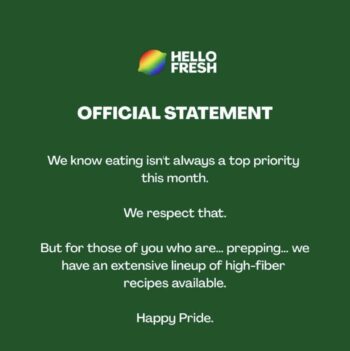
HelloFresh has found itself in the middle of an unexpected controversy after a Pride Month social media promotion suggested high-fiber recipes for customers “prepping” for Pride celebrations. Some customers laughed over the anal sex reference. Others were offended. The campaign quickly drew criticism online, with detractors comparing it to other recent corporate marketing misfires that became lightning rods in broader cultural debates, including campaigns from Bud Light and Jaguar.
But amid the outrage and social media arguments, a more interesting question has emerged: why have we become so dependent on corporations to tell us what to eat in the first place?
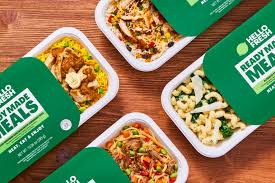
For years, meal-kit companies have sold convenience as a lifestyle. Fresh ingredients arrive at the doorstep. Recipes are pre-planned. Measurements are done for you. Dinner becomes a subscription. While it can be a great way to support an organic farm by ordering a box of food every week, portioned meal kits are something else.
The formula of box kits has been successful because modern life is busy. Families juggle work, school, caregiving, and endless digital distractions. A box of ingredients waiting at the door can feel like a solution. Yet the convenience comes at a cost.
Every meal kit represents layers of packaging, shipping, shippers, refrigeration, warehousing, plastics, and logistics. It also places consumers one step further from the source of their food.
The HelloFresh backlash took another turn when critics began sharing concerns about the company’s labor practices. Among them was Joshua Garrison, who posts on X as @Bearded_Bigot and says he previously worked as a contractor delivering for HelloFresh.
In a lengthy post, Garrison described what he viewed as a disconnect between corporate marketing efforts and treatment of workers. He criticized the company’s reliance on temporary labor and accused management of focusing on branding while delivery workers and warehouse staff faced low wages and job insecurity.
His account reflects personal allegations and opinions that Green Prophet has not independently verified. However, it touched a nerve among consumers already questioning the priorities of large food-delivery companies.
Those concerns are not entirely disconnected from documented events.
In 2024, the U.S. Department of Labor announced a settlement involving migrant children who had been employed by a staffing contractor supplying labor to HelloFresh facilities. The company stated that it did not knowingly employ children and said it had strengthened oversight procedures after learning of the violations.
For many consumers, the incident raised uncomfortable questions about how much they really know about the companies preparing and delivering their food. It also raises a larger sustainability question. What would happen if more people grew even a small portion of their own food? (We have the original Victory Garden handbook. You can download it here).

Imagine: a tomato plant on a balcony. A pot of basil on a windowsill, a community garden plot and a relationship with a local butcher or neighborhood produce vendor. These choices won’t replace global food systems overnight. Nor will everyone suddenly have the time or space to grow their own vegetables. But there is value in rebuilding a direct connection to food.
A home-cooked meal does not require a marketing department. A backyard tomato does not need a social media campaign. A chicken purchased from a local butcher comes with accountability that no national subscription service can replicate.
The irony is that most of the world’s great cuisines were built on simple ingredients.
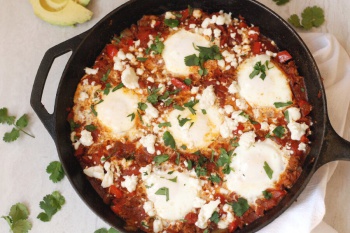
You don’t need a subscription box to make shakshuka, lentil soup, roasted vegetables, or a simple salad. You need a few basic ingredients, some confidence in the kitchen, and a willingness to experiment. The debate over HelloFresh’s Pride campaign will eventually fade, just as other social media controversies have. We remember an Italian pasta company being anti-gay, and they survived.
What may endure is a growing consumer realization that the most important questions are not about clever marketing slogans or seasonal campaigns. They are about who grows our food, who packs it, who delivers it, how workers are treated, how much waste is created, and whether communities are becoming more resilient or more dependent on distant corporations.