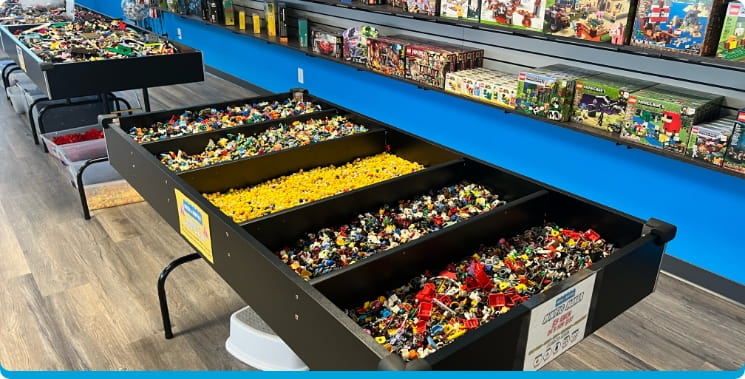

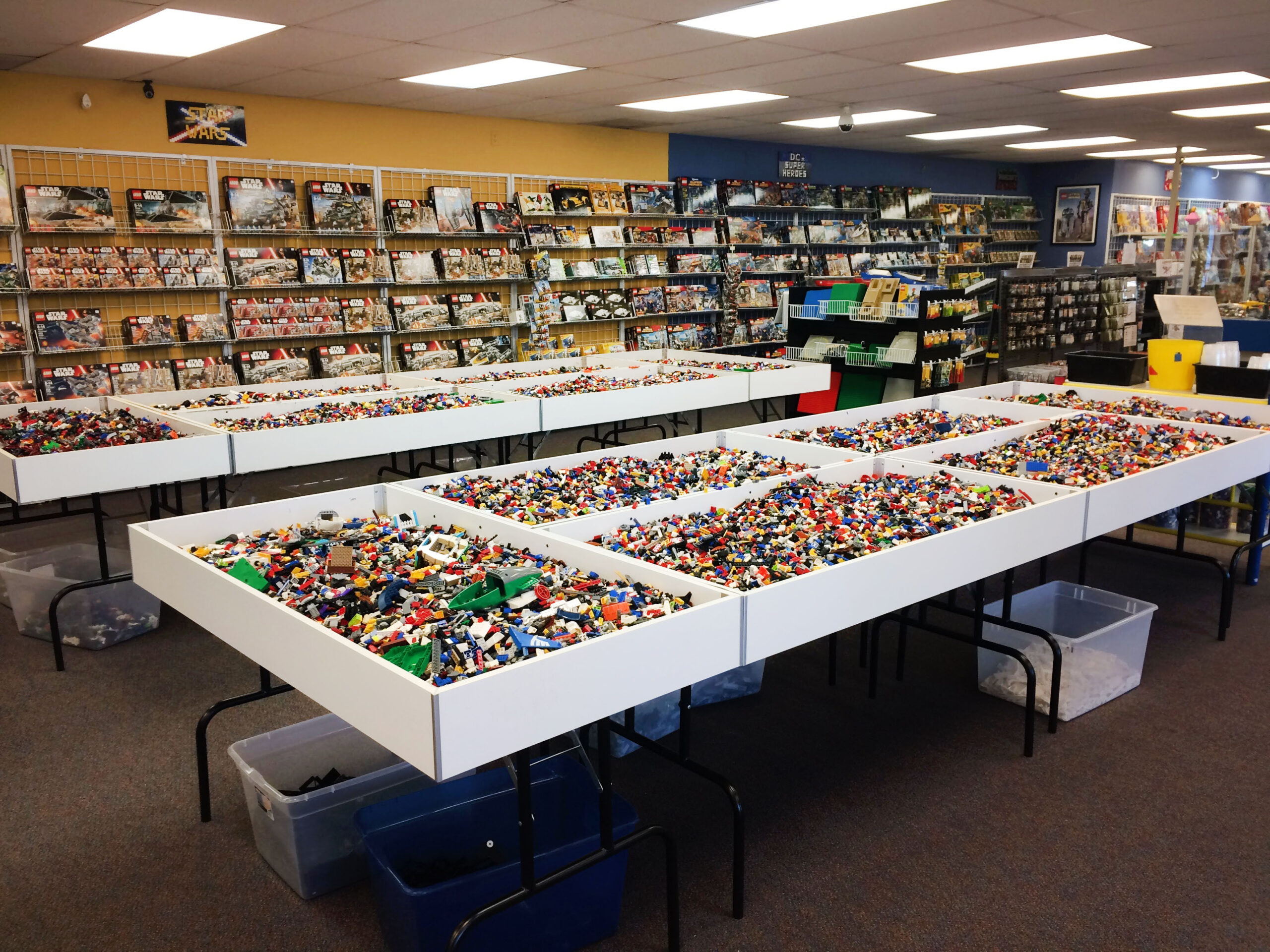
A strange controversy is swirling around Bricks & Minifigs, the fast-growing chain of second-hand LEGO stores that buys, sells and consigns used LEGO sets, bricks and minifigures. At the center of the dispute is a valuable LEGO Star Wars collection in Oregon, allegations involving consignment agreements, ownership disputes, lawsuits, YouTube investigations and Reckless Ben and conflicting claims from multiple parties. The details are still being fought out in court, and many of the most serious accusations remain unproven.
What would be unfortunate is if the controversy overshadows something important: stores like Bricks & Minifigs are part of a growing movement toward reuse, repair and circular consumption. And we need more of them. Just like Zero Waste shops that help us buy soaps and home goods without plastic, we need ways to share and renew our childrens’ toys.
Related: kids will love this bicycle helmet shaped like a LEGO character
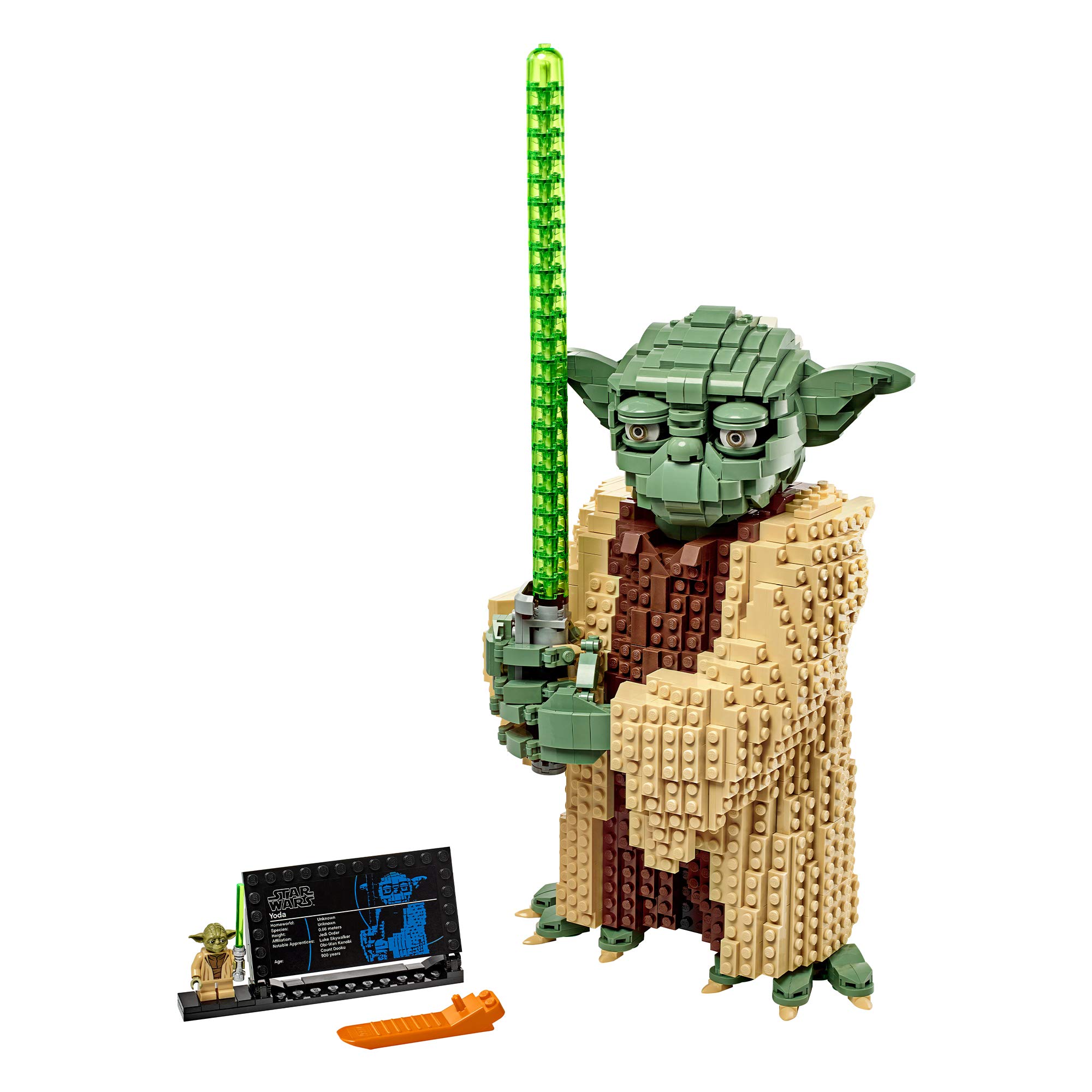
As a mother of a 13-year-old son, I recently faced a familiar dilemma. What do you do with hundreds of dollars worth of LEGO? Over the years we bought the Empire State Building, Baby Yoda, the Paris skyline and countless other sets. My son would spend a day or two immersed in construction. Then the finished model would become a dust-collecting sculpture on a shelf. The problem wasn’t LEGO itself. The problem was what LEGO has increasingly become.
When I was a child, LEGO was mostly a bucket of possibilities. You dumped the bricks on the floor and built whatever your imagination invented: a spaceship, a castle, a submarine, a creature from another planet. If you didn’t have a certain piece, you made do or grabbed something from your junk drawer.
Today’s LEGO experience is often different. Many children build a branded object exactly as instructed, admire it, display it, and quickly move on to the next purchase. The company has been extraordinarily successful at transforming its products into collectibles, licensed franchises and display pieces. Star Wars, Harry Potter, Star Wars, Marvel, architecture, gaming worlds and pop culture icons have become major pillars of its business. For investors this has been brilliant. For creativity and the environment it’s a disaster.
A small family footnote sits somewhere inside this history. A cousin who married into my family comes from a toy-making lineage whose grandfather helped pioneer the idea that toys could become powerful companions to movie franchises. He was the first to conceive Star Wars characters as figurines and collectibles. The concept helped reshape the toy industry, turning fictional worlds into merchandise ecosystems. Today, LEGO is one of the greatest examples of that transformation. Yet the environmental cost of hyper-customized toys is rarely discussed.
Every highly specific set eventually reaches a moment when a child no longer wants it.
Then what? This is why businesses like Bricks & Minifigs matter.
A second-hand LEGO marketplace keeps plastic bricks circulating for years instead of ending up forgotten in basements or discarded in landfills. It gives children access to building materials at lower prices. It extends the lifespan of a product that was originally designed to last generations.
The concept resembles long-established markets for used books, bicycles, musical instruments and even video games. Children have been trading Nintendo cartridges and consoles for years. LEGO was always destined to develop a similar circular economy. But circular businesses require trust.
The current controversy illustrates how important clear consignment agreements, transparent inventory systems and rigorous chain-of-custody procedures have become. As resale markets mature, whether for LEGO, designer clothing, electronics or collectibles, customers need confidence that their property is protected and traceable.
The lesson isn’t that these stores shouldn’t exist, the business lesson is that they must become better.
In many ways, the bigger question is whether we should be encouraging children to move away from highly prescribed building experiences altogether.
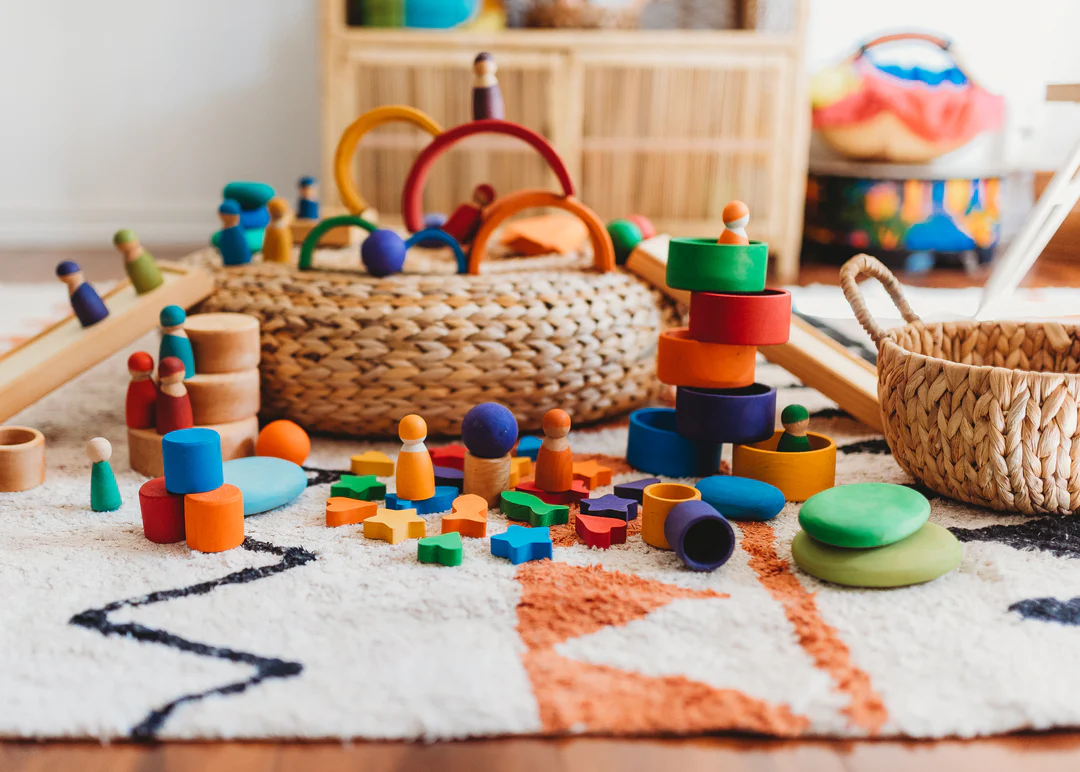
Visit a Waldorf classroom (also known as a Steiner school) and you’ll often find simple blocks, natural materials and open-ended construction toys. The pieces are imperfect. They don’t lock together with engineering precision. Shapes are rounded, textures vary and colors tend to resemble nature rather than a marketing palette. You won’t find LEGO at any Steiner school.
The point is imagination. Similarly, wooden plank building systems such as Kapla encourage children to create structures from simple repeatedA dispute involving Bricks & Minifigs has sparked debate about trust in the growing second-hand toy market. But beyond the controversy lies a larger question: how can we encourage children to play more creatively while keeping toys in circulation and out of landfills? forms rather than following instructions. The child becomes the designer instead of the consumer. My son has played with his Kapla for days upon days. He’s built towers he then enjoys smashing apart.
The most sustainable toy isn’t the one that can be endlessly collected: it’s the one that can become anything.
At Green Prophet we’ve often explored the value of open-ended design, biomimicry and learning from nature rather than imposing rigid systems onto the world. Nature rarely produces perfect right angles. Trees, rivers, coastlines and ecosystems thrive through variation, adaptation and creativity.
Children deserve toys that encourage the same qualities.
So while lawyers and YouTubers battle over the latest LEGO controversy, it may be worth stepping back and asking a larger question. How do we build a toy economy that values imagination over accumulation?