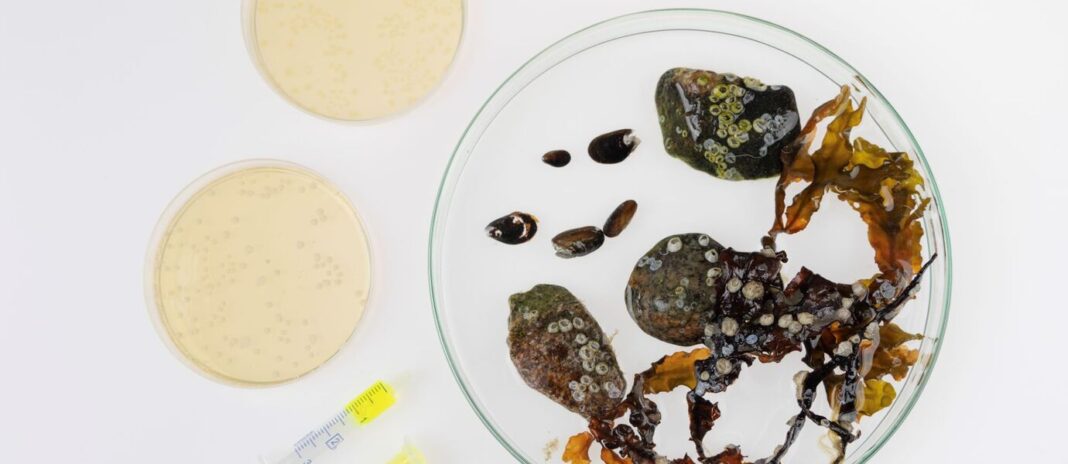

Barnacles and mussels may not seem like obvious sources of innovation, but their remarkable ability to cling to rocks, ships, and other surfaces has inspired researchers for decades. Now scientists at Aalto University in Finland (the same university that has found support for odd-shaped timber) have developed what they describe as the world’s best 100% protein-based adhesive by combining biological traits from both marine organisms.
Researchers used DNA fragments from barnacles and mussels found in genetic databases and inserted them into Escherichia coli bacteria. The bacteria then produced protein molecules based on the engineered DNA instructions.
The resulting adhesive works in dry conditions, wet conditions, and even underwater. This advance could repair coral reefs or become a new biological glue used in emergency situations for suturing and construction in coastal and flood zones.
The breakthrough is significant because most of the world’s adhesives are made from petroleum-based materials. According to the researchers, global consumption of adhesives has reached approximately 19 million tonnes annually, with widespread use in construction, textiles, packaging, and manufacturing.
While a bio-based alternative could eventually replace some conventional glues, the researchers point to applications where existing adhesives often struggle.
“Thanks to its water resistance and biocompatibility, this protein adhesive could be used to repair coral reefs—or one day even heal major tissue injuries, potentially saving human lives,” said doctoral researcher Helena Aspelin.
The underwater performance of the adhesive is particularly noteworthy. Conventional glues often lose effectiveness when exposed to moisture, making marine and medical applications especially challenging.
Coral reef restoration is one potential area where the new material could prove useful. Around the world, conservation groups transplant coral fragments onto damaged reefs, but attaching those fragments securely in underwater environments remains difficult. A protein-based adhesive that functions underwater could potentially offer an alternative approach.
The research also highlights the growing field of biomimicry, where scientists and engineers look to nature for solutions to human challenges. Barnacles and mussels have evolved highly effective natural adhesives over millions of years, enabling them to survive in harsh marine environments where waves, currents, and changing conditions constantly test their grip.
By borrowing biological strategies from these organisms, researchers hope to develop materials that perform better while reducing reliance on fossil-fuel-based products.
The new adhesive remains in the research stage, and further development will be needed before it reaches commercial, environmental, or medical applications. However, the work demonstrates how studying nature’s own engineering solutions can lead to new possibilities for sustainable materials.
For now, one thing is clear: the same natural glue that allows barnacles and mussels to survive in rough seas may someday help restore damaged ecosystems—and potentially support future medical treatments as well.